A few little tidbits about Vietnam – it’s a country of 100m people, more than twice the population it was in 1975 at the end of the war. That means it’s pretty young, and the stat I’ve heard is that 65% of the population is younger than 35. So – for many of them, the war didn’t take place in their lifetime and is nothing other than family stories. An analogy that’s useful for me is that in 1995 the end of World War II had been 50 years earlier – that’s roughly how long ago the end of the Vietnam War was.
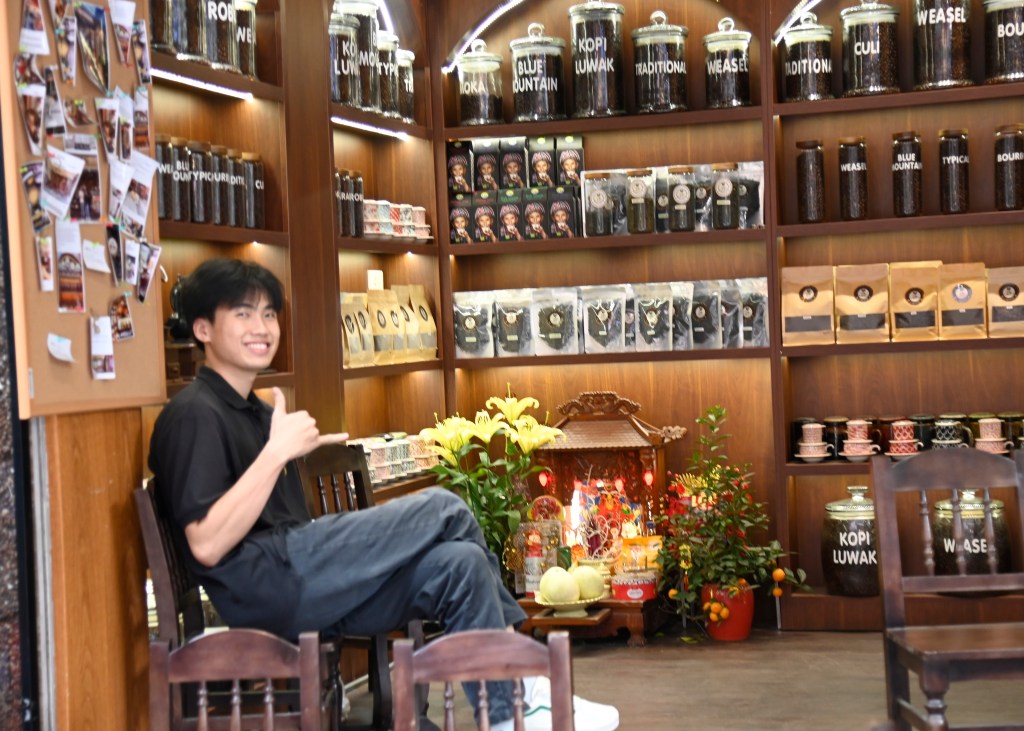
And I was surprised to hear that Vietnam is the world’s second biggest producer of coffee, after only Brazil and, based upon what we saw in Hanoi yesterday, the coffee culture here is alive and well, but I didn’t see a single Starbucks or a Dunkin’. And the coffee here is crazy good.
So is Vietnam a communist country? The answer feels complicated to me. Yup, it is a one-party government and that ruling party is named the Communist Party of Vietnam, and it rules the roost, but apparently only about 3.5% of the population is members of the party. And – from what we saw and heard, this place is built on capitalism. Residents are privately owned, the amount of retail was extensive, there’s a significant service industry, we didn’t hear nor see evidence of the state controlling pricing, the quality of healthcare is wholly dependent upon what you’re able to pay, and more. It seems like something will have to give – the people will ask for a more representative government and/or the government will tighten the noose if that begins to happen.
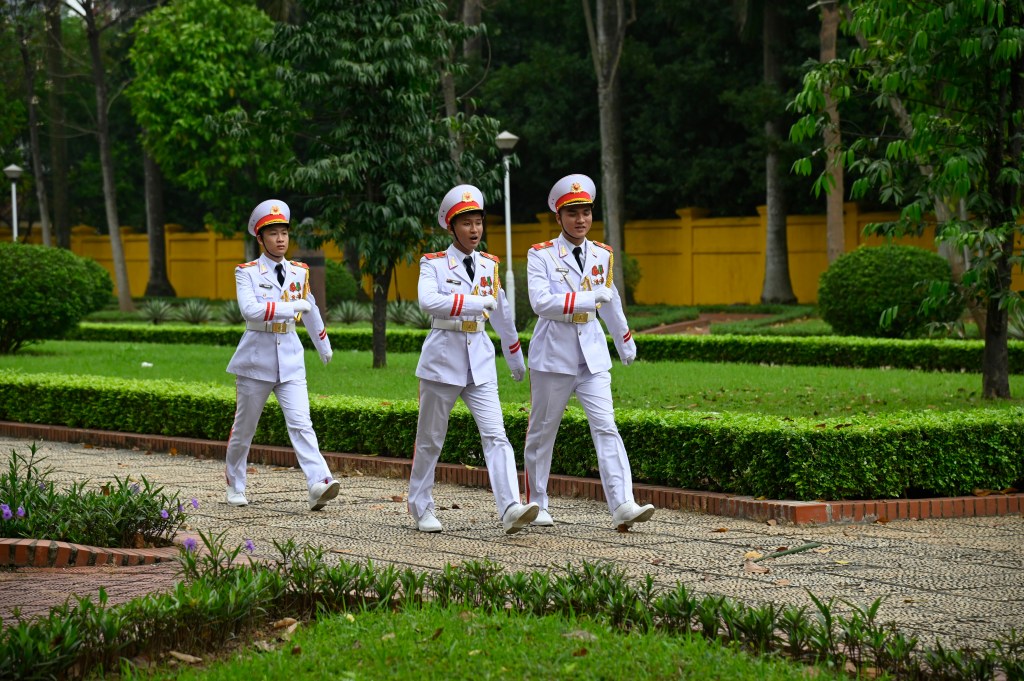
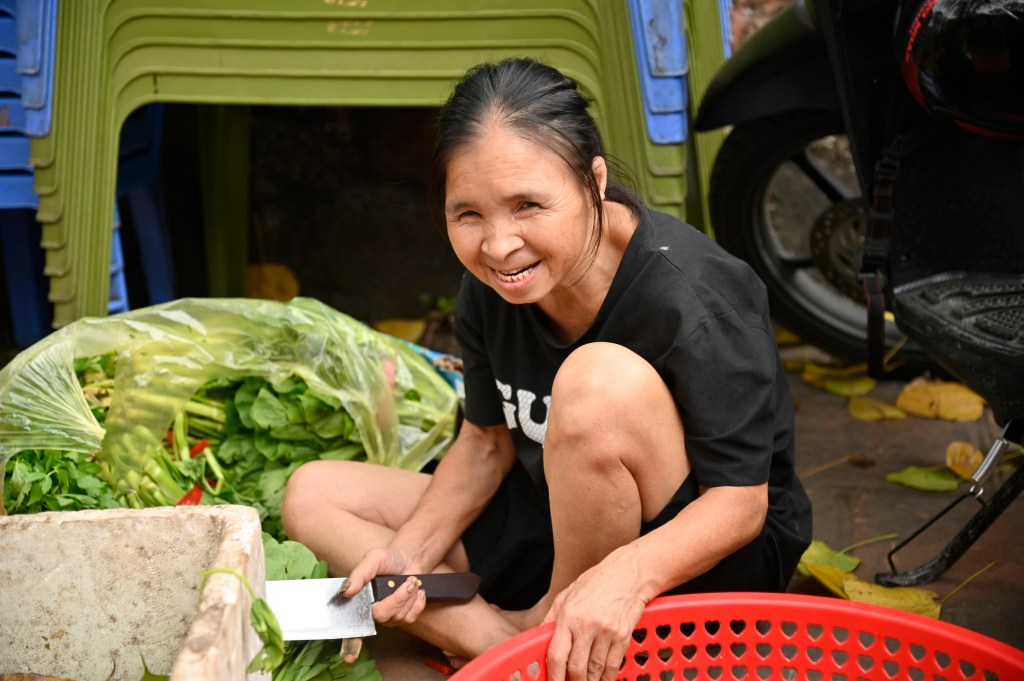

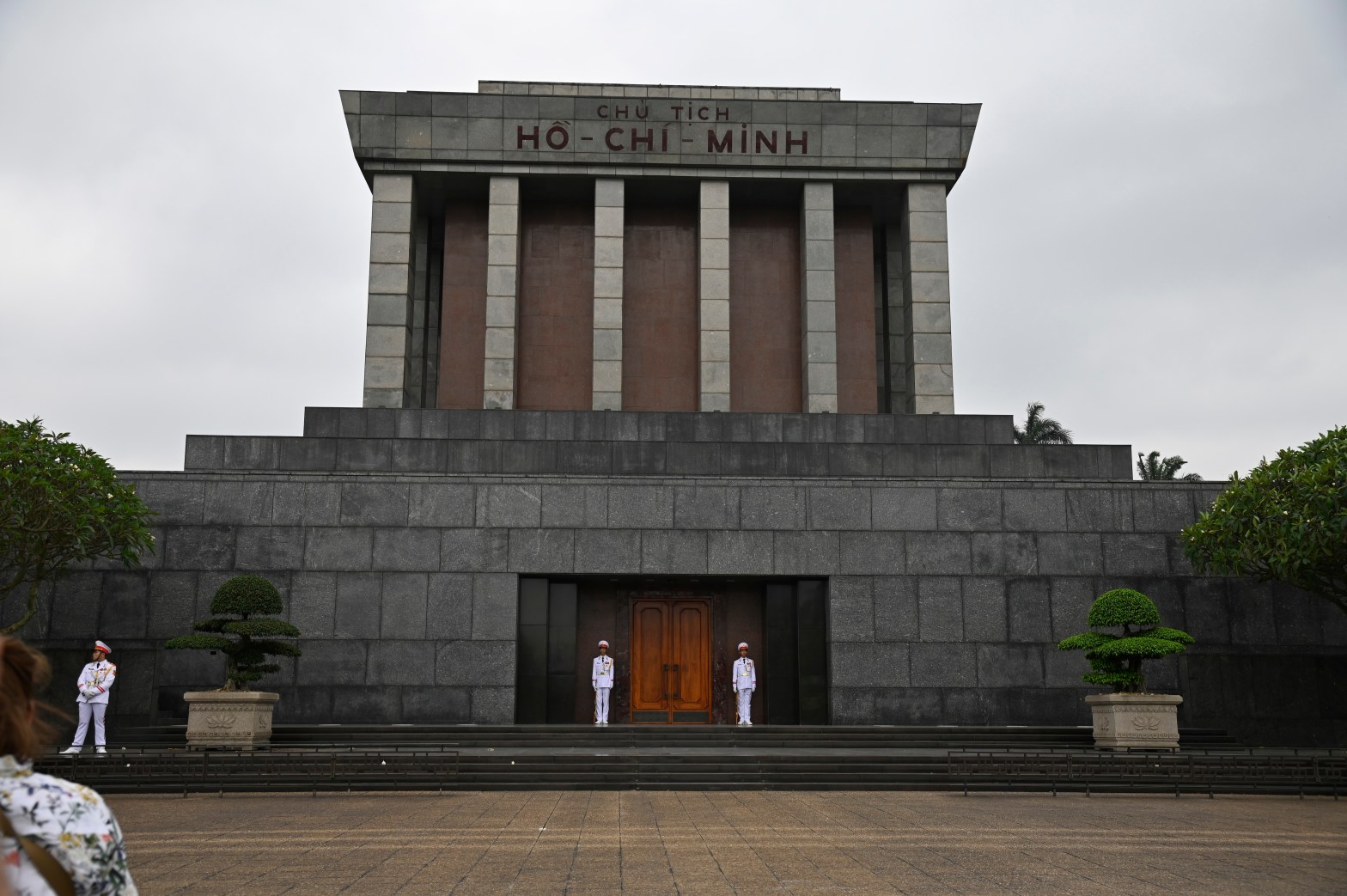
Day two was spent in and around Hanoi, starting with a visit to the location of Ho Chi Minh’s mausoleum, based on Lenin’s and, yes, containing Uncle Ho’s remains, available for public viewing. He didn’t want it that way, per his will, but his followers thought this was the best thing to do. Nearby are the parliament building and several other buildings, including the home of the president. As well, Ho Chi Minh’s living compound, for lack of a better word, also was nearby – his homes and office, some of his cars, his underground bunker. He’s held in the esteem here equivalent to George Washington in the US – the father of the country.

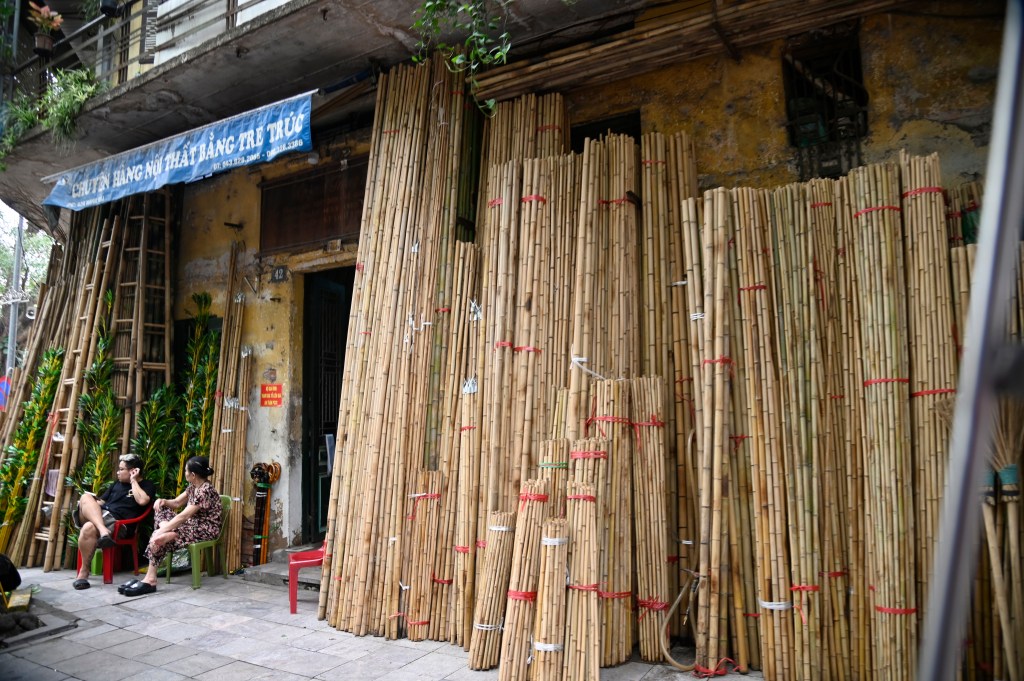

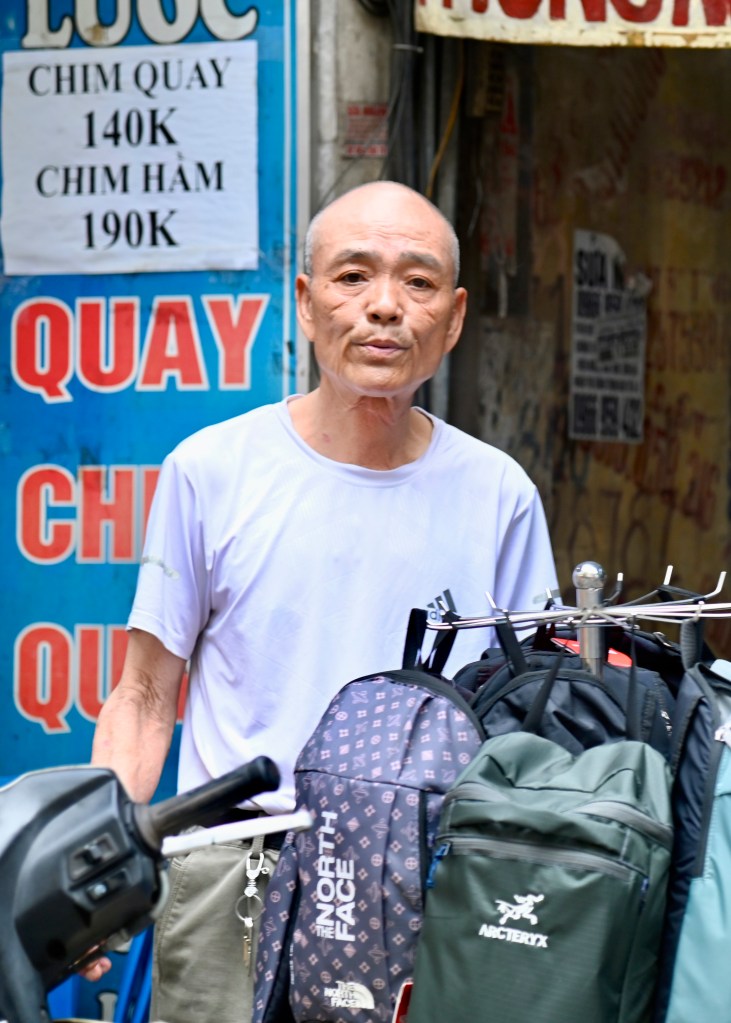
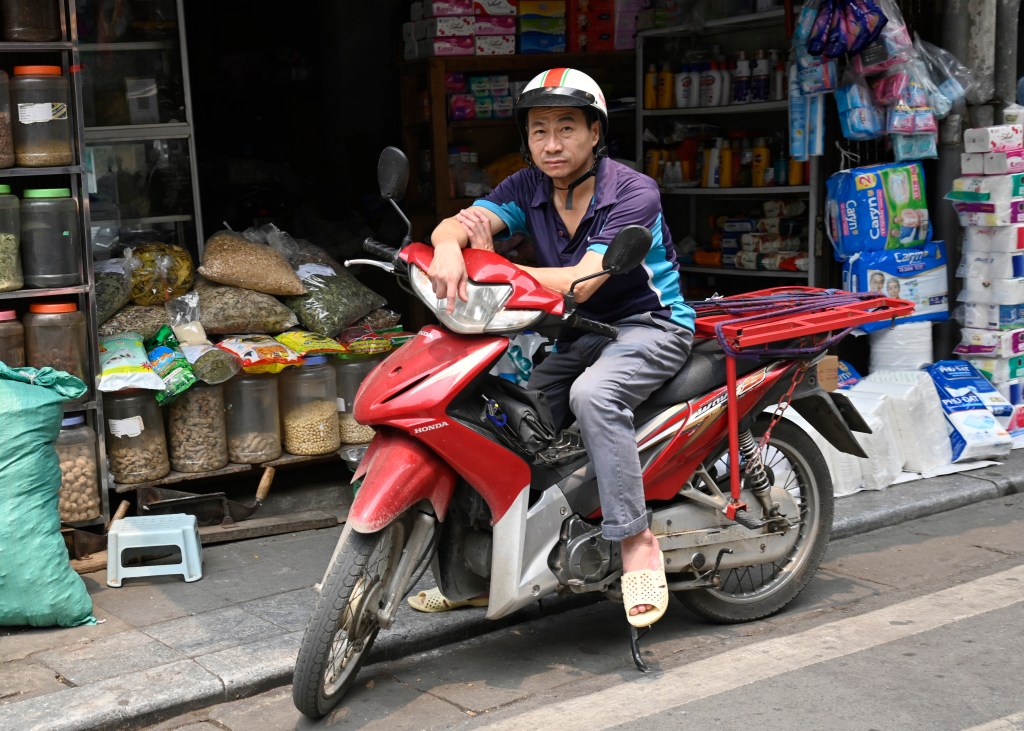
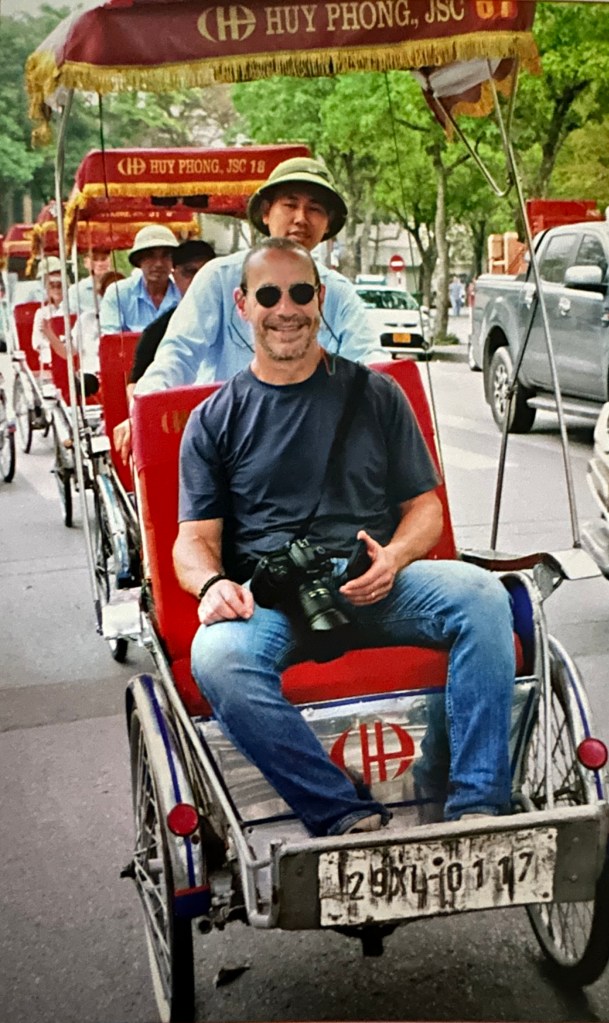
We also made a visit to a confucian temple complex and university before taking a rickshaw ride through the Old Quarter. Because the French were here for c 100 years, there is a ton of French colonial architecture, beautiful and beautifully restored from the Vietnam War bombings. And because the city has grown so much, there also is a significant amount of modern architecture and high-rise buildings and the city has spread further out and has become, apparently, expensive in certain area – we heard values of $2,000/sq ft. The Old Quarter is the urban core and it remains densely populated, with narrow streets, lots of retail shops and hostels and apartments, pagodas, and temples. The streets used to be named for the things sold on each one – chicken street, bamboo street, sails street, etc. Of course, this has evolved to now different shops on each street.
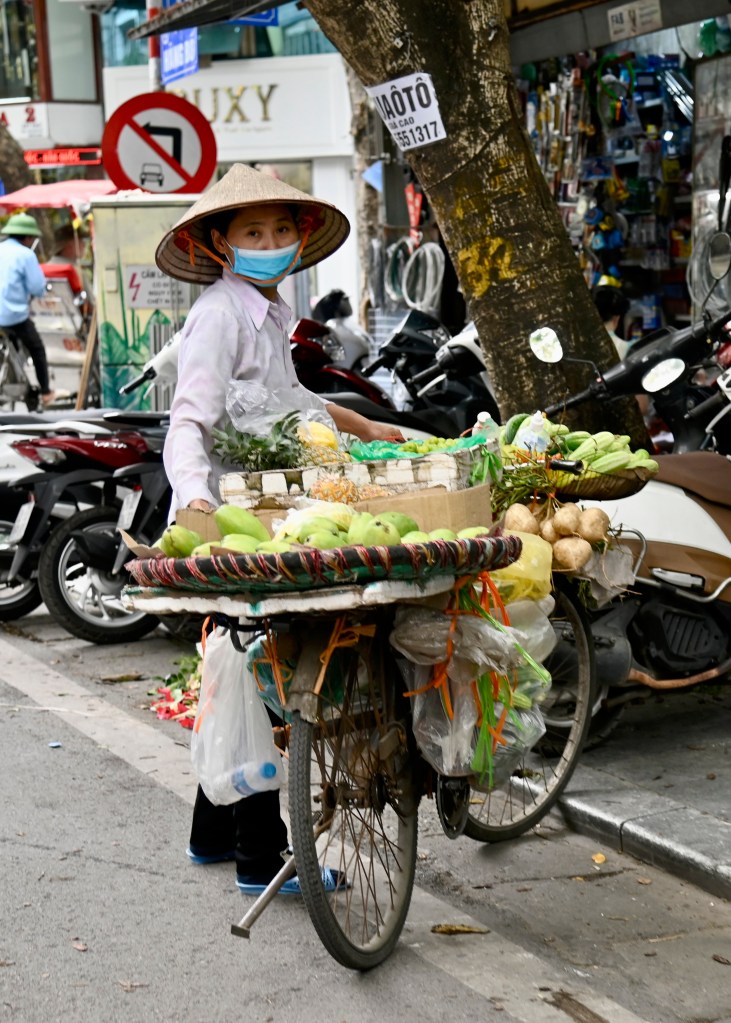
So that rickshaw ride was wild – not fast (it was a rickshaw after all), but total eye candy given all the activity. It was the Lower East Side on steroids – an amazingly dense street scene of motorbikes, scooters, bicycles, cars, rickshaws, pedestrians, restaurants, retail shops, tourists, locals, coffee bars, foodstands, delivery people, and more.
Lunch at a local restaurant where I finally got the hot and spicy experience I craved, though it came courtesy of my guide from Ninh Binh who had brought me fresh chilis – a variety of appetizers followed by pork with noodles in a broth. My lips tingled. I got sweaty. And the ice cream for desert felt great.
The Hanoi Hilton was our next stop, the infamous prison in the city where John McCain had been kept for years after his plane was shot-down and he broke both his arms and a leg and was severely beaten. The prison is now a museum – well, part of it is a museum, the other part had been torn down so a tall modern office tower could be built. The exhibits focused on the two phases of the prison’s life – first as a French prison where Vietnamese prisoners had been kept, and then a Vietnamese prison where Americans were kept. Every country has its propaganda, and I felt like this museum was trying to make it seem like the French were much harsher than the Vietnamese had been. Regardless, it was a sobering experience to be there. But, like any museum, we had to walk through two gift shops along the path through it.

Our afternoon ended with a water puppet show, inside a medium-sized theater, where live musicians and singers performed alongside an apparently traditional form of entertainment that started in the rice fields. Performers, hidden behind a curtain in waist-deep water, use long bamboo sticks to control wooden and lacquered puppets – people, dragons, unicorns, fish, phoenixes that appear to dance on the surface.
And, before dinner back at the hotel we were able to meet with a 79-year old Vietnamese air force veteran, Nguyen Hong My (pronounced “mee”), who in 1972 was shot down by an American pilot. Mr My told us the story of how he had been recruited in 1965 to be in the air force, sent to Russia to learn how to pilot MIG-21s, and returned to Vietnam to fight in the war, where he had shot down an American in January 1972. Three months later, USAF Major Daniel Cherry shot down Mr My. Fast forward to 2008, and Mr My and Daniel Cherry met in-person, and the two reconciled and were able to put their past behind them. Major Cherry wrote a book about the entire experience, My Enemy My Friend.

This was the only day in Hanoi, but it was a great day of learning and seeing and talking and eating.
 Fred's Travel Blog
Incredible photos already! Love the history and context. Looking forward to more.
LikeLike