It was a much needed day of (mostly) fresh air after the 24 hours it took to get here to Hanoi. The city is bustling – 10m people, a maze of motor-scooters, mopeds, and cars, tons of store-fronts, a mix of old French-style architecture, more modern high-rises, and some decaying buildings that went up not long after the Vietnam War ended. That conflict here is called the “American War,” similar in naming to the “French War” and “Chinese War” that preceded it and the “Khmer Rouge” war that came after. I’ll write more about the Vietnam War another time, but to paraphrase what I chatted about today with several people, it’s always good to get the other side’s perspective and hear their stories.
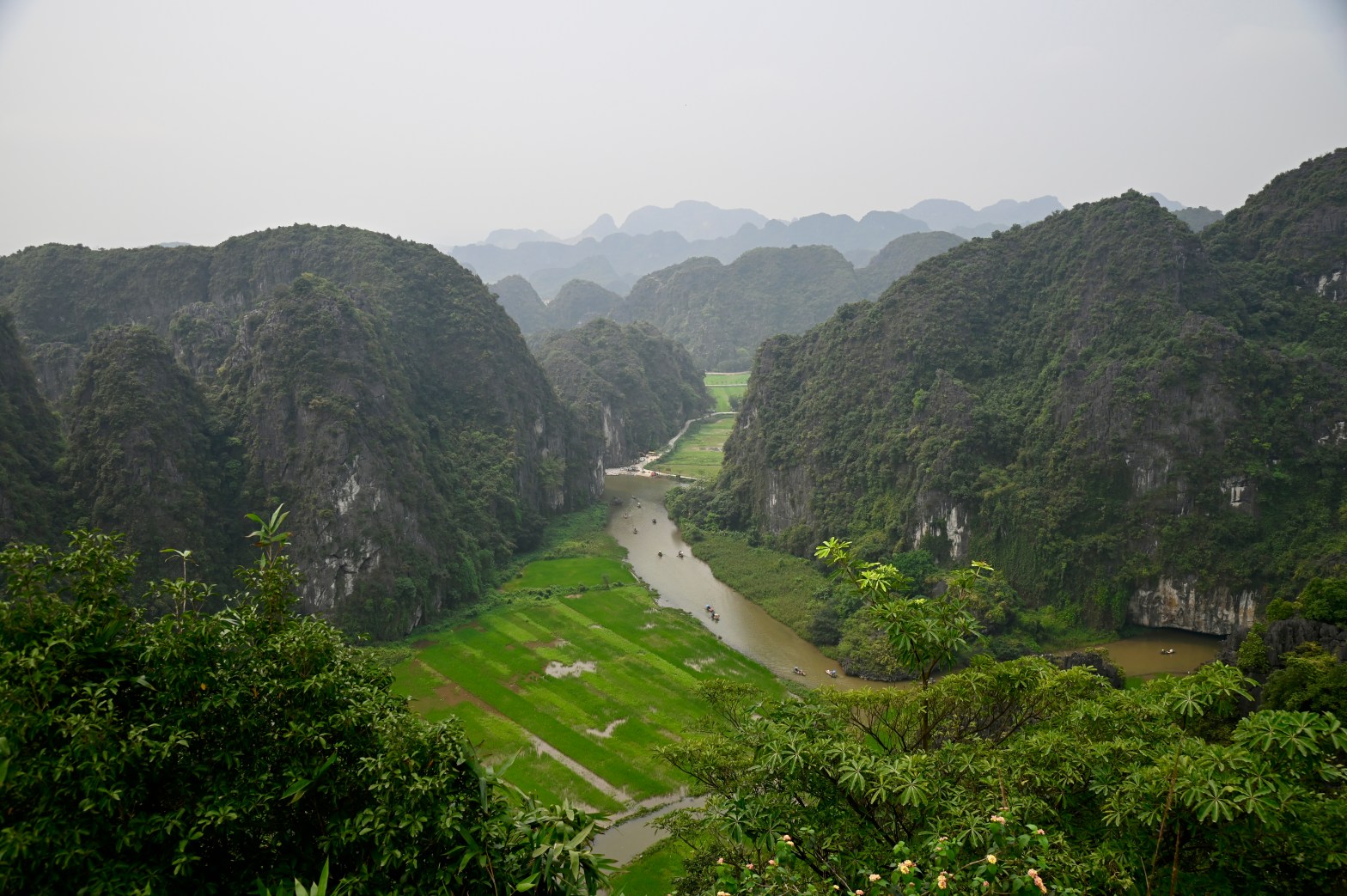
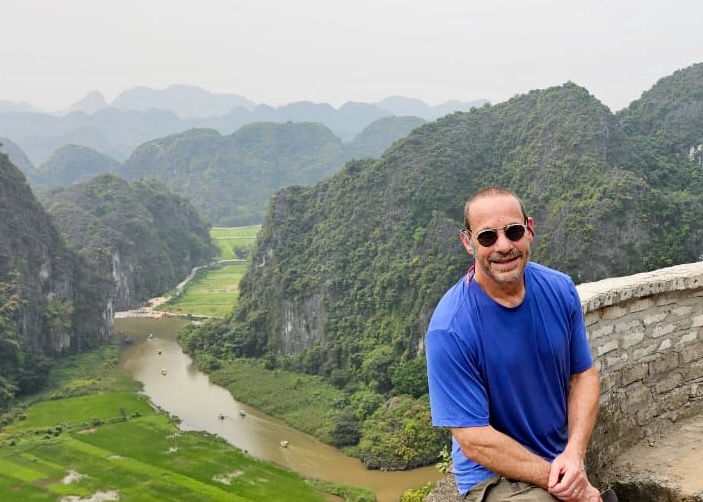
But I digress – I needed to first get out of the city and into the country, so I headed out with a guide to the area known as Ninh Binh (it is both a province and a city), about a 2-hour drive southeast the city, situated in the Red River Delta, and a UNESCO World Heritage Site. It is probably most well known for the huge limestone jungle-covered mountains (called “karsts”) that rise like towers over the rice fields above the (now-enclosed) river that was used as one of the locations where the movie “Kong: Skull Island” was filmed. But more importantly, Ninh Binh was an ancient capital, in the 10th and 11th centuries, offering protection from the Chinese mongols who tried multiple times to invade Vietnam.
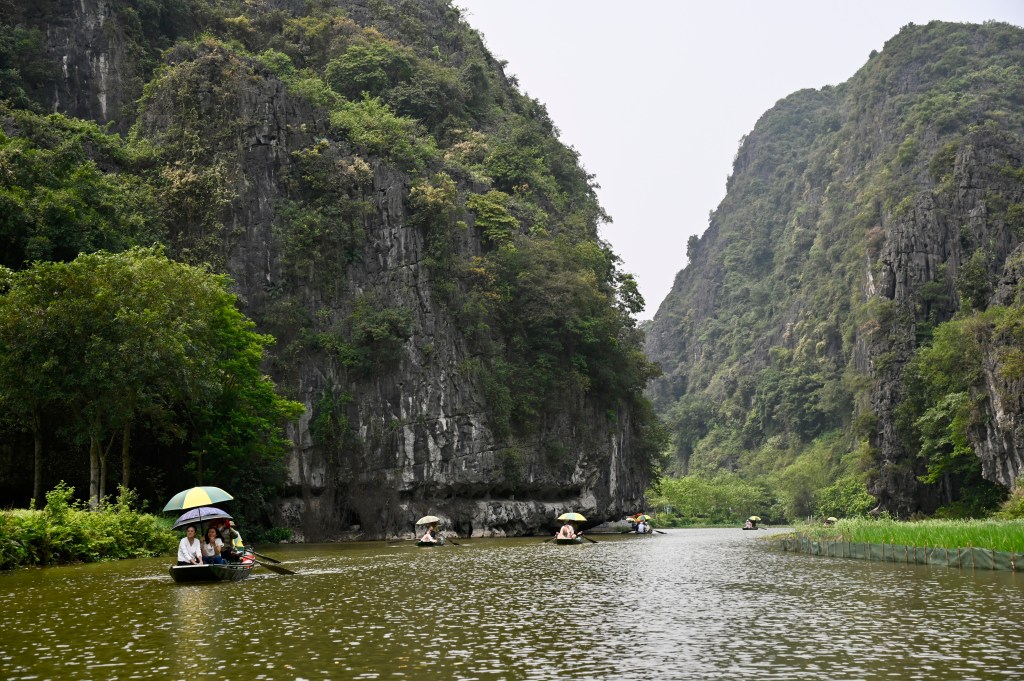
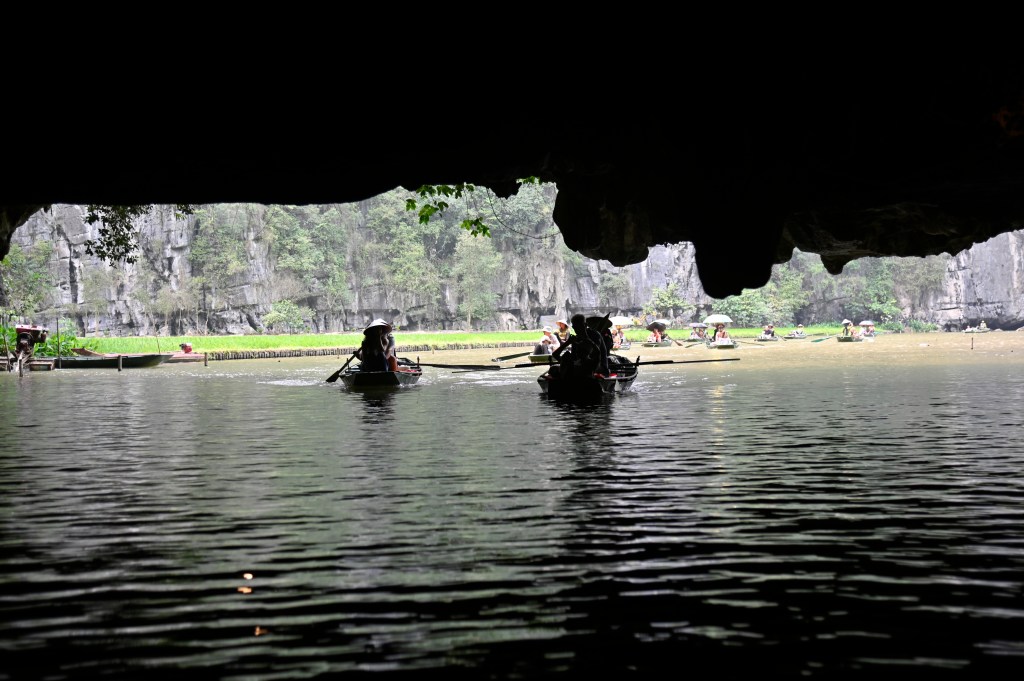
My early afternoon was spent on a riverboat cruise along the river in Tam Coc, where it was just me, my guide, and the boat’s rower – a local woman working two oars, mostly with her feet, as was done by the vast majority of other boat drivers. It was a quiet, tranquil ride past the rice fields, looking at the mountains, and keeping an eye out for mountain goats (which are used for many of the traditional local dishes), storks, and snails who lay their eggs along the edge of the rice fields.
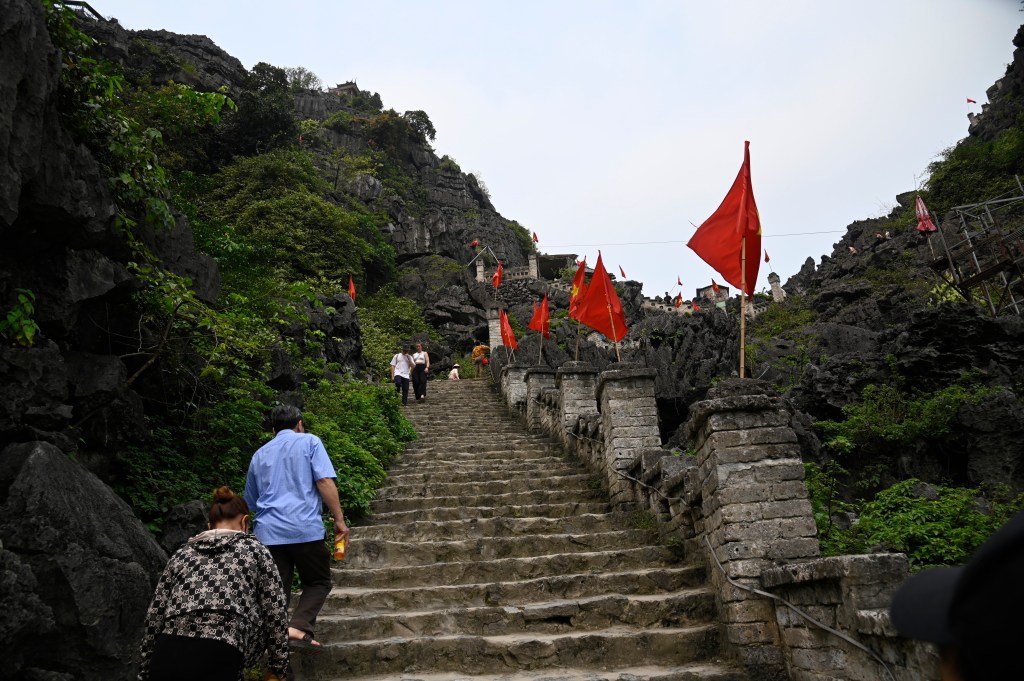
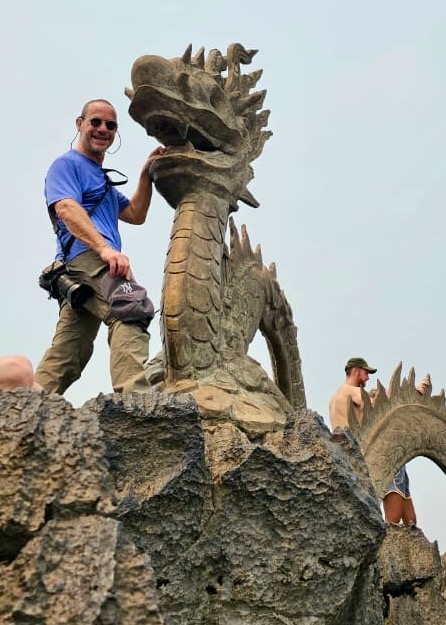
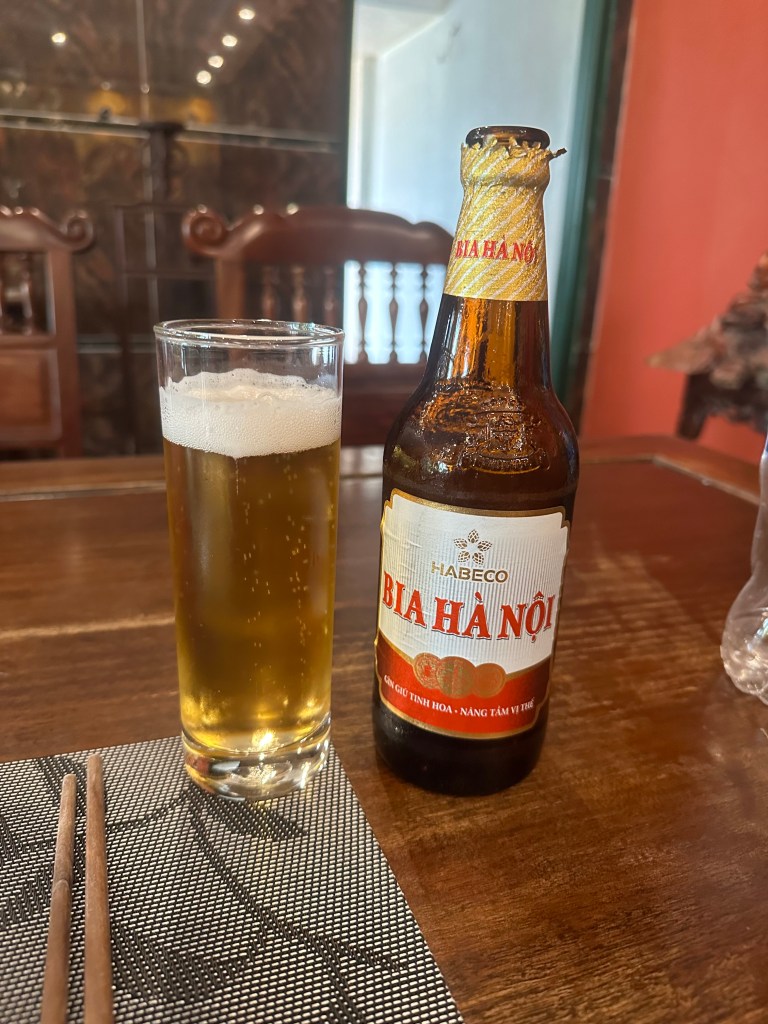
That was much needed after a morning spent climbing the 500 (!) uneven steps – in 90 degree heat with high humidity – to the top of Hang Mua, giving a spectacular view of the valleys below. I was a sweaty mess by the time I got to the top – which was worth it – and even moreso when I made it back down. That meant I got to reward myself with my first local beer of the trip along with a seven-course meal of local specialties (but with insufficient chili heat to my taste).
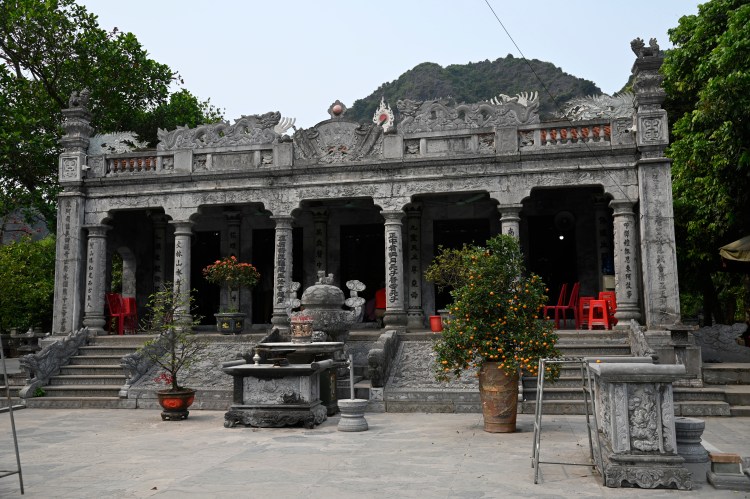
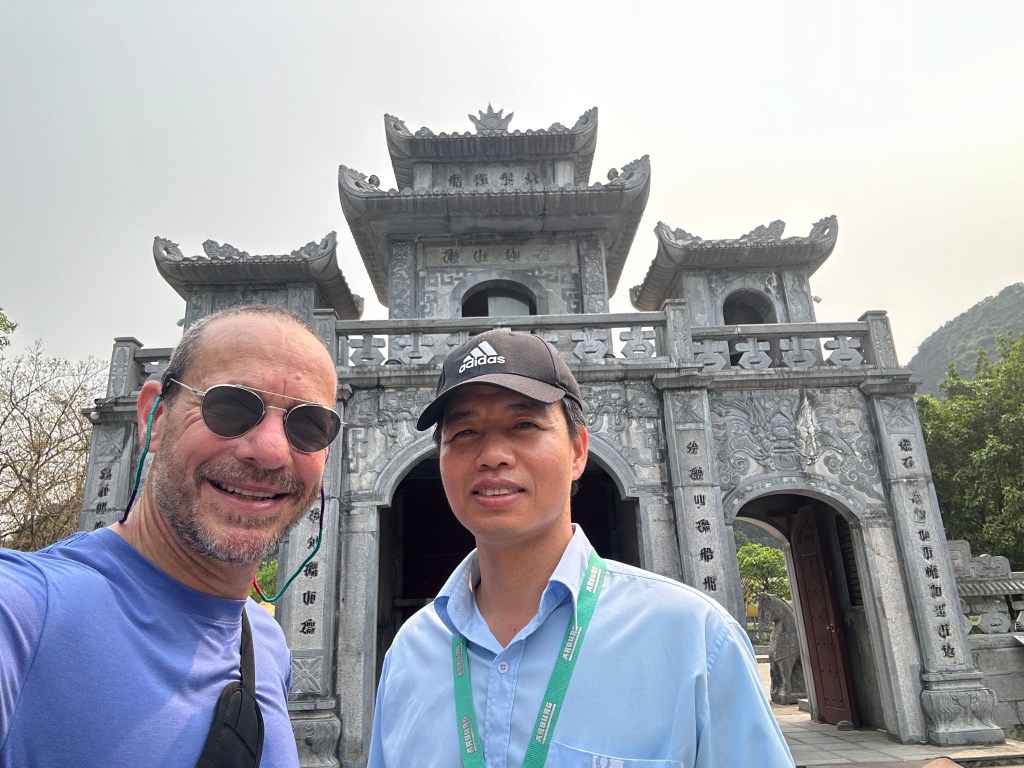
And, for a bit of local religion and history, we stopped by the Thai Vi Temple, dedicated to King Tran Thai Tong, his wife, and son; he was first the general that defeated the Chinese invaders, then left everything to his son so he could become a monk. While it is not the most beautiful of the temples in the area, it was explained to me that it was the most historical and religiously significant.
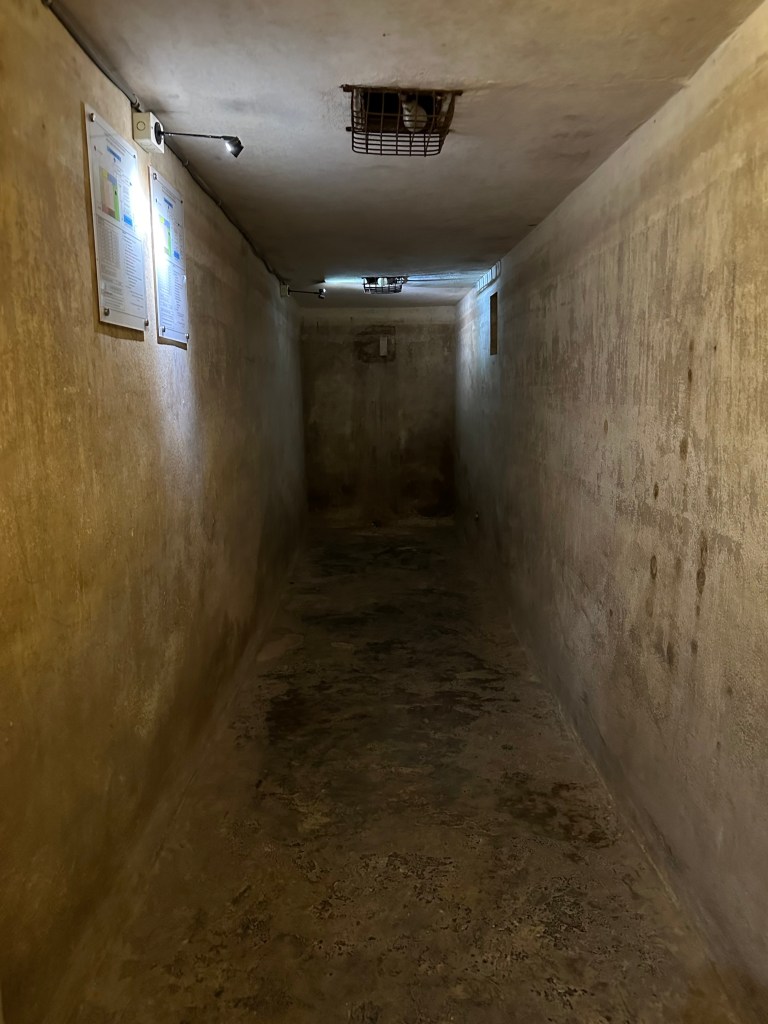
All that outdoor activity was a great relief, and it was followed by a brief lecture and tour at our hotel, giving its history – built in 1901-02, and a hotel ever since, though impacted by the bombing of the city toward the end of the war, and the site of visits by Jane Fonda, Joan Baez, Graham Greene, and many others. And – in 2011 – it was discovered that a bomb shelter lay underneath the hotel’s (now) swimming pool, having been built during the war for hotel guests, staff, local embassy staff (though not the Chinese or Russian embassies, as they had their own bunkers), and other important locals.
Dinner at a local restaurant with two folks I traveled with in Israel and Jordan was a good way to catch-up and share tales of our days as we anticipate our Hanoi city tour and a bit more Vietnam War history.
 Fred's Travel Blog
“lotta scooters”, rowing with your feet, sweaty hikes and very cool grey stone architecture but…….was the beer good and cold!?
LikeLike