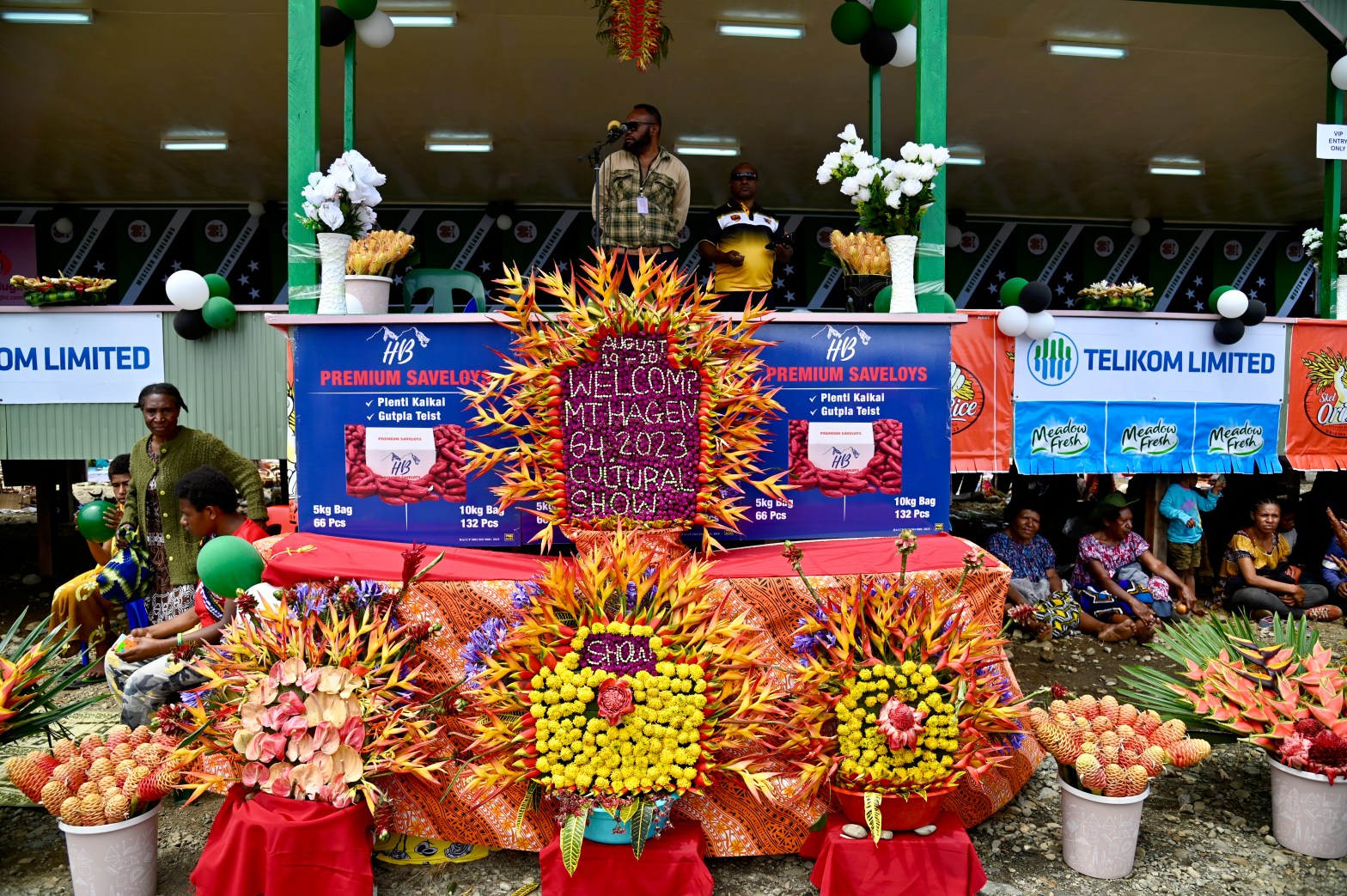
Back in the early 1960’s, a group of tribes from around the Western Highlands Province met in Mount Hagen. While it appears to be difficult to uncover the true history of this meeting, it seems that, originally, it was designed to help calm the animosities between and among various tribes.
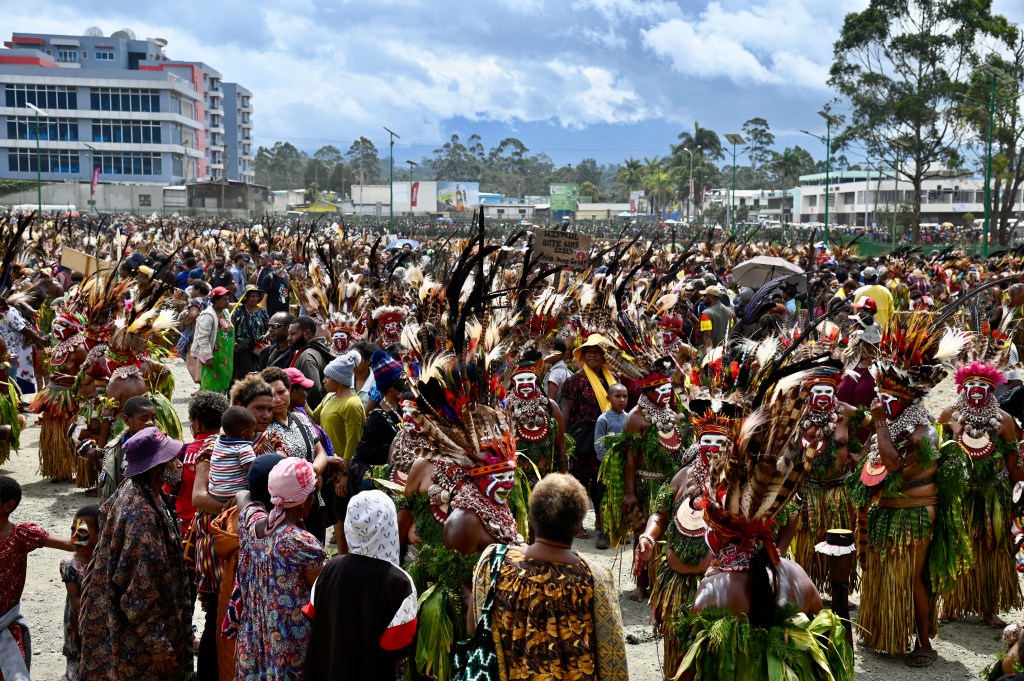
The Mount Hagen Cultural Festival has now become one of – if not “the” – largest and most popular annual gathering of tribes from around the entire country of Papua New Guinea. Some web-sites say it started in 1961, but – according to signage at the event – this was the 64th Festival, which implies the first meeting – if it has always been an annual event – was in 1959. Regardless, the original meeting took place prior to the country’s independence from Australia in 1975. Today, more than 80 different tribes – from all over the country, not just the Western Highlands Province – come together for two days in August each year to show-off and share their cultures – traditional face-paintings, costumes, dances, and songs – in some cases, traditions that go back thousands of years. It is a “sing-sing” in local parlance, and it attracts thousands of locals and international travelers. These days, it is a celebration of all these cultures, a showcase for all the attendees, and a competition, as awards are handed-out for various tribes in attendance.
In December of 2019, I took a cruise to Antarctica, and one of the women I met on-board had told me about the Mount Hagen Cultural Festival. She made a point of saying how amazing it was and that it really should be on my bucket list. This is one of the ways I choose where to travel – by following the recommendations of other experienced travelers. And, so, attending the Festival made it on to my list.
When the first wave of COVID had pretty much ended, I’d tried to get to the Festival in 2022, but was told I could only be on the waitlist. I asked about 2023, but was waitlisted for that year as well. My only confirmed reservation was for 2024, so I thought I’d be waiting a while. In the early Summer of 2022, a spot opened-up for me for that year’s festival, but I had to decline due to other commitments. And again, this year, a spot opened-up, so off I went to Papua New Guinea.
While the rest of the trip had been really remarkable, nothing really prepared me for attending the Festival, which would be on my last two full days in the country.
After we landed at the Mount Hagen airport around 9 a.m. on the morning of day eleven, we immediately headed to the Festival, which was being held, for the first time, in the Queen’s Park which is 9.6 acres in the middle of town.
International tourists pay for the privilege of special treatment at the Festival – we were able to enter the grounds early (while we could get in as soon as we arrived, it seems like the grounds didn’t open up for locals until about 11 or 11:30 a.m.), and we had our own designated entrance and rest area, where our tour guides would keep an eye on our gear and have water and lunch available to us. So – when we first entered the grounds, at about 9:45 on both days, it was already busy with tribes and attendees, but it was nothing like what it would become later in both days.
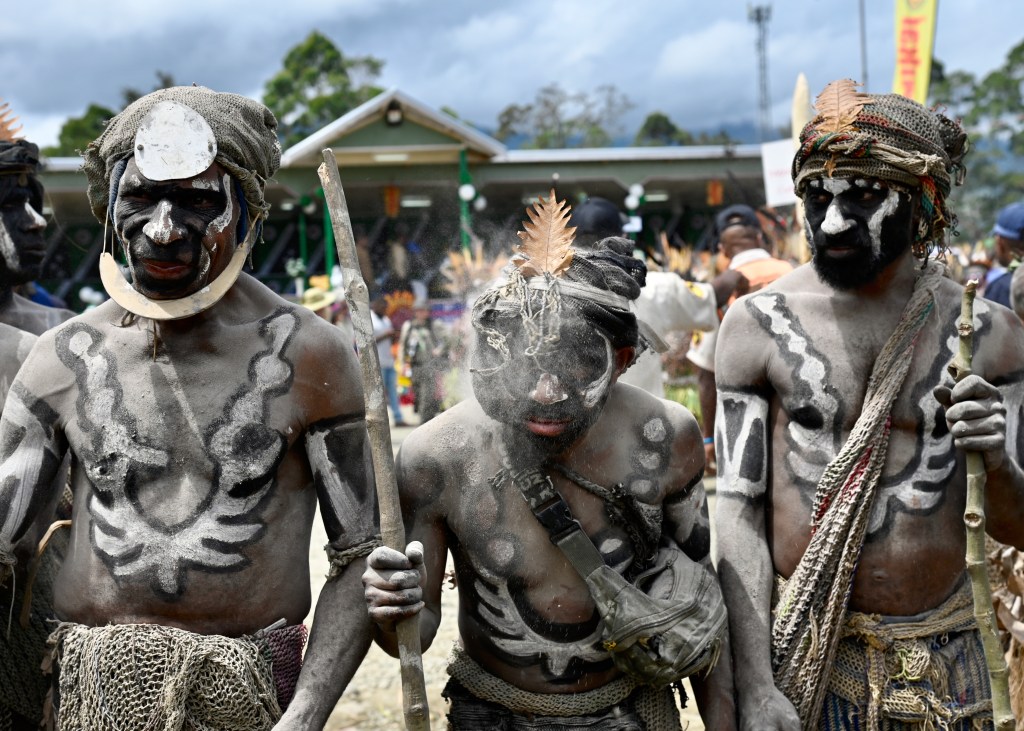
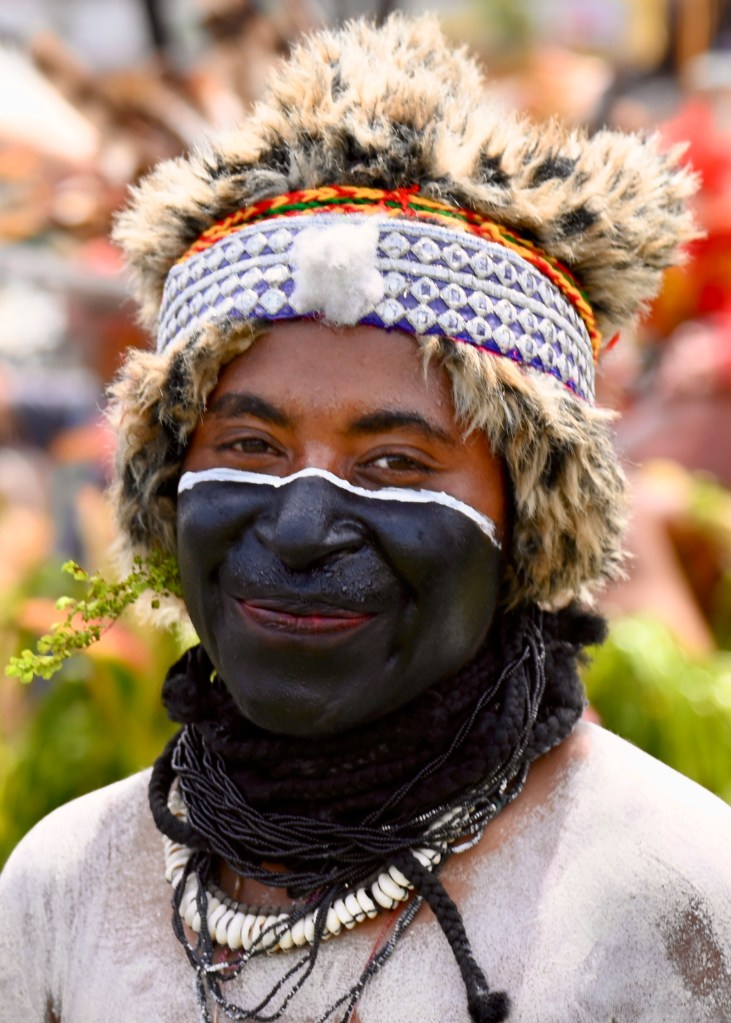
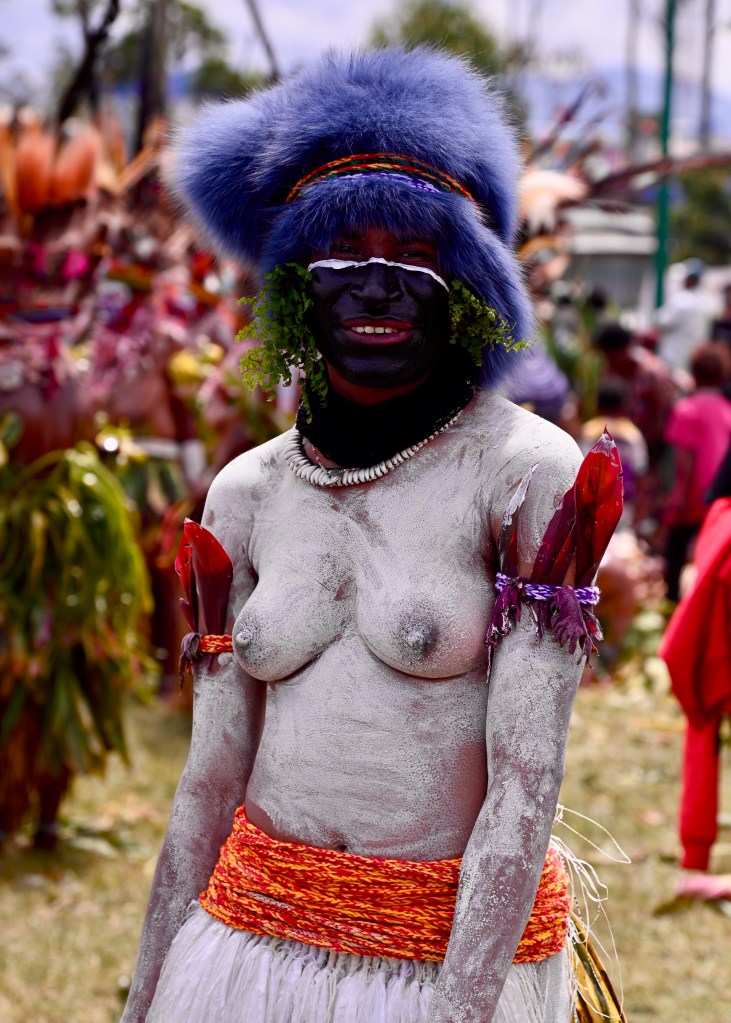
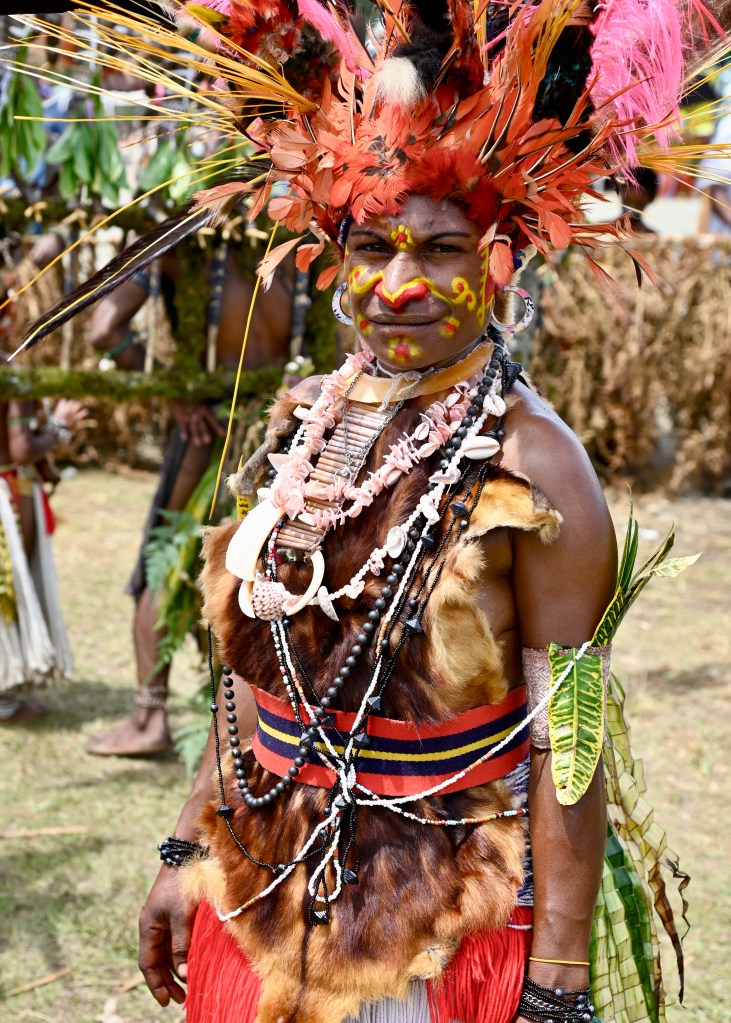
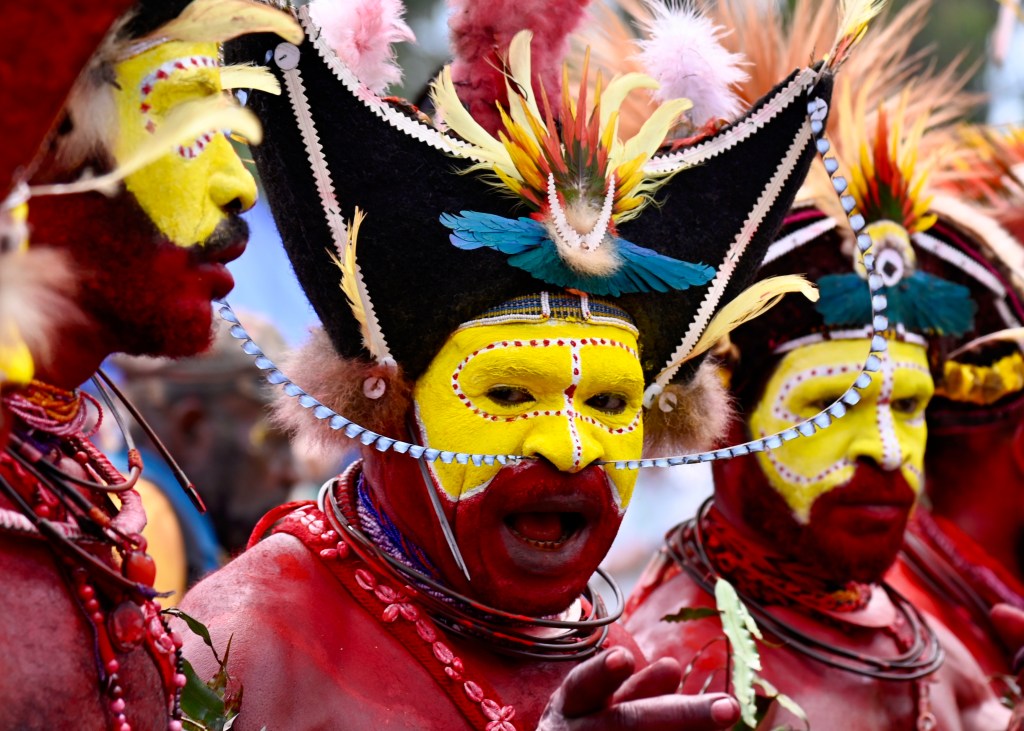
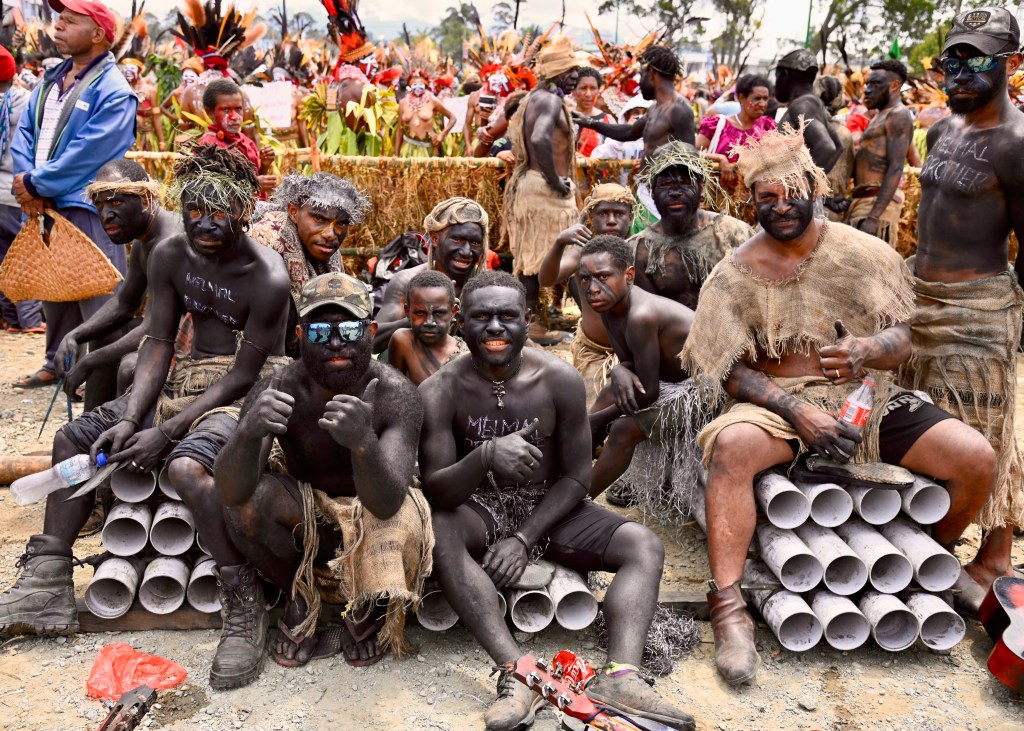
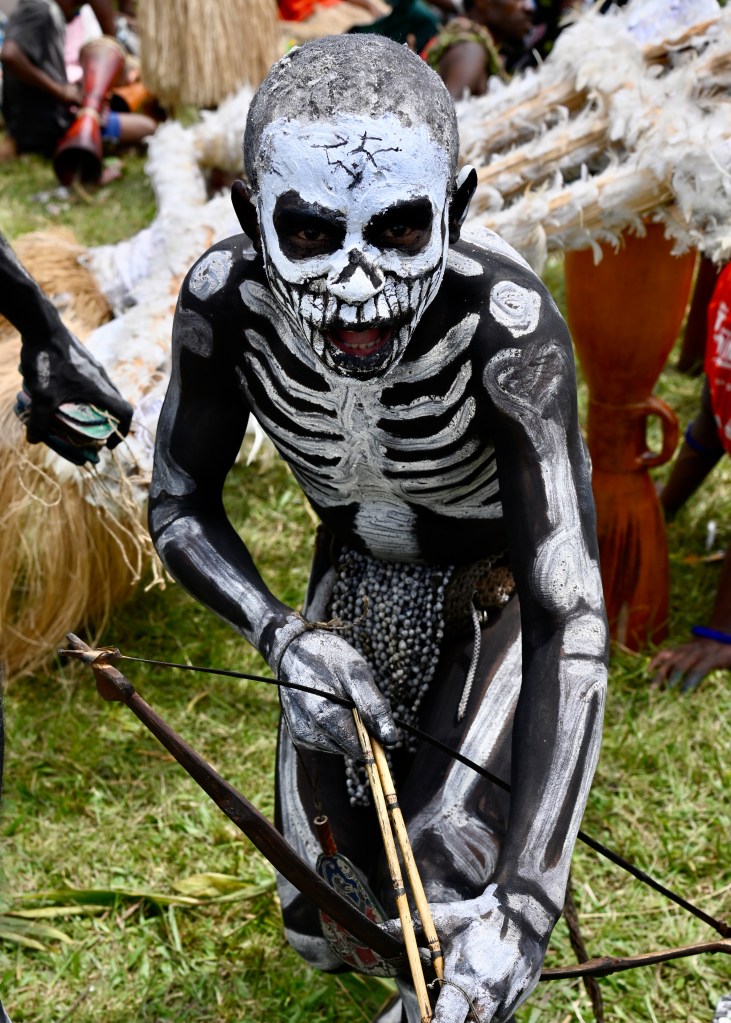
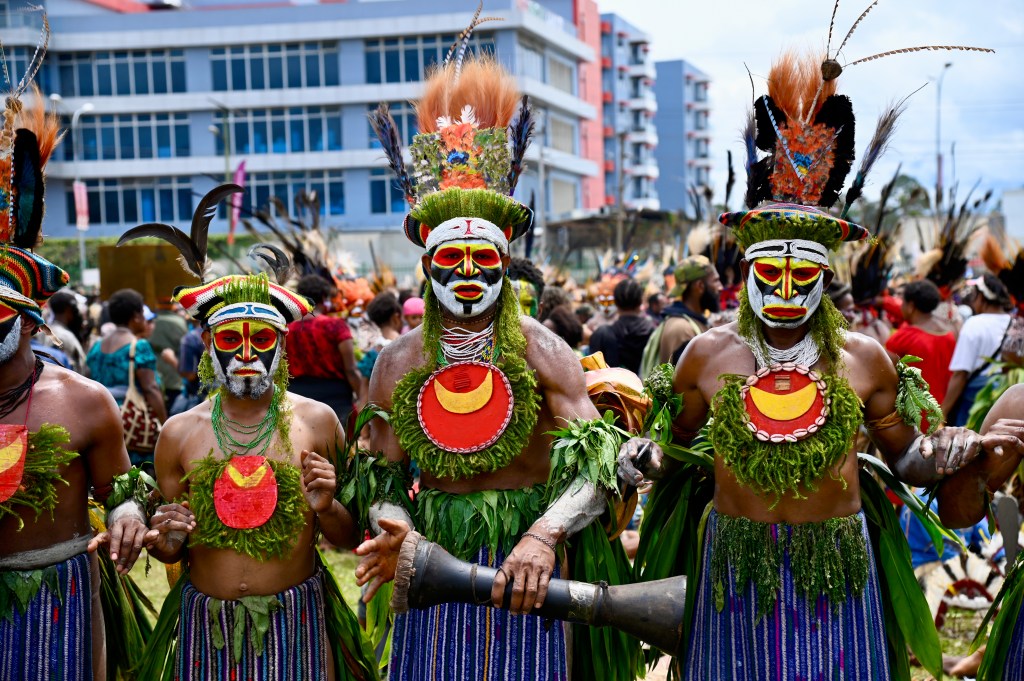
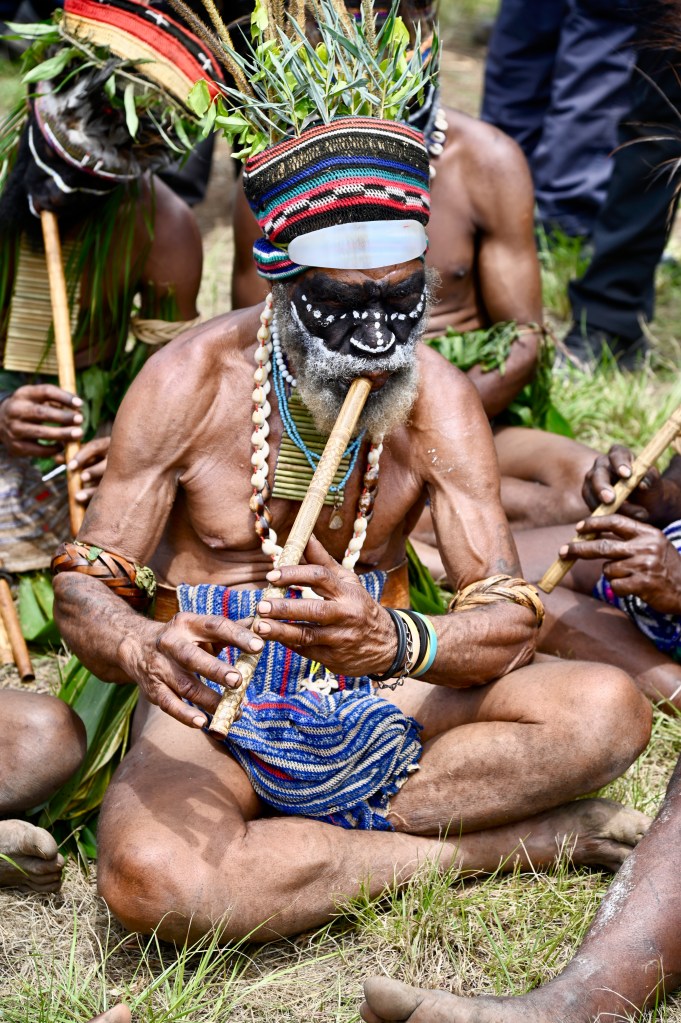
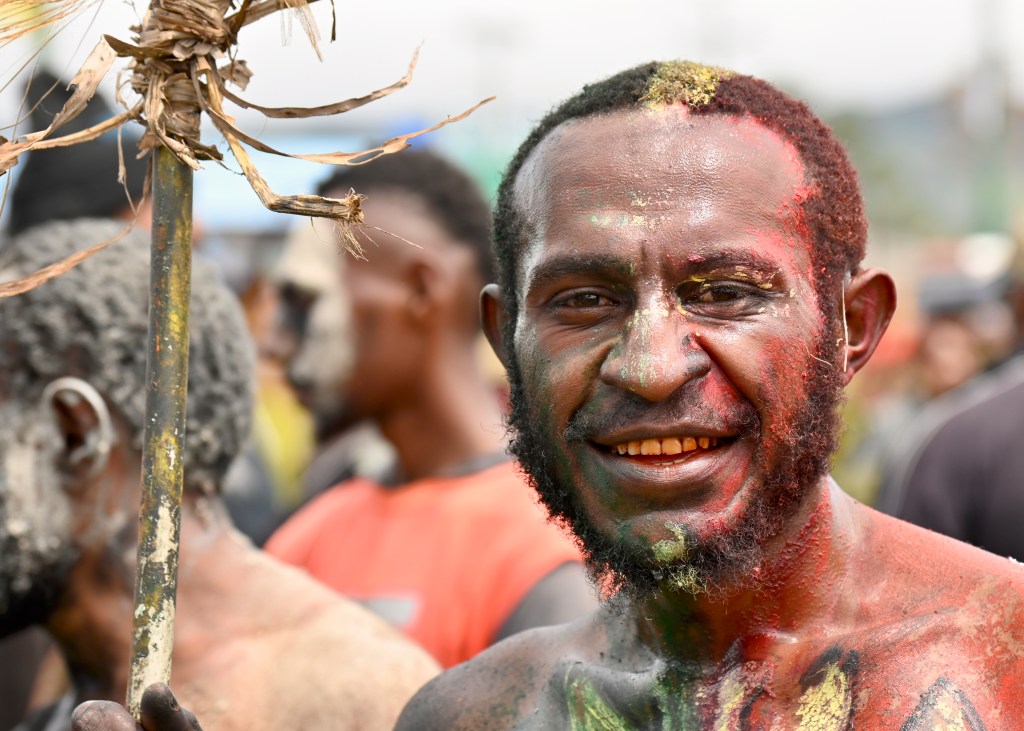
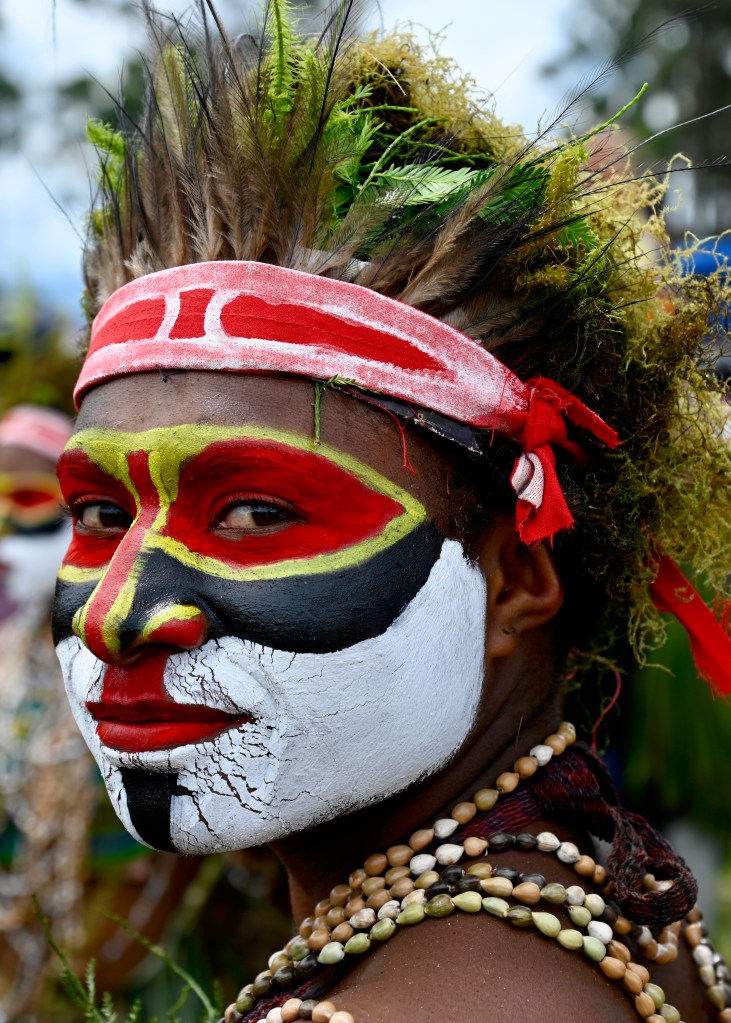
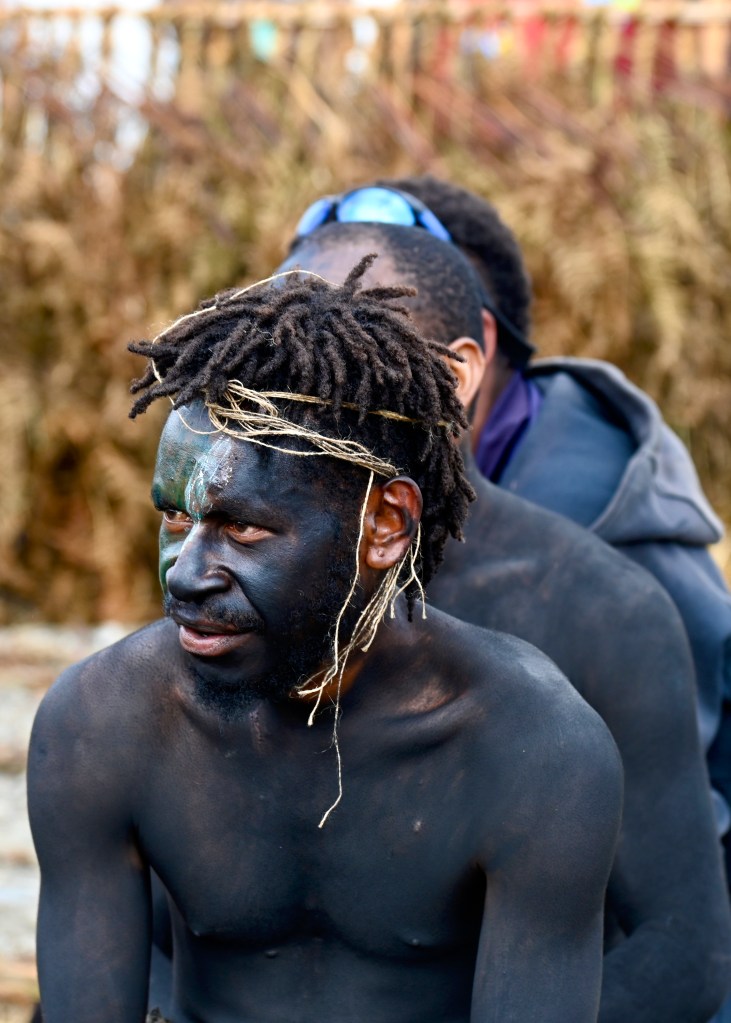
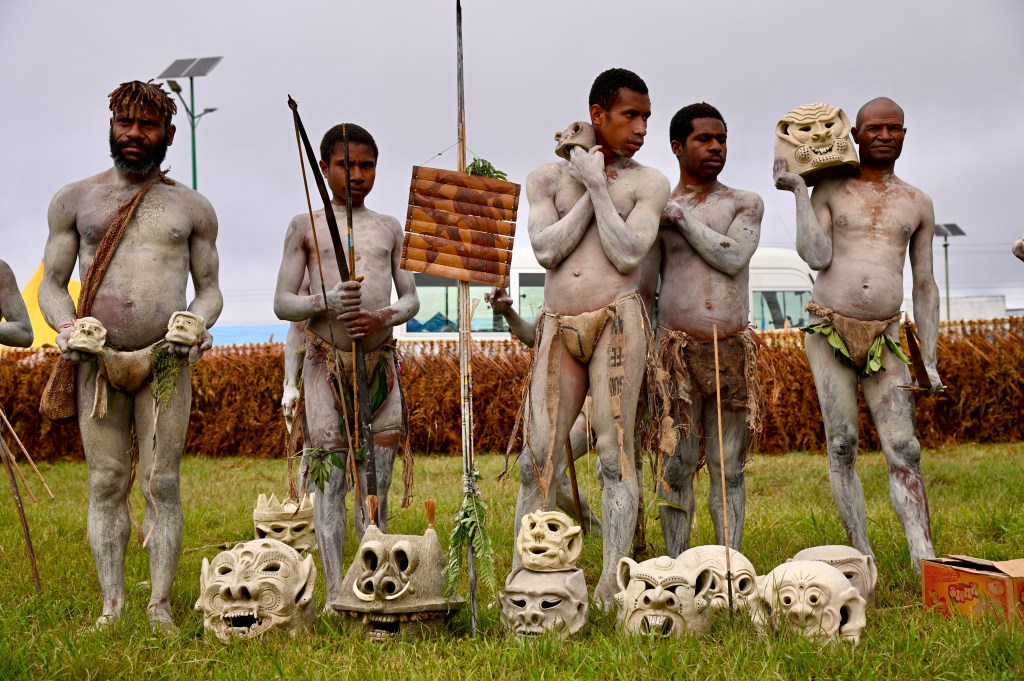
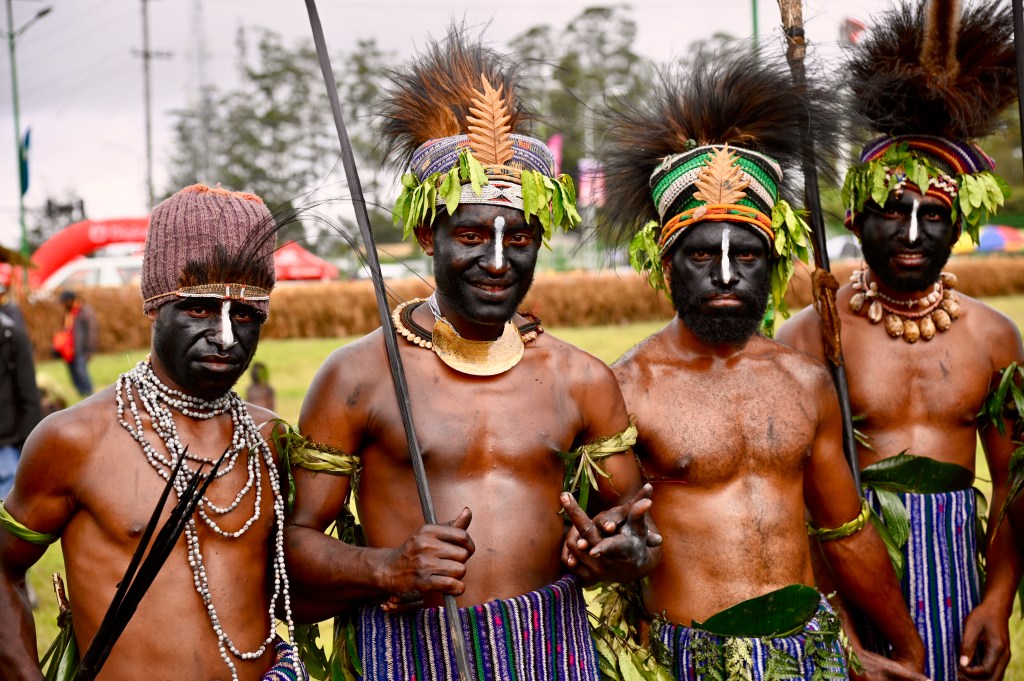
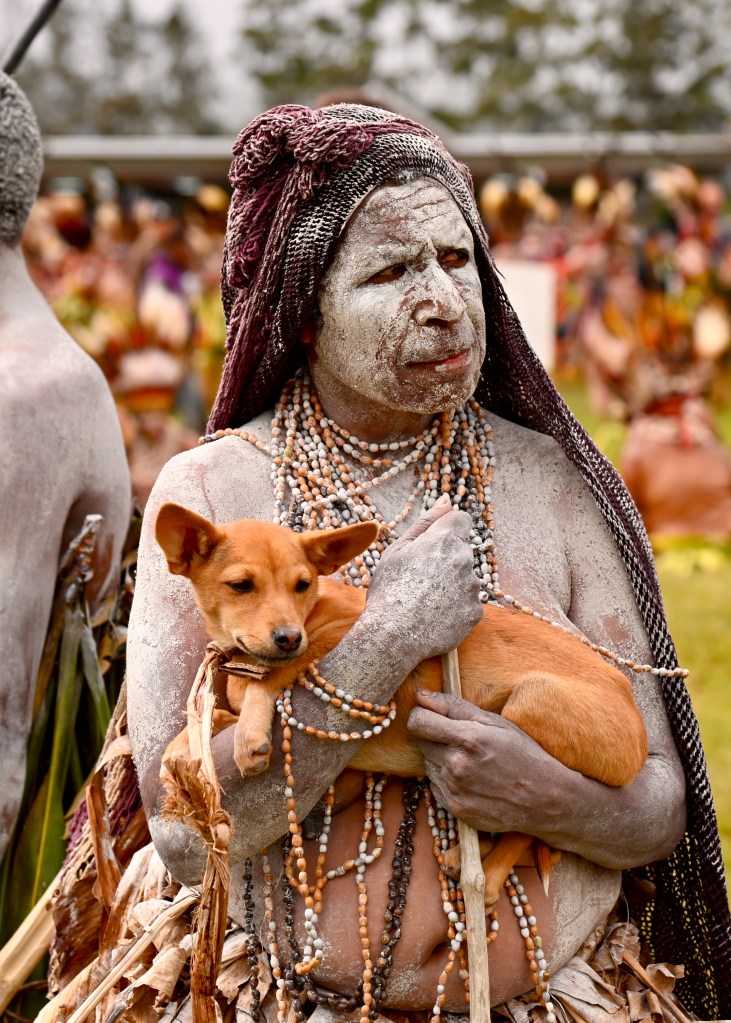
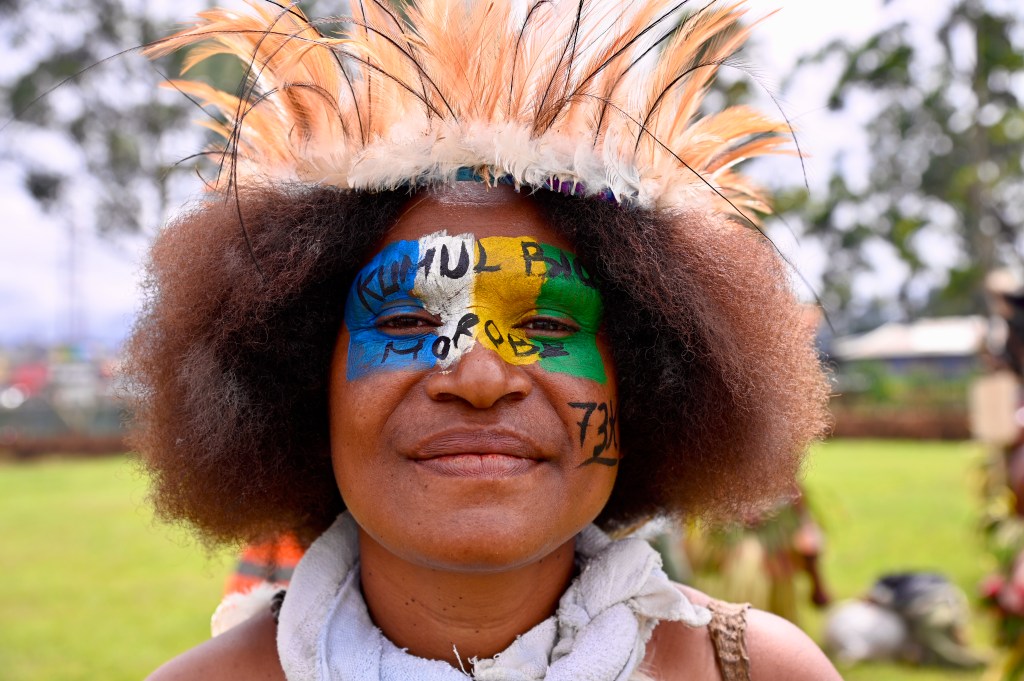
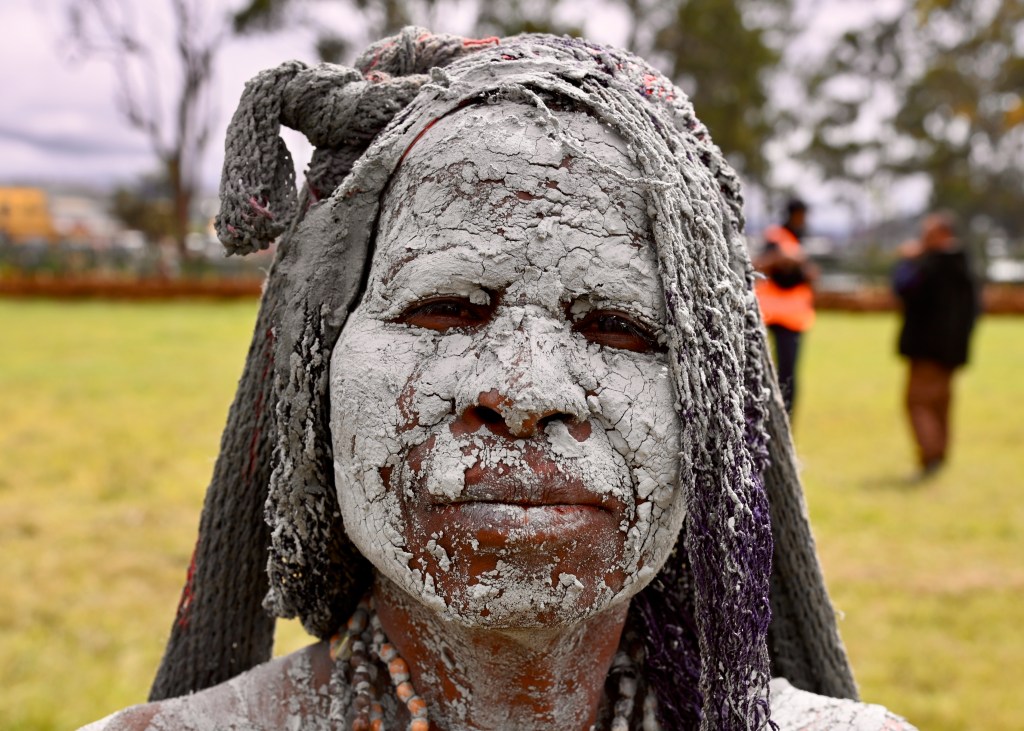
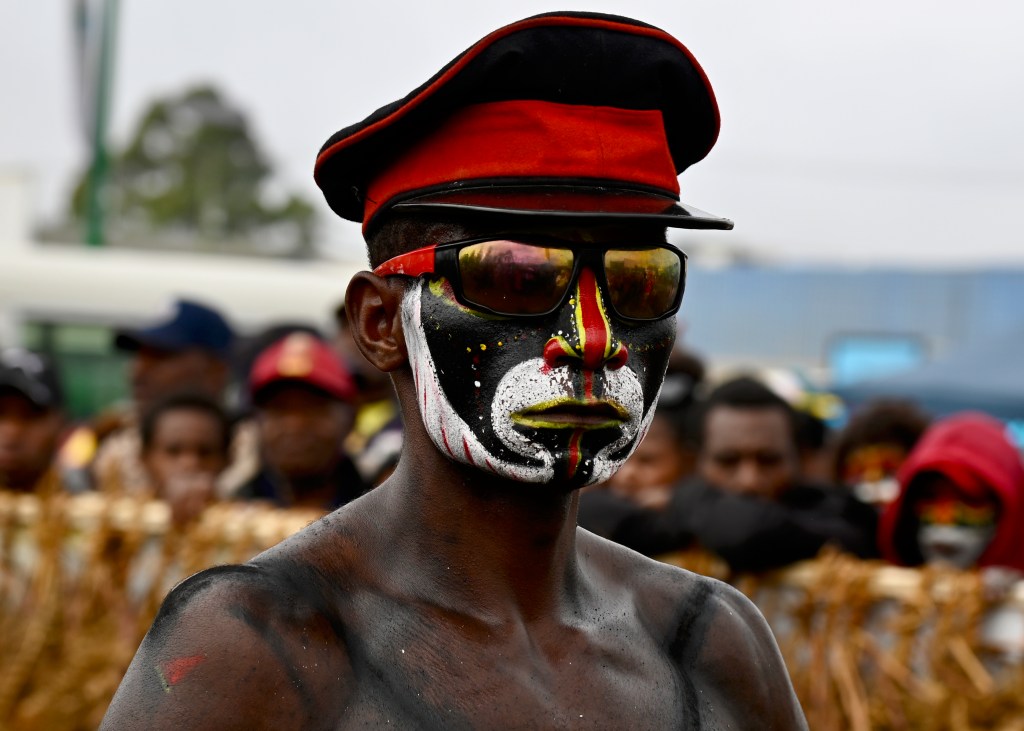
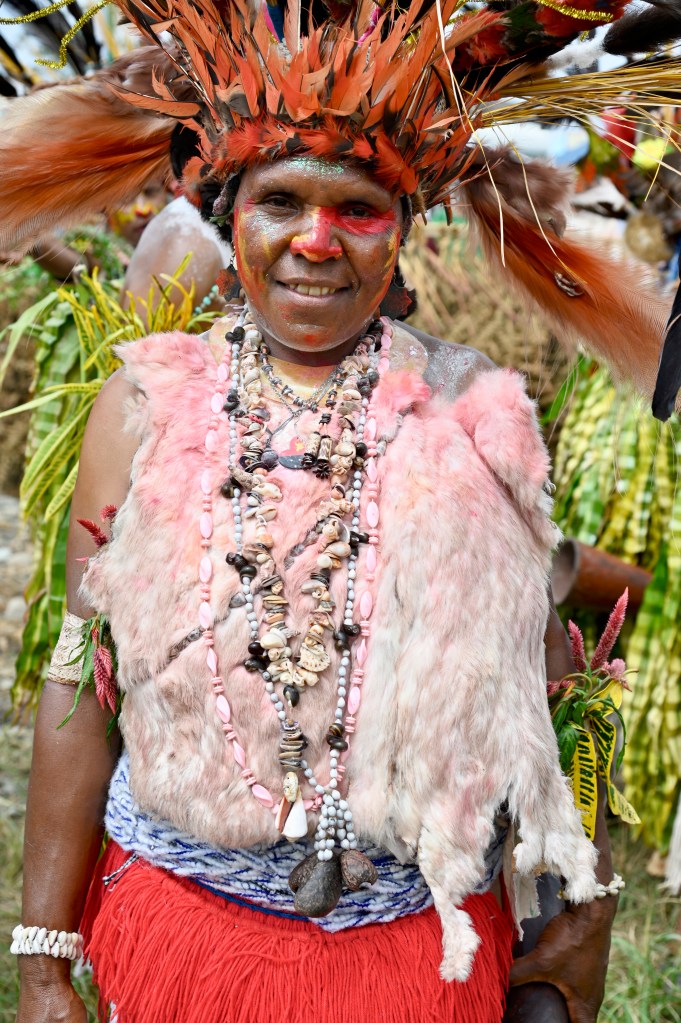
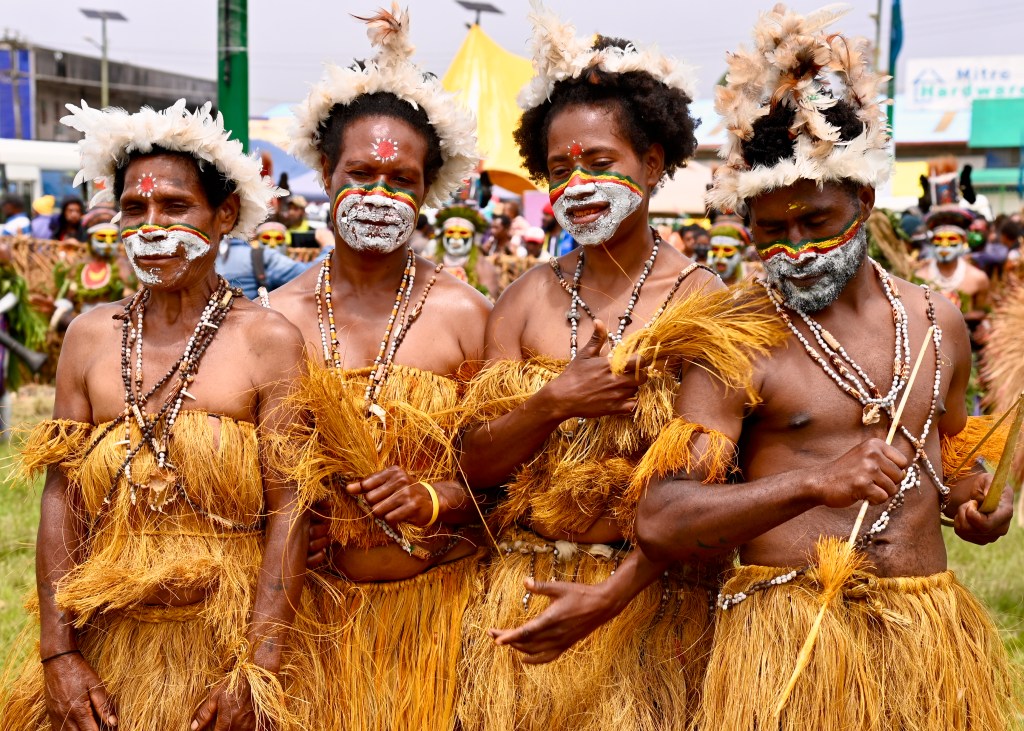
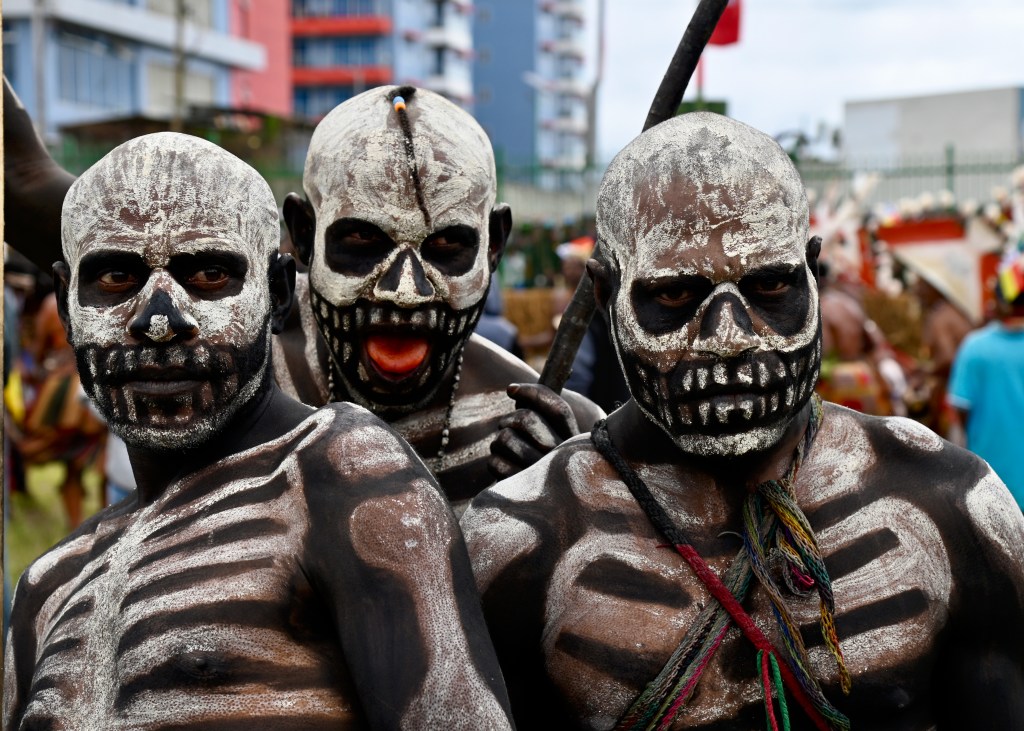
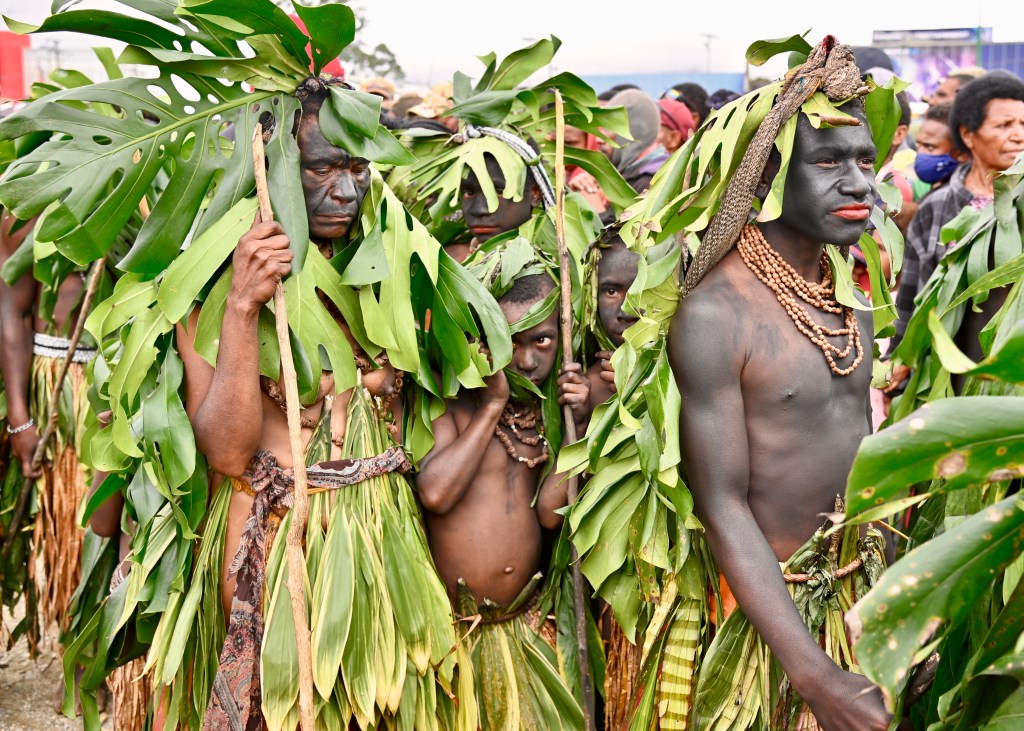
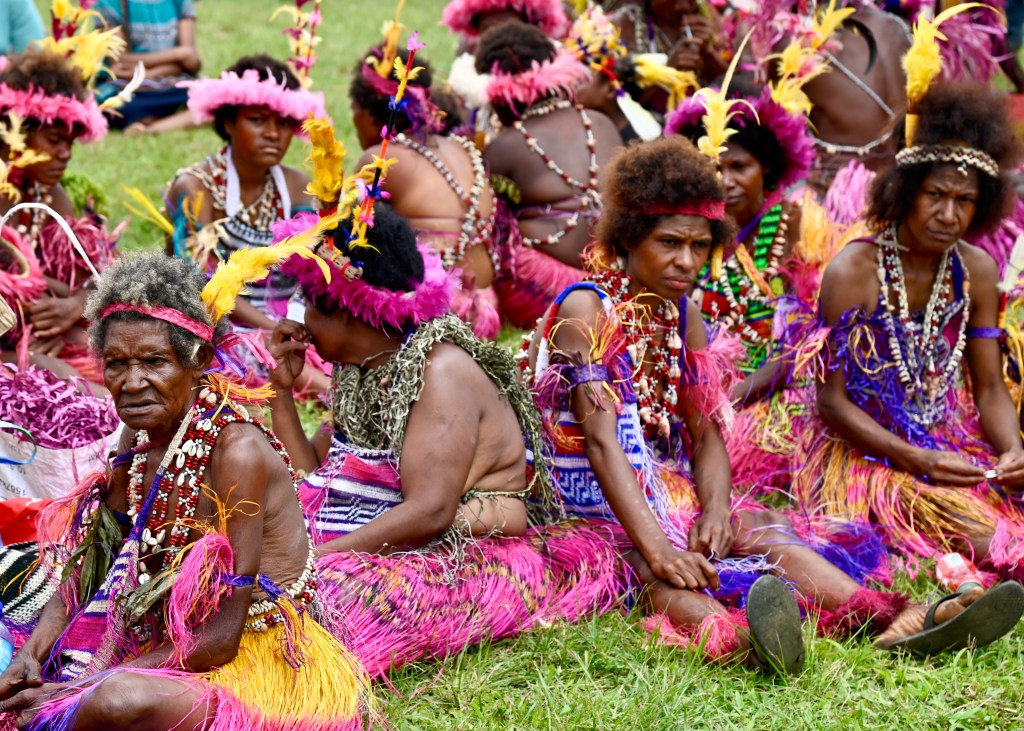
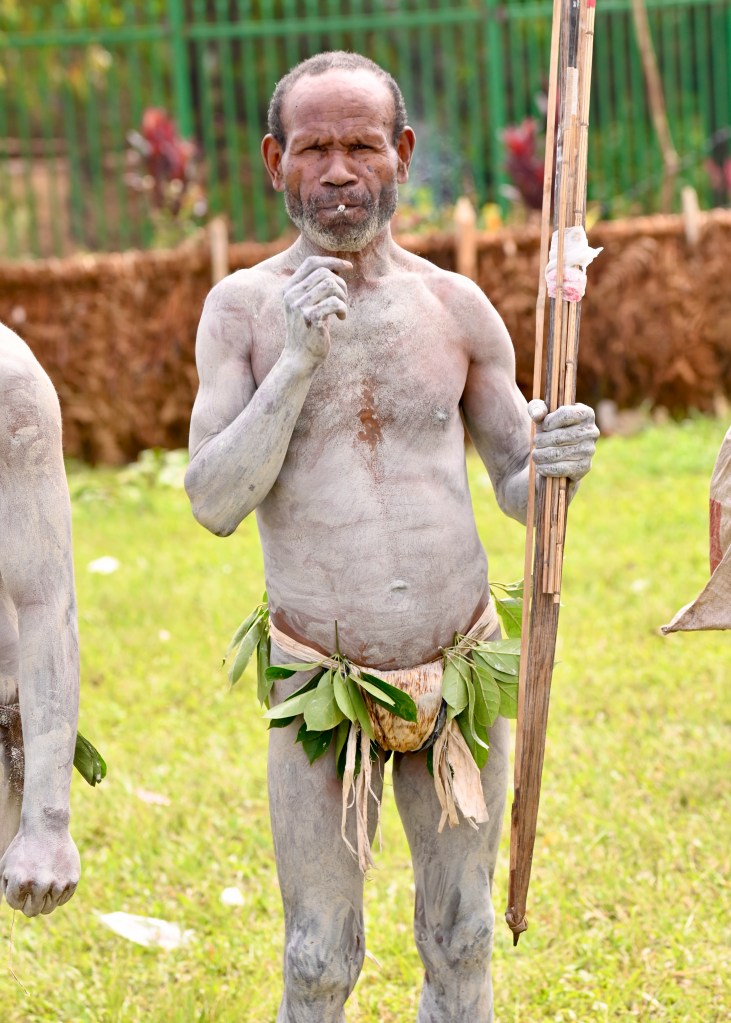
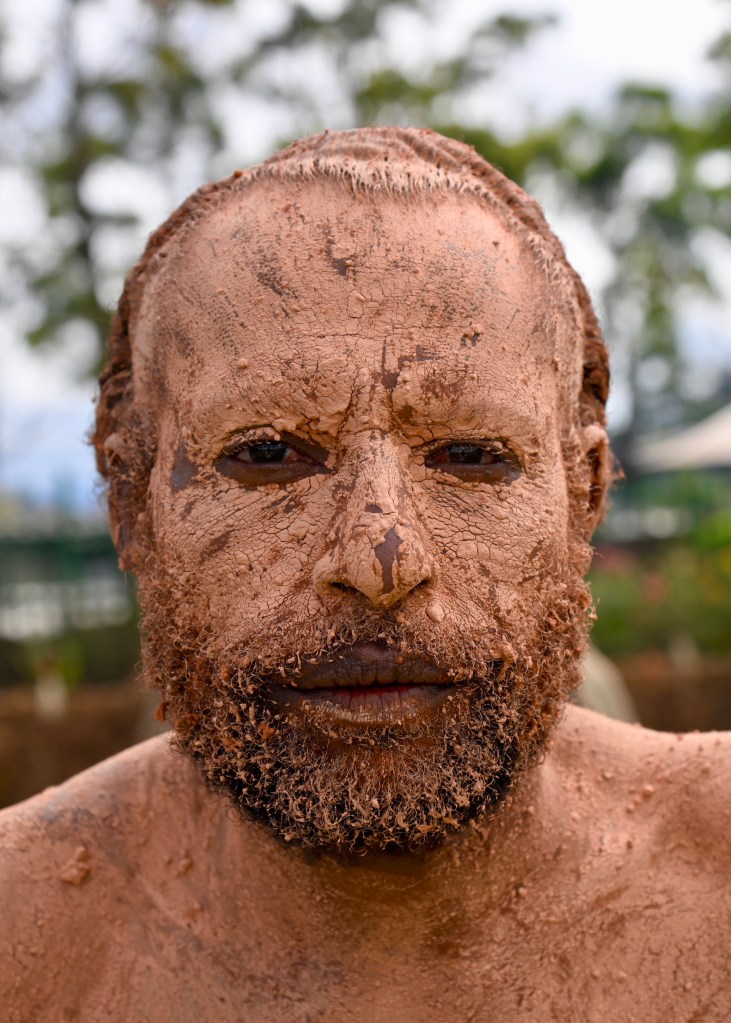
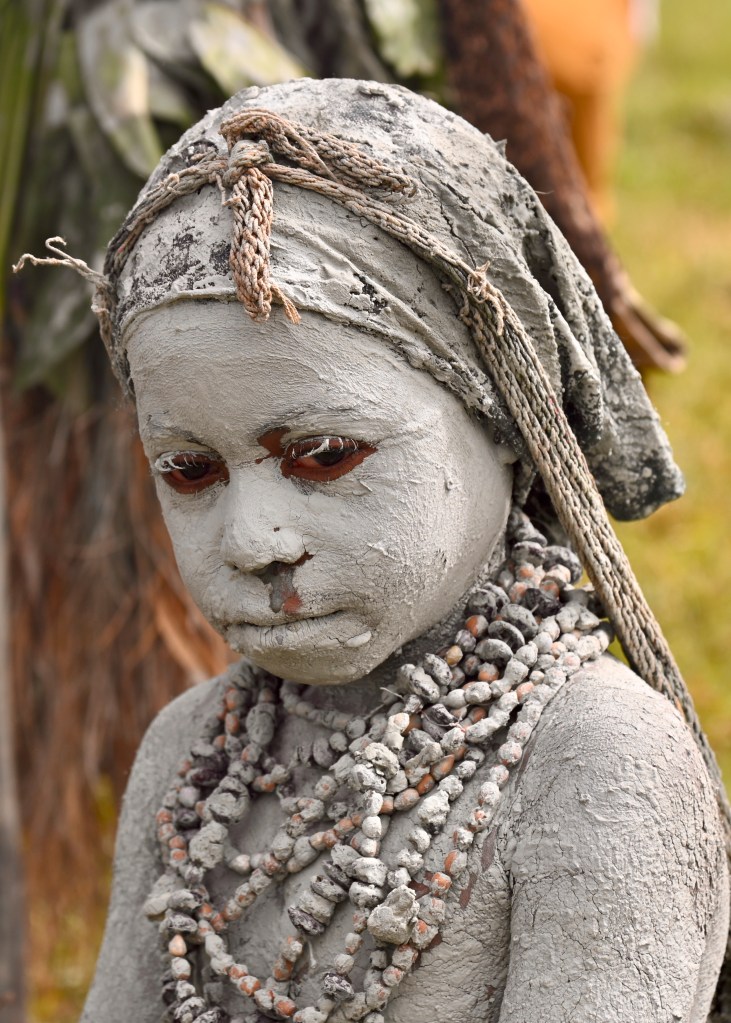
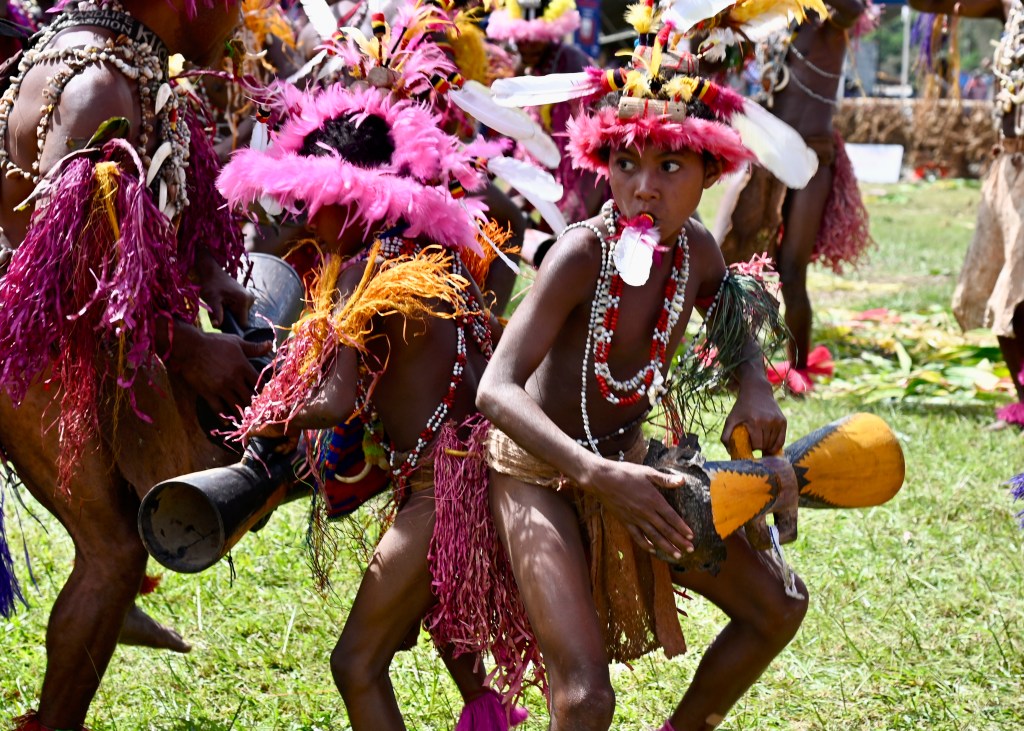
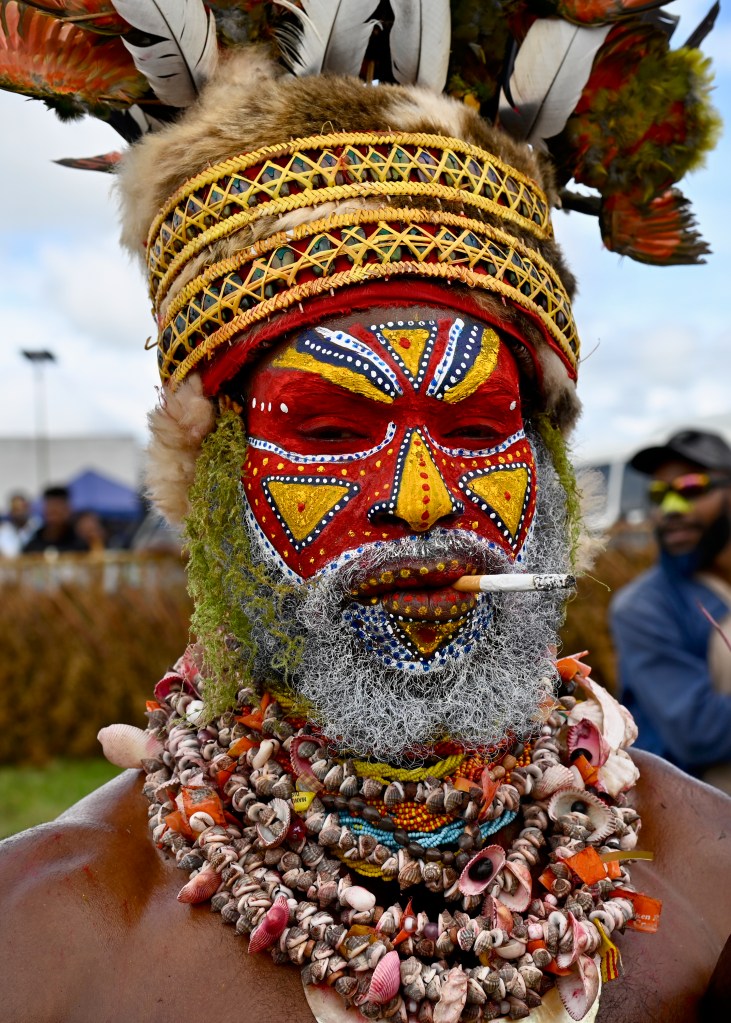
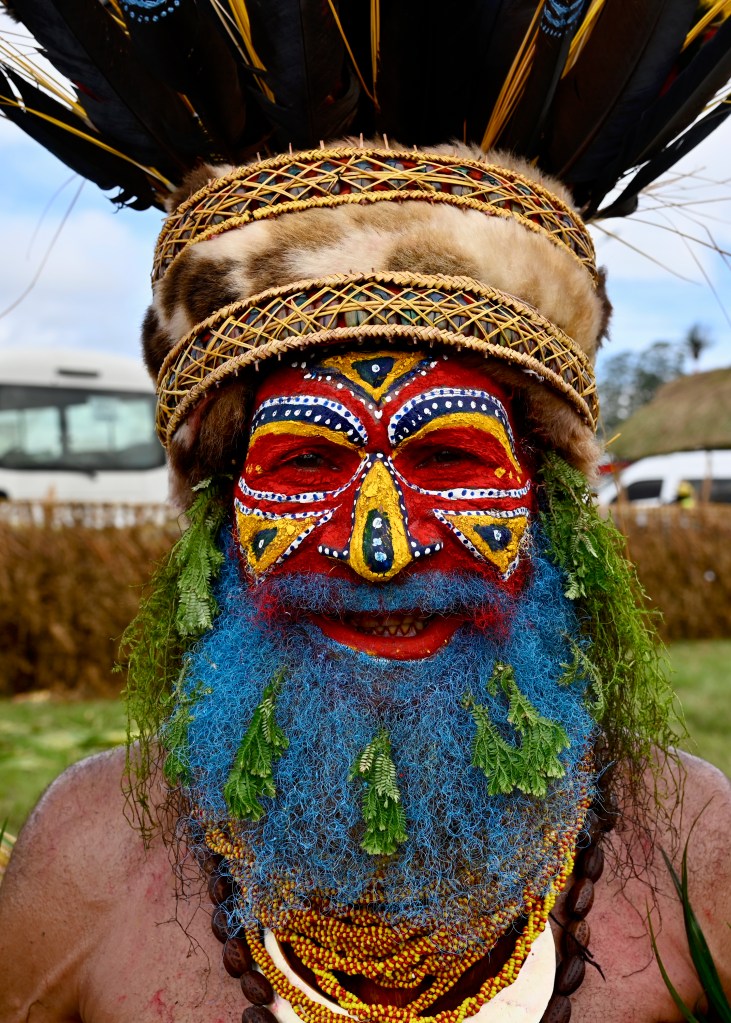
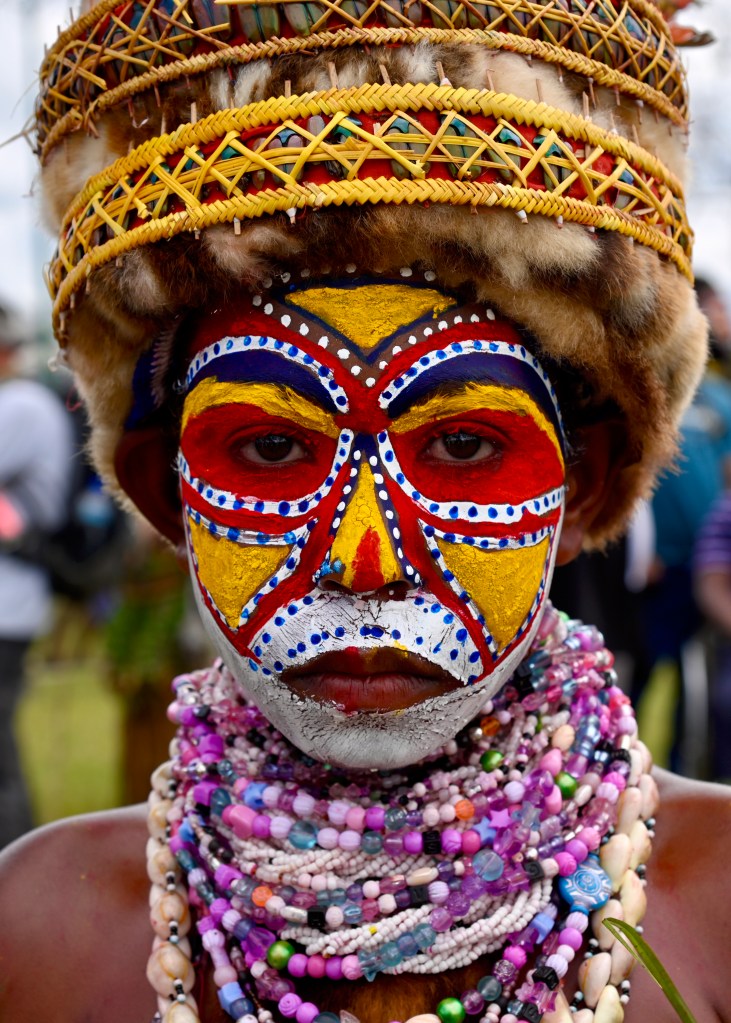
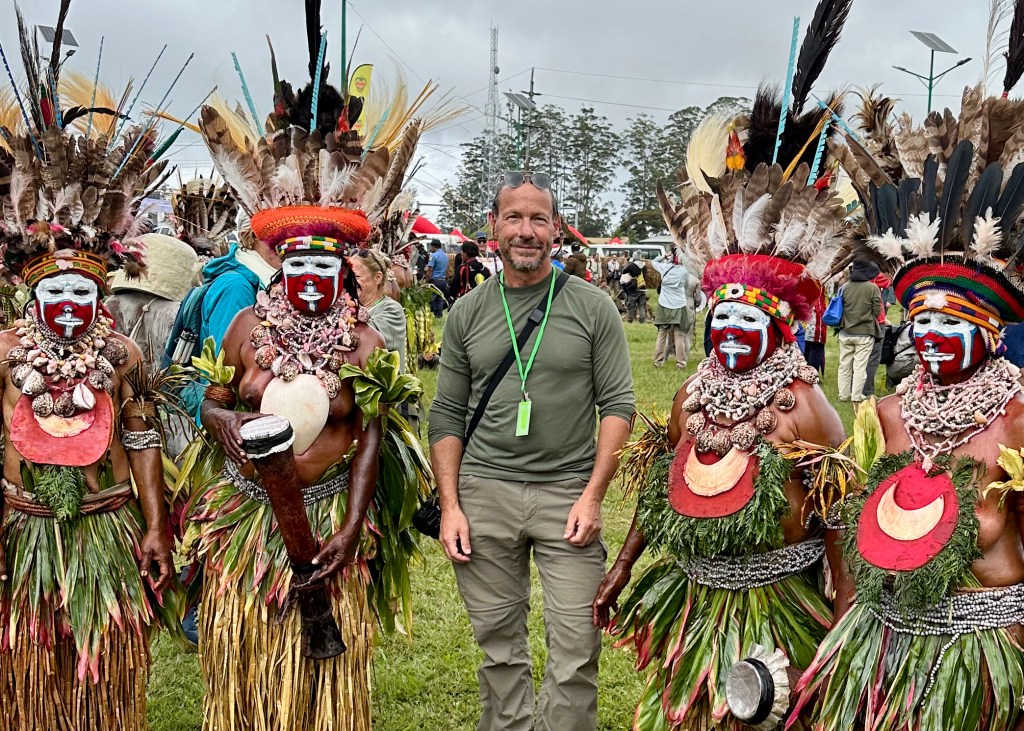
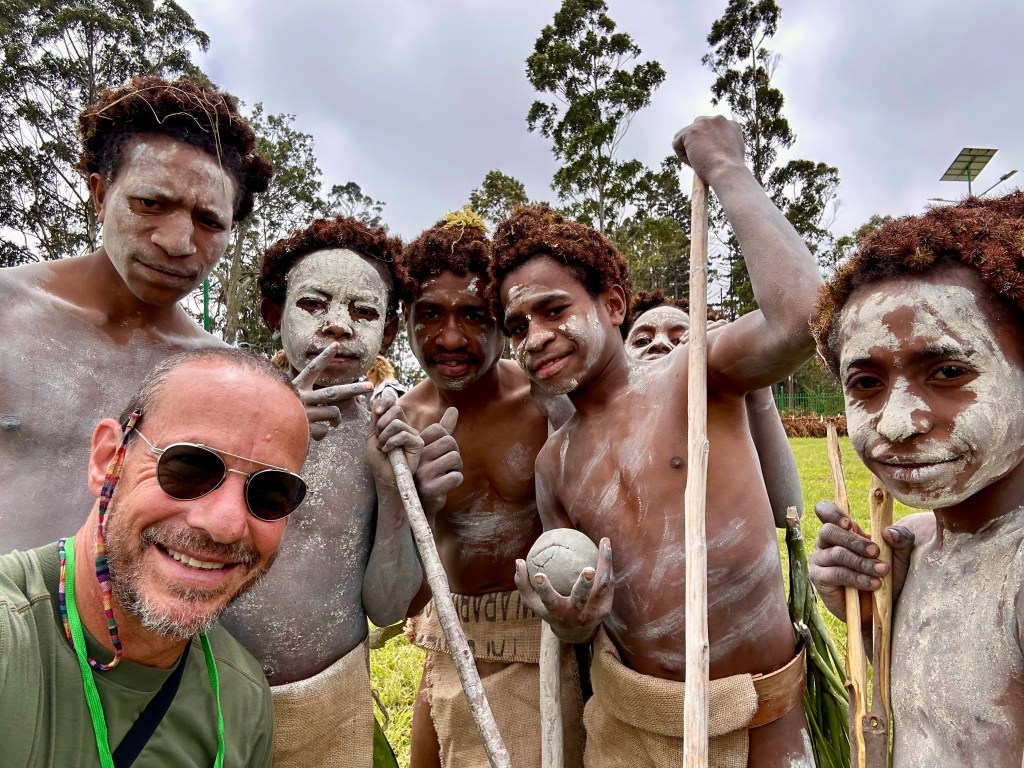
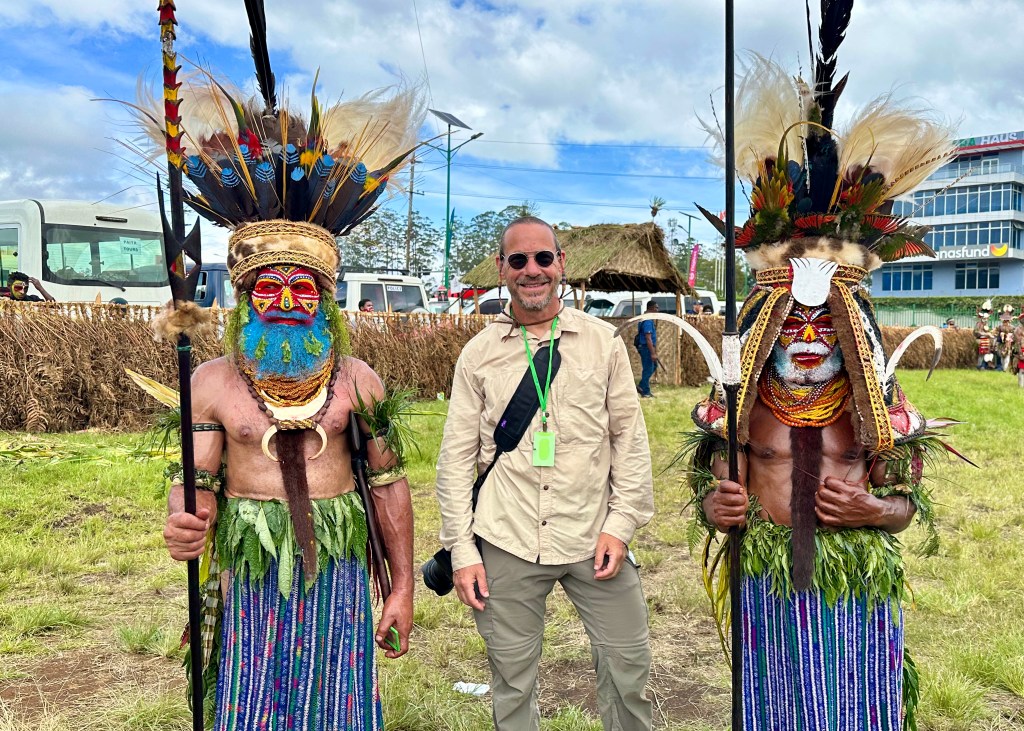
In this large park, there already were around 20-30 tribes gathered – groups of of 10, 15, 20, 30 people each. And, as the day continued, more tribes arrived – with faces painted in fantastic colors and bodies decorated with palms and feathers and beads and bones, or bodies covered with black or gray ash and images of skeletons painted on them, or headdresses of grass and mud, or the Huli Wigmen showing off their headdresses that were expertly woven of human hair, or the Mudmen with their 20-lb clay masks. Men with spears, or bows and arrows. Men and women playing traditional drums that they carried with them as they danced, or drums that sat on the ground while being beaten with small pads or sandals. Tribal members making fires and smoking home-rolled cigarettes. People dancing in circles, or bodies swaying as they sat on the ground and sang and/or rhythmically pounded out a beat, or marching along as they sang and danced, or demonstrating small battles between tribes.
It. Was. Amazing. It was wild. Eye candy. Stunning to the eyes and the ears and the whole body. Just remarkable sights and sounds. The type of experience where the back of your head hurts from smiling so much.
Or, as one of my fellow travelers simply put it, “Wow.”
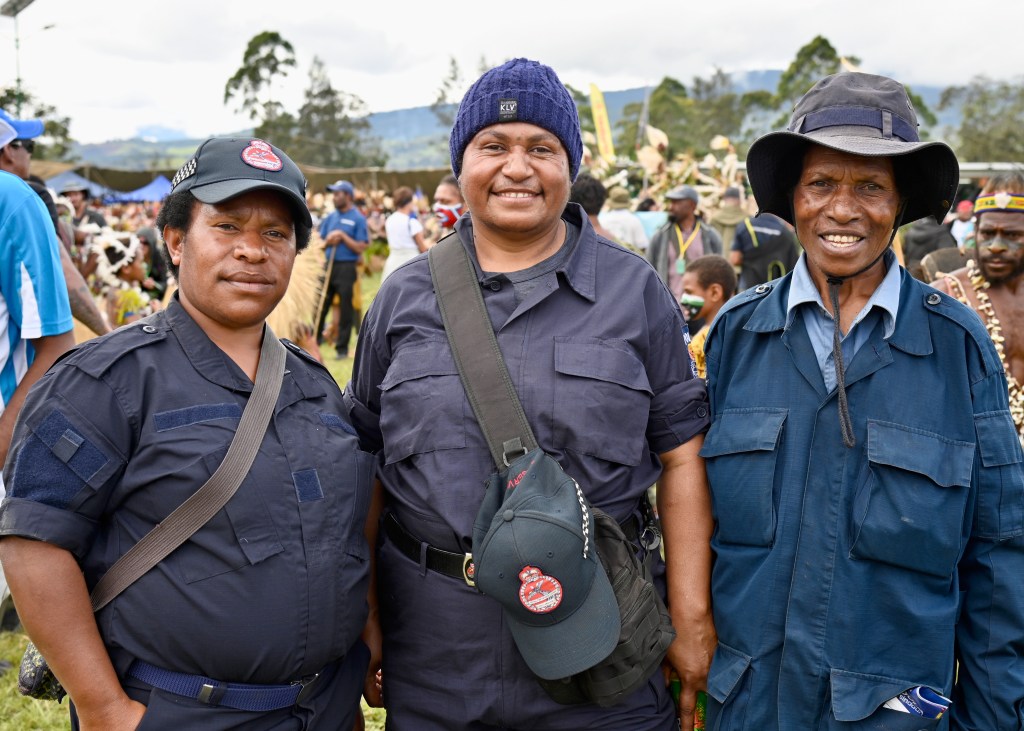
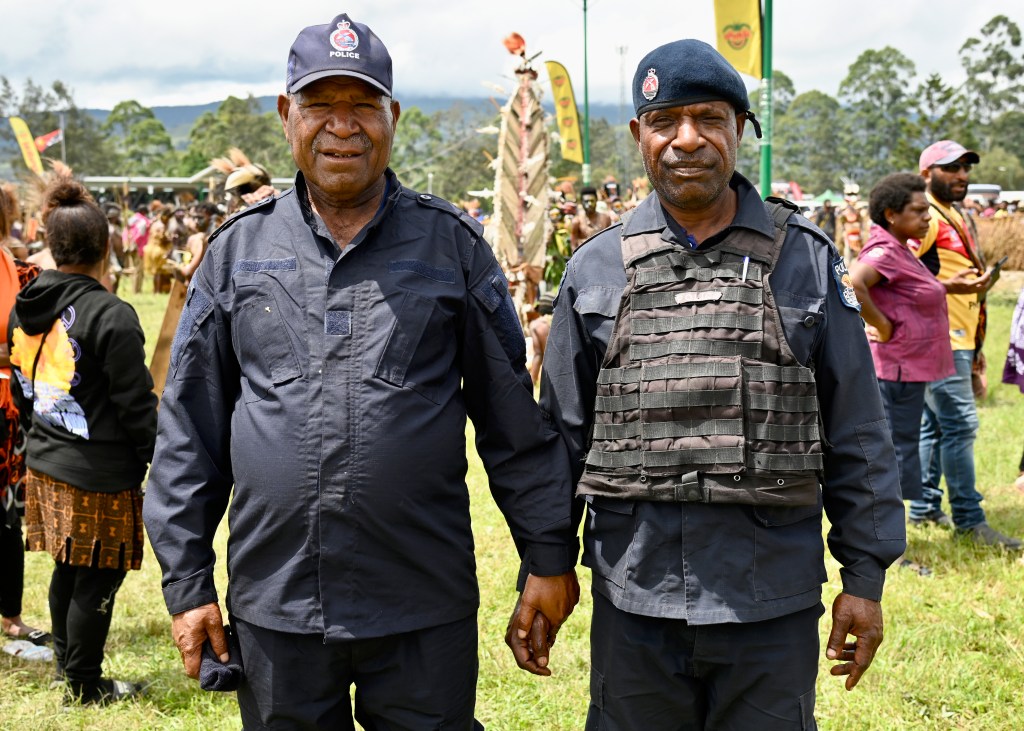
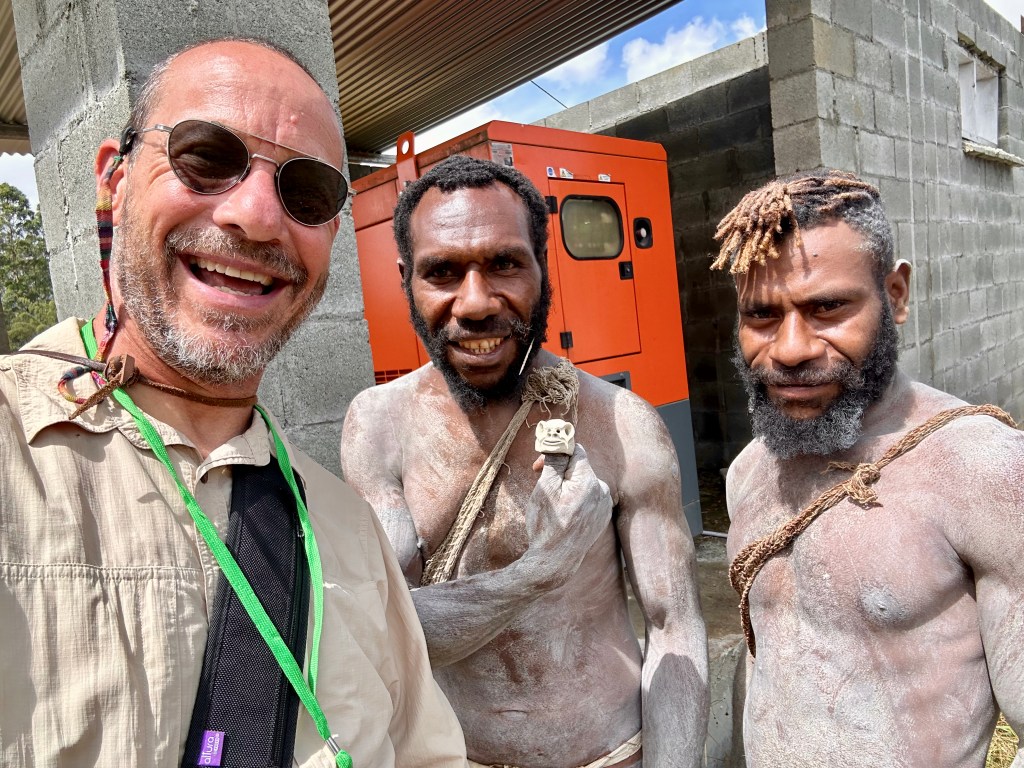
And, as the grounds opened up to the locals, and more tribes also arrived, it became just a sea of merriment and wonder and awe. At dinner that evening, several of us debated how many people were on the grounds, and our estimates went from 5,000 to as many as 12,000. And everyone was in good cheer, and warm and polite with each other (though a local policewoman did warn me to keep my iPhone in my shirt pocket rather than my cargo pants pocket). The tribal members who were performing were very happy to have their pictures taken – posing and prideful in doing so – even some of them asking to have them taken. And, conversely, several tribe members and locals asked me and other international tourists to have our pictures taken by them (“Snap?” someone asked me at one point).
We were able to simply wander the grounds at our leisure, moving from tribe to tribe and working our way through the crowd, waiting at the entrance as new tribes arrived, roaming while we took photos and videos. A stage was set-up at one end of the grounds where speakers stayed at the microphone almost the entire time (frequently to our annoyance) welcoming the tribes, and listing the countries that were represented by the international visitors. Many many of the locals thanked me and my fellow travelers for visiting their country.
And just outside the dancing area there was a display and sale of arts and crafts, like much of which we’d seen in the prior week we’d been in and around the country.
By about 3 p.m. on the first day and 1:30 on the second day, we were exhausted, and departed the Festival. The evening of the first day we headed back to our local hotel – the same place we’d stayed at during our prior stay in Mount Hagen; I met some of my fellow travelers at the bar for a drink before our group dinner. On the second day, we headed right to the airport, and we headed back to Port Moresby for our final evening in Papua New Guinea.
This trip to Papua New Guinea had been based around attending the Mount Hagen Cultural Festival. It was the last thing we really did while in country. And it was incredible.
I took over 1,000 photos and videos in just these two days. I’ve tried to keep the selection relatively small but representative as well. Some browsers will allow you to right-click on each of the images below so they show up larger in a new tab.




 Fred's Travel Blog
Spectacular! So much color and contrast and the smiles are amazing, thanks Fred….I really appreciate the effort and imagination you have put in to all these posts and pictures!
LikeLiked by 1 person
Thanks so very much – and thrilled you’re enjoying it so much! It’s hard to put into words and pictures just what these experiences are like, but I’ll keep on trying!
LikeLike