
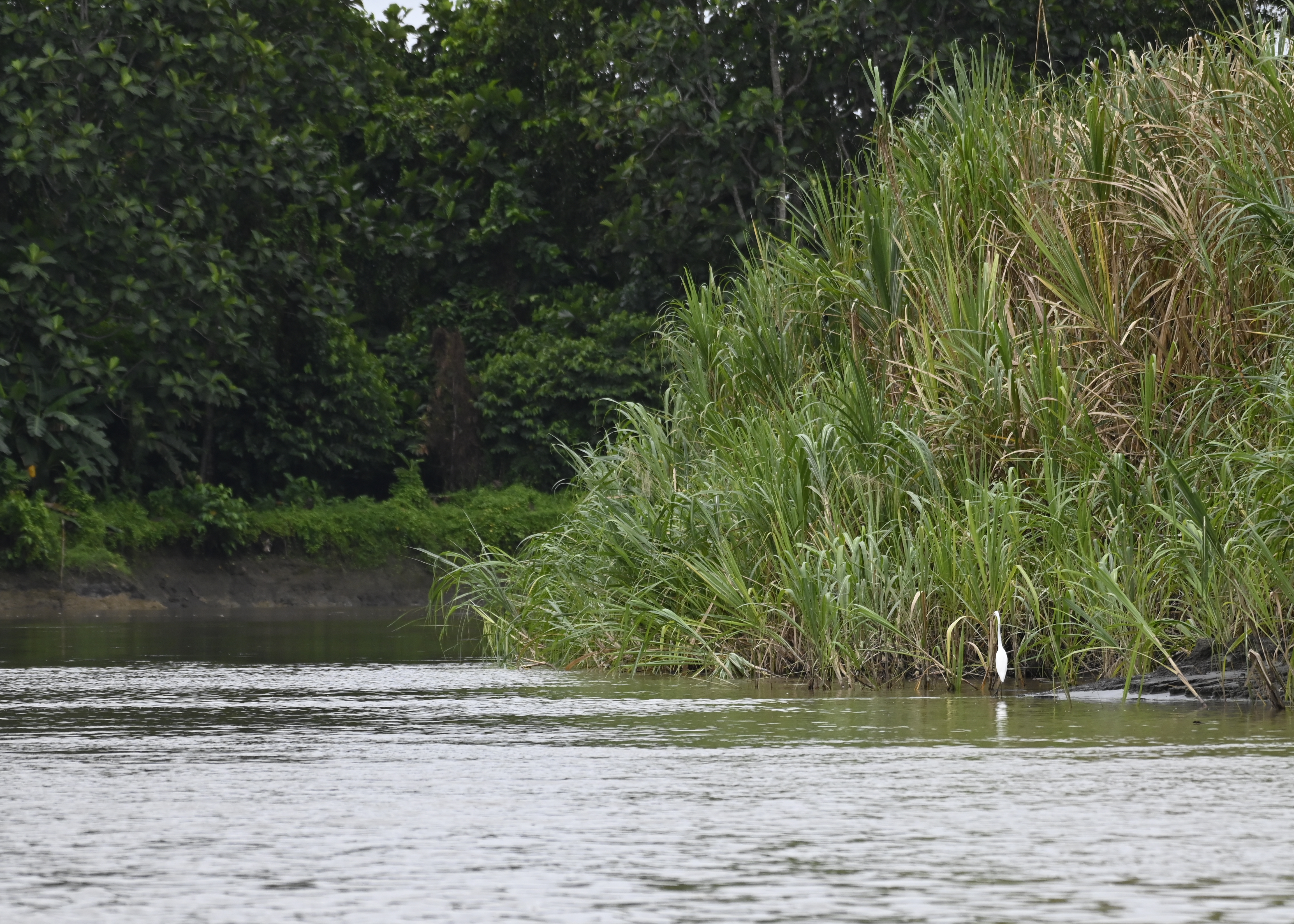
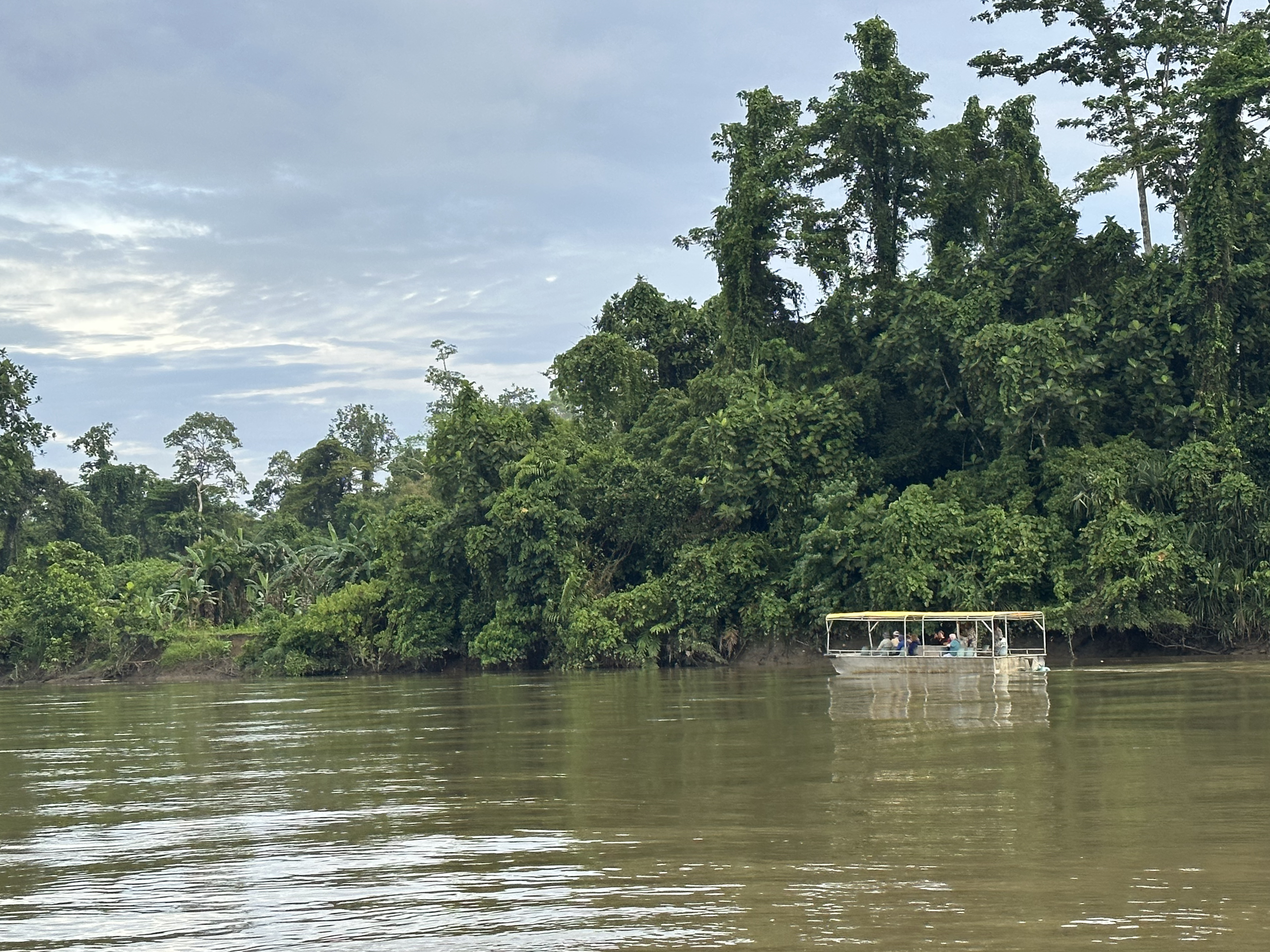
On the morning of day ten, we cruised a bit north on the Karawari; the river opened up a bit, stretching to perhaps 100 yards wide. The grassy shoreline continued to be dotted with tall trees. Egrets sat in the grass until they heard our boat begin to get close, at which point they’d take off – usually going in the same direction as the boat – so that we almost always only got photos of them flying away. There were some fish eagles and cockatoos (too far away for my camera to capture them well), and other birds. It was cloudy and overcast this day, maybe in the 70’s and not too humid.
It would be our last full day out on the river system here in the East Sepik Province, as we’d be flying back to Mount Hagen early tomorrow.
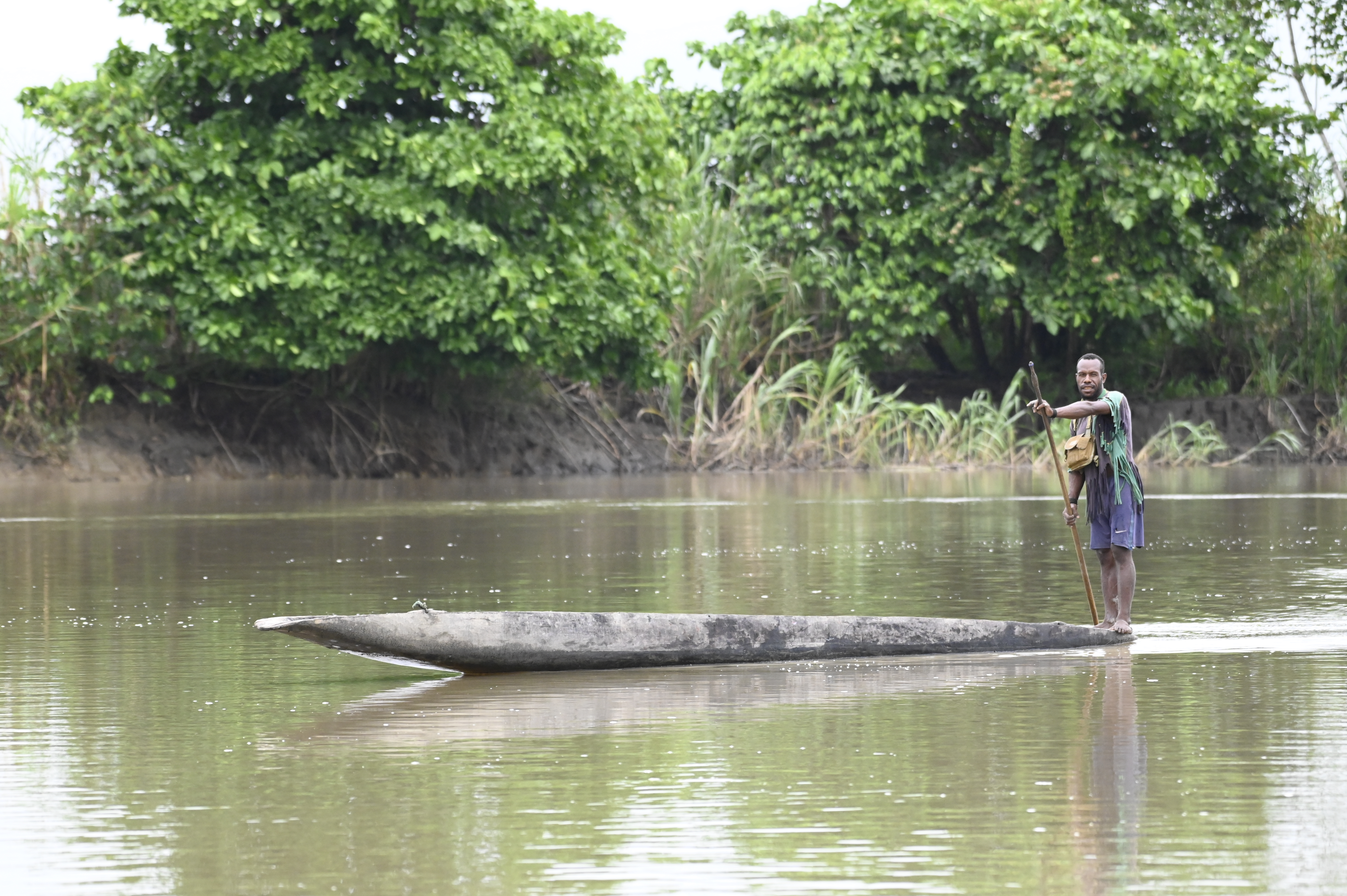
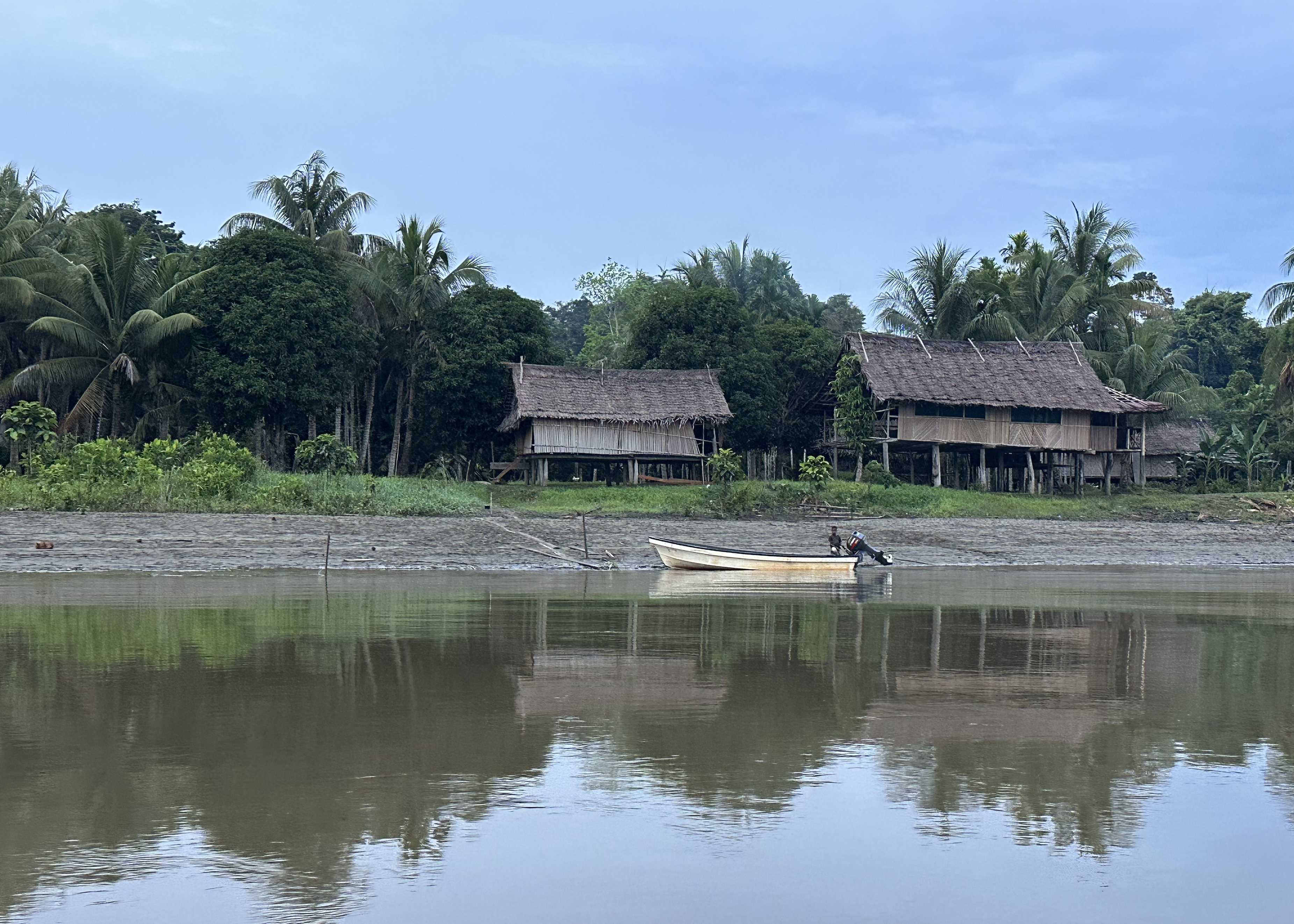
Our first stop was the Mindimbit village, apparently populated by the Iatmul (or “Yatmul”) tribe, of which there are two clans and, for us then, two stops. Combined, the two locations included about 500-600 people.
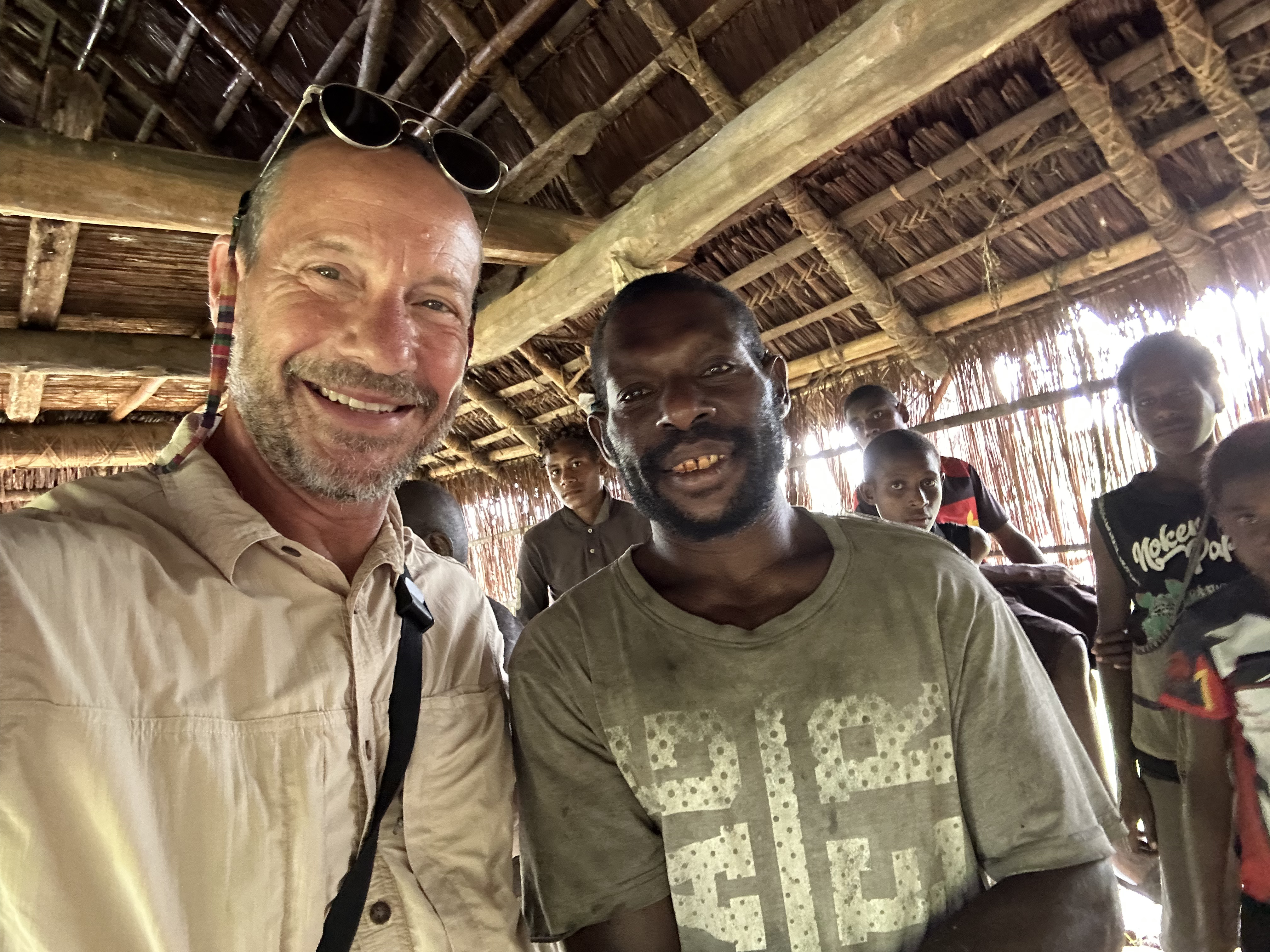
The first stop was so that we could see a demonstration of how disputes are resolved among tribal members. One of my travel mates is a very successful attorney, who had served multiple times as a first chair trial lawyer, so for him this was absolutely fascinating. We entered a men’s spirit house. The two sides of the dispute – a handful of men (it would never be woman, as we asked and were answered) – stood on either side of an intricately carved stool. The stool was not for sitting; instead, it was a protecting and presiding spirit on which sat a bundle of leaves. Each side would take turns explaining their side of the story – in our case, a man was accused of cutting down a tree on another man’s land. As emphasis in making a point, the speaker would strike the stool with the leaves, sometimes leaving a few of the leaves on the stool as his argument progressed. The other side of the dispute would then take-up the leaves and make a counter argument. This could go on for hours or even days, as was explained to us, until – finally – agreement was reached or a chief made a final ruling.
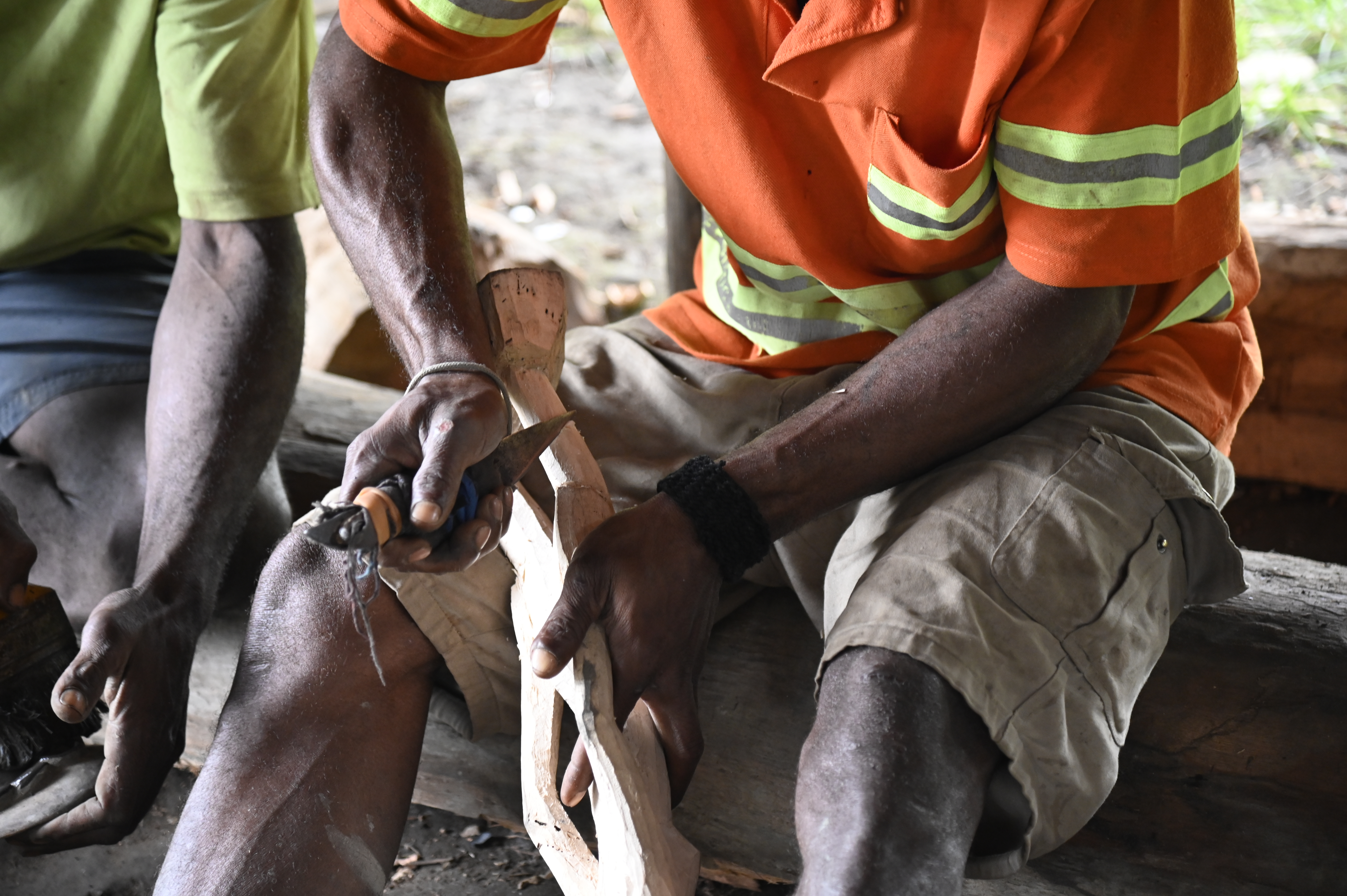
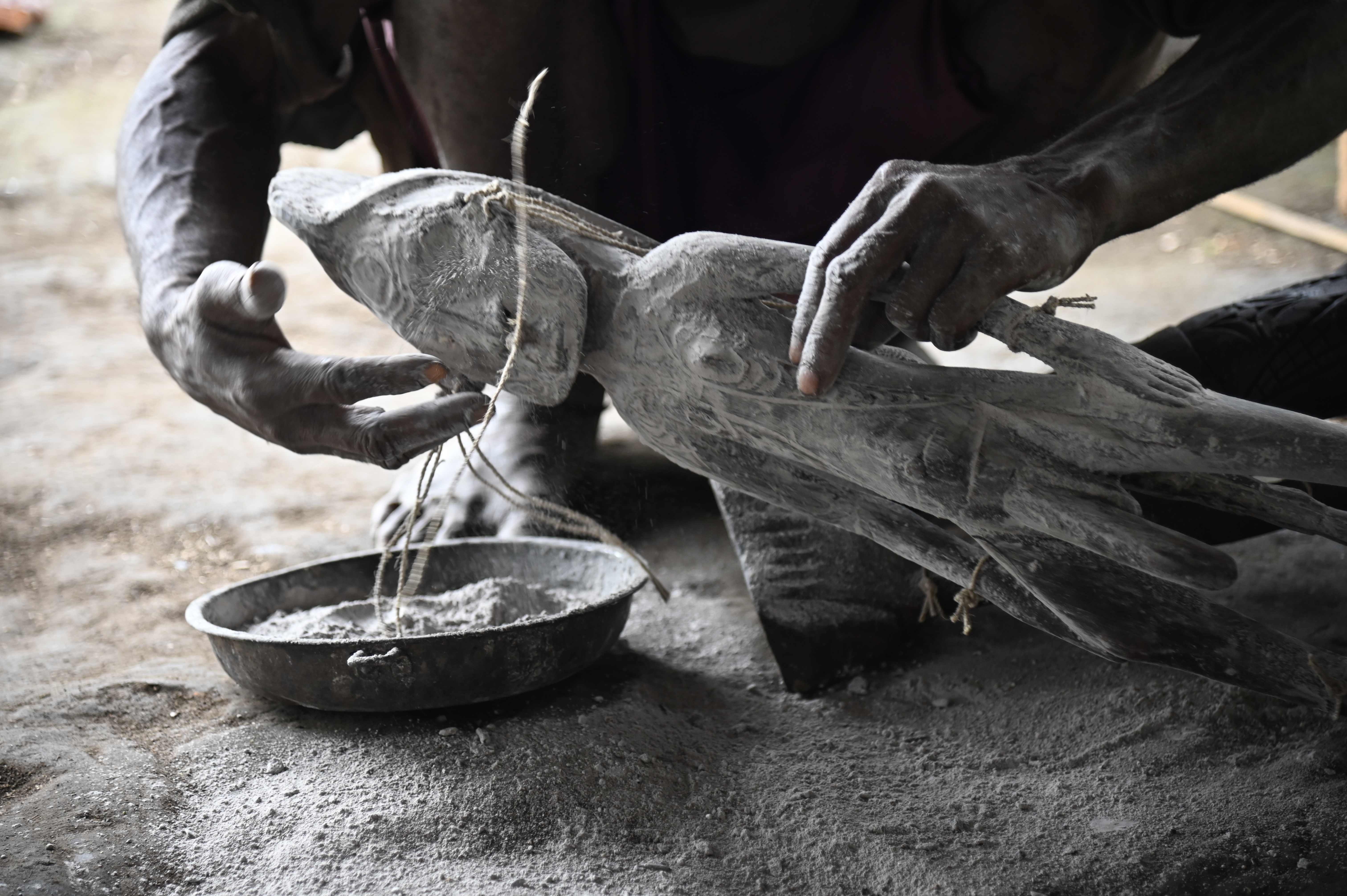
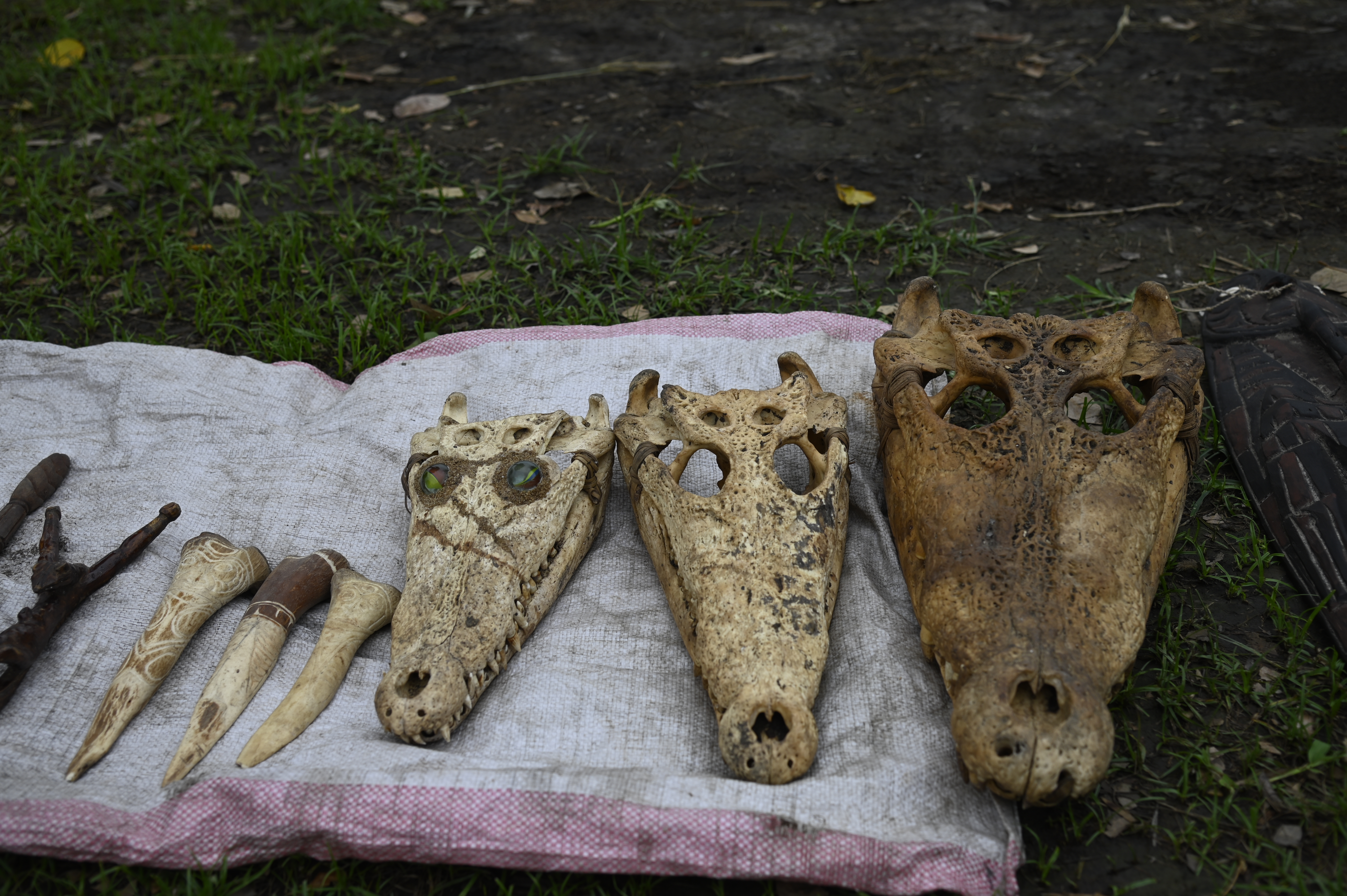
At the second stop, we saw and watched how a set of intricate carving was done – with an axe for rough-cutting, and finer blades for more detail, to painting with a type of oil as a finish, to – finally – a covering in ash to age the piece. This village is well-known for its carving, and we saw incredibly intricate and large examples – include a pair of 8 ft long serpents and a totem representing the village, both of which were being carved to fulfill an order placed by someone from Thailand. The cost of the carving would thus have to include shipping – from the village where we were (Mindimbit) by river to the closest city – Wewak, the capital of the East Sepik Province – and from there to wherever.
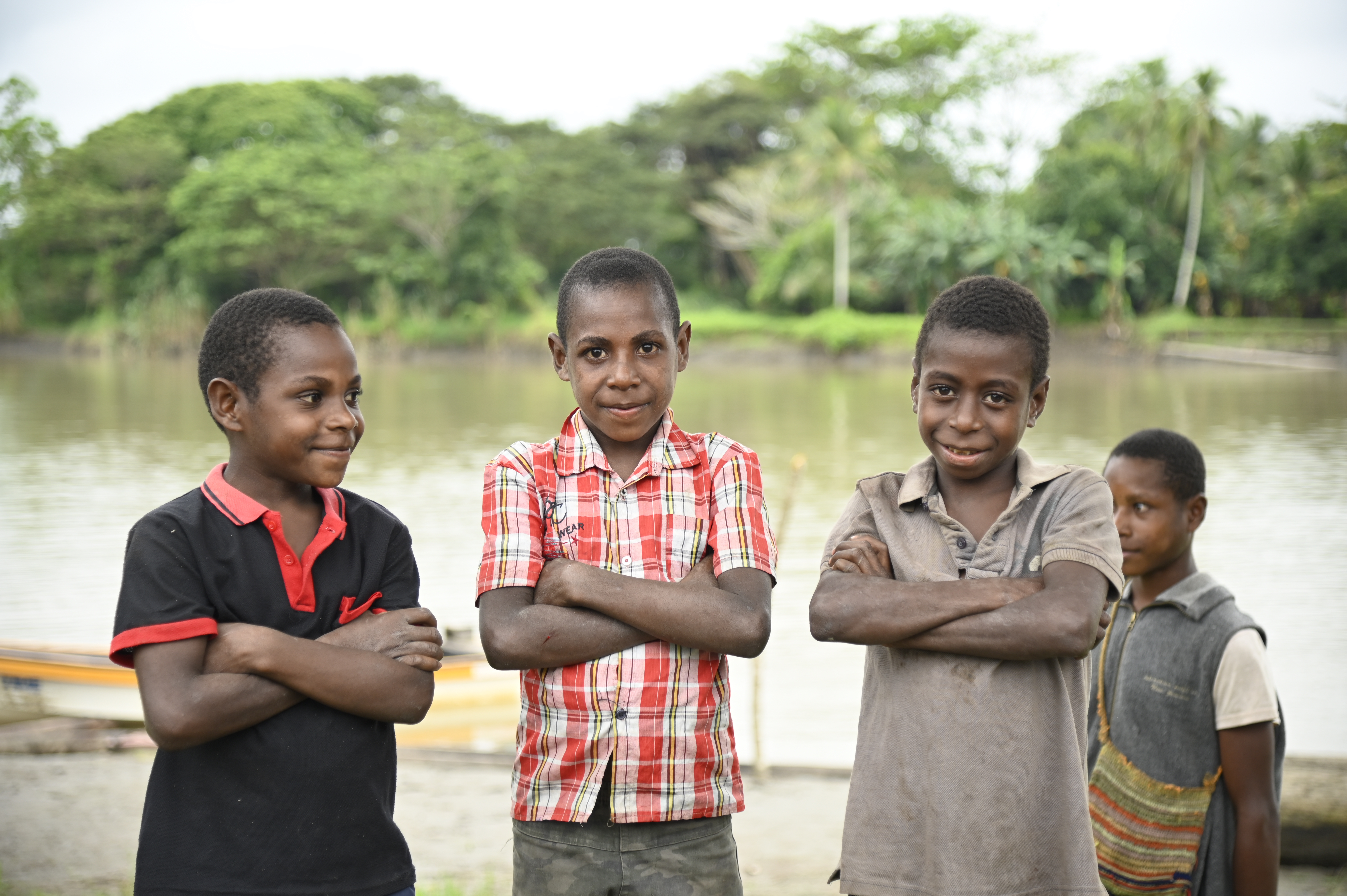
After the second visit, we stepped back onto our boat to return to the Sepik Spirit. Our driver – Brian – continued as he always had – going along the shoreline to flush-out birds, slowing down for photos as he saw us pull-out our cameras, and always careful when he saw locals nearby in their canoes so as not to rock them with our wake; the one exception to that rule was when there were children swimming on the edge of the river near the bank – they loved the wake Brian created and directed, when he could, toward them. He worked hard for our experience, and I came to think of him as the safari driver of the river.
We had lunch on board and then proceeded on the Sepik Spirit so that we would be positioned further south on the Karawari for our morning return to the airstrip. Along the way, we hopped back into the flat-bottom boat for one last stop: a small village where we’d get a chance to see a crocodile farm.
Our imaginations went wild. We envisioned what you might experience in the Florida everglades: multiple large crocs in a gated set of cages built into the river, with raw chicken carcasses nearby so that they could be tossed to the crocs so we could watch their ability in catching them and strength and voraciousness in eating them.
That’s not what we saw.
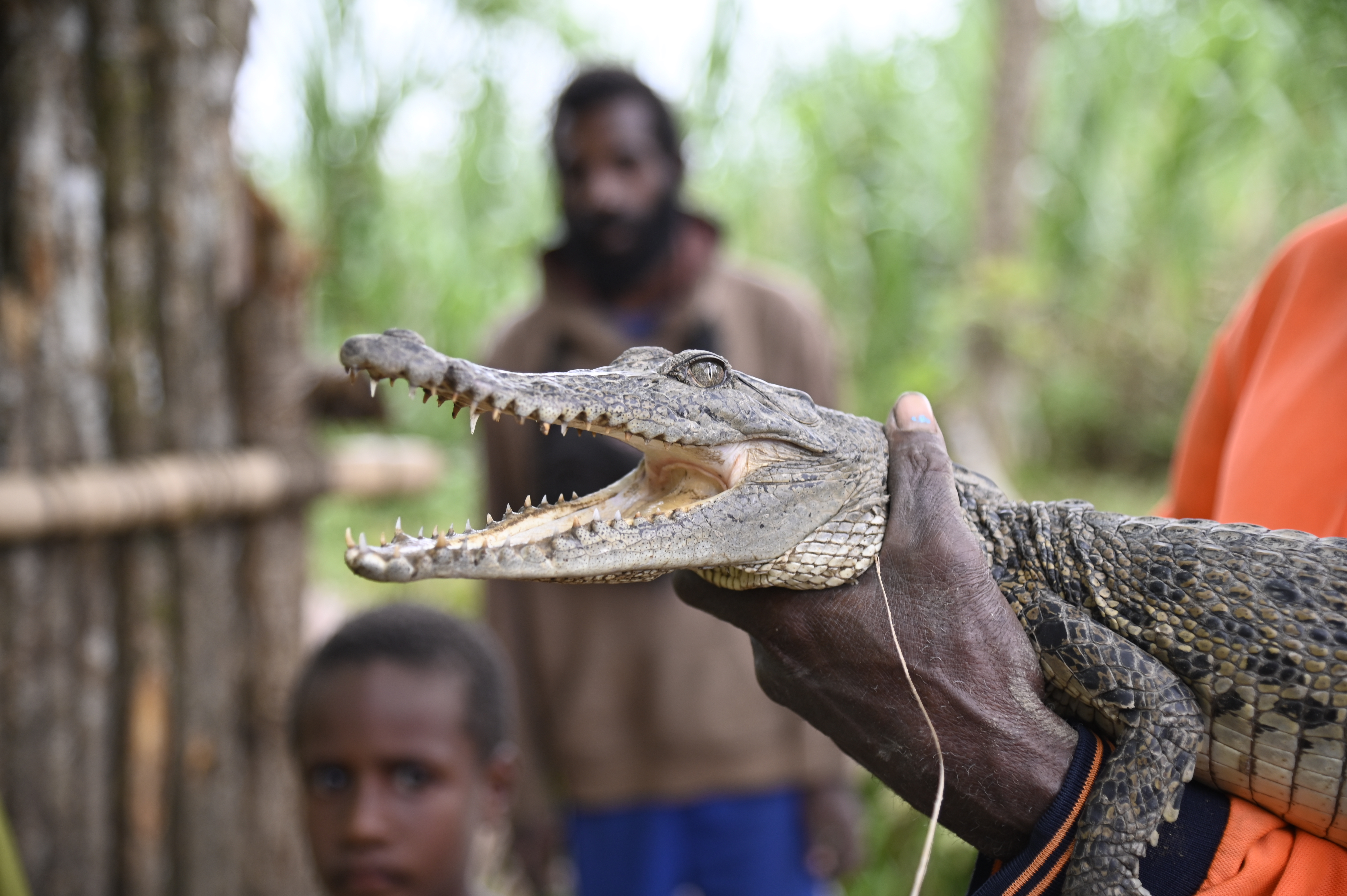
There was a 3-ft square enclosure, with the fencing – about 3-ft tall – likely made of sago palm wood. Inside were three freshwater crocodiles. A small one, a slightly smaller one, and a much smaller one. Gratefully, the keeper of the beasts pulled the two larger ones out for us to see. He offered the medium-sized one to hold to those of us who so dared. So – done! But I wanted to hold the larger one. The keepers thought for a bit. They then grabbed some reeds from a nearby plant and slowly wrapped them tightly around the end of the croc’s snout so that it couldn’t open its mouth.
They carefully handed me the big guy (for whatever reason, I thought the croc was male). All four feet of him. He was hefty but completely docile, and I posed for some pics. Then another of my travel mates – the same woman who had led our touching of the large dead croc on the boat’s deck the prior morning – also wanted to hold the croc, and she did with the obligatory pics. Then her husband – the attorney who had been fascinated by the dispute resolution – wanted in on the action. His wife carefully handed him the croc, which immediately began to urinate, getting some on the poor guy’s shoes and shorts and camera. I’m sure there’s a joke to be made about a lawyer and crocodile pee, but I’m not smart enough to come up with it.
We once again boarded The Sepik Spirit, continuing our journey back south to a spot from which we’d take the flat-bottom boat back to the airstrip in the morning. For the rest of the afternoon we relaxed in the boat’s lounge, reading, editing photos, chatting. After dinner, I stayed in the lounge talking to the crew, who were interested in seeing photos and hearing stories from some of my prior trips, so I shared with them tales of Antarctica, my chimpanzee and gorilla treks in Uganda, and my most recent trip to Bhutan and Nepal.

Day eleven started with breakfast at 4:45 a.m. so that we could leave for the airstrip by 5:30 or so. That departure was delayed until about 5:50, and we left on three flat-bottomed boats: two to handle our split group of 14 people, plus the third to handle our luggage. This was done so that each of the three boats could move a bit faster than usual.
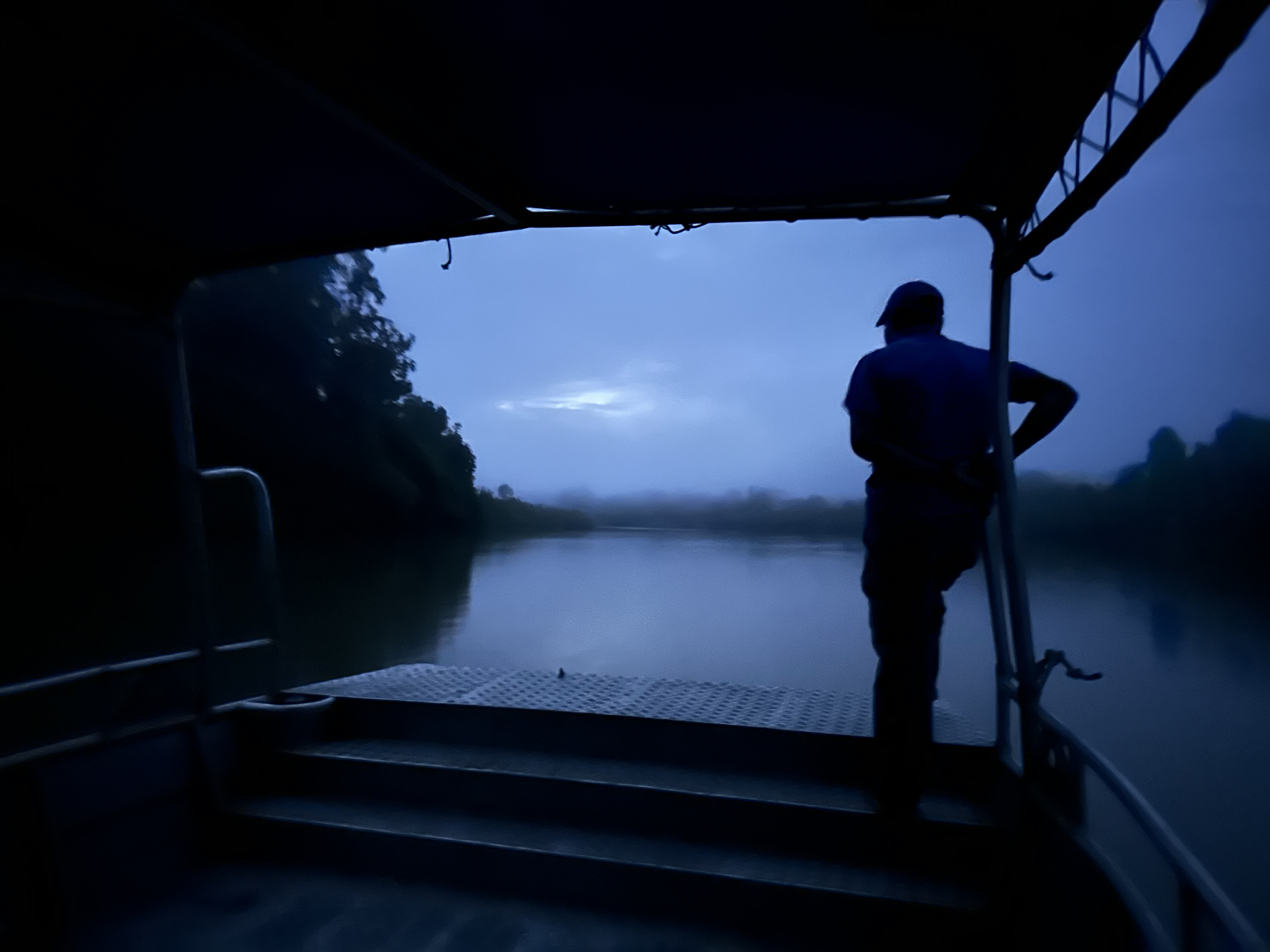
It was pre-dawn when we left, almost completely dark as there only was star and moon-light on the river (I have one video of about 30 seconds that is nothing but blackness). The drivers, though, could see well enough, and the light gradually came as we continued south. For the Vietnam vet who was with us, he later told me this was another time for him of quiet contemplation: a 150 ft-wide river, edged by jungle, in the morning mist. One of my fellow travelers commented that it looked like a Monet painting. As the sun rose, we began to see life along the river’s edge – birds, people, and fish snapping at bugs on the river’s surface.
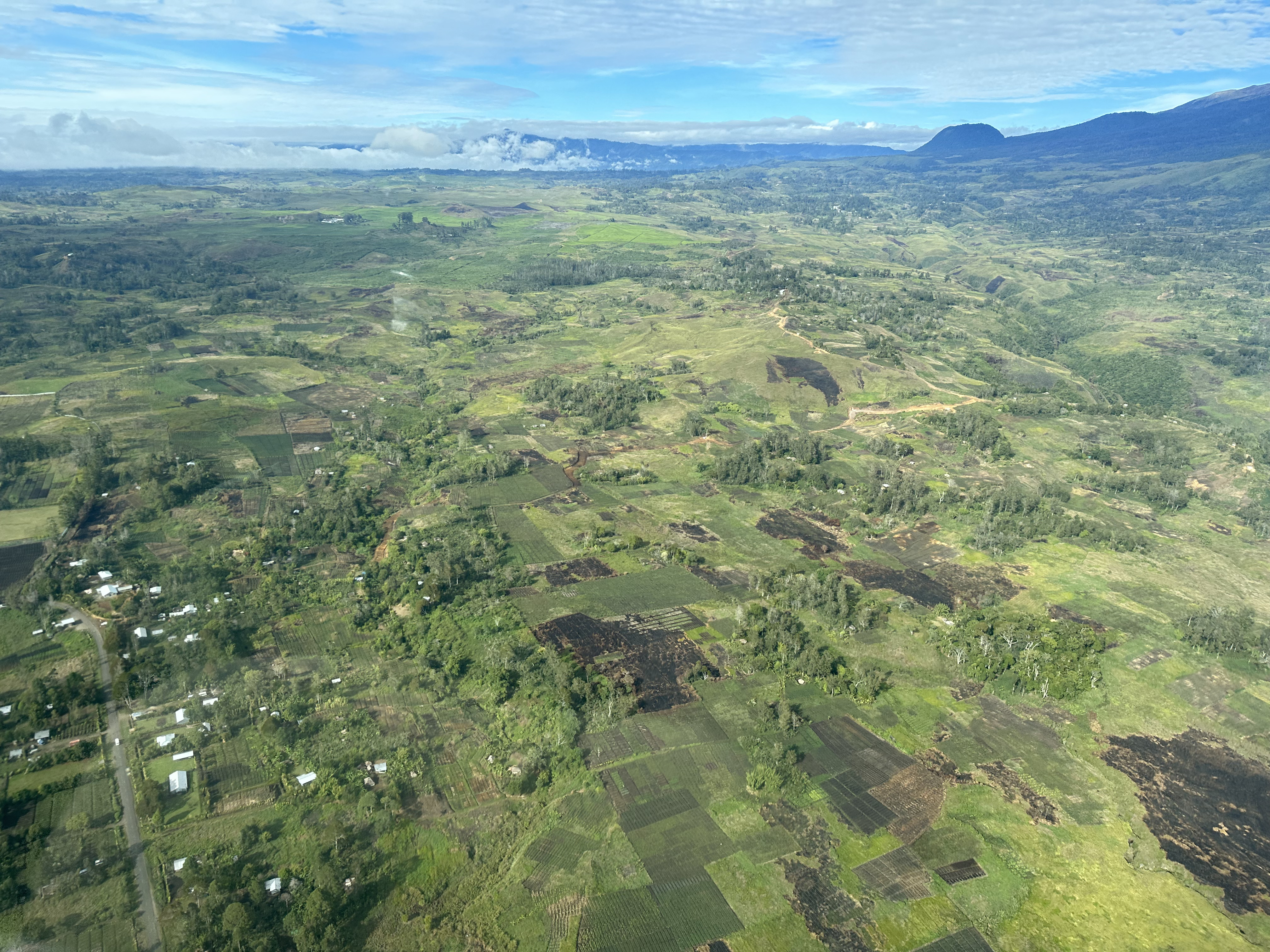
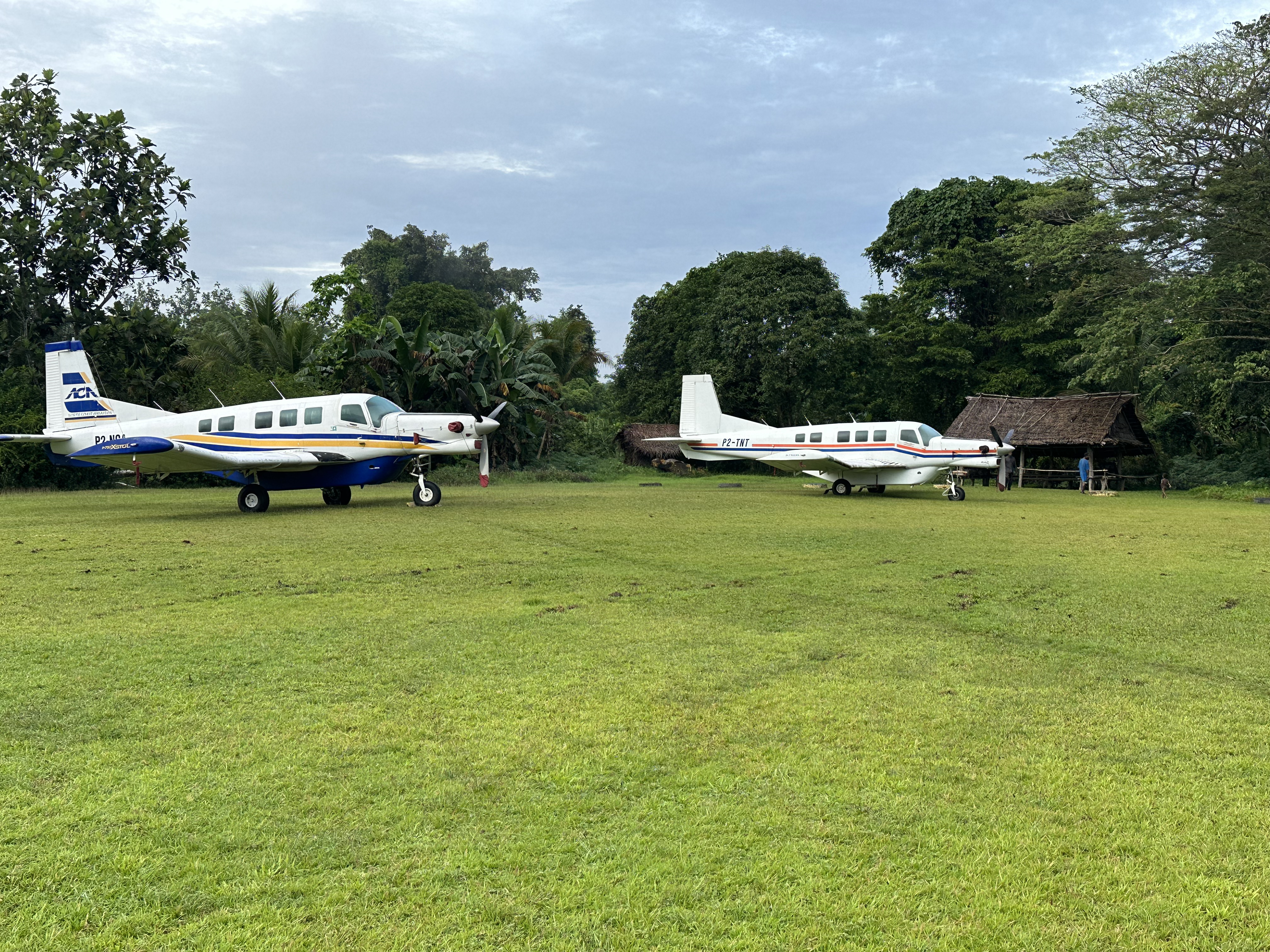
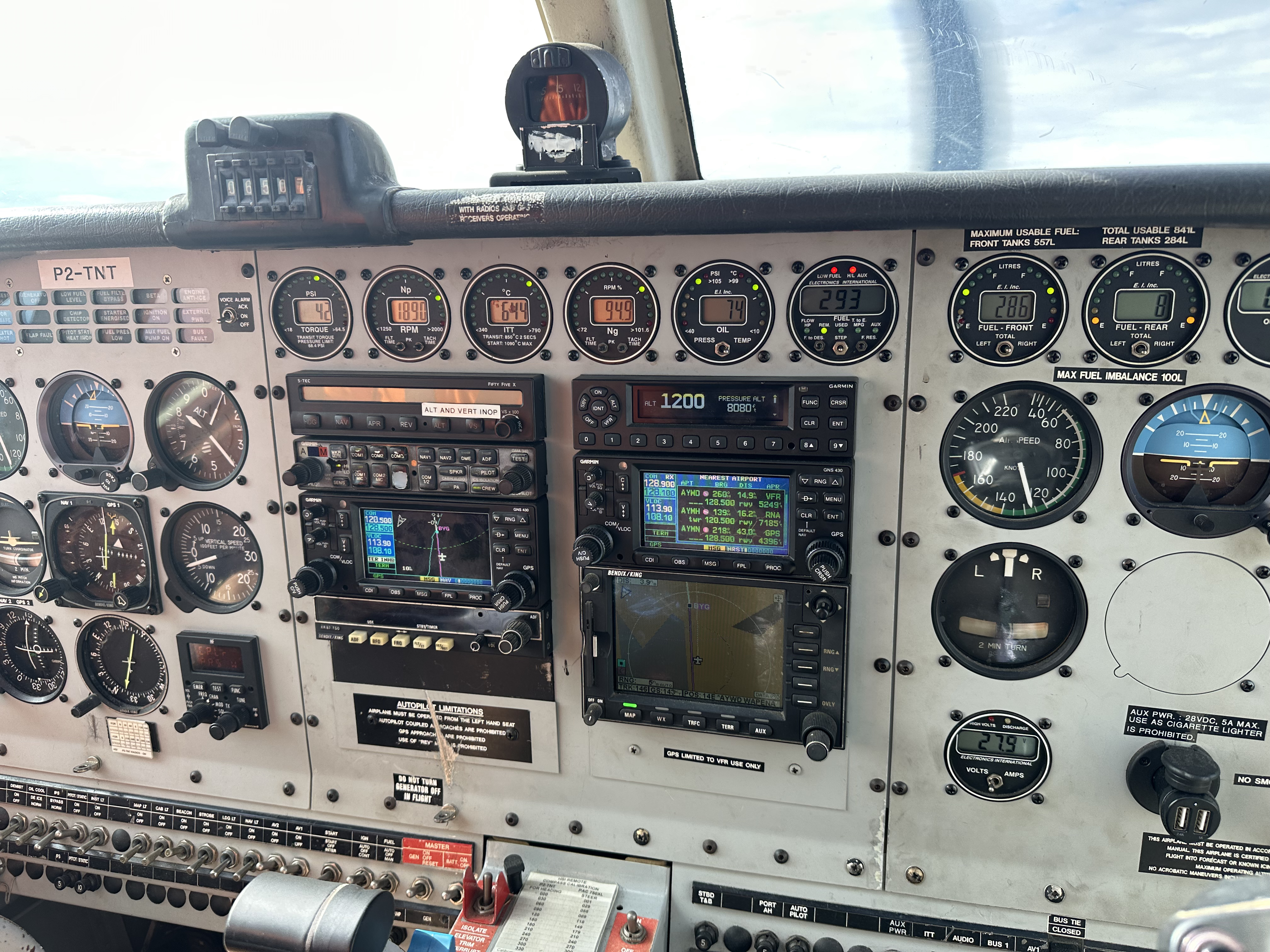
We arrived at the airport in time for a scheduled 7:30 a.m. departure, with our group of fourteen split between two flights along with two other passengers. I got to sit in the co-pilot’s seat alongside Sam, the same New Zealander who had piloted our inbound flight just a few days prior. I rode with the headphones on, careful not to touch any of the controls or pedals, and Sam explained how the measure of altitude worked as we flew (the plane gathers information on air-pressure – which has a constant as altitude increases, and the instrument displays that calculated altitude). As the green hills and mountains of the Western Highlands Province began to rise-up in front of us, Sam also explained had the Highlands – where we were headed – had the best agriculture in the country, with fruits and vegetables from there shipped throughout PNG, and we could see the large number of small family farms from the air.
We had some concern that the Mount Hagen airport – where we were headed – might be too cloudy to land at, but Sam had told us there was another strip nearby we could use if that happened. As we flew, though, Sam pointed out how the wispiness of the tops of the clouds in the distance was an indication to him that the clouds were lifting; he spotted a hole in the clouds where the Mt Hagen airport was, and we headed directly there. The gap broadened as we got closer, and we landed at about 9 a.m.
What we did over the rest of this day and the next I’ll save for my next post.
[Clicking on an image below will enlarge it in a new window]


Oh this great big world you’re letting us see…..amazing! You’re the best!
LikeLiked by 1 person
Ah, gee, thanks Dan. You’re my biggest fan!
LikeLiked by 1 person
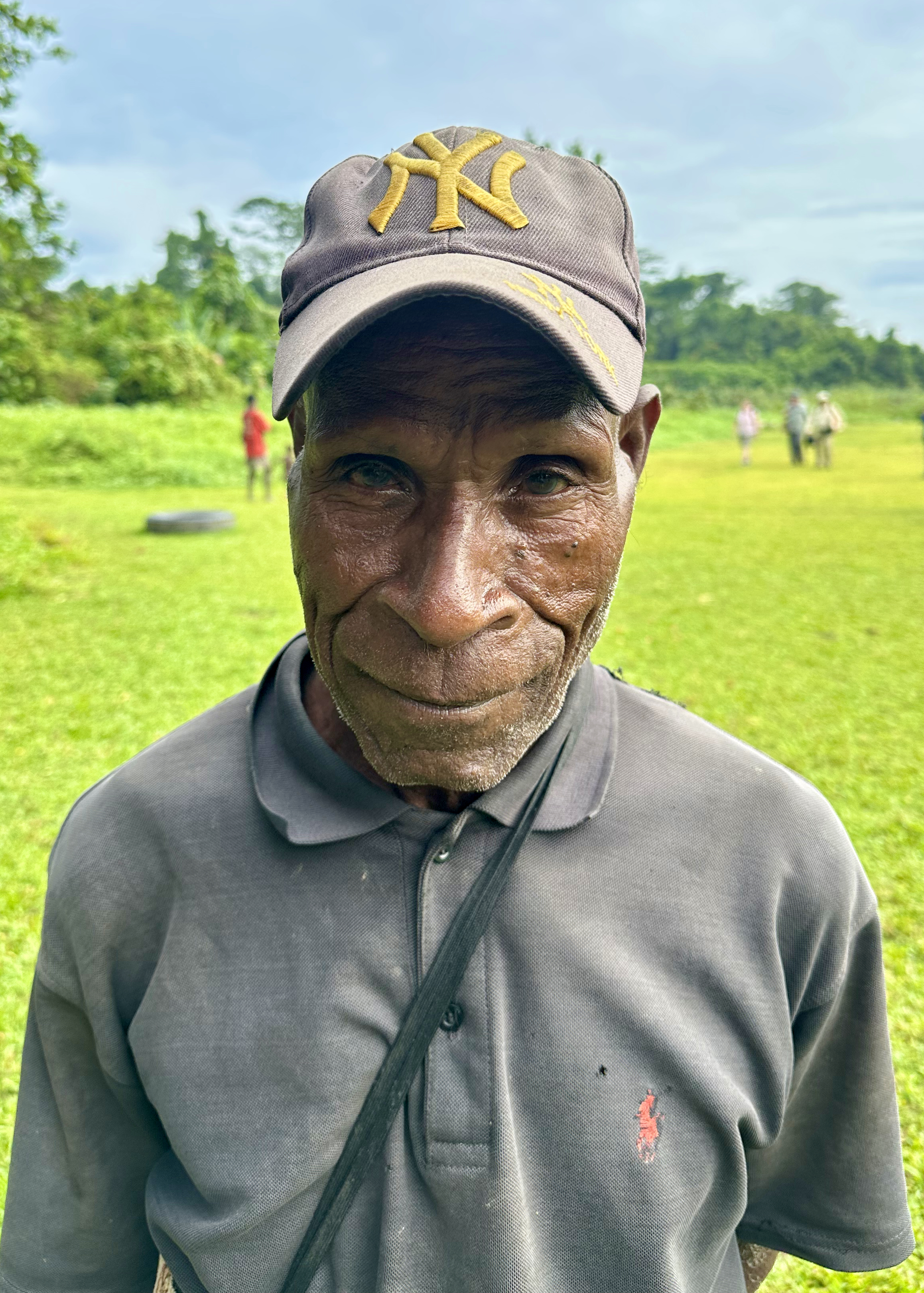
and a Yankee fan!
LikeLike
It’s a global brand baby!!! If he even knows who they are!
LikeLiked by 1 person