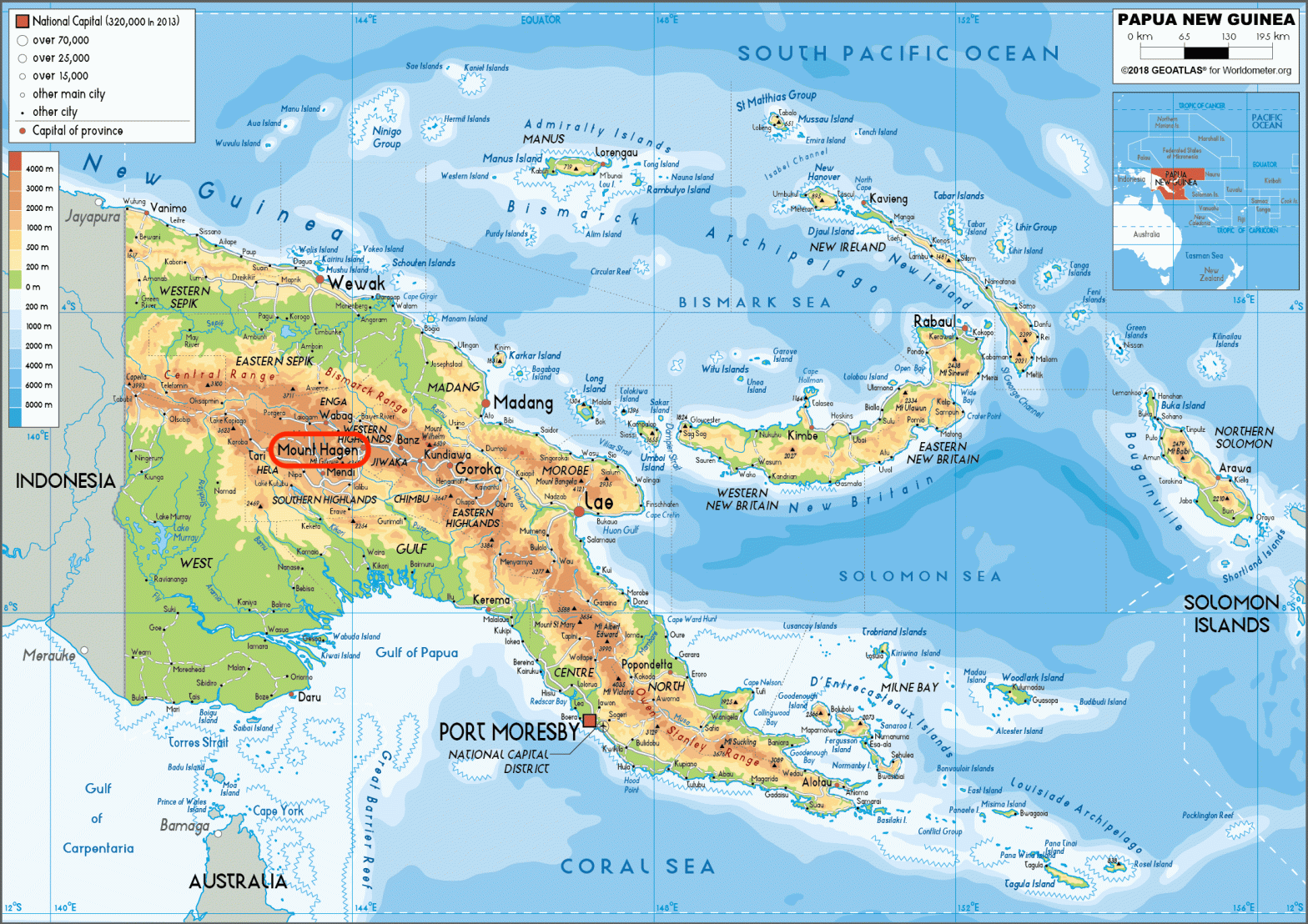
Day five started with an early flight from Port Moresby to Mt Hagen, a city in the Western Highlands province. The flight up took about an hour and the airport sits at about 5,500 feet, while our lodge, which overlooks the Wahgi Valley, sits at 7,100 feet.
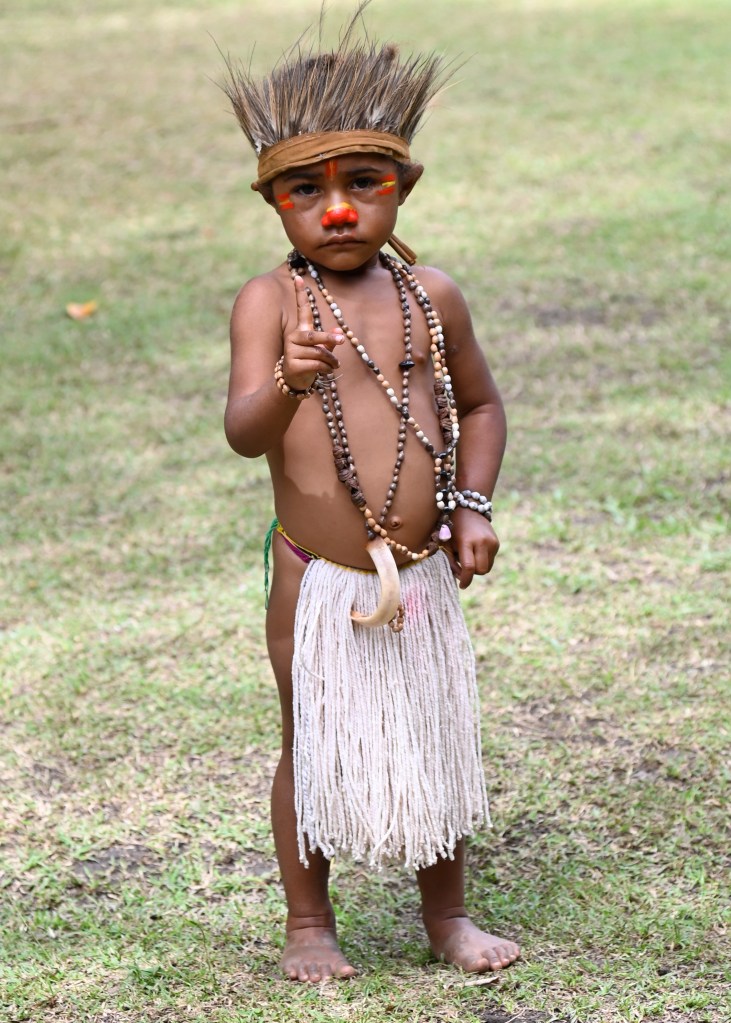
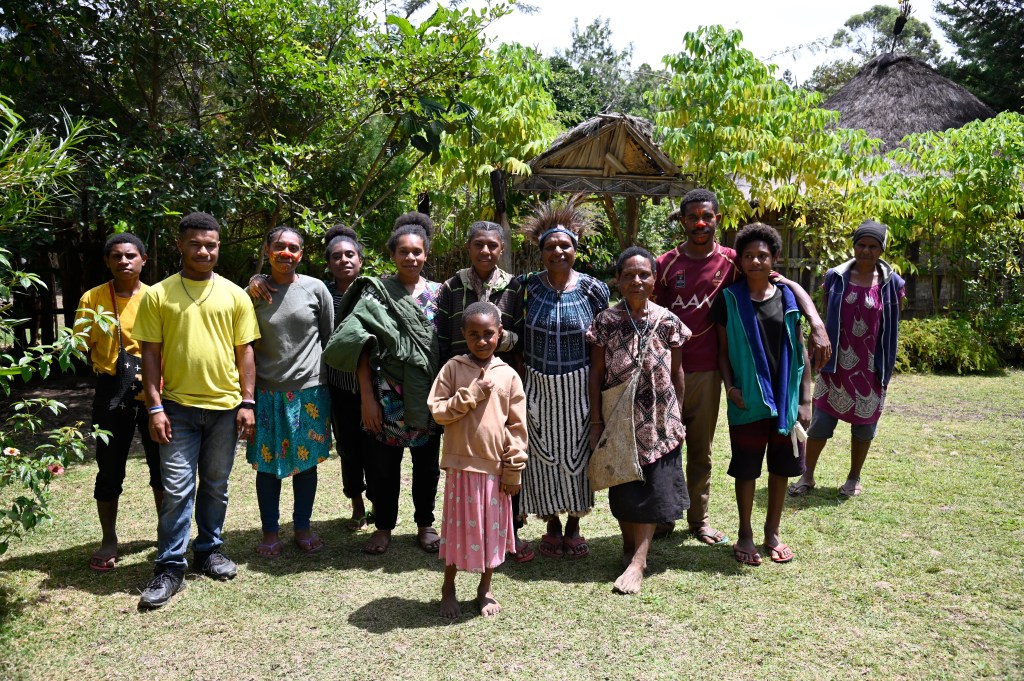
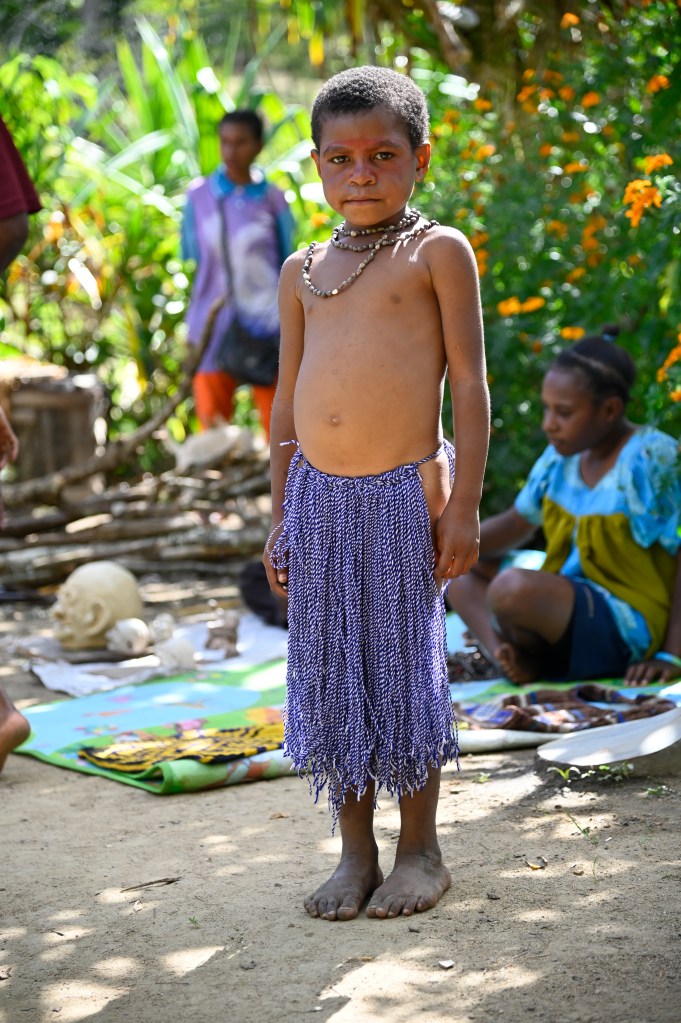
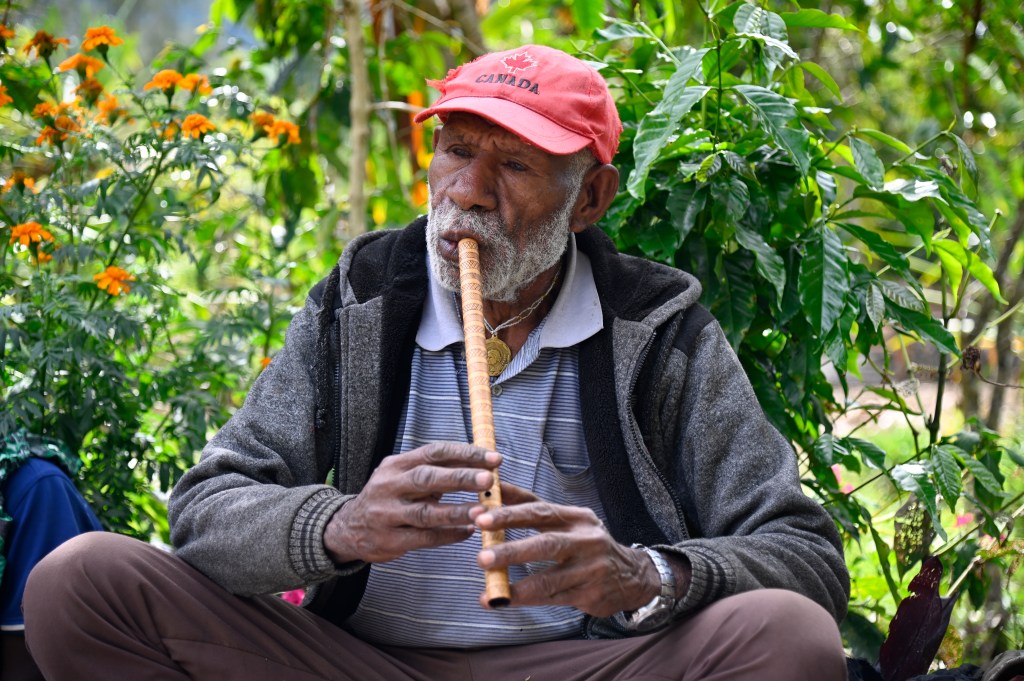
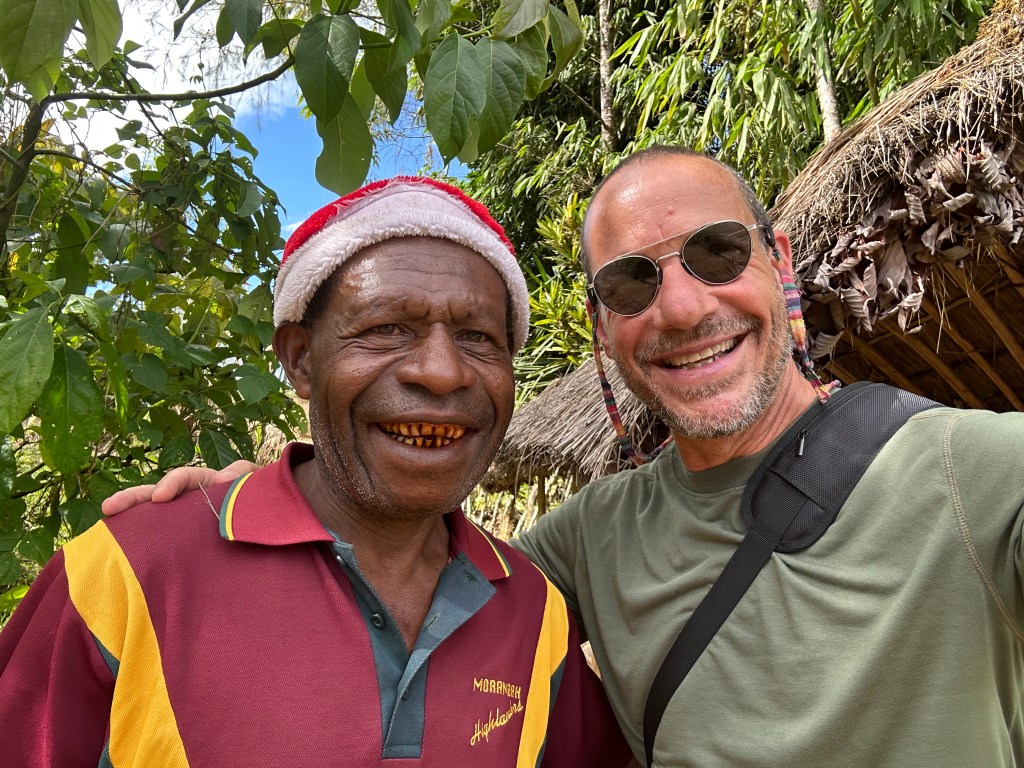
Our time over the next few days will be taken up by excursions to villages around this region and the other regions we visit. The wide variety of tribes and traditions and cultures will give us the chance for lots of interaction with locals. The tribes we saw on day five, and I suspect on other days as well, sit in a place between the modern world and traditional culture. Apparently, most of the country is Catholic (though we say many churches of a wide-variety of denominations – Baptists, Evangelicals, Seventh-Day Adventists, among others) and that religion is blended with long-held traditions. The villagers we saw yesterday were a mix of clothing – western blended with tradition; for the performances we saw, it was all traditional clothing. Those we saw on day five live in small communities in the jungle – houses mostly built of trunks of trees bound together – but we saw a flushing toilet and a solar panel as well.
Our first visit was to the Koskala village of 300 people where we saw the Sedaka tribe; we took about an hour drive from the airport, first on well-paved roads (build by the Chinese, though the locals asked them to remove the traffic lights in town), to less well-paved roads, to packed dirt and rutted roads. We passed industrial looking shopping centers and small roadside markets, tho the farther we got from town the fewer of both we saw. We passed by tea and coffee plantations (most small and owned by locals), banana trees, and mostly thick vegetation with view of mountains in the distance. People sitting by the roadside in small stands sold fruits and vegetables. Many people walking along the road – the elderly, children, and every age in between, almost universally waved to us as we drove by; in fact, all our interactions so far have been with local communities that are warm and gracious and share their names and smiles.
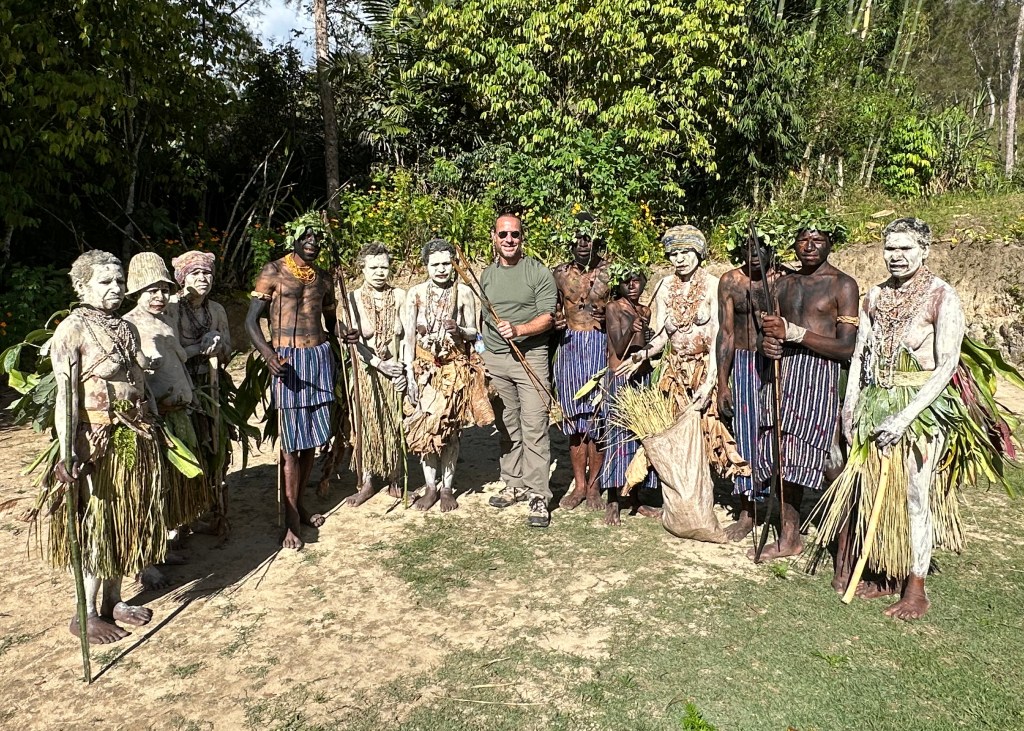
At each village we visit we’ll have a chance to see a performance or demonstration of traditional ways. At the first one, we first saw and heard courtship songs, performed by a group of seven adults and one child. They then demonstrated some traditional healing methods.
That visit was followed by a long drive to the Munaga village, home of the Wurup clan of 200 folks; apparently they had broken off from a larger tribe, in order that they could just focus on their culture and cultural demonstrations. Here we saw how traditional battles were held between villages – including, apparently, an agreed upon “rest” period between each attack.
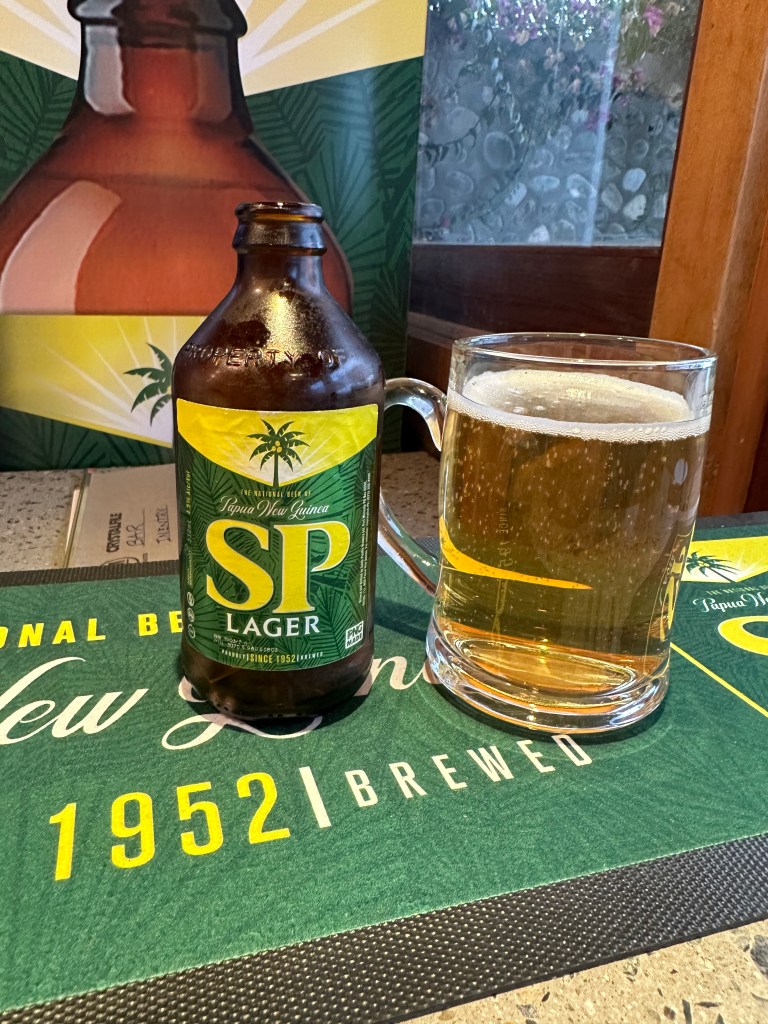
After that, it was a lengthy drive back to our lodge for dinner and my first Papua New Guinea beer.
(Clicking on an image below will enlarge it in a new window).


 Fred's Travel Blog
Fantastic! What an experience! Have you had the penis gourd lecture yet?
LikeLiked by 1 person
Um, not yet. But we did hear a great story. As you can imagine, alot of the tribes around PNG didn’t cover their genitalia. When white men arrived and some of the tribes saw them for the first time, they thought the white men didn’t have any genitalia – because, of course, it was all covered up. True? Who knows! But sure sounds good.
LikeLike
In film school I did a documentary on a tribe in PNG on the why’s and how’s of the penis gourd…..circa 3 foot long slightly curved hollowed out reed attached to warriors…..junk. *The more you know!
LikeLike