Bangkok, Bhutan, and Nepal – Day Eight

April 24, 2023

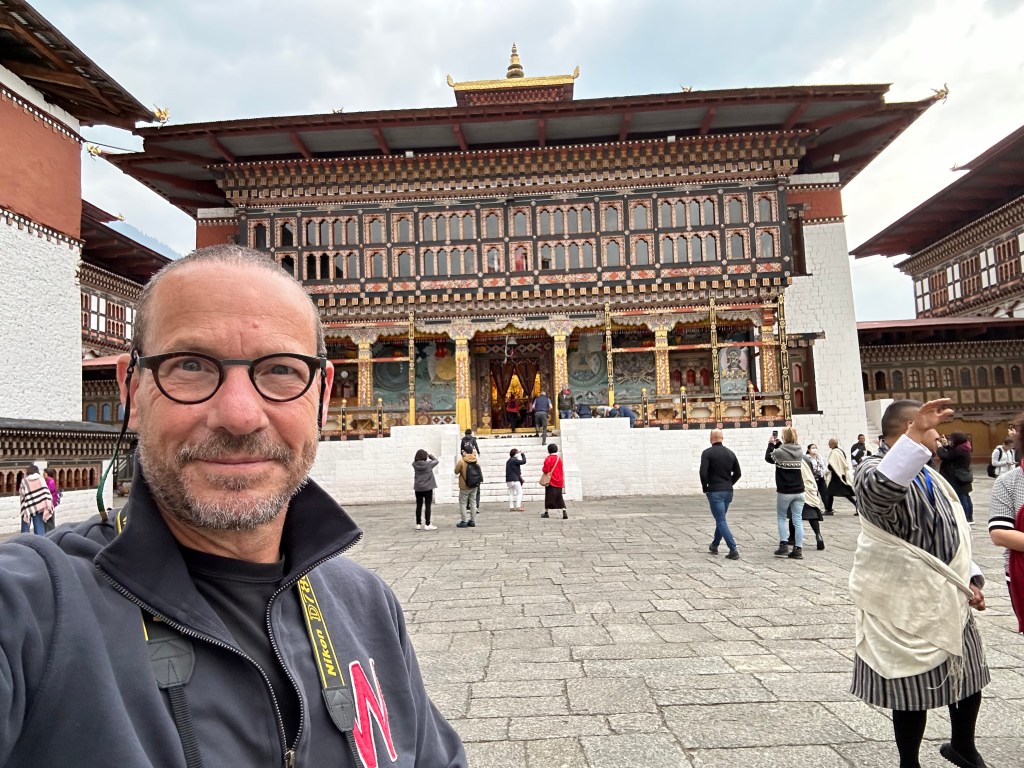
Day 8 – The Hike to the Tiger’s Nest Monastery

At the hotel bar last evening, a handful of us briefly chatted with three women who’d hiked to the Tiger’s Nest Monastery that day. They’d said they got started at 6:40 a.m. and the trail was pretty much empty; when they finally started their descent, it was crowded with people. So – an early start would make sense: breakfast about 6 a.m. with a 7 a.m. departure scheduled.

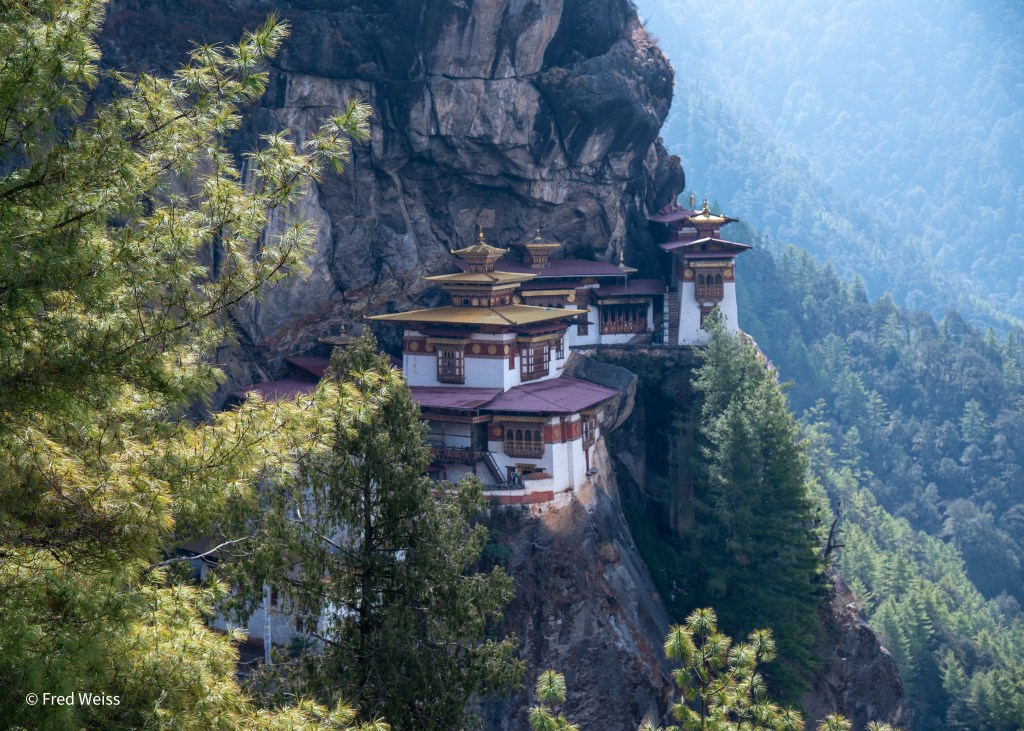
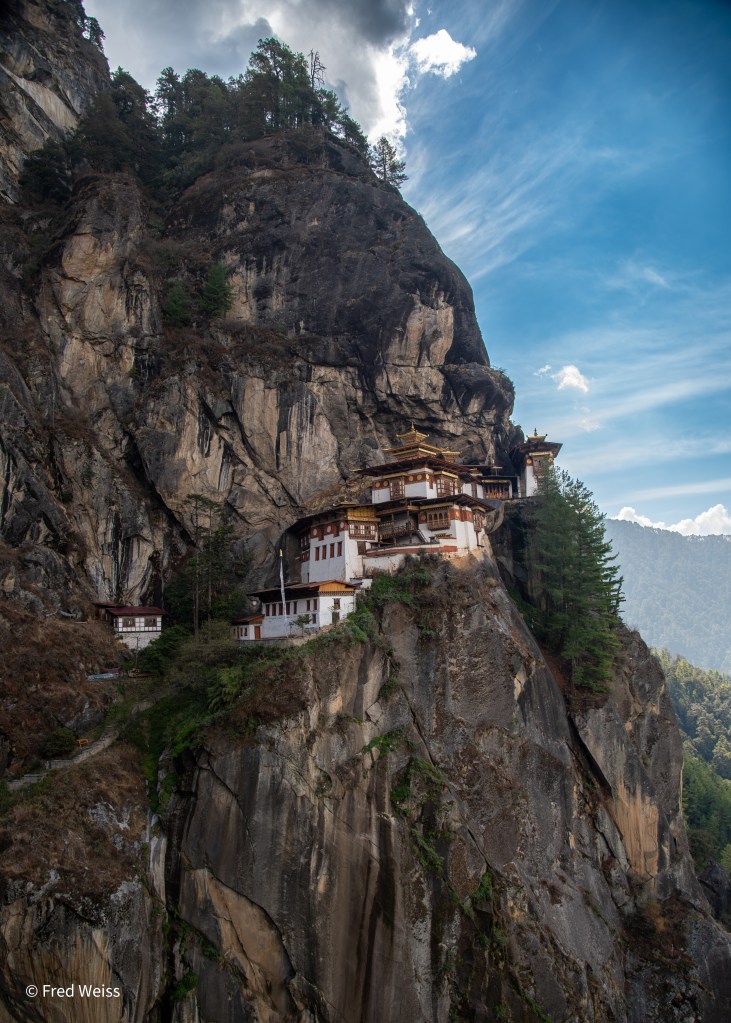
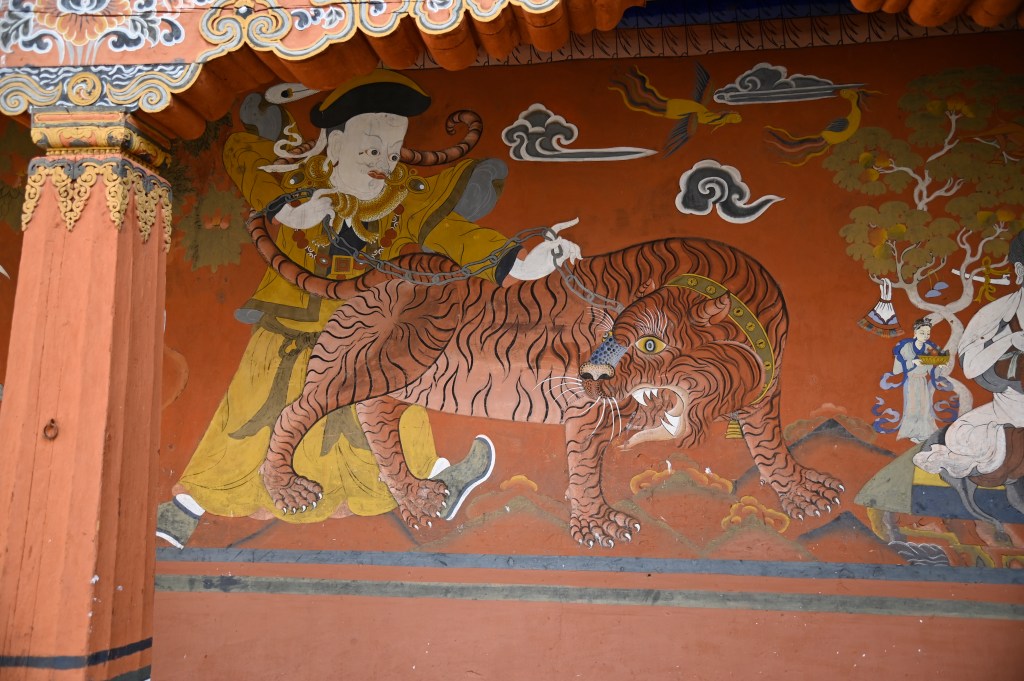
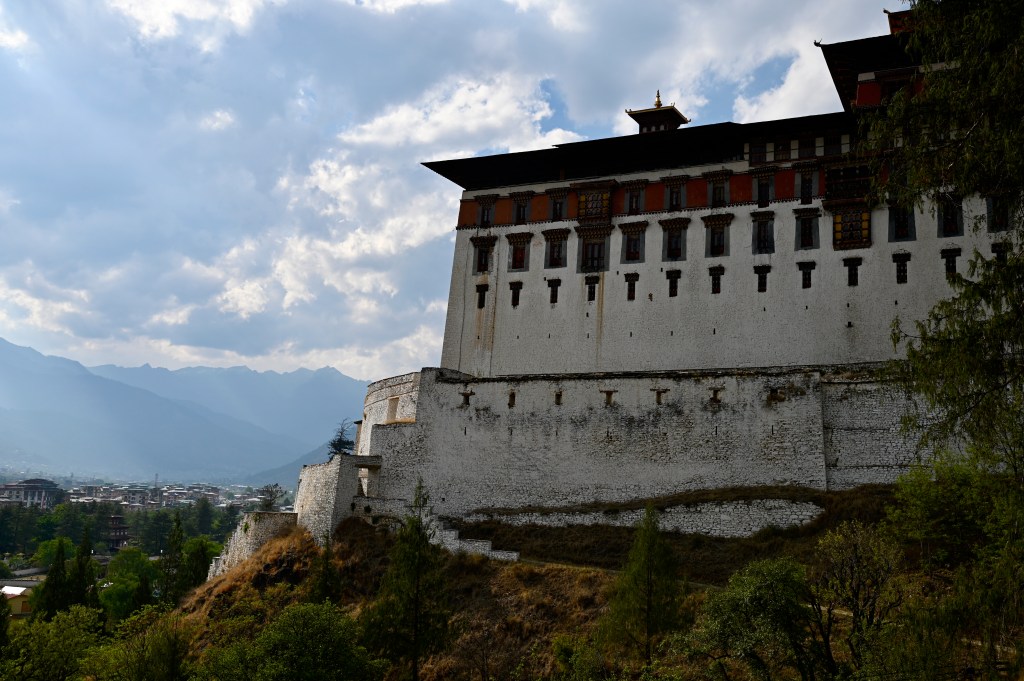
The Tiger’s Nest (or Paro Taktsang) is a sacred Buddhist monastery that dates to 1692 around a site where Buddhism was first introduced to Bhutan. There’s a legend that the monk who first meditated there was carried from Tibet and up the mountain on the back of a tigress, giving the site it’s name. It was significantly damaged in a fire in 1998 and subsequently repaired.

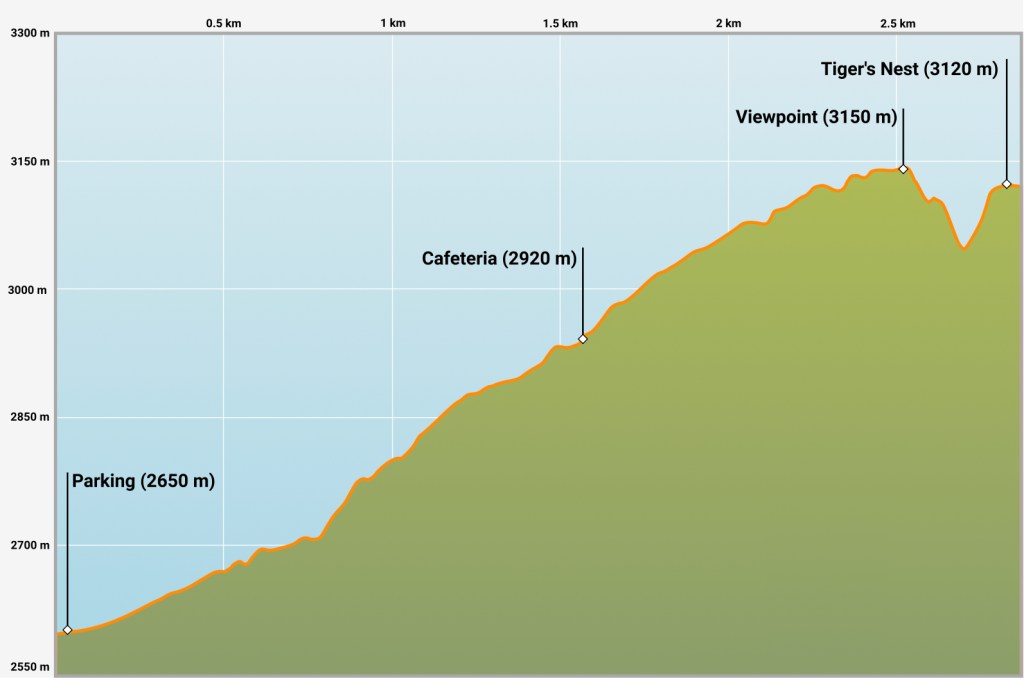
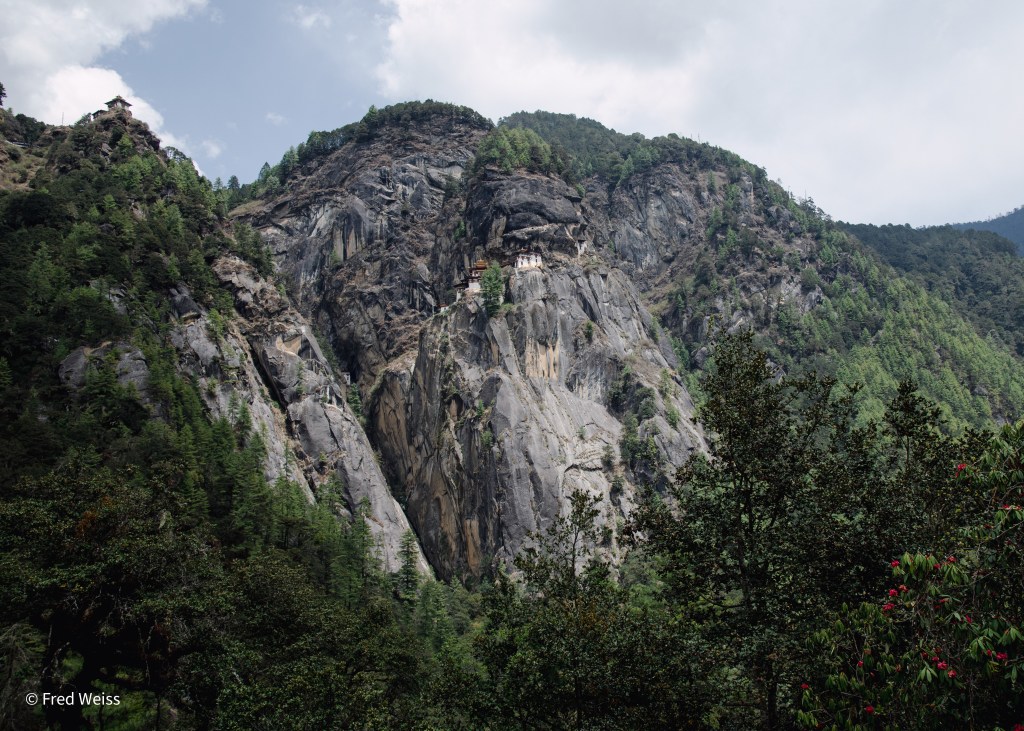
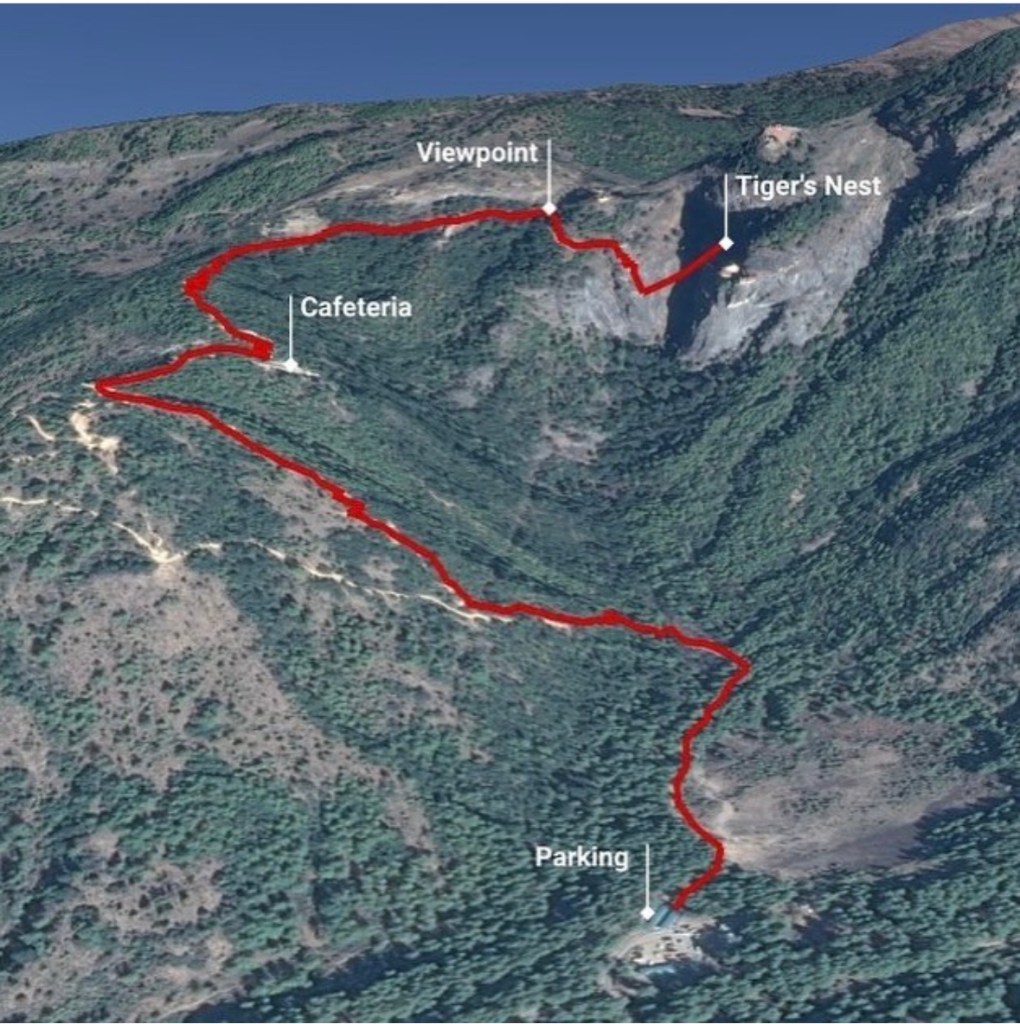
It was a 10-15 minute drive to the parking lot from where the hike would begin. At that point, we already were at about 8,500 ft elevation; a cafeteria would be at 9,500; the best viewpoint – from where the most famous pictures are taken – is at about 10,300, and the Tiger’s Nest itself is slightly below that.

The weather at 7 was probably low 50’s and just a tiny bit foggy and a clearing sky. We knew that as we started the hike we’d shed layers, as the sun would climb in the sky as we climbed on the trail.

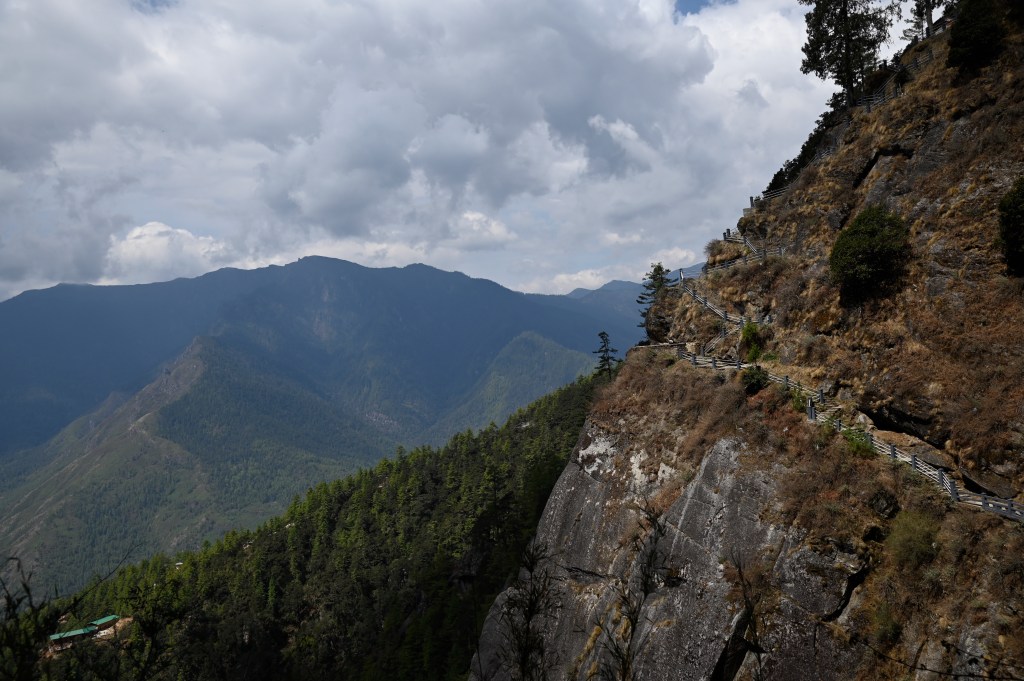
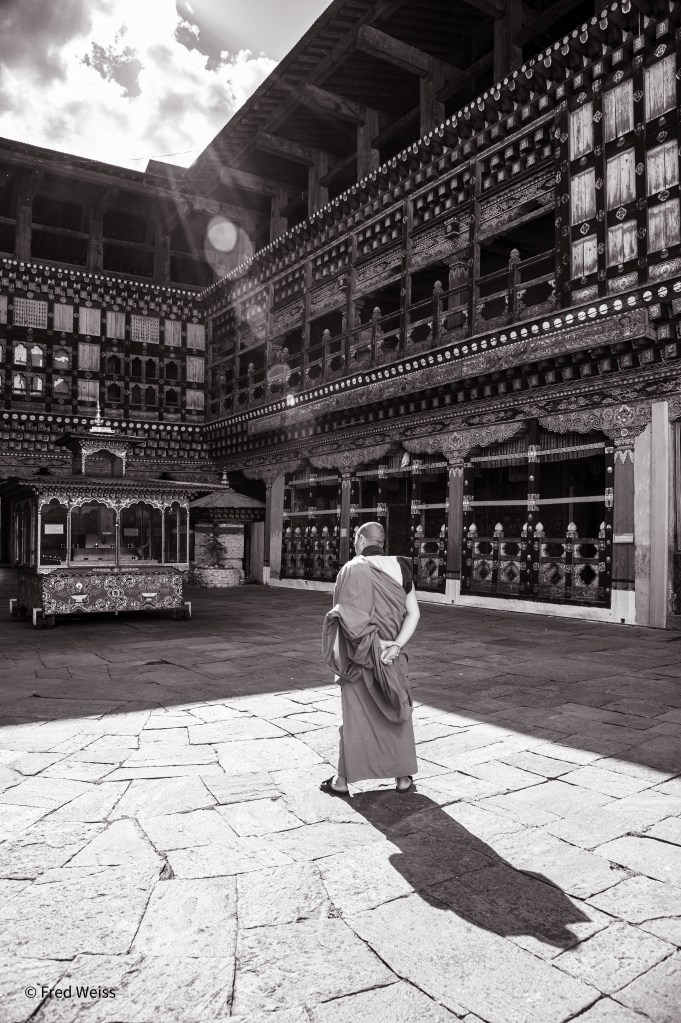
The trail itself ranges in width from about 3’ to about 8’; most of it is packed mud or clay and it twists and turns up the mountain. At various points there are 5” – 8” circumference tree limbs buried into the path, creating stairs of sort to ease the uphill/downhill. Other times there are large rocks that act as stairs, or simply a packed-earth incline, or tree roots. The first half of the climb – prior to the cafeteria – is a “moderate” hike – twists and turns, almost always uphill. Just before the cafeteria it flattens a bit, and immediately past it there’s a steep incline that eventually leads to the viewpoint. From that spot, you begin a set of 800 steps with a handrail that hugs the side of a canyon, first down from the viewpoint, then back up to the Tiger’s Nest. Once you enter the gate, you have to give-up your camera(s) and packs, and there’s a tour of four temples within the complex. After that, you start heading back along the same route.

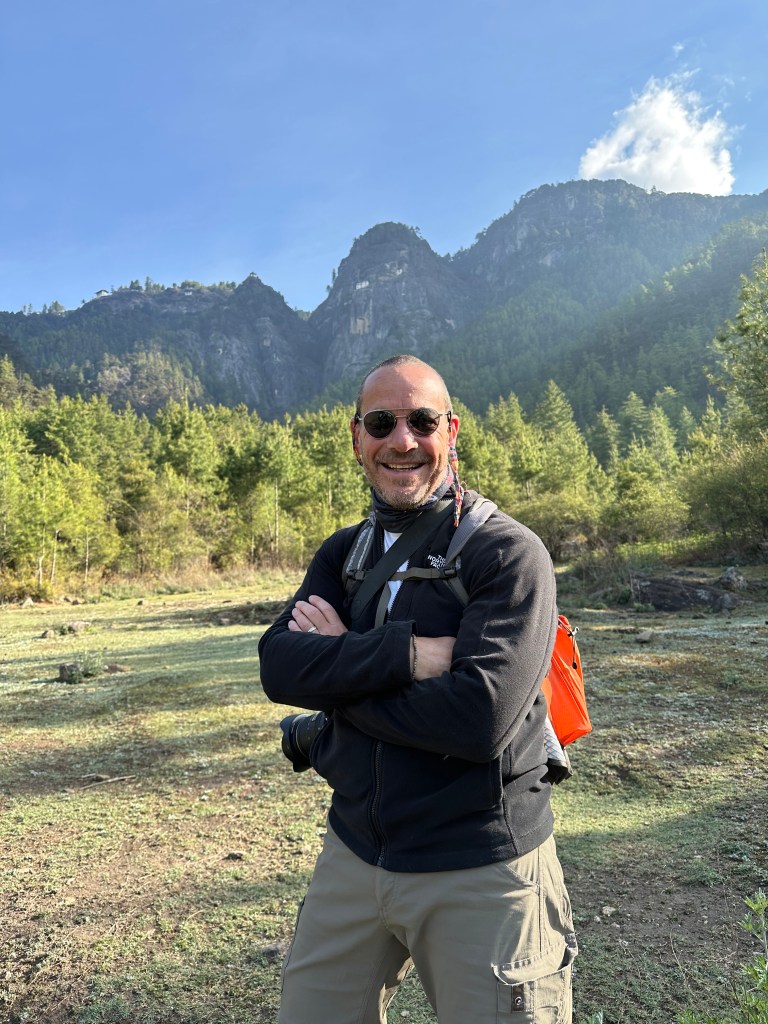
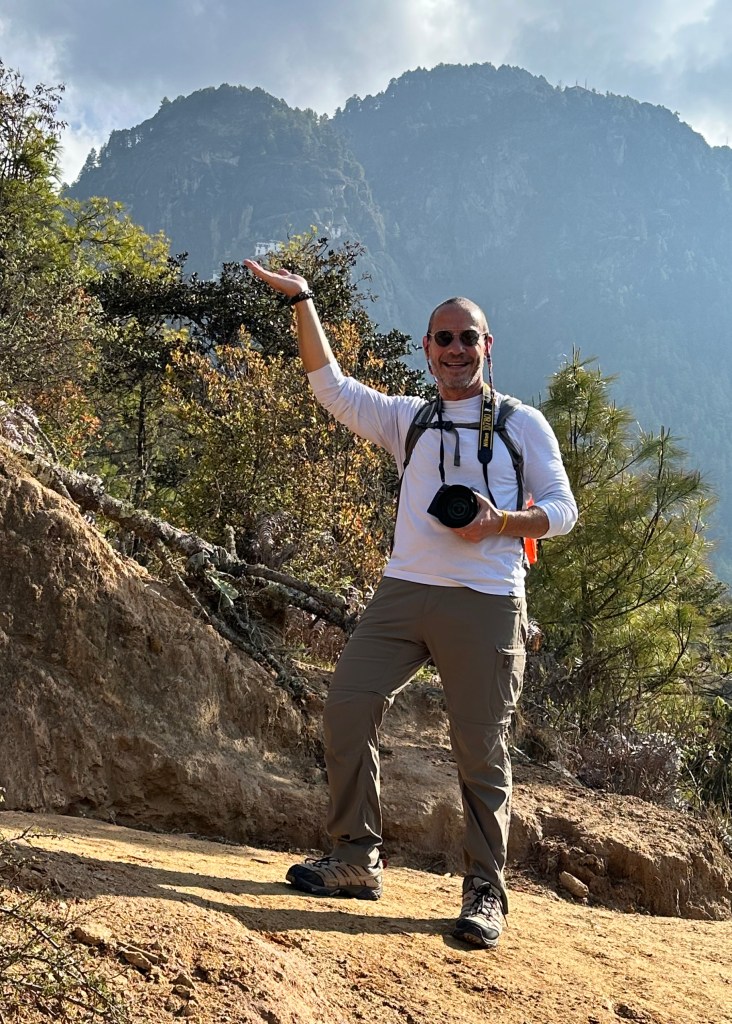
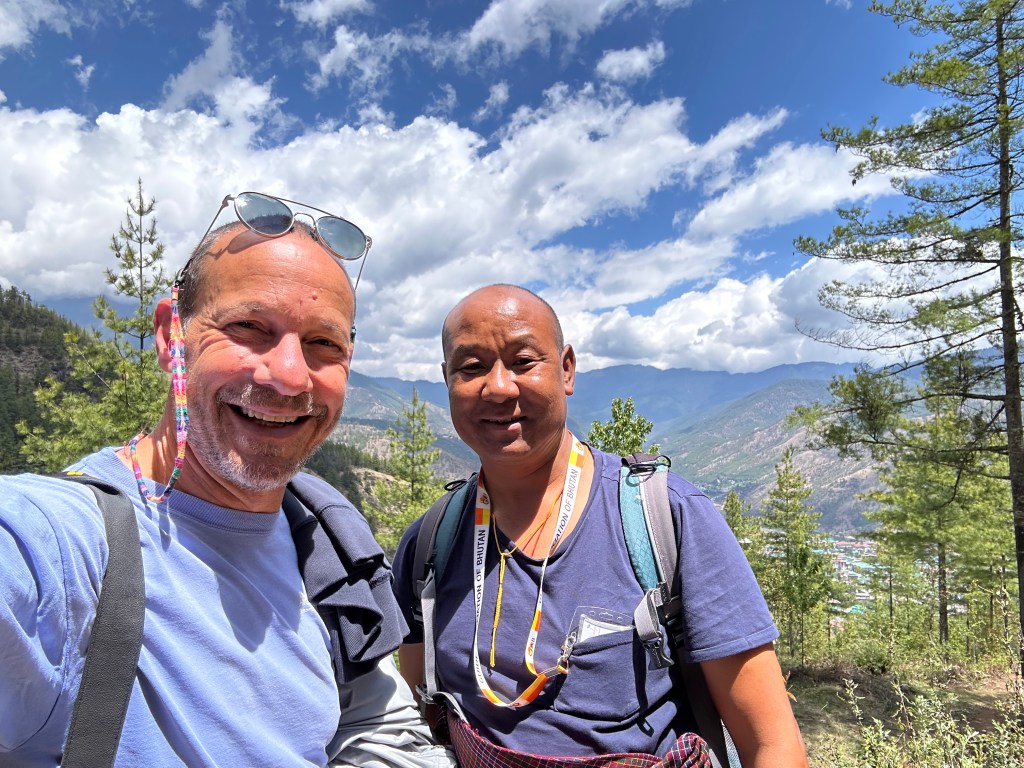
Our guides took up the front and rear of our group, and we became pretty spread out fairly quickly, depending upon how many stops each of us made to take pictures or take a drink of water or catch our breath. And you do have to stop to catch your breath. It got sunnier and warmer as we hiked; I had two layers on – a long-sleeve t and a North Face fleece – and I carried a daypack that had my camera, a rain jacket, and a baseball cap. The fleece came off after about 20 minutes, and that’s the way I hiked the rest of the way; once in the monastery I had to put my fleece back on, as it was chilly inside, but it came off again for the return hike. I moved back-and-forth among our group, from the lead, to further back while chatting and taking pics, and back to the front.

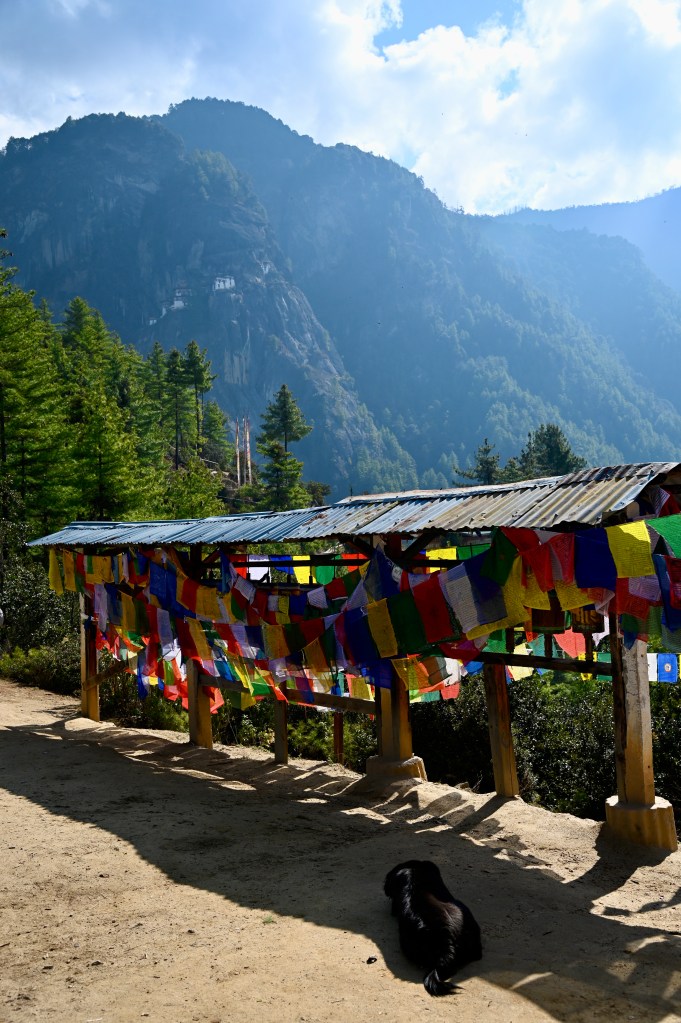
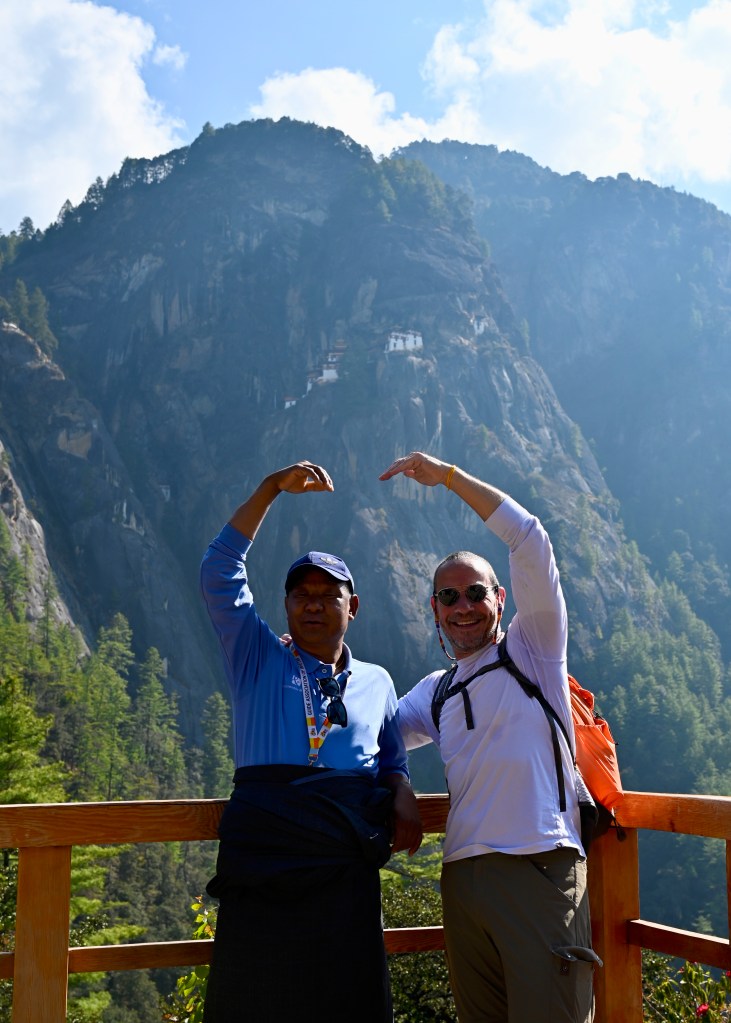
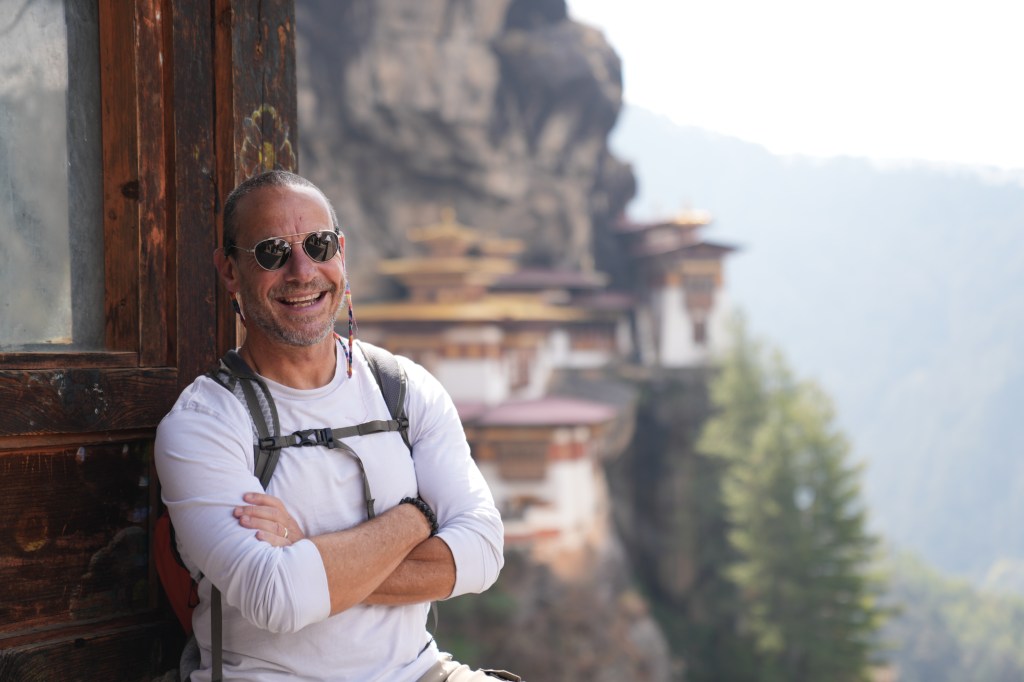
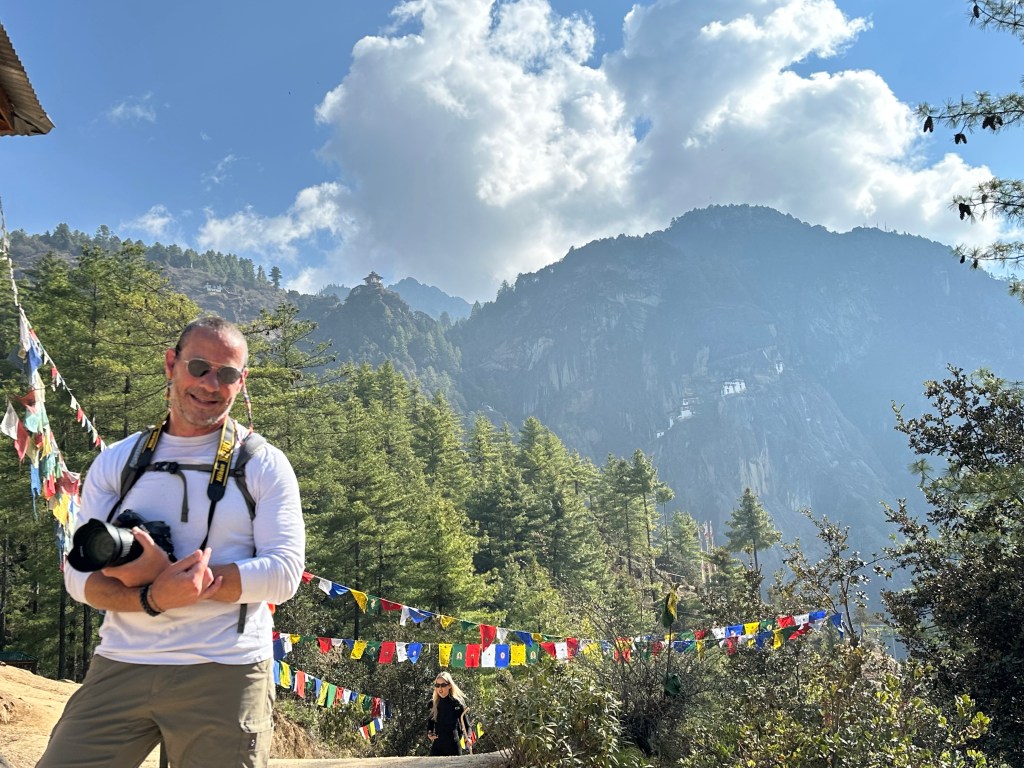
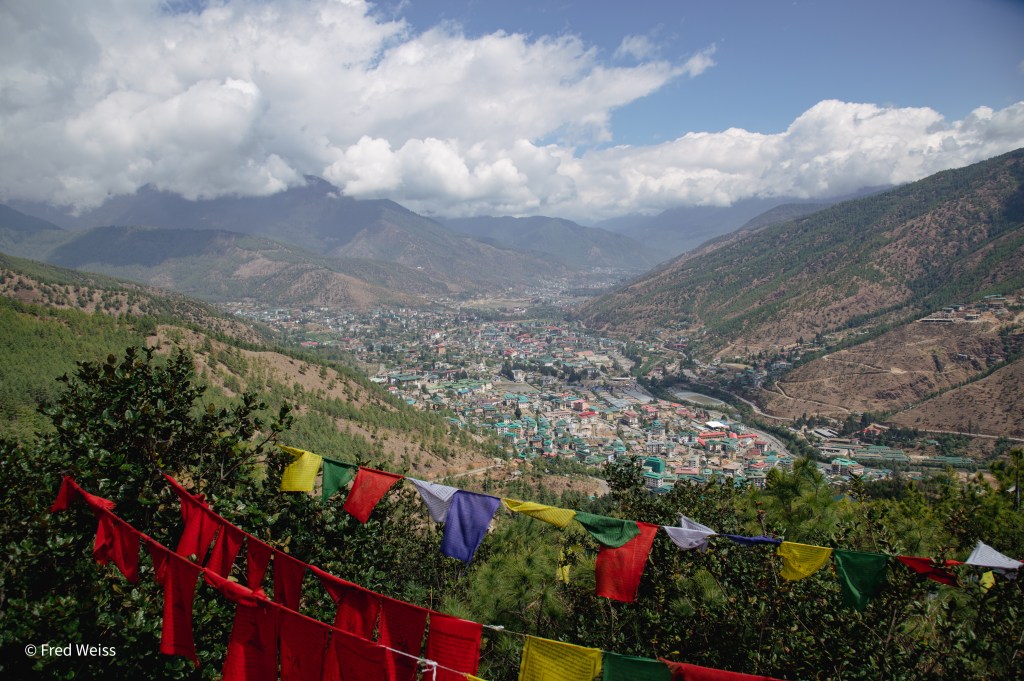
It was great. A push physically – huffing and puffing, sweating – but never feeling as if “I can’t do this.” The views across the mountains and valleys were beautiful and awe-inspiring. Seeing the Tiger’s Nest from the parking lot and then along the way and then from the cafeteria and then from the viewpoint was great – it set a goal of sorts – and also fed the disbelief we were going all the way there.

The round trip hike itself took about 3 1/2 hours, not including the stop at the Monastery, covering 5.2 miles; the app I use said the elevation gain was 2,800 ft, which doesn’t quite match what the elevations are measured to be (tho maybe it’s “total” ups-and-downs), but assume we went up about 2,000 ft from where we started. Overall, from when we started the hike to when we got back down, we spent about 5 1/2 hours out-and-about.

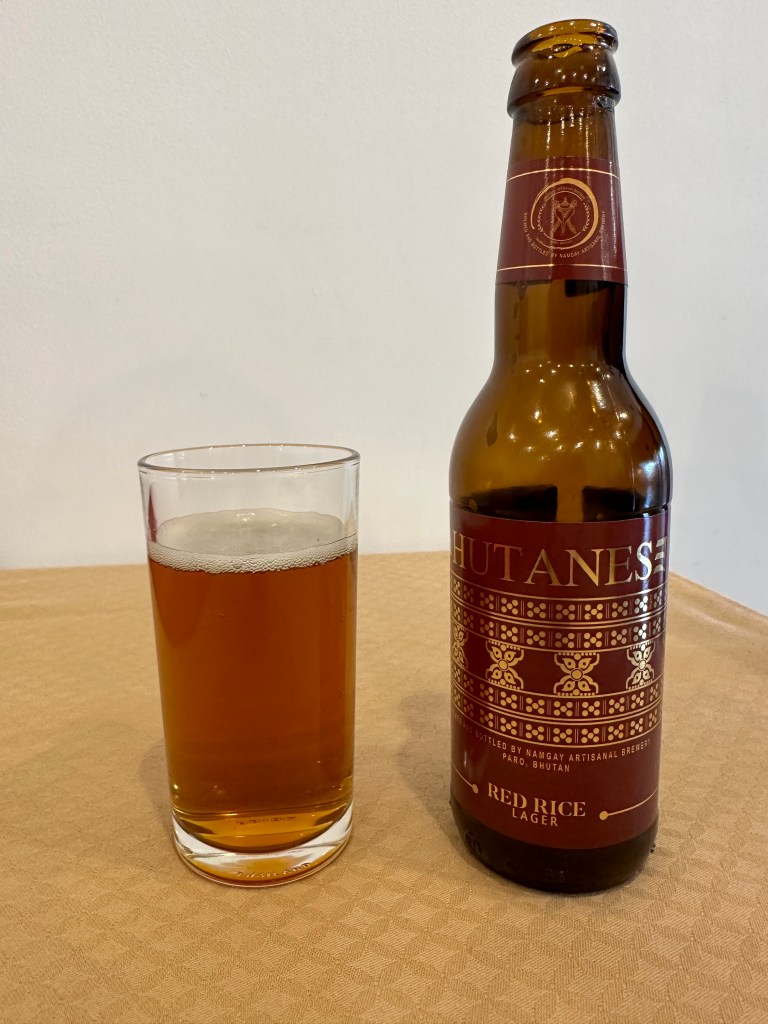
After the descent, it was a stop for celebratory champagne, beer, wine, fruit, and croissants, in chairs under a tent. We sat and chatted, traded pics, with smiles on our faces as we listened to a couple of musicians play some local music.

It’s been a great day.
Bangkok, Bhutan, and Nepal – Day Three

April 19, 2023

Today I visited places of the soul and the stomach, then walked across a good portion of the central city.

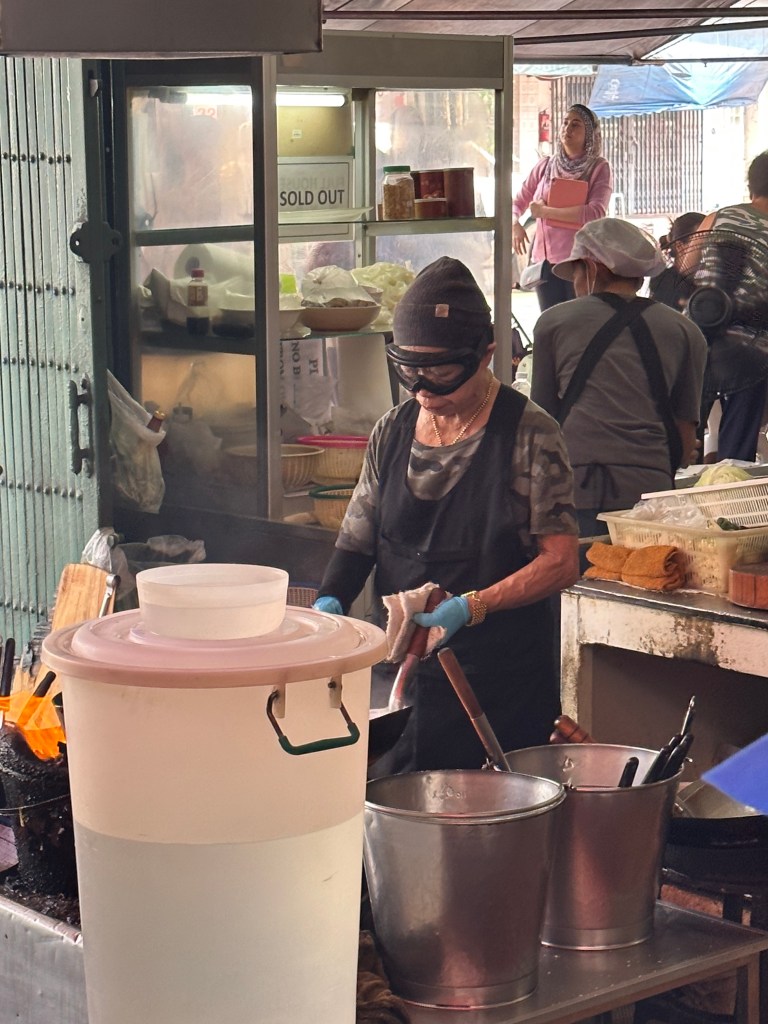
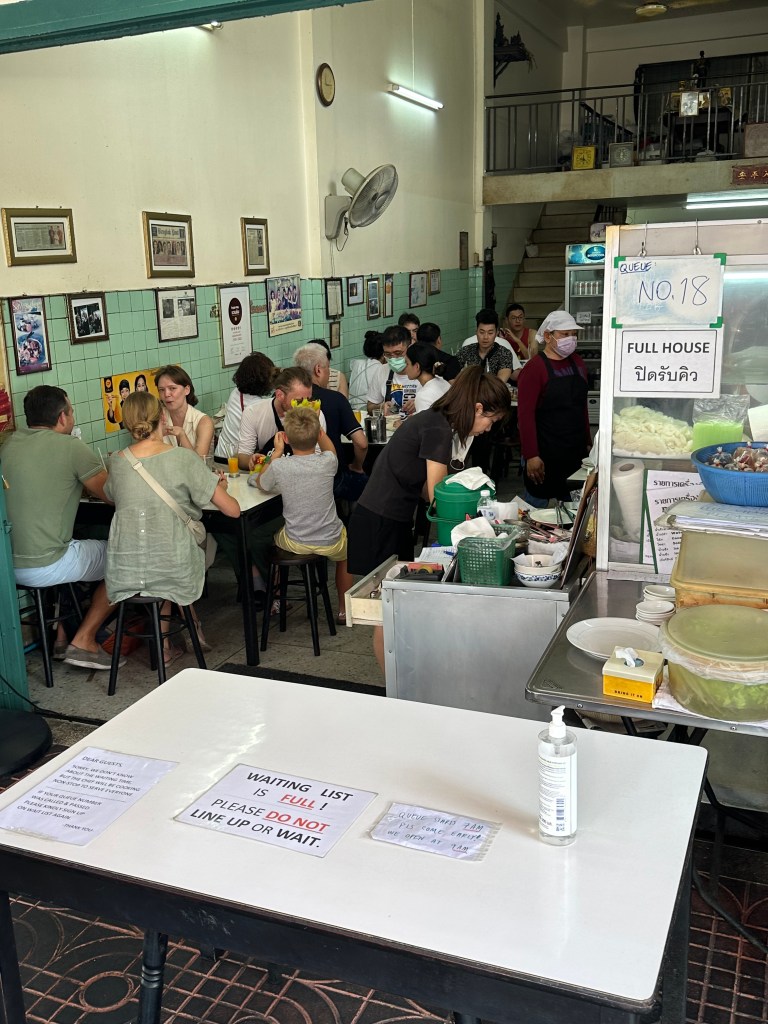
My goal for the day was to have a meal at Raan Jay Fai, a highly recommended one-Michelin star street-food restaurant. Named for its begoggled owner and chef (“raan” means restaurant – the rest is her name), the place is wicked small and is very rustic with the “kitchen” outdoors next to an alley; it is extremely popular and open from 9 a.m. until 8:30 p.m. I’d heard there were lines prior to its even opening each day (maybe everyone was waiting to order one of her popular crab omelets), so my game plan was to go to a nearby Buddhist temple first, then getting to the restaurant mid-morning, thinking that as a single eater at an off-hour I’d have no problem getting in.

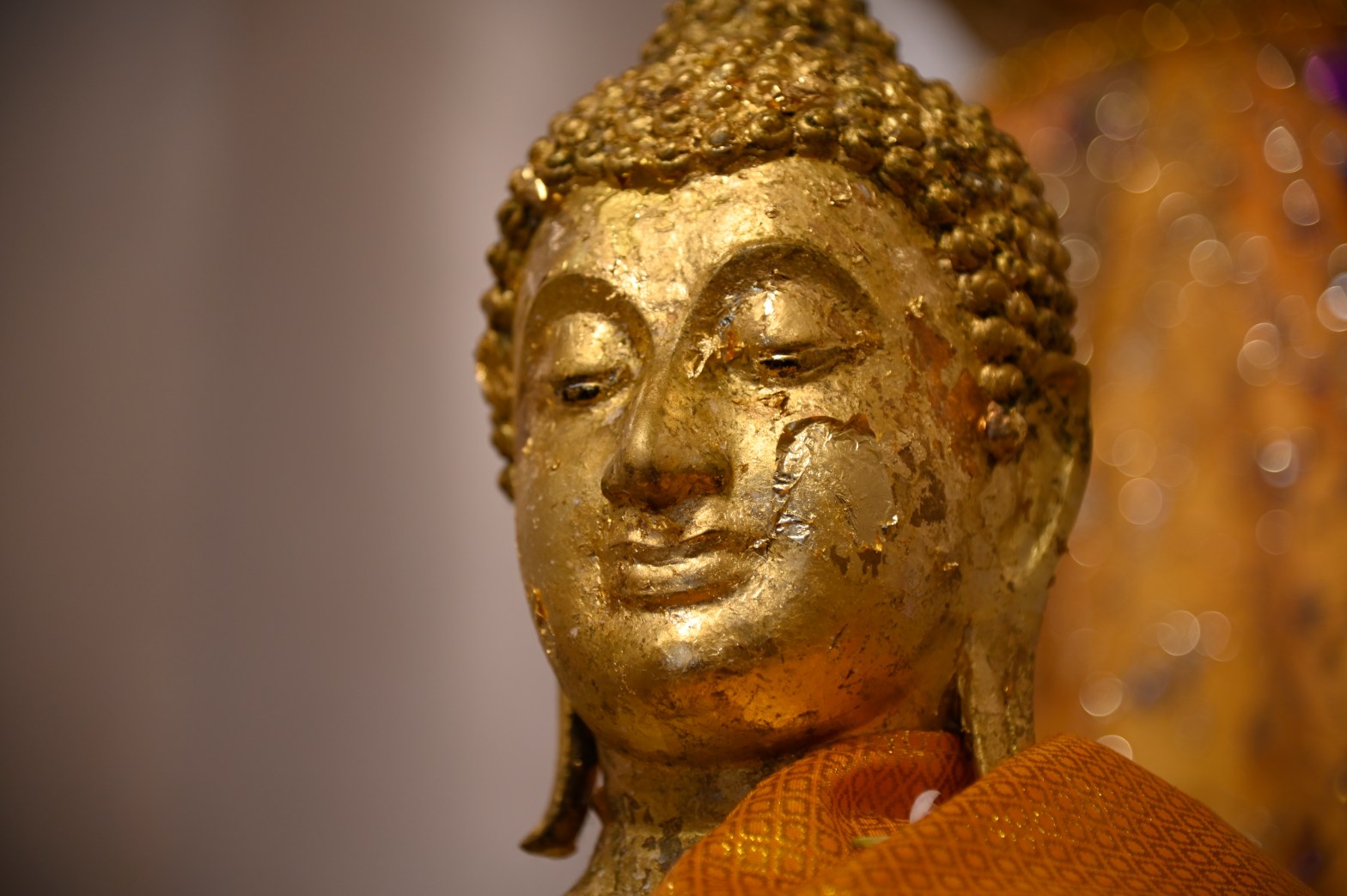
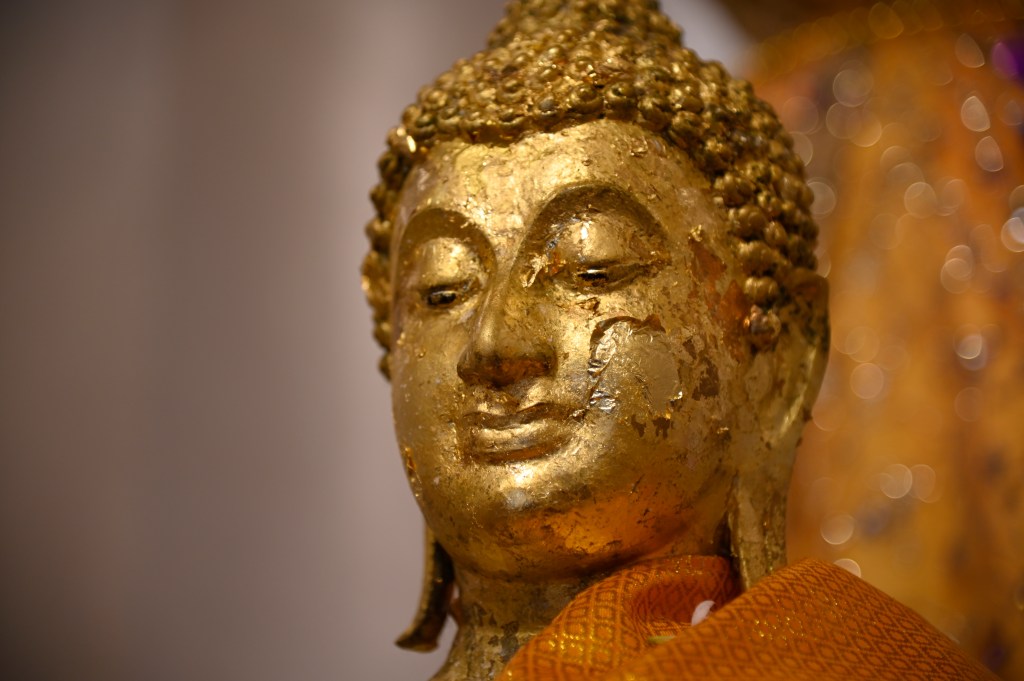
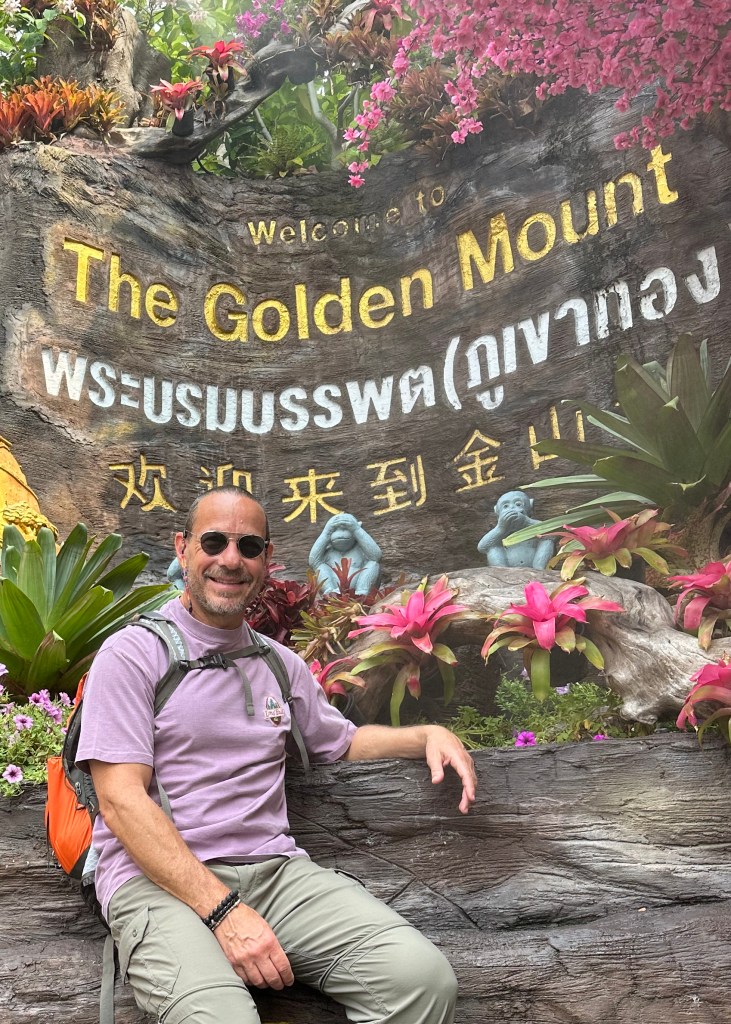
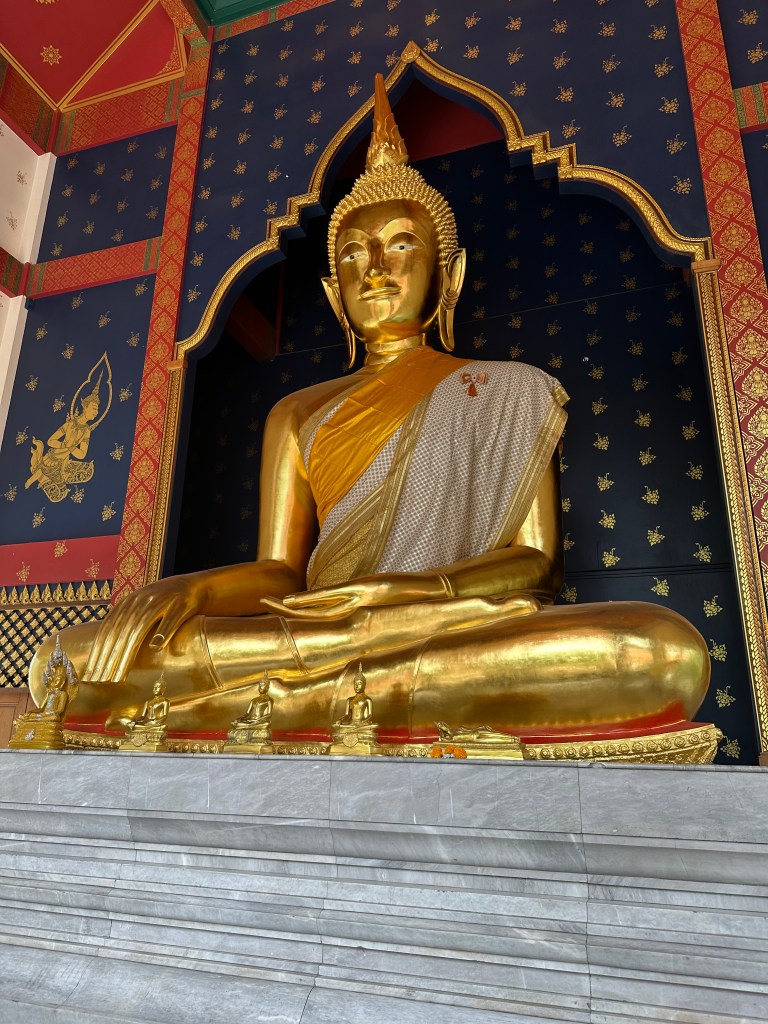
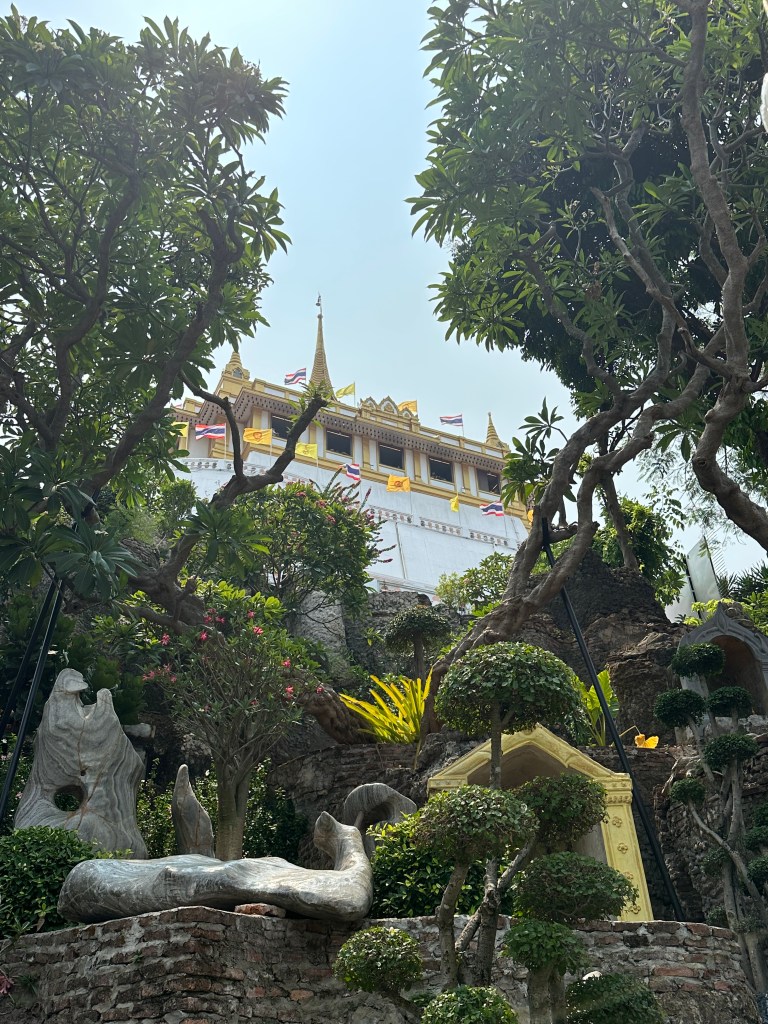
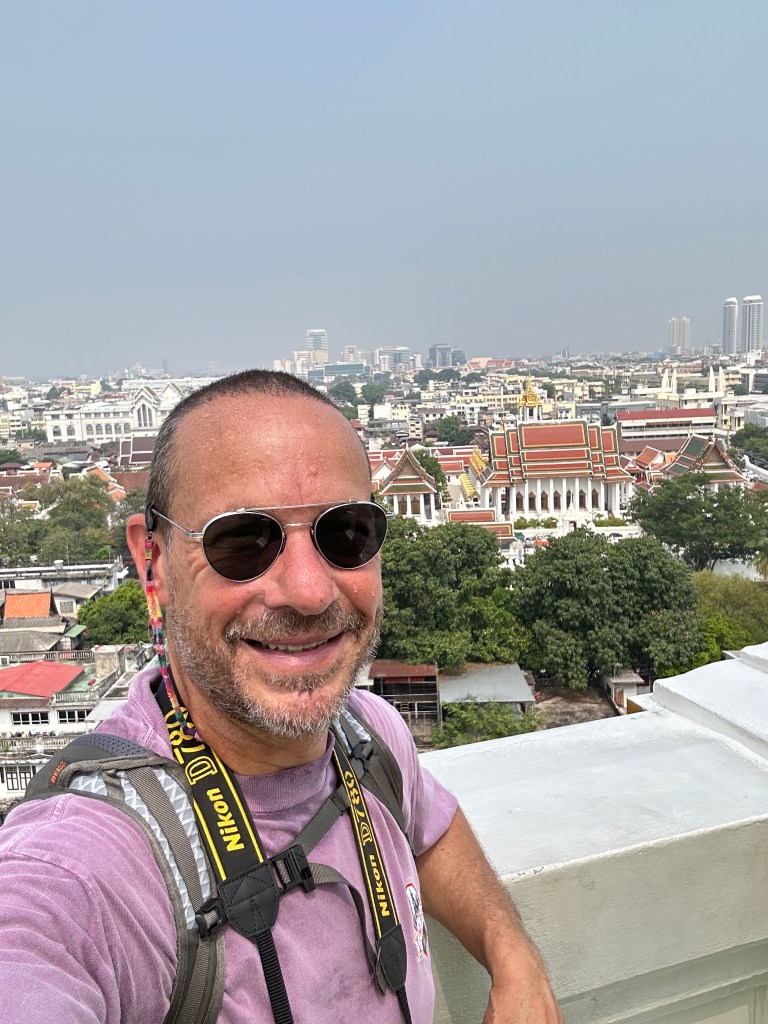
Wat Saket (The Golden Mountain Temple) dates back to about the mid 1400’s and has been renovated several times since. It sits on the highest hill in central Bangkok – it’s actually the highest temple in Bangkok and – before skyscrapers – was the tallest building in Bangkok – and so gives great 360 views of the city; relics from The Buddha are buried beneath the structure that sits at the very top. It’s reached by walking up 344 steps (somebody else counted them way prior to my getting there) and the temple and its grounds contain many different buddhas.

What I didn’t realize was that all the steps except the very last few are OUTSIDE; it was around 95 degrees and humid, so, yeah, I was sweating before I even got to the top. But it was worth it to see the views and the many buddhas along the way. It wasn’t crowded at all, and several folks were praying and making offerings.

After the walk back down the 344 steps it was a 5 or 6 minute walk to Raan Jay Fai. It’s in an older part of the city, an area known for its many back-packer spots and night scene. I arrived about 11:15 a.m.

There was a line. Then I spied the sign that said “Full House” and “No 18.”

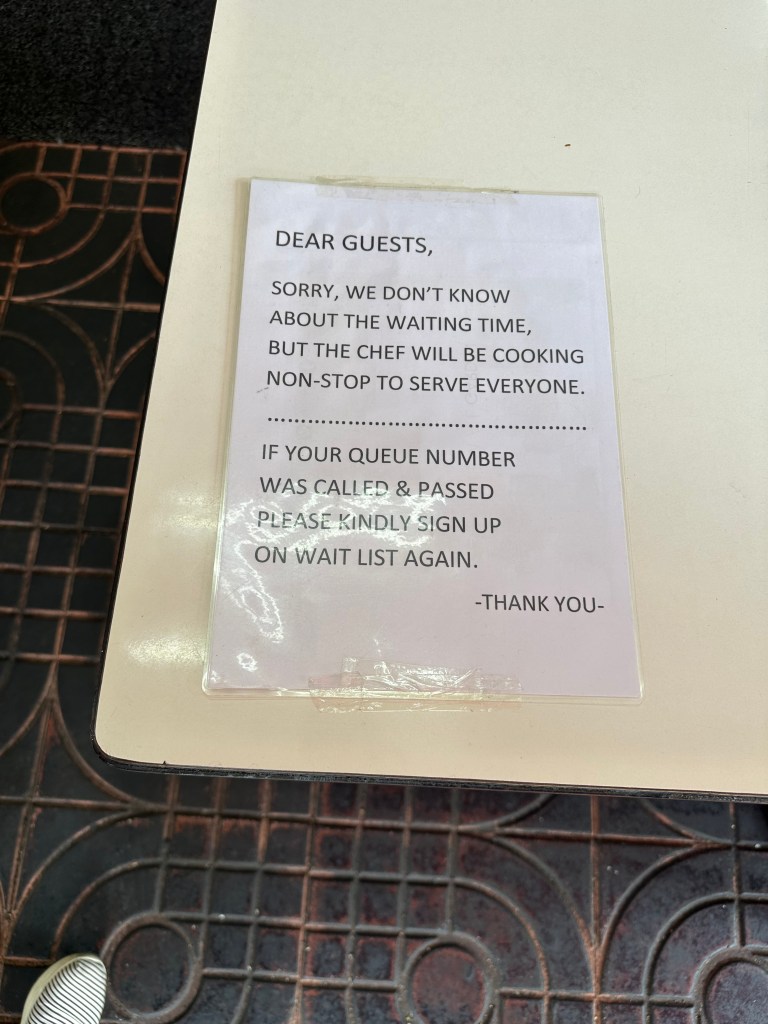
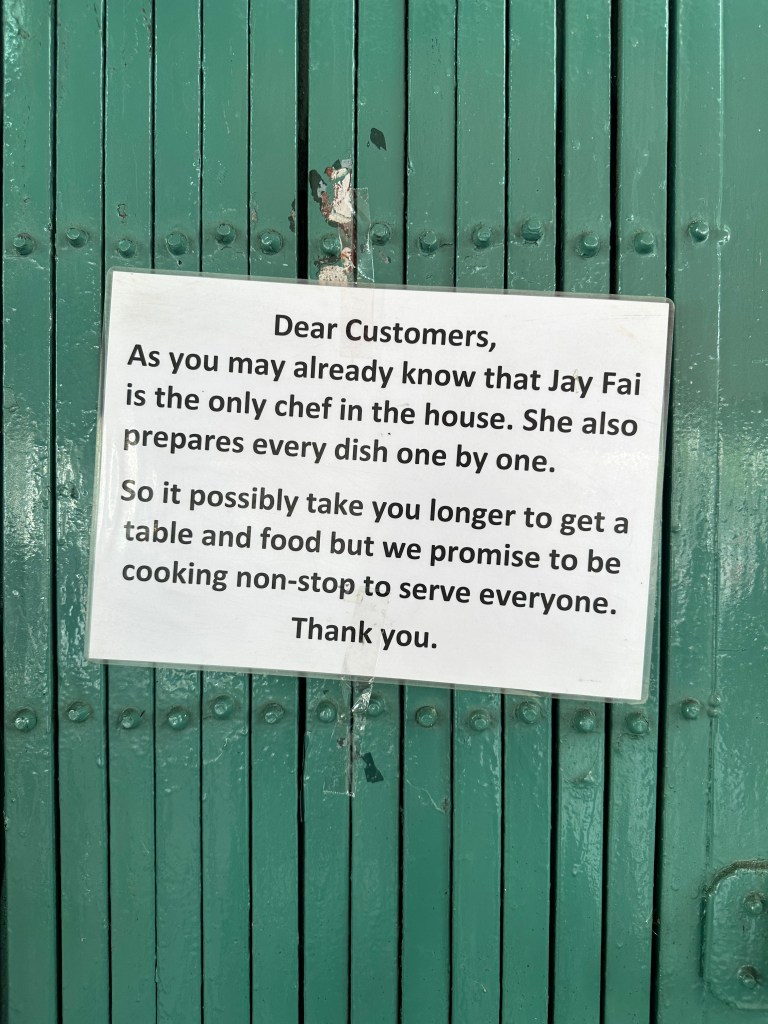
Jay Fai is the only chef. She makes every single dish that is ordered. Yup, the restaurant opens at 9 a.m., but people start queuing up as early as 7 a.m. so that they can put their name on the waiting list for the day as soon as it opens. So – Jay Fai has been cooking, presumably, since 9 a.m. They had just started cooking order “number 18” on the waiting list. I chatted with two couples out front. One had gotten there at 7:45 and were number 29 on the list. The other couple had gotten there at 7:30 and were number 22 on the list; they told me they’d seen at least 70 or 80 names on the list at one point. It was a “Full House” when I got there because they weren’t adding anymore people to the list. These two couples had been waiting outside for close to four hours! Fortunately, they didn’t have to choose their meal UNTIL their number was called.

So, I didn’t get to eat at Raan Jay Fai.

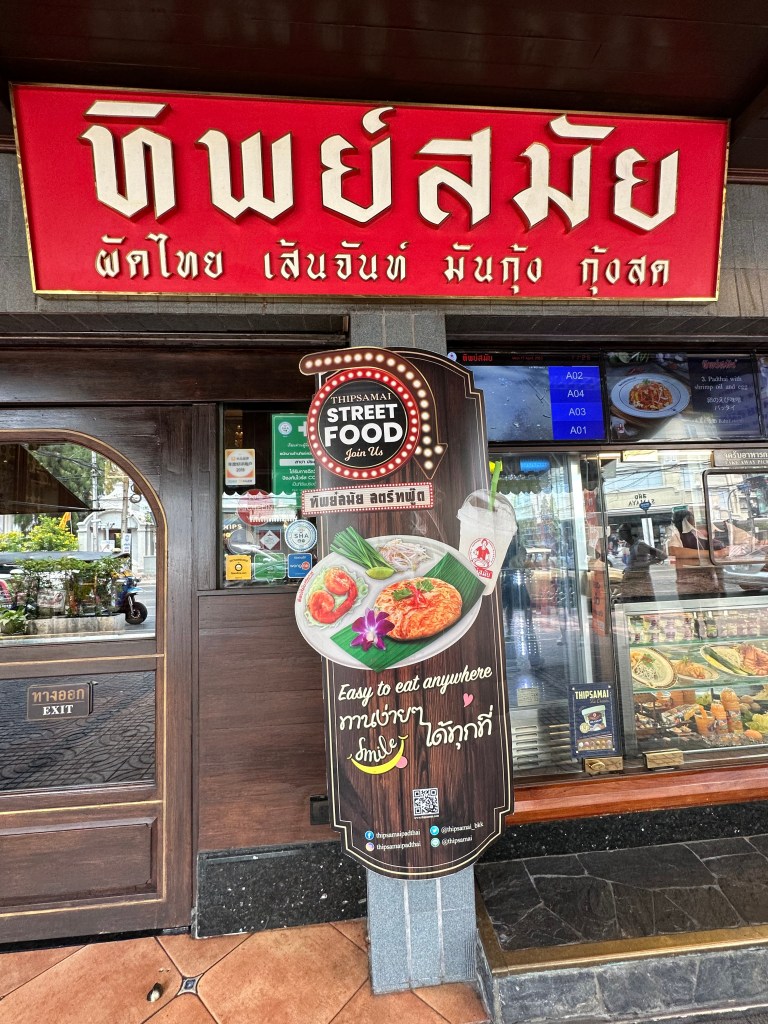
But just down the street was a famous and popular pad thai joint that one of the couples recommended. I ate there instead and was REALLY grateful for the air conditioning. It was good – very good – but maybe not as good as Raan Jay Fai might have been. And a whole lot cheaper – my six spring rolls, pad thai, and a bottle of water cost me about $10. After I left, I ran into one of the couples again (who were STILL waiting) but they now knew what they’d order when their number was called and told me it’d put them back about $160 (the crab omelet ain’t cheap I guess).

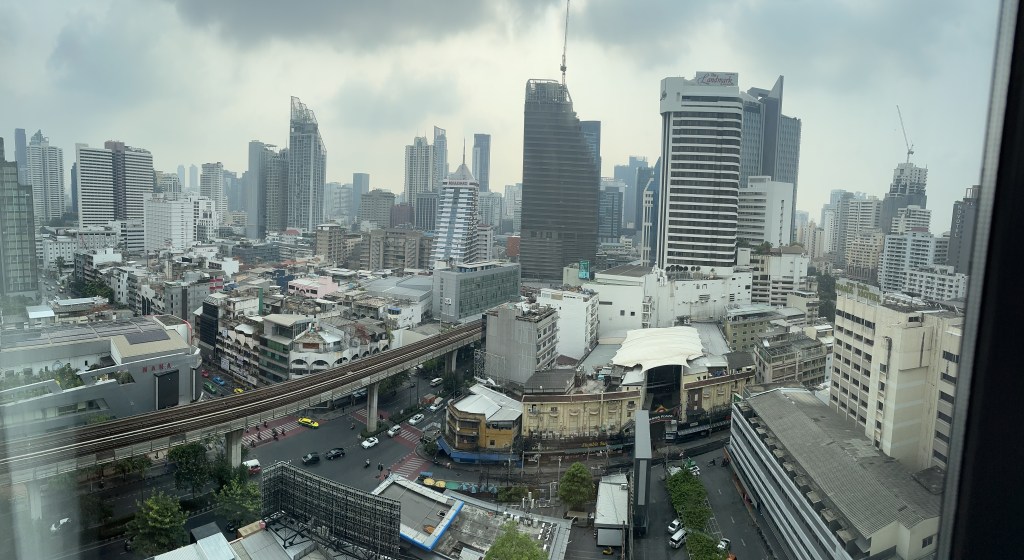
After lunch I decided to walk back to my hotel, as I’d be checking-out to move closer to the airport for my 5 am flight to Bhutan on Thursday morning. The walk – about 4 1/2 miles – took me along a single long avenue, crowded with 6-8 lanes of traffic almost the entire way, first walking past auto-supply and repair shops, then office furniture shops, with a smattering of other small retail joints. Gradually, this gave way to a handful of smaller and what seemed nicer restaurants, I walked by the National Stadium, and then larger retail shops and malls and office buildings. Vendors with street-carts – mostly food (juices, fruit, drinks, chicken or pork or noodles) – were scattered along the sidewalk as this transition took place and there were small little enclaves where a group of street-cart vendors might be gathered together. The “skytrain” or metro was overhead, and periodically there’d be a shrine where people could pray and make offerings. Other people were walking too – mostly around the mall and office building areas. Me? Well, it was in the low 90’s and I was simply sweating.

It’s an early night tonight, as my pick-up for the 5 a.m. flight to Bhutan is at 3 a.m.

Bangkok, Bhutan, and Nepal – Day Two

April 18, 2023

Last night and most of today was kind of a food fest, though I had time for more than just eating.

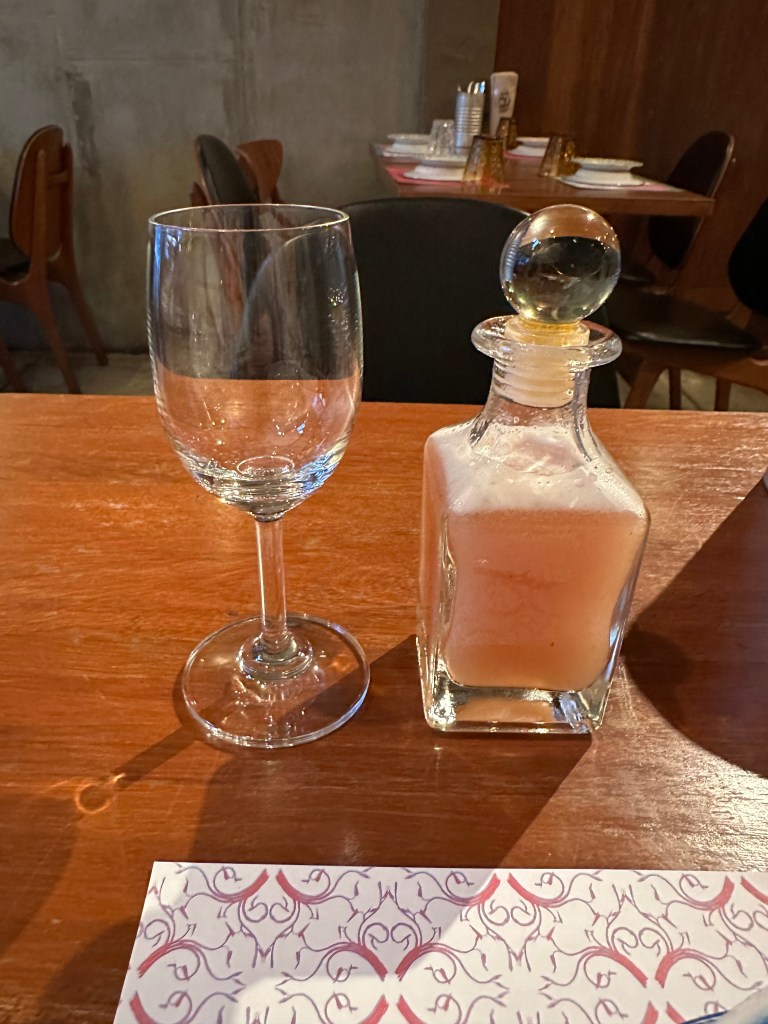
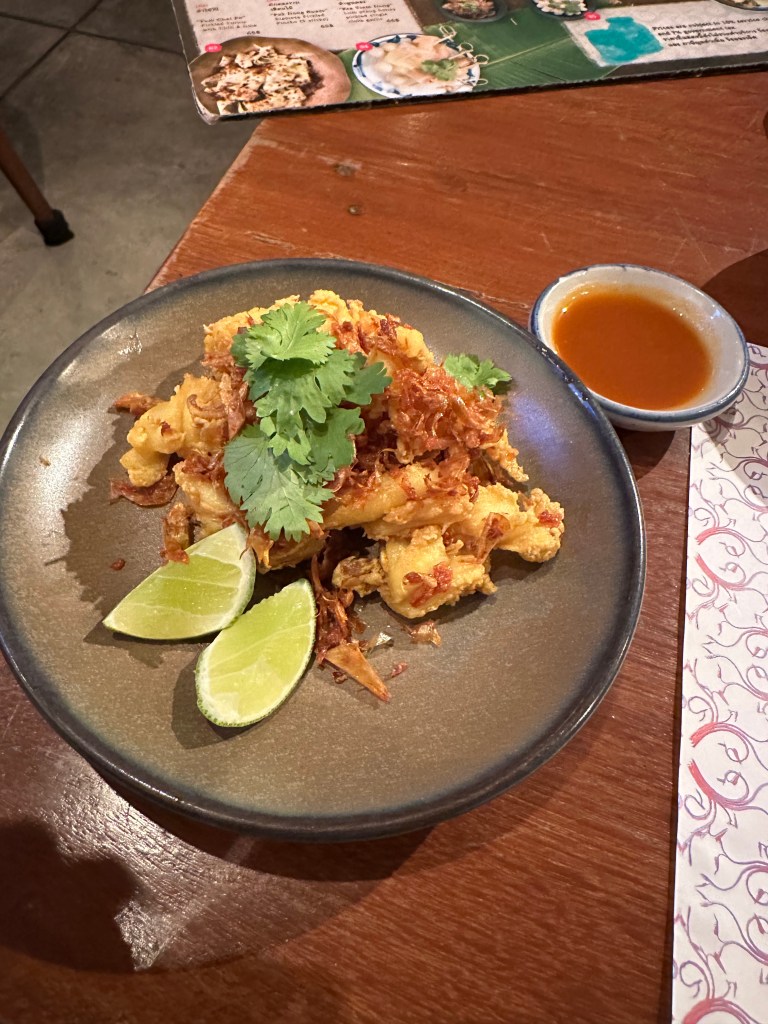
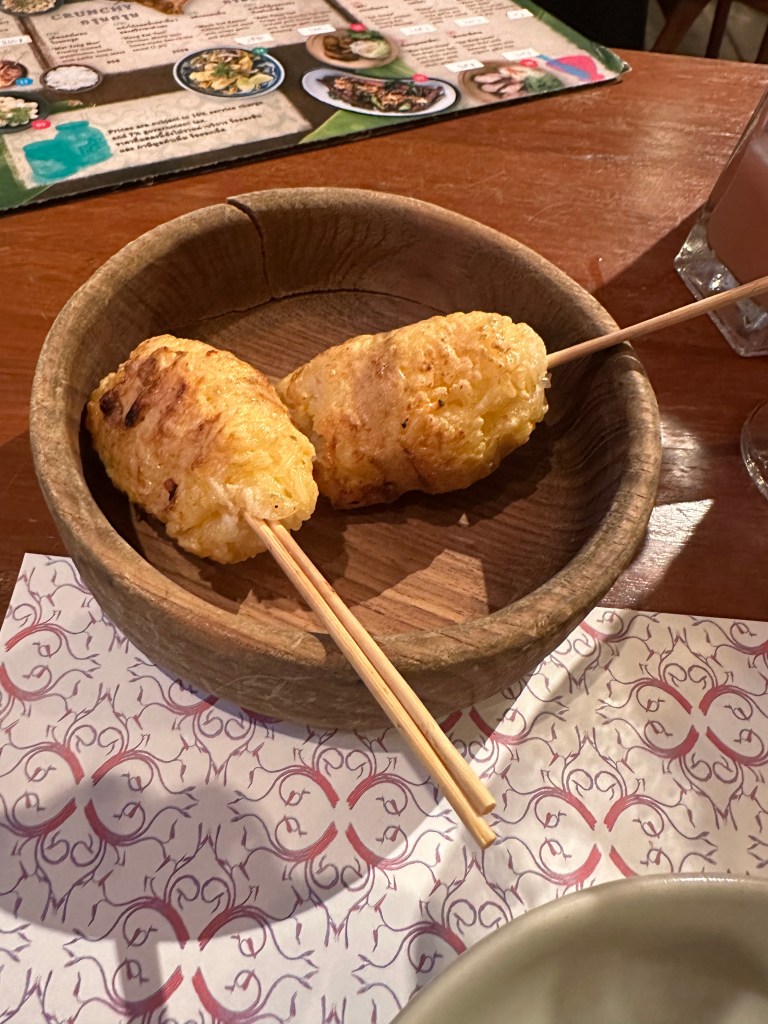
On Monday evening I went to a foodie-recommended small plates Thai restaurant here in Bangkok that specializes in “urban rustic” using fresh ingredients, lots of fermented stuff, and drinks to match: Err Urban Rustic Thai. Some good eats (and drinks) – pickled turnip with chili and lime, steamed sticky rice grilled on a skewer, turmeric fried squid with garlic and shallot, and braised minced pork with eggplants on steamed rice custard.

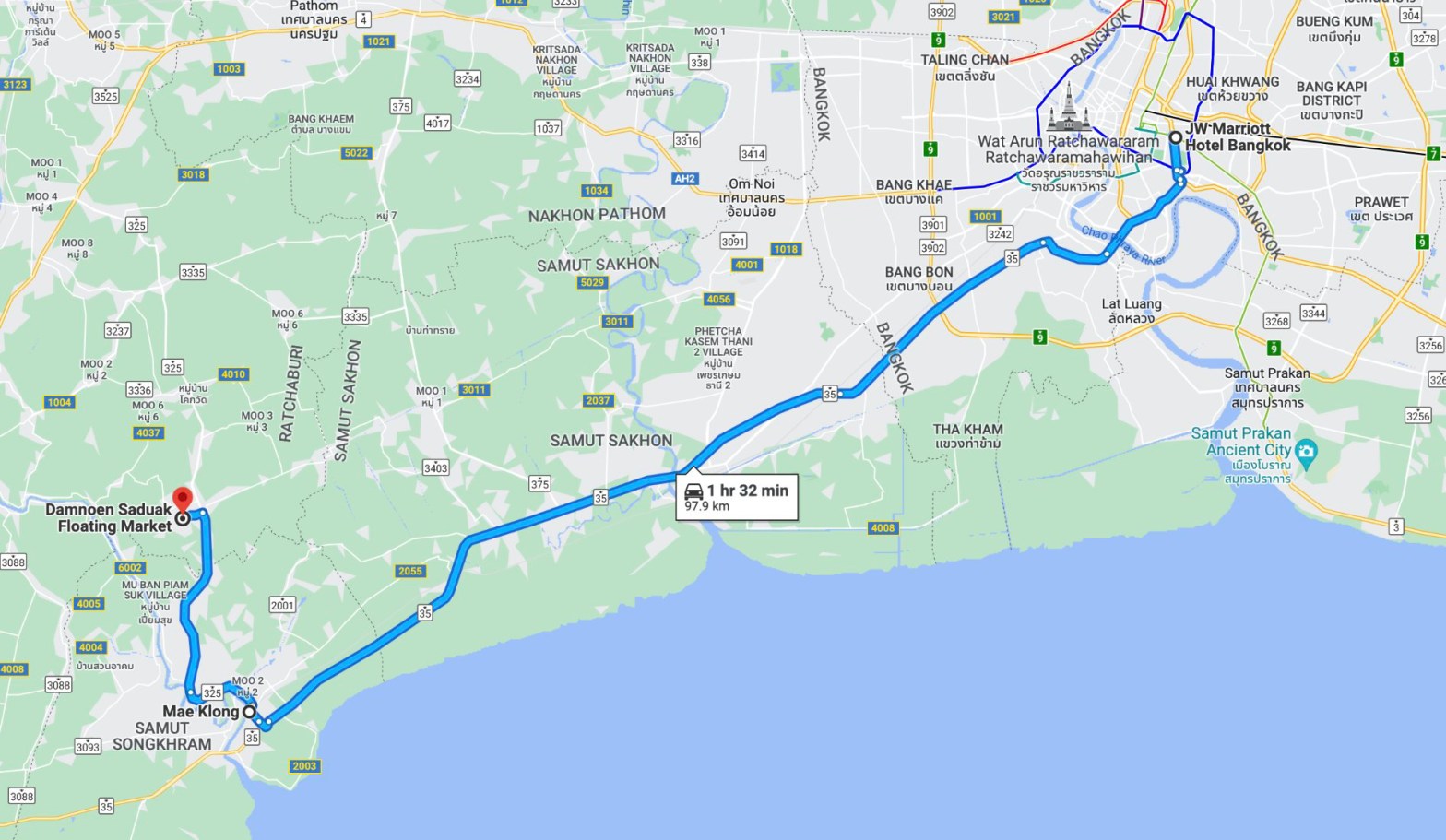
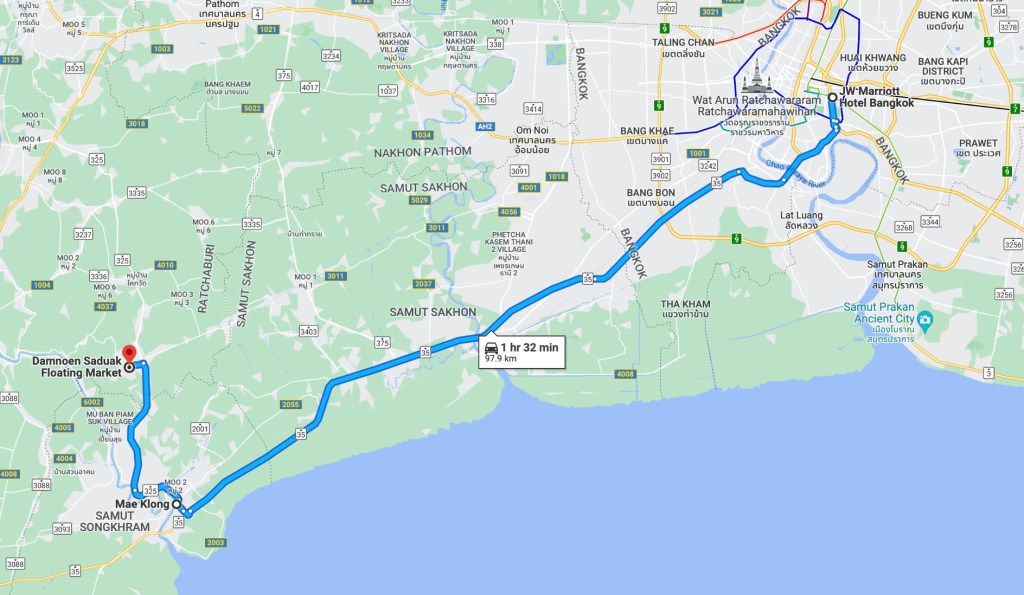
Today, Tuesday, I decided to mostly get outside the city since I’d spent all of yesterday here. So – with a guide who’s name is Chai, I took a 90-minute road trip about 90 minutes west of Bangkok, with a 7 a.m. pick-up, to visit a “train market” followed by a floating market followed by, well, just a market to grab some food.

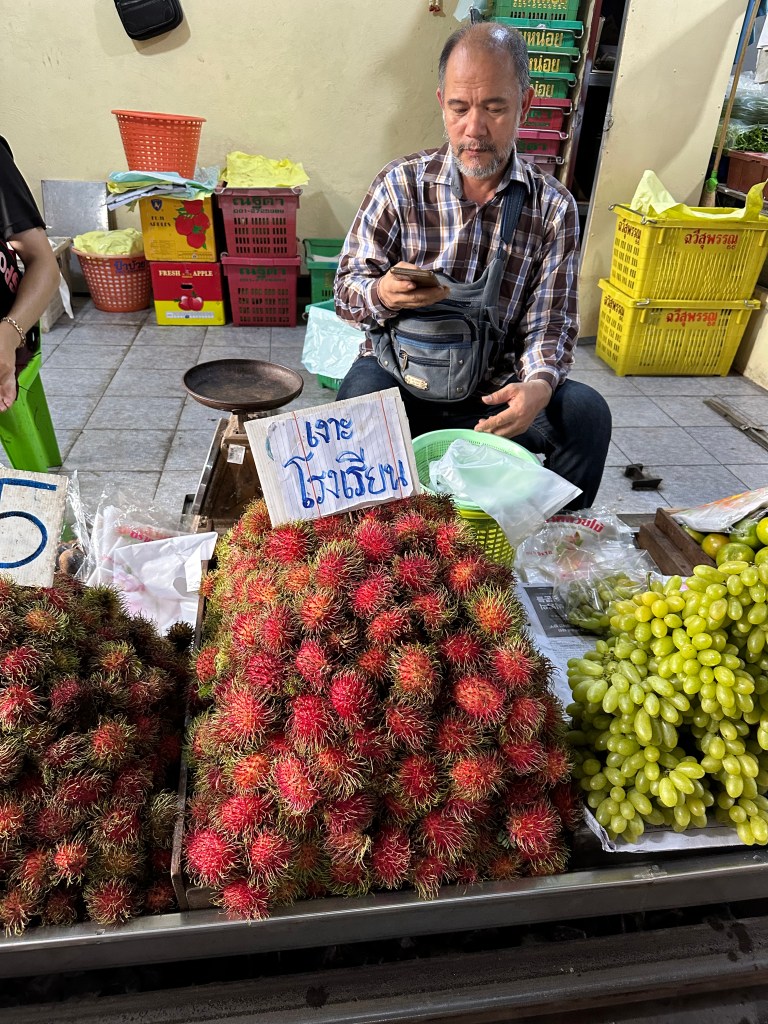
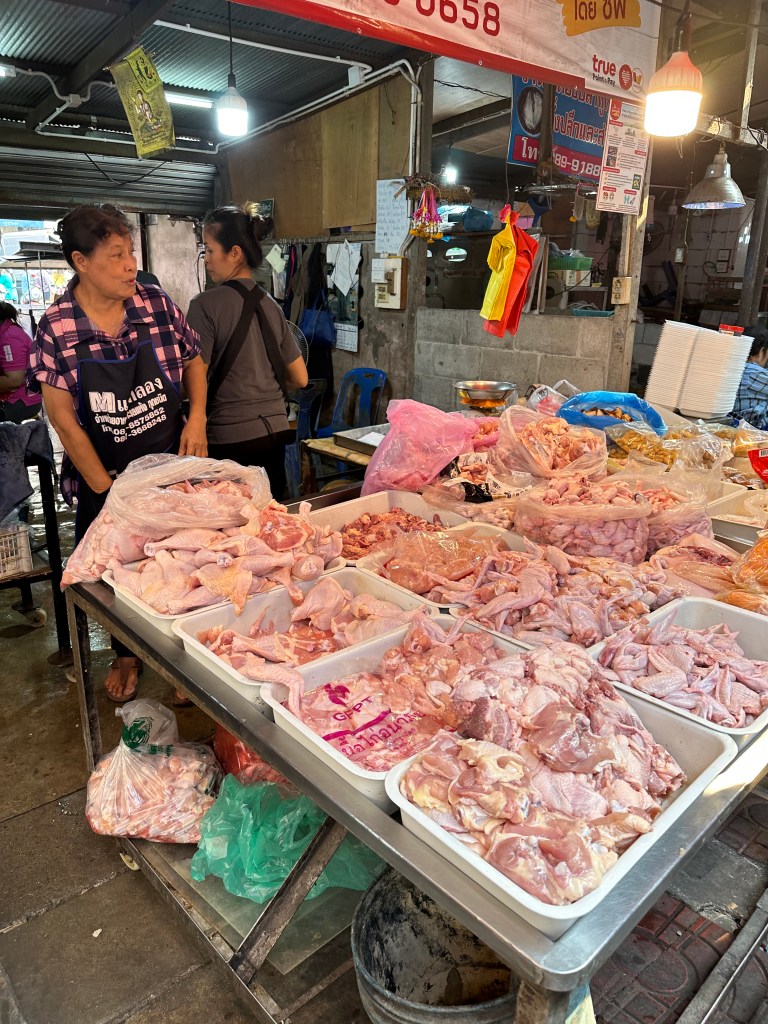
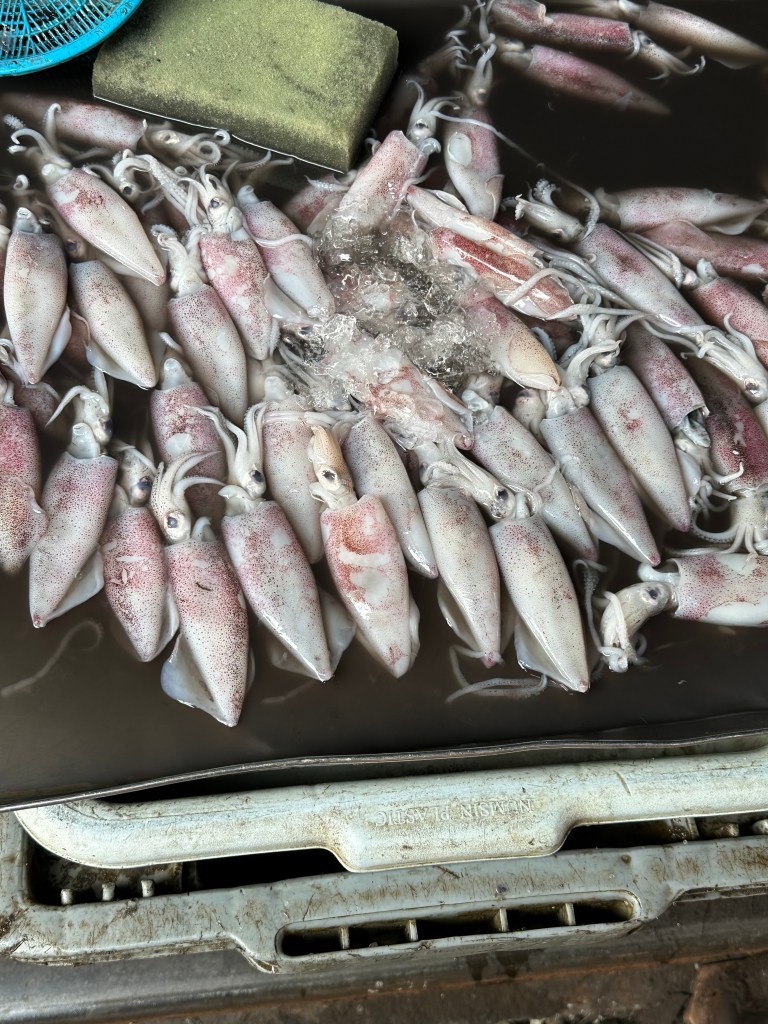
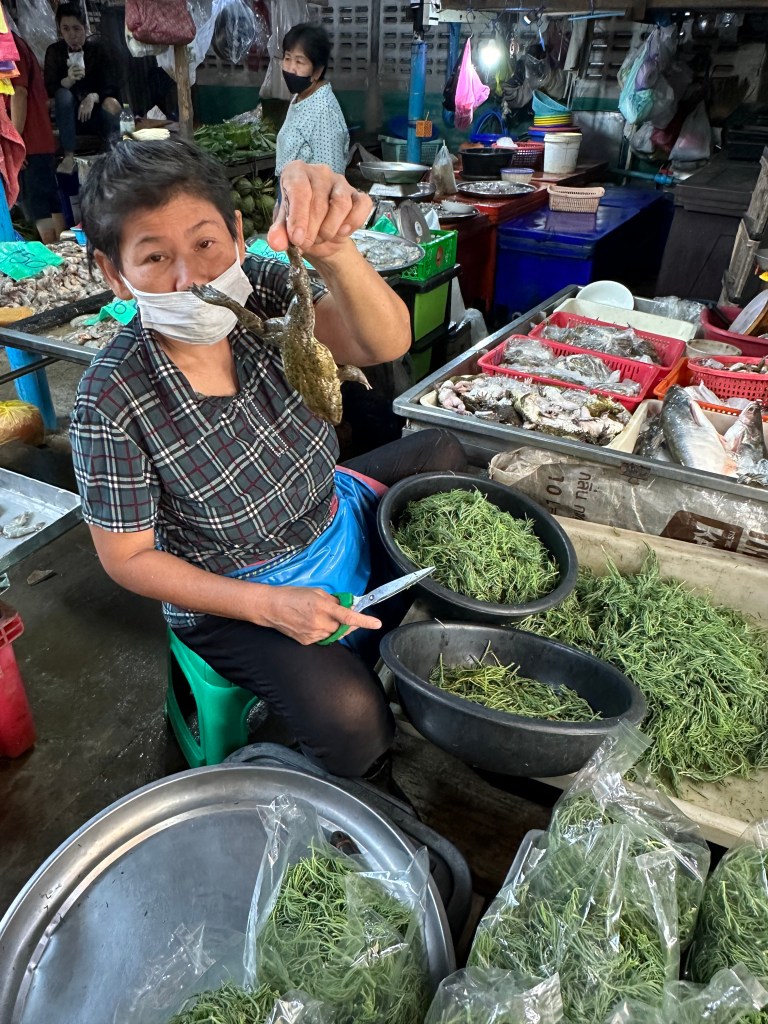
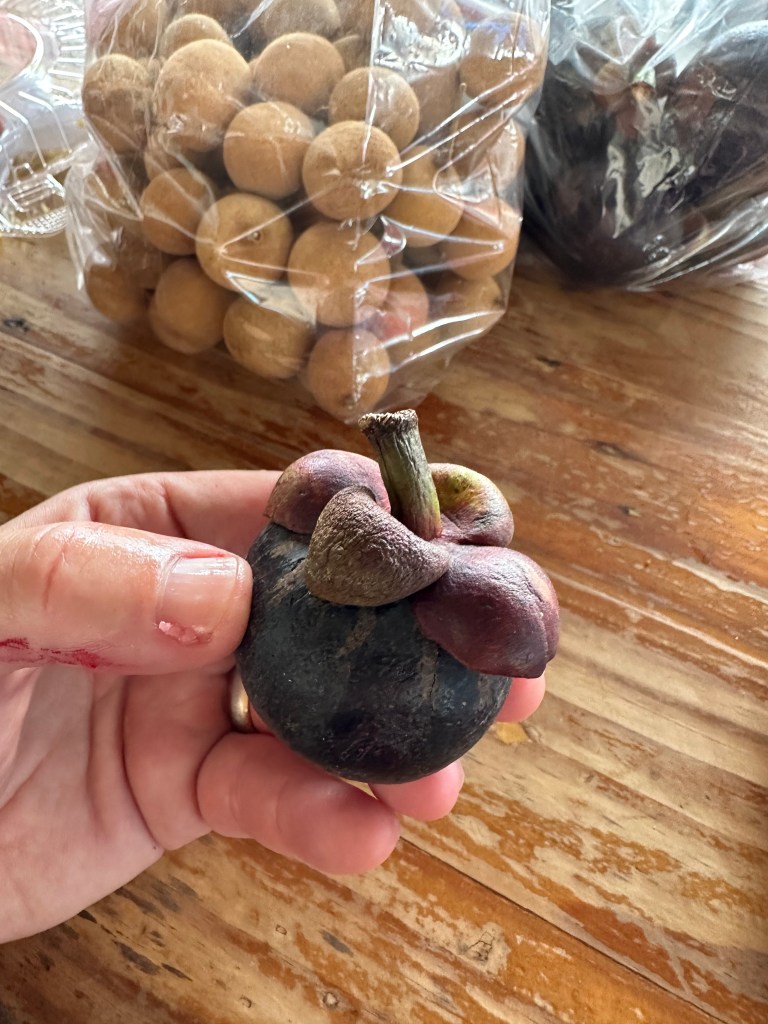
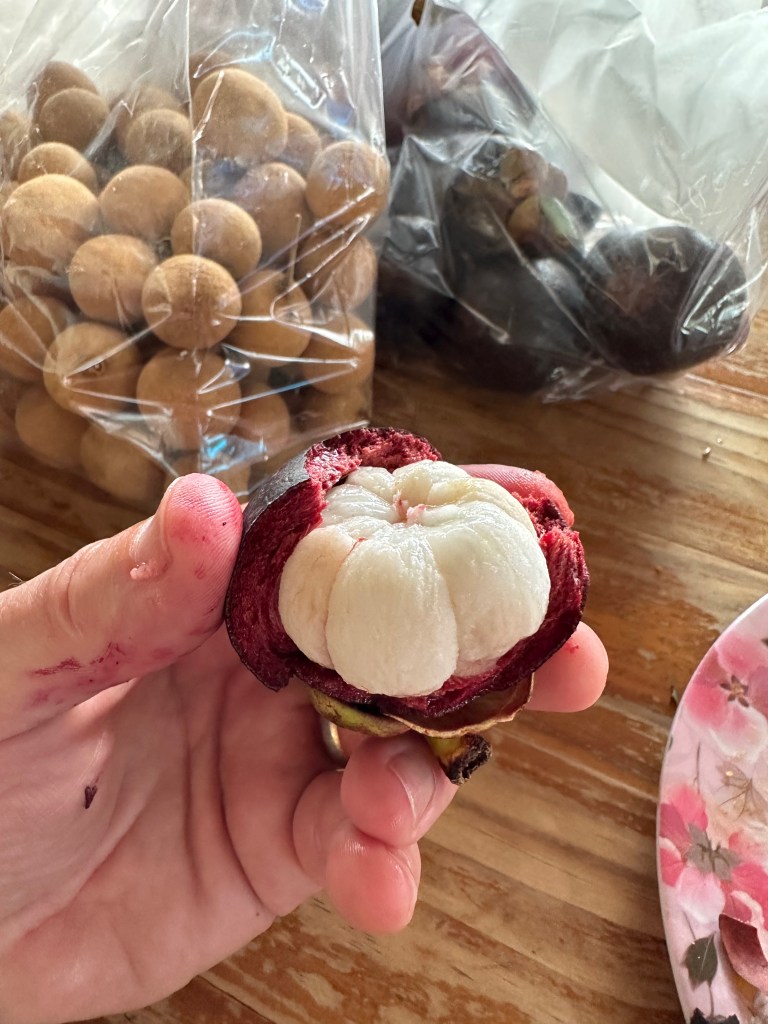
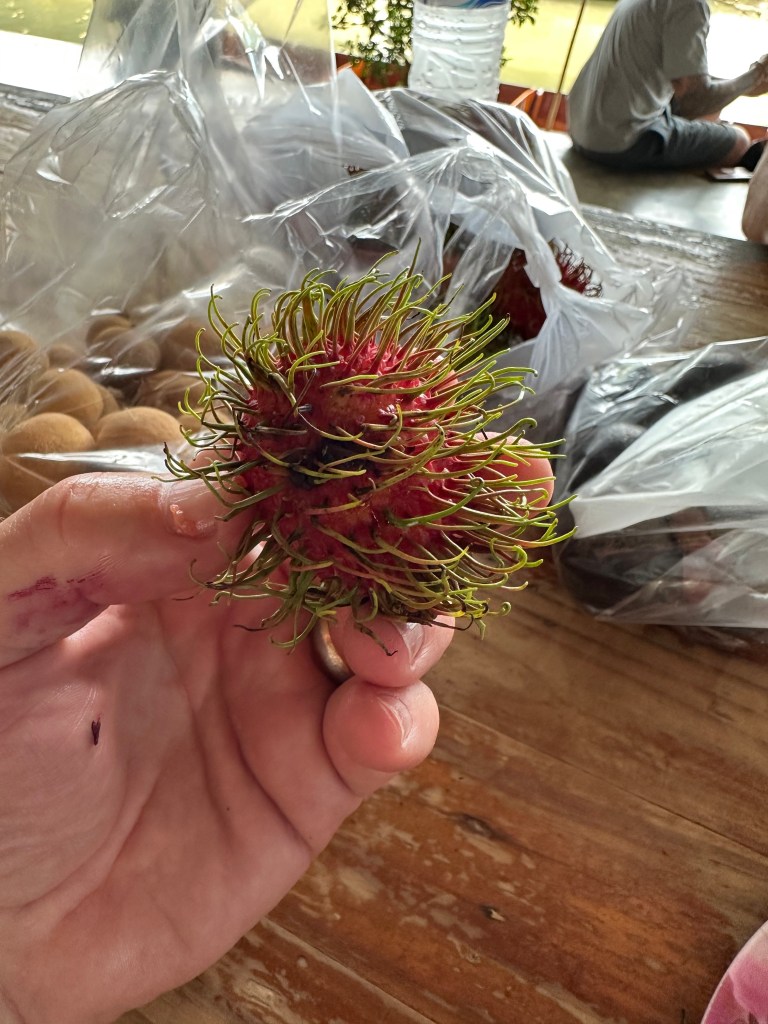
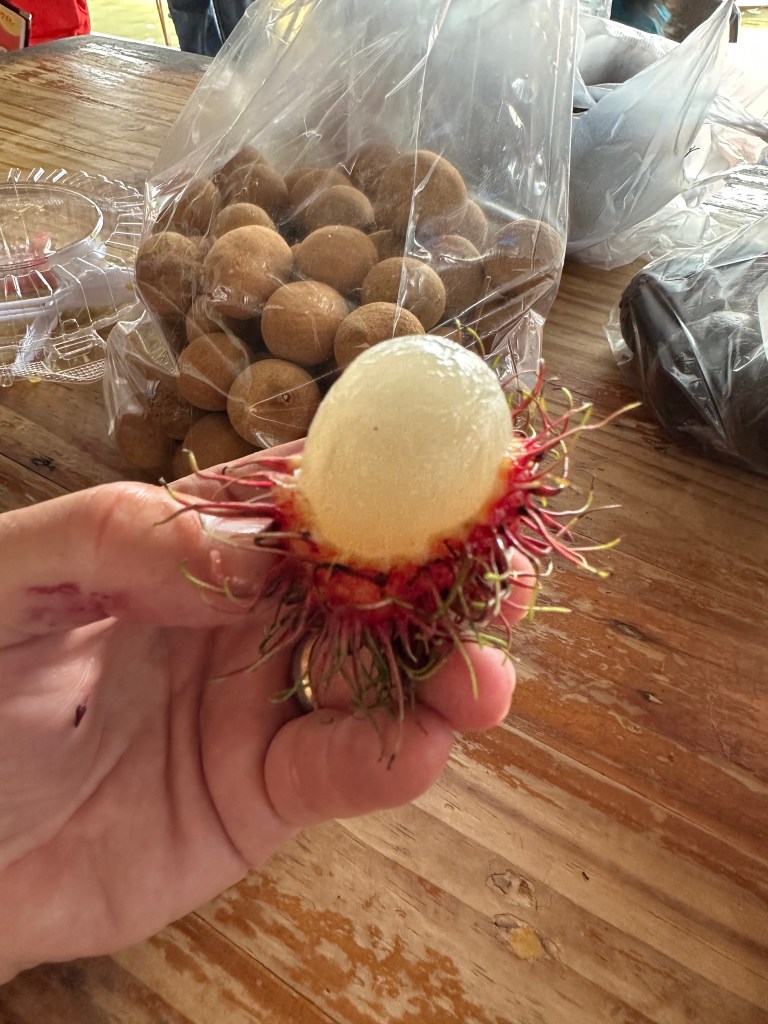
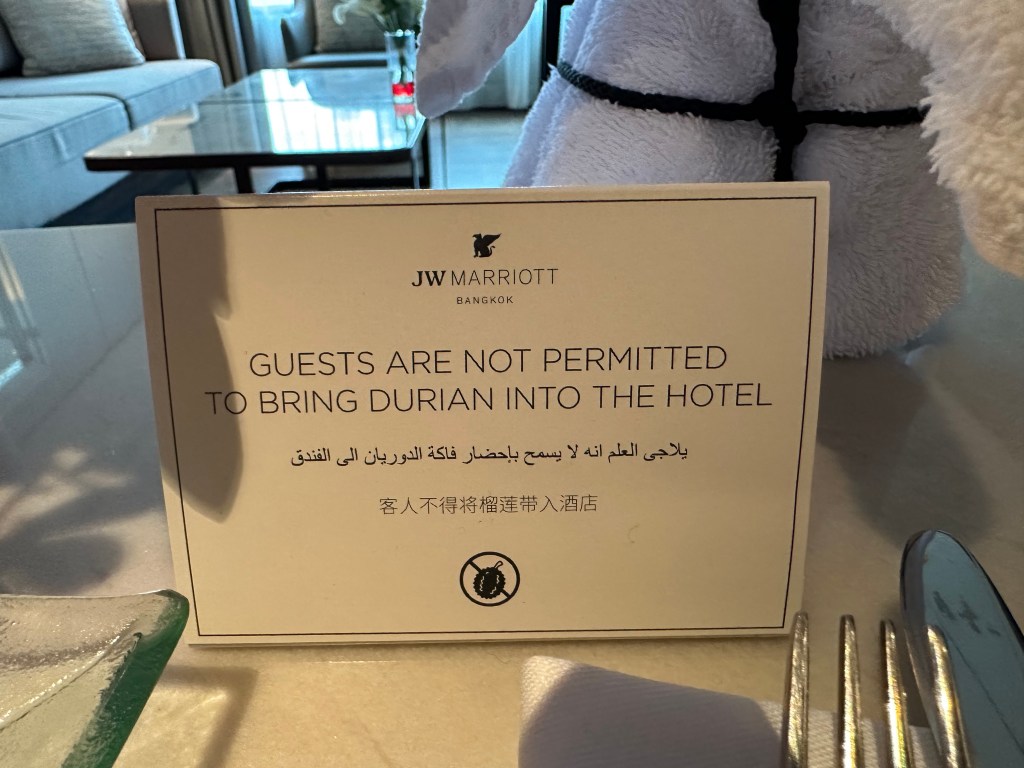
The Maeklong Railway Market has become popular on YouTube: lots of food and tchotchke vendors lining either side of railroad tracks, with their awnings overhanging the tracks; just before the (scheduled) trains come by they all pick up and move back, then immediately go back to where they started when its all over. And what did these vendors sell: a remarkable, stunning, incredible combination of fruits, vegetables, fish, meat, and tchotchke. Fruits and vegetables we only periodically see at home (mangosteen, rambutan, longan, pulasan, jackfruit, durian, buddha’s hand, and – of course – mango and papaya). Tons of squid, catfish, frogs. And chicken and pork, of course.

Following that we made a quick stop at a small family-owned brown sugar “factory” – with this brown sugar made from coconut oil. You could see how the brown sugar was made (think extracting the coconut sap from the tree itself – not the coconuts – and then boiling it. Yup, just like maple sugar). And – waddaya know – they also sold alot of what they made along with coconut carved stuff, coconut oil, and other trinkets.

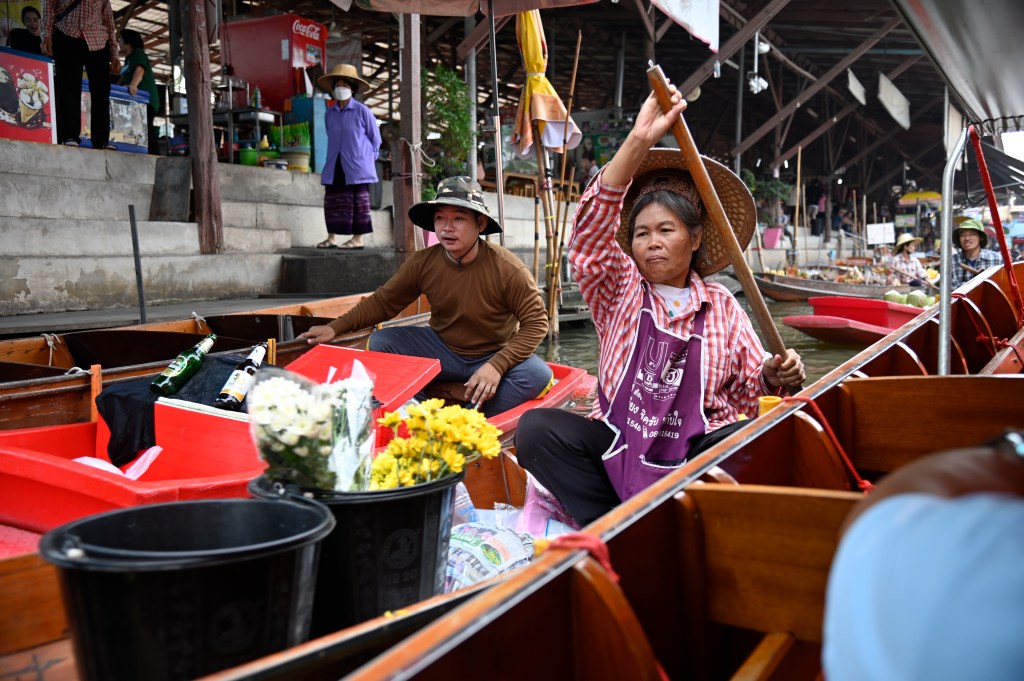
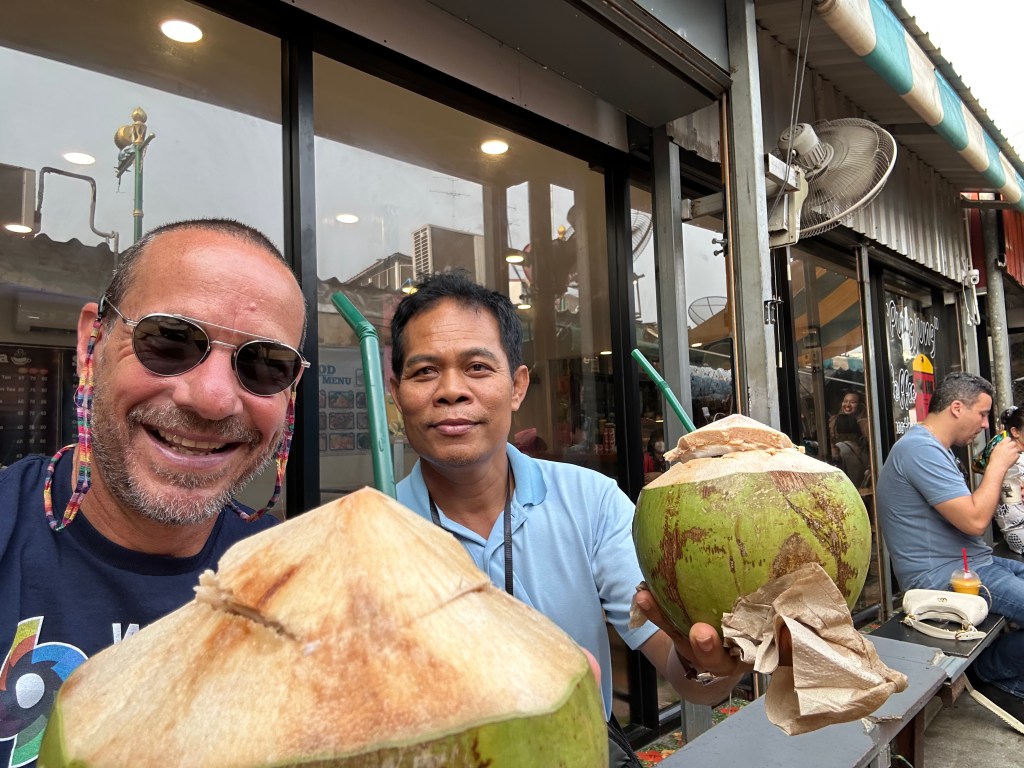
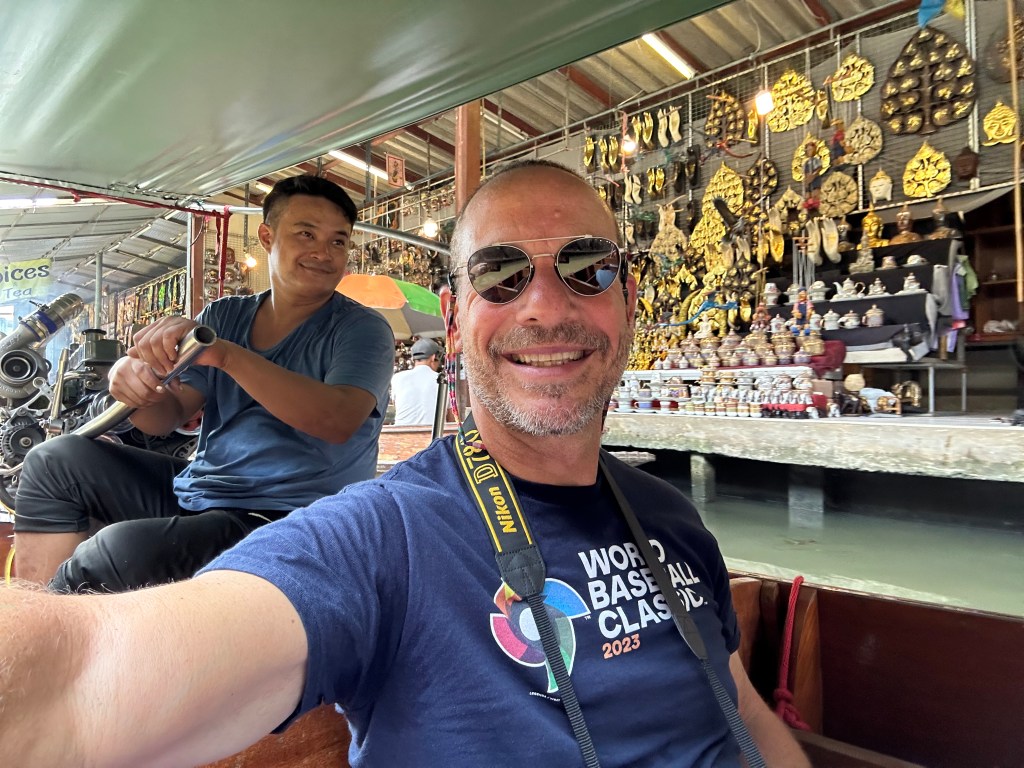
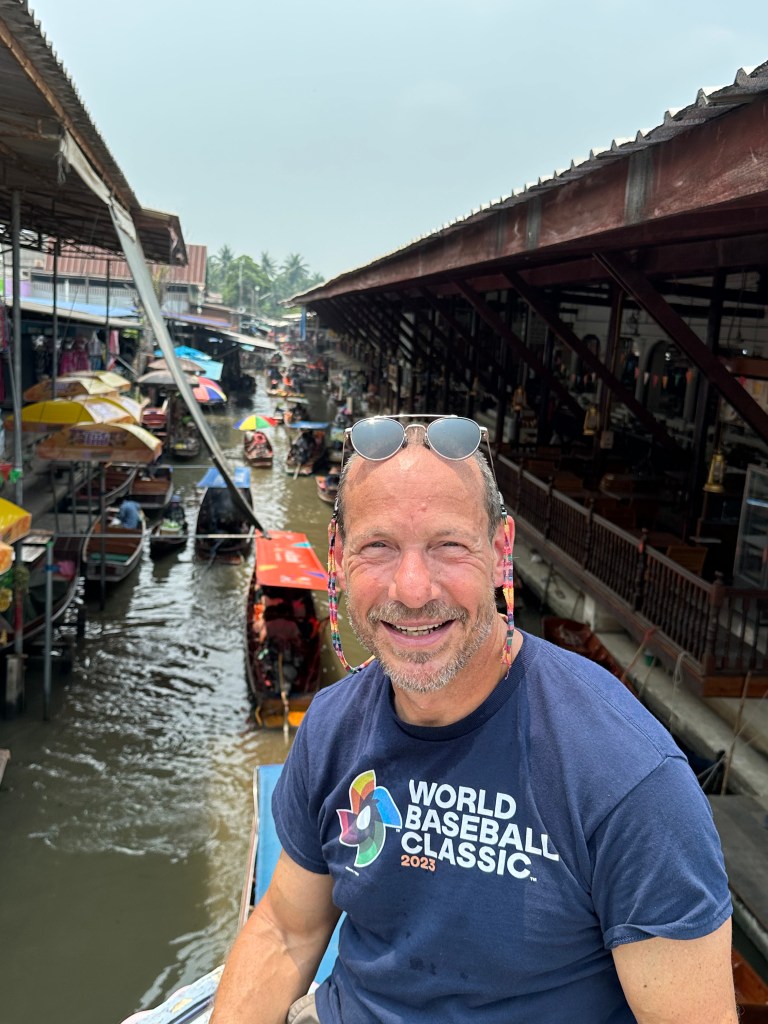
From there we headed to the Damnoen Saduak Floating Market; this was fun, but also a bit depressing. After we paid, we stepped into a 12’ long narrow awninged motor boat that probably sat ten (tho it was just the two of us). Kind of like a long motorized canoe that goes 5-10 mph max. The driver slowly took us on a long loop through a bunch of canals; there were vendor stands along a good part of the way as well as other vendors in their own boats on the water. So – kinda fun to be on the water and seeing a ton of stuff being sold – great eye-candy. Depressing in that it is virtually all tourists there today – it seems very few locals still shop there – and, as well, there were many many empty vendor stands that closed as a result of the pandemic.
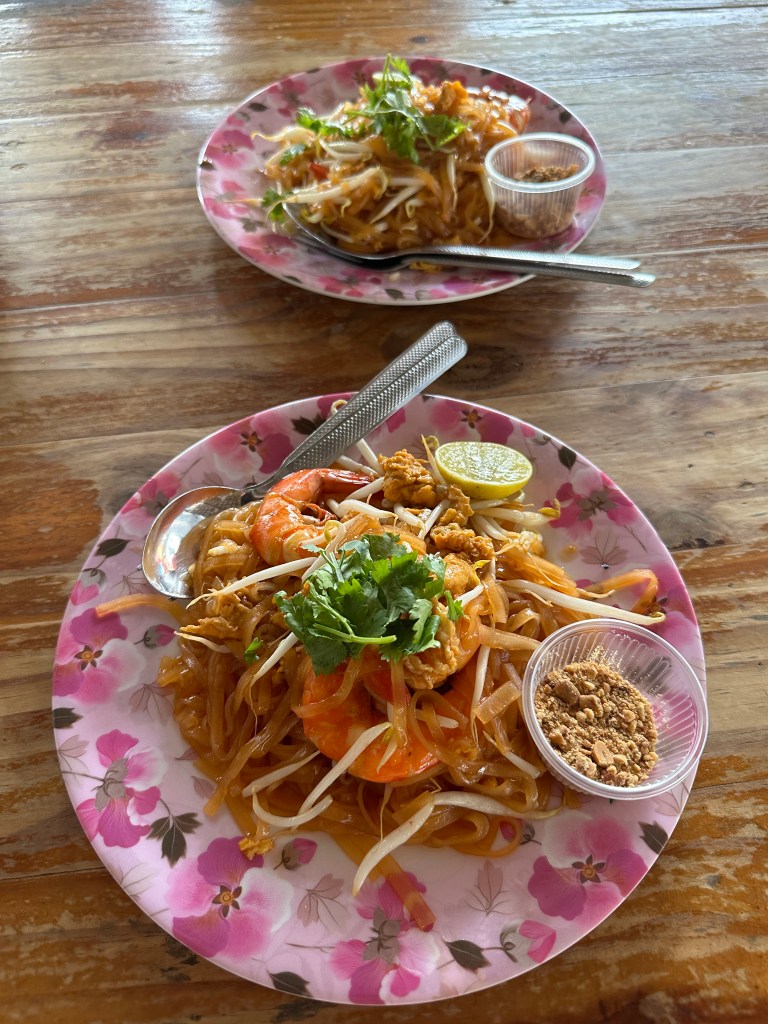
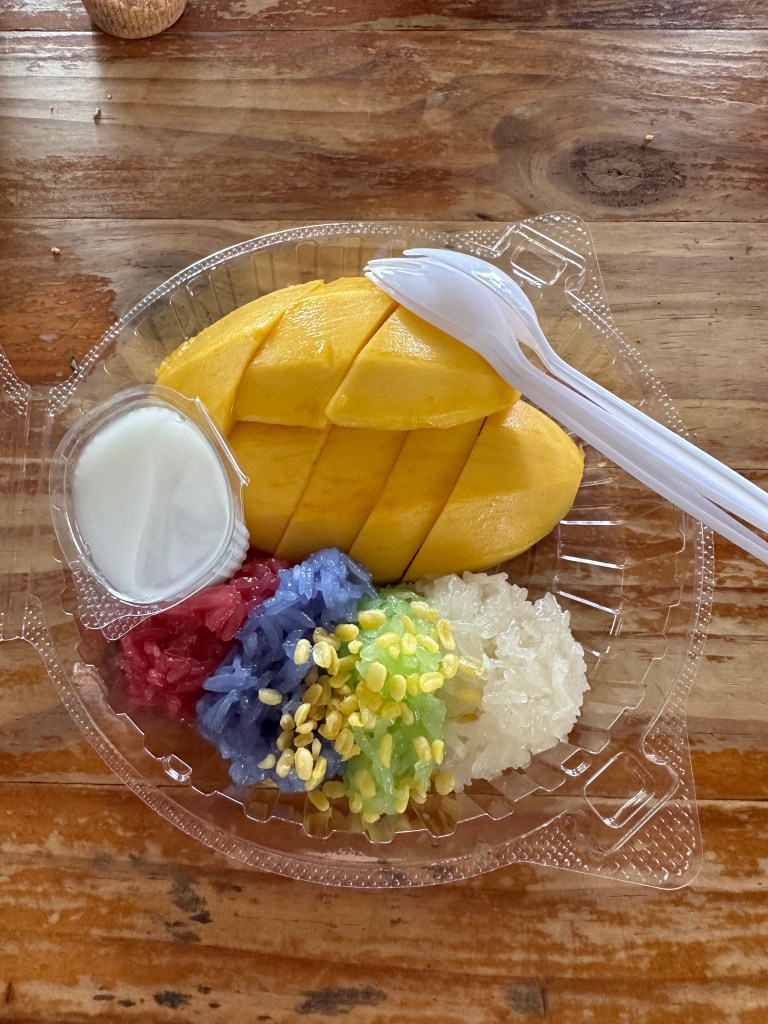
We got out of our boat and walked into the canal-side food market. That’s when we got to EAT! We started with a minced pork rice-noodle soup and followed that with shrimp pad Thai. Then it was sticky rice with mango, followed by a fruit tasting (the mangosteen, rambutan, and longan – all of which are related). To top it all off, coconut ice cream with peanuts. GREAT eats – and I was so stuffed I could’ve fallen asleep on the road-trip back home.
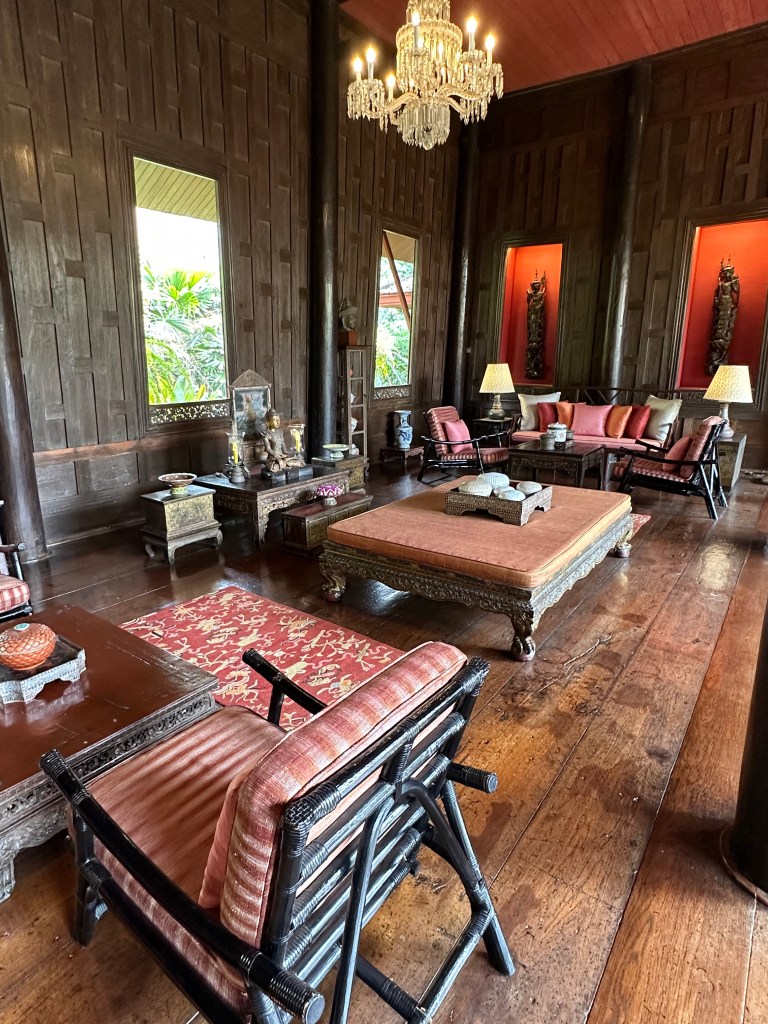
After returning to the hotel – hot and sticky from the heat and humidity – it was time for a shower before I headed back out to the Jim Thompson House. He was a Delaware-raised architect who re-discovered the quality of Thai silk in the 1950s while living here, and he started the Jim Thompson Silk Company, which still exists. He disappeared on a trip to Malaysia in 1967, and his home has become a museum – he designed and built a combination of new and relocated traditional teak Thai houses and filled it with beautiful objects he collected over his lifetime. And – yup – you exit through the gift shop – and they sell alot of silk clothing there! I ended my visit with a mango slushy in the shaded garden.

Causing the Floating Market