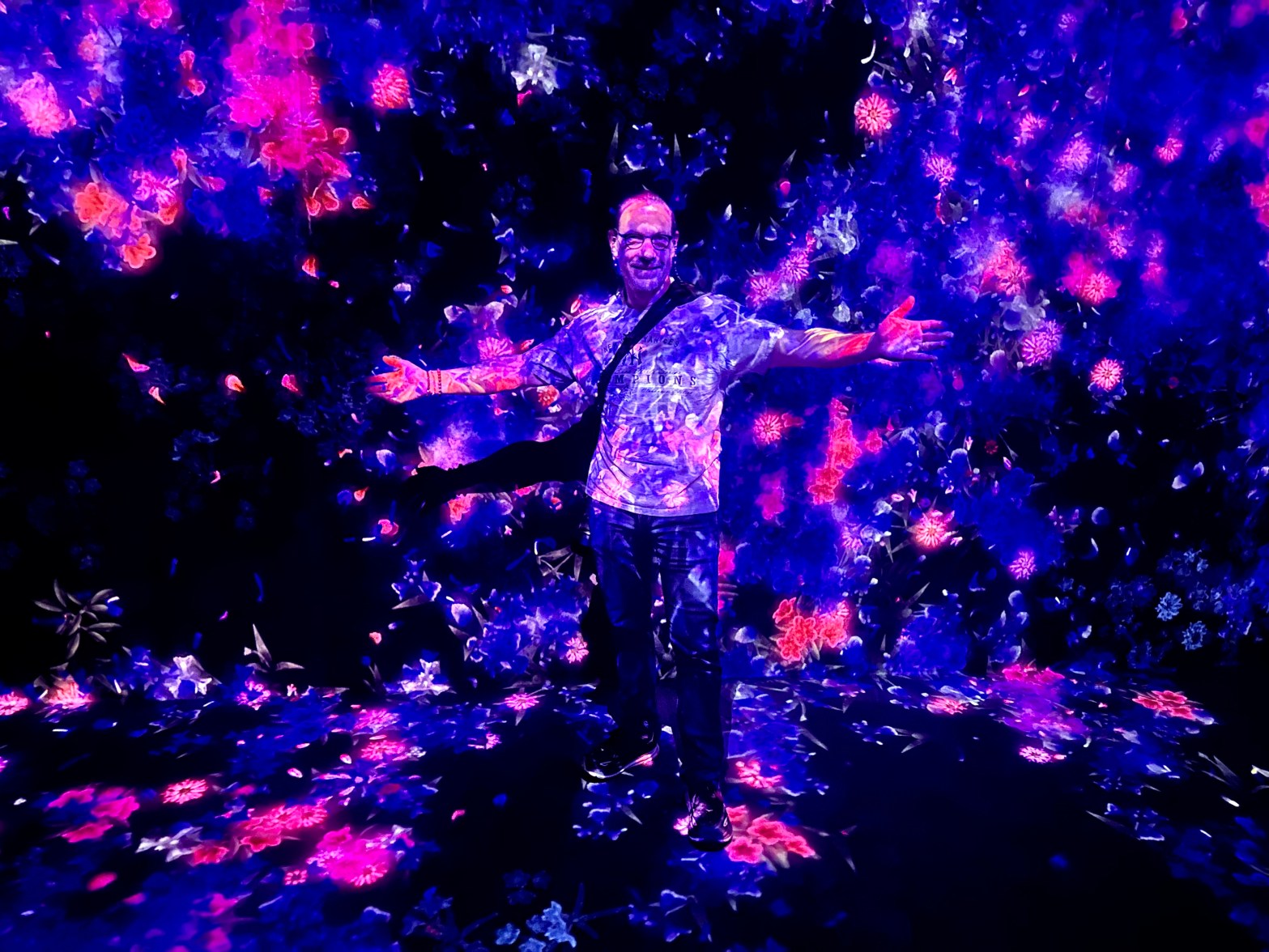
My last full day in Tokyo, and I decided to not get up too early after four really busy days.
To start, I took the subway to the Roppongi, a very upscale neighborhood with high-end clothing and other retail, as well as newer buildings – office and residential. Walking over to the Azabudai Hills area and buried in the expansive mall-like basement of the Mori office complex (The Pokemon Company apparently is headequartered there), was the teamLab “Borderless” exhibit; that’s a misnomer though – it really is an expansive immersive digital experience. TeamLab is an art collective founded in 2001 – artists, programmers, engineers, animators, and others – who create art that combines all of their collective skills. They’ve got multiple exhibits at various locations in Japan, Macao, China, Singapore, Hong Kong, and other cities around the world.
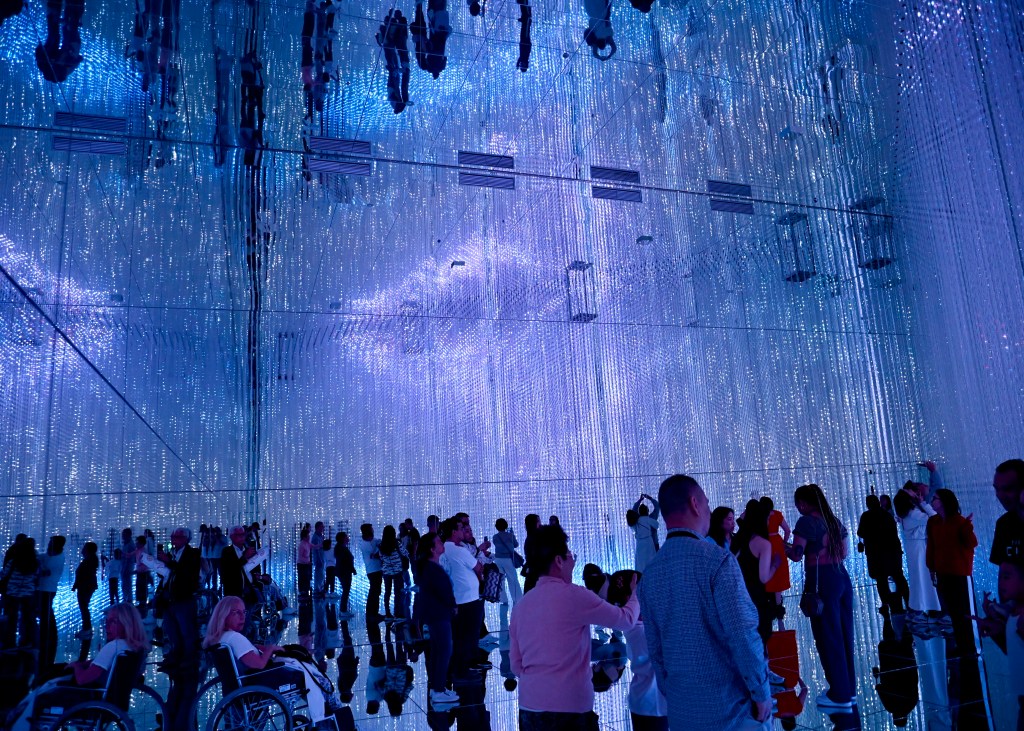
You wander and walk – there’s no guided pathway – in and around a series of large and small rooms and hallways; projected on the walls and ceiling and floors are light shows, animated fish and marching turtles and people; hanging from the ceiling in one room are lighted beads, in another virtually unlit room large cubes are attached to the walls with warnings about sharp edges, in others there are mirrored floors. It’s close to dark other than the lights and images being projected; in one room I experienced vertigo unlike in any of the other rooms. Children and adults – me included – looked in awe-struck wonder at the ever-changing images and lights; even if you loop back into the same room, you may see something completely different. It was pretty darn cool.

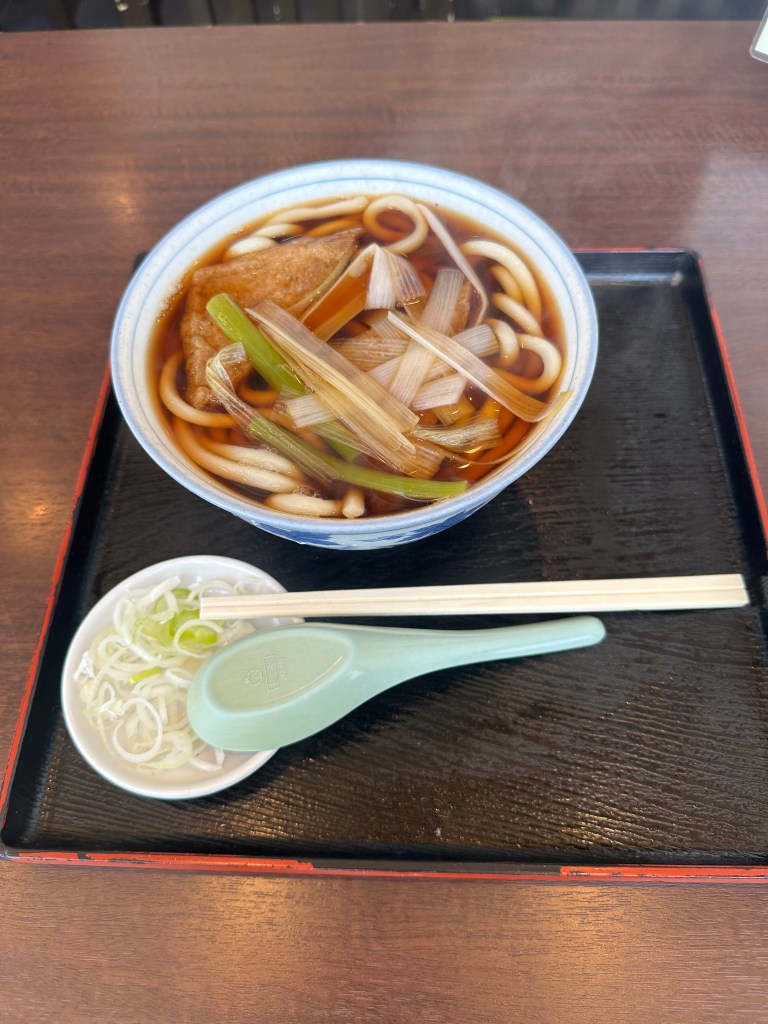
After I finished, I started walking back to the subway. Not sure what I was going to do for lunch, I noticed a black-suited Japanese business man ducking into what looked to be a small local restaurant, so I followed him in. The waitress – whom I presumed to be one of the owners with her husband in the kitchen – didn’t speak any English but handed me a point-and-pick menu. I was the only caucasian in the place, and had a great bowl of ramen. At one point, I put my iPhone on the table, leaning it up against the menu in order to film myself slurping; the guys at the table next to me, not knowing I was filming, grabbed the menu, only to see my phone fall; they apologized – by nodding their heads and laughing a little at what I was doing.
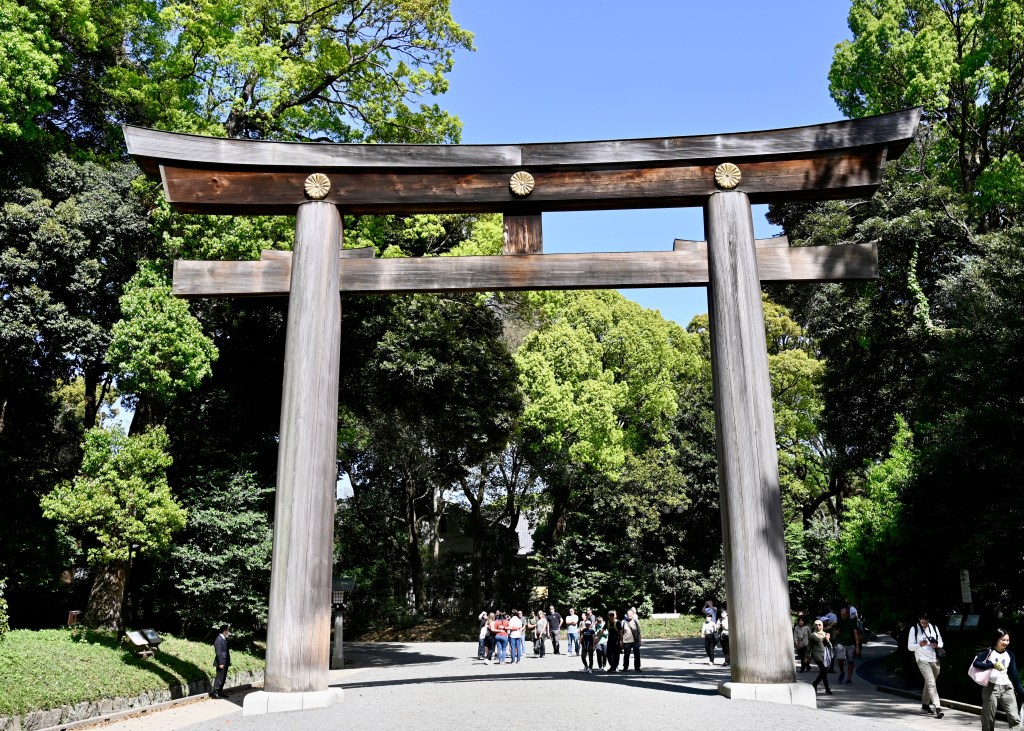
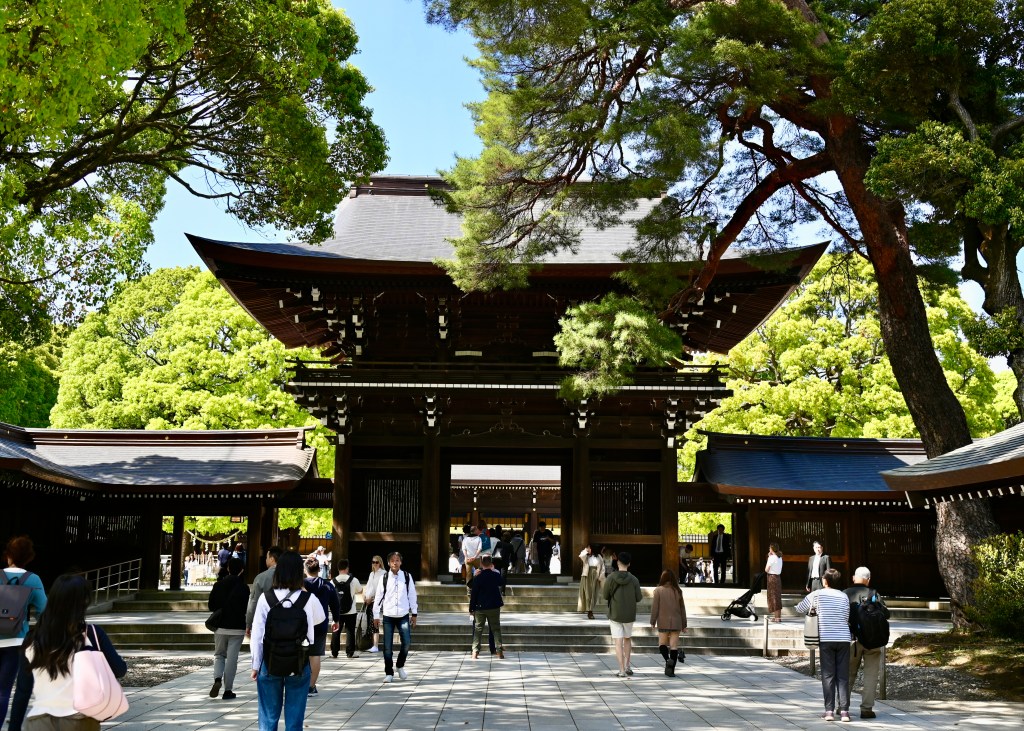
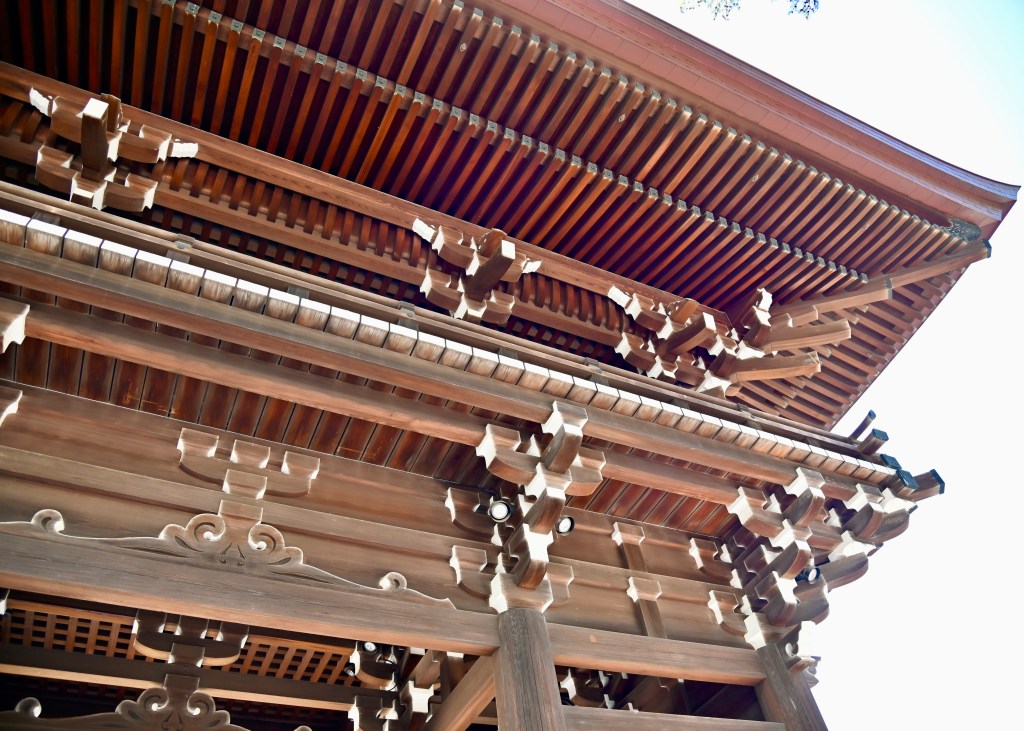
From there, I was off to the Meiji Shrine; the subway left me with about a 15-minute walk first through city streets and then into a large public forest with evergreen trees. Amidst all of this was the Shinto Shrine complex – dedicated to the Emperor Meiji (the first emperor of modern Japan) and his Empress wife; he died in 1912, and the Shrine was dedicated in 1920, though was destroyed during WWII air raids on Tokyo. It was rebuilt and dedicated in 1958 and is one of the country’s most popular Shrines, visited by tourists and locals alike.
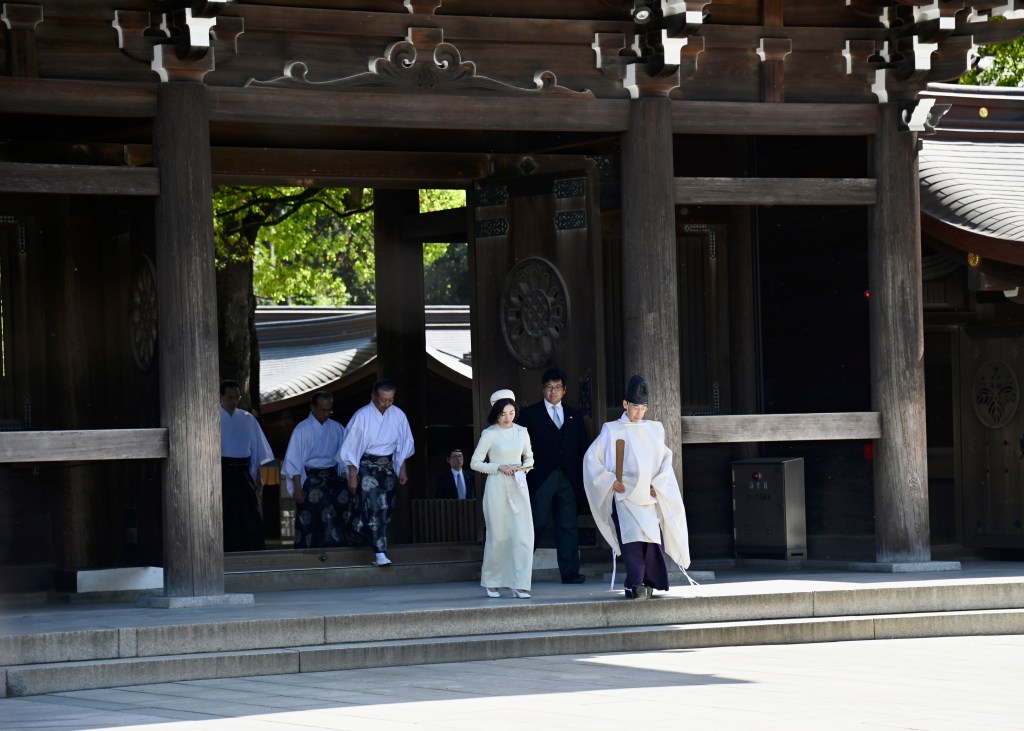
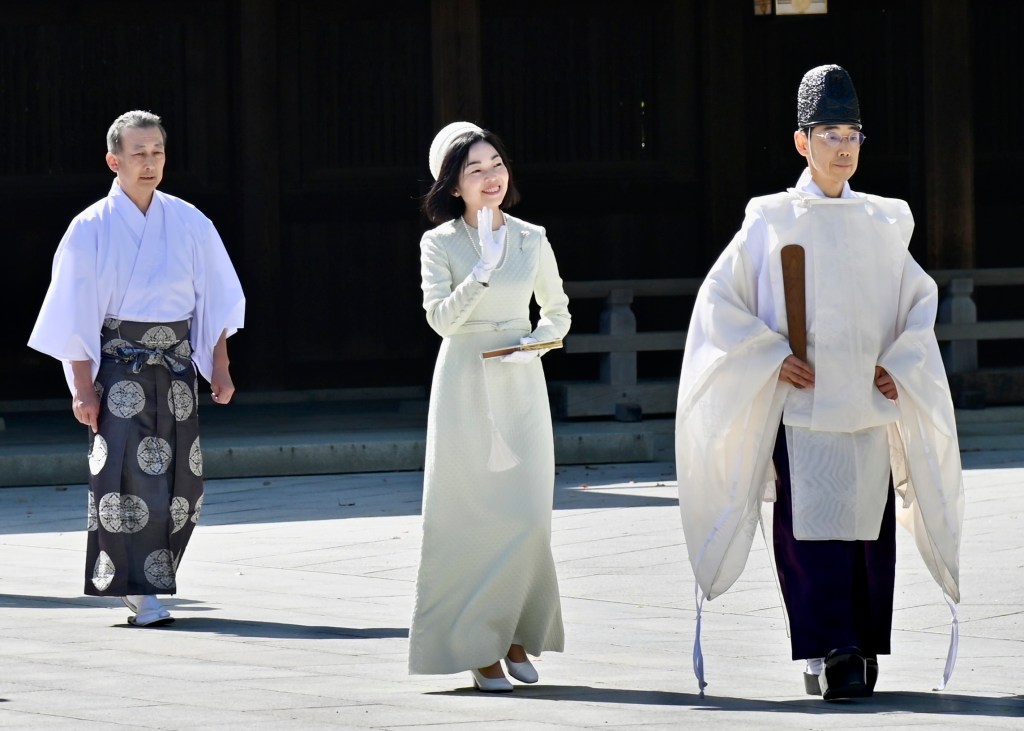
During my visit I noticed news camera crews and Shrine personnel sweeping leaves off the large plaza in front of the Shrine. Slowly, a group of low-key security – guys in black suits, no uniforms, and no visible weapons – pushed everyone off to one side of the plaza for some unknown reason. Finally, one guard told us that the princess – the current Emperor’s only child – was coming to visit the Shrine. We waited for about 20 minutes and Aiko, Princess Toshi entered the plaza with several priests; they walked across it, went behind some screens and then entered where the main altar is located, stayed briefly (we were too far away to see what was happening there), and then walked out the way she came. The whole thing lasted about 20-25 minutes, but it was exciting to see.
I took the subway back to my hotel to rest-up before my evening’s activity.
When I decided I was going to Tokyo, there were two things I wanted to be sure I did: see sumo (which I did on day one) and go to a Japanese professional baseball game – NPB or Nippon Professional Baseball. Not knowing exactly how to pull this off, I dug into Reddit and learned about JapanBall and JapanBallTickets – both amazing resources for learning about Japanese baseball, history, stadium, players, and how to buy tickets. There are two teams that play in metropolitan Tokyo (and five overall that play within reasonable distance); the Tokyo Yomiuri Giants play in the Tokyo Dome; they are, for better-or-worse, considered the New York Yankees of Japanese pro ball – the first team, the winningest team, and two of the games’ biggest stars played for them, one being Sadaharu Oh (868 career home runs). The Tokyo Yakult Swallows plan at Meiji Shingu Stadium, the second oldest ballpark in the country (built in 1926) and where Babe Ruth and Lou Gehrig once played.
Fortunately, the league’s scheduled allowed me to see one of these teams – the Swallows – playing the Yokohama DeNA Baystars.
I took the subway down to the Stadium figuring I’d arrive early – when the gates first opened – to see what the scene was like. The stadium definitely needs an upgrade, but the fans already were waiting to get in, a good sign for the enthusiasm they’d show. The starting line-ups were to include two former US MLB players.
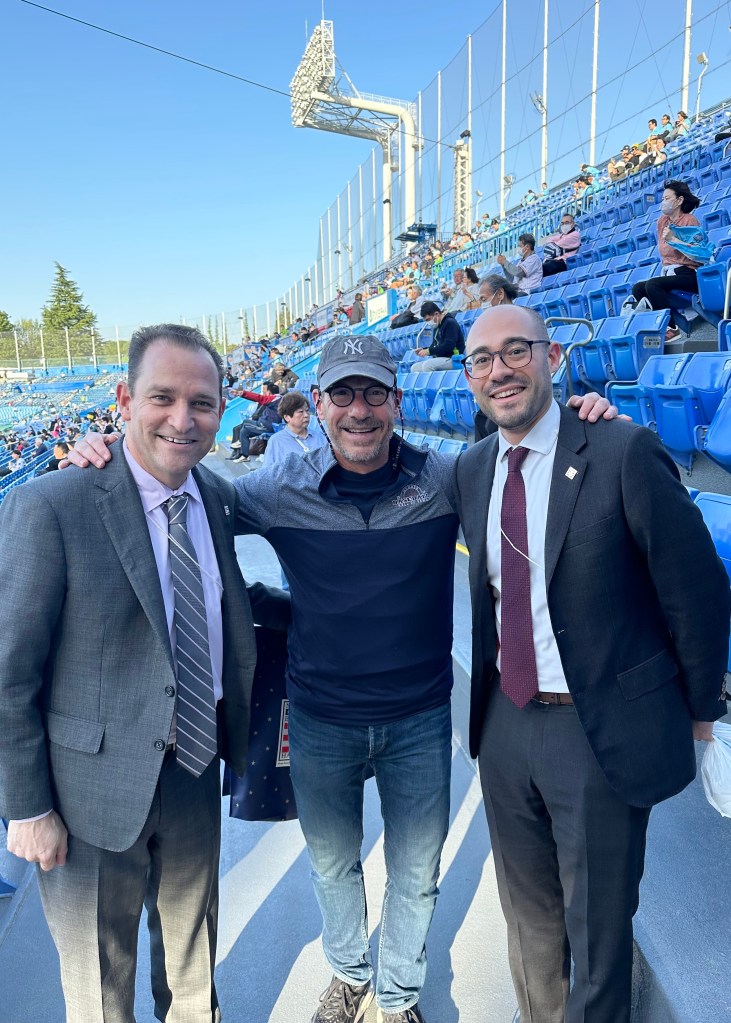
Once I walked in I took a stroll around the the entire seating area, from the right-field foul pole, headed past first base to behind the plate and up the third-base line to the left-field foul pole. I was wearing my MLB Hall of Fame jersey, and as I was walking, I noticed a few guys in suits walking down an aisle. Two of them stopped and pointed at me, then at my jersey; it was then that I noticed they were wearing MLB Hall of Fame lapel pins. Turns out it was the president and one of the vice presidents from the Hall of Fame, in Tokyo to announce a new partnership between NPB and the HOF. Small world! We had to grab a photo!
So what’s different inside the ballpark? Cheerleaders! Both before the game and during player announcements and between some innings. Vendors – almost all of them were women, and they basically carry kegs on their backs, with hosed spouts and plastic cups; want a beer? They pour you a fresh one out of their keg.
And the cheering is just fantastic – two different official cheering sections for the home team – one that sings and cheers and chants when they’re at bat, the other cheers and chants and sings when they’re in the field. Home team scores a run or hits a a home-run? Fans’ umbrellas come out and get opened and spun around. There’s just a ton of enthusiasm.
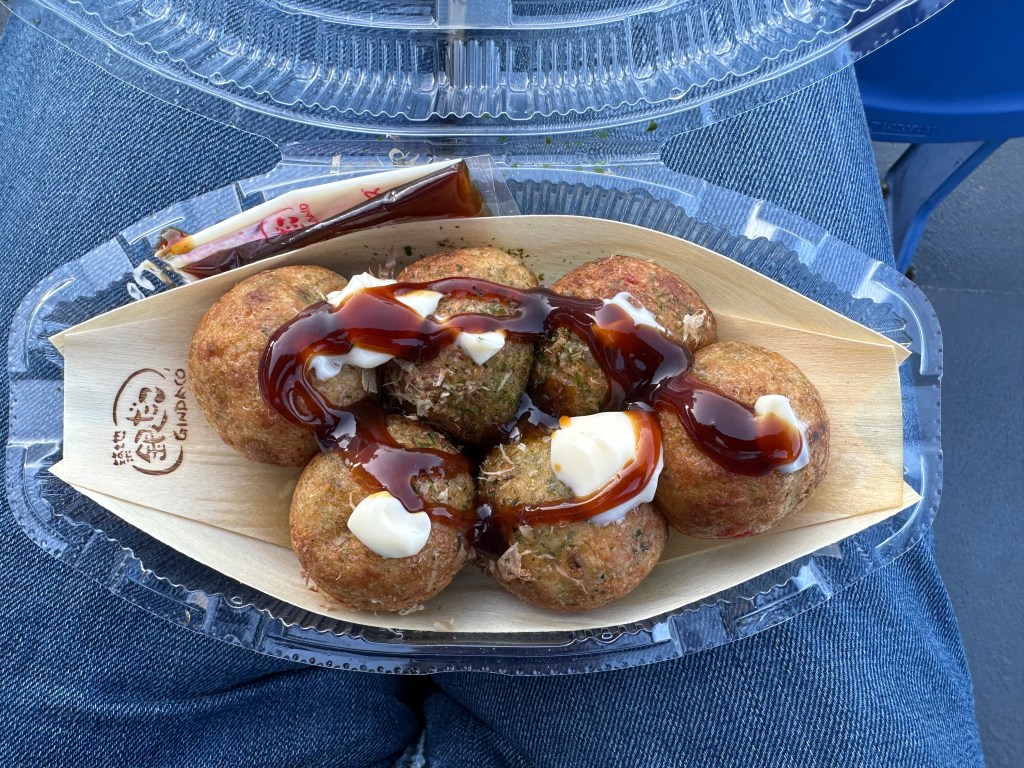
And the food for sale? Well, I didn’t know what most of it was – there weren’t a lot of English-language signs at the food stands in the concourse, so I found something that looked pretty tasty based upon the signs. There was a dude standing there hawking whatever it was; so I asked him – what is it? He indicated he didn’t speak English well, so grabbed his phone, typed something in, and showed me the resulting picture: it was an octopus. So, what he was hawking was essentially clam fritters but made with octopus. Sounded good! Tasted good too.
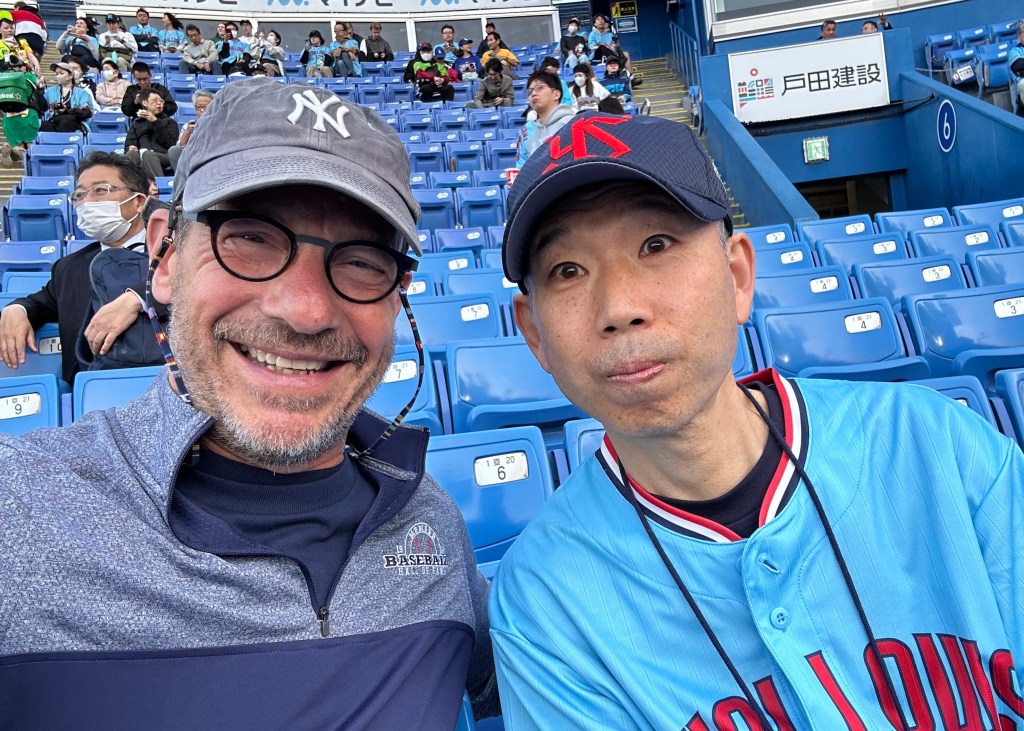
My seat was about 10 rows behind home plate, seated next to Yoshi, one year older than me, a die-hard Swallows fan and former season ticket holder. He’d brought his own food with him, as well as his umbrella.
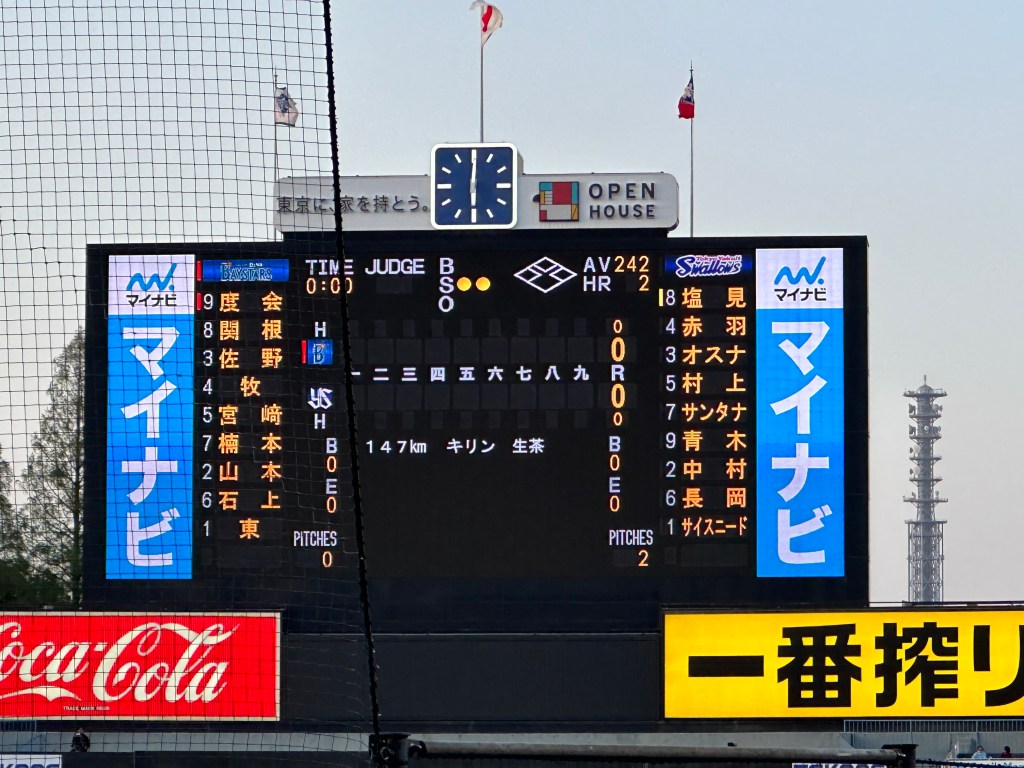
It took me just a few minutes to decipher the scoreboard – everything was in Japanese, but so much was familiar, just in a different format than I was used to. The pitch speed was in km/hr instead of miles; there was no pitch clock. They did have video review on the scoreboard, and no DH during the game. The Stadium was only about 3/4 full when the game started, but there were a lot of late arrivals and by the 3rd or 4th inning it was full. It was loud and boisterous throughout, even more so when the Swallows came back from 2-0, 2-1, and 3-1 deficits to ultimately win the game 4-3 on home-runs by Osuna (to tie) and Muramaki (to win). Super fun.
After a subway ride back to my hotel, I finished my last full day in Tokyo with a Wagyu burger and a couple of cocktails, happy about having been to the game and seeing a home-town win. My stay in Tokyo had started with sumo and ended with baseball.
 Fred's Travel Blog