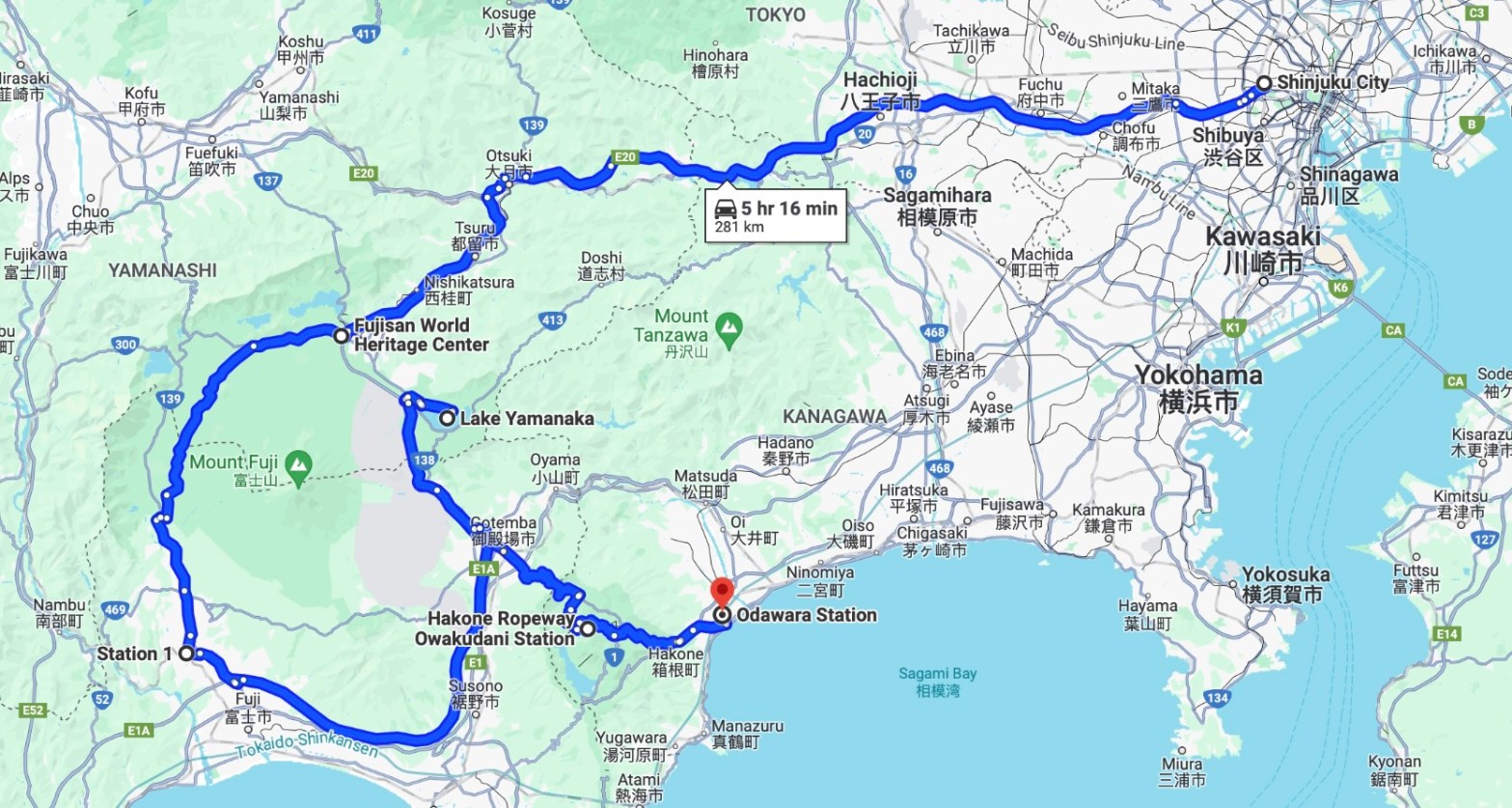
Even though I’d committed to spend my entire five days in Tokyo, there was one day-trip I wanted to take: a chance to see Mt Fuji, the tallest mountain in Japan. It’s only located about 62 miles from Tokyo and can sometimes be seen from the city, but given its proximity to Tokyo, it’s easy enough to get closer to it for better views.
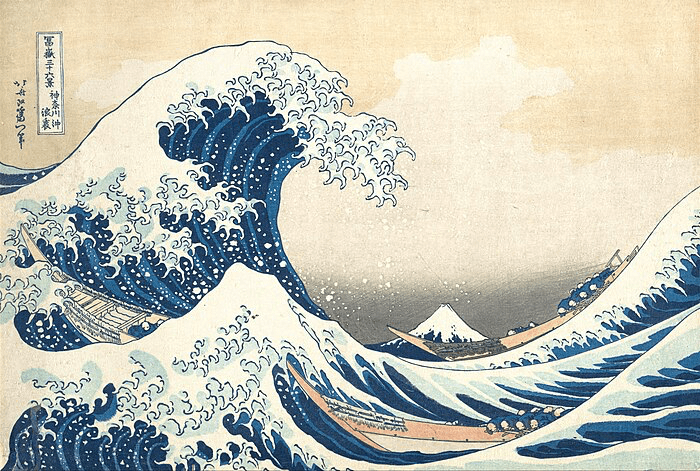
We’ve all seen images of it, with perhaps the most well known being that shown in “The Great Wave off Kanagawa,” part of a collection known as “Thirty-six Views of Mount Fuji,” a series of landscape prints. That great wave is seen on posters, coffee cups, coasters, t-shirts, and in movies. It’s become so familiar that we don’t even recognize it as great art any more, nor even notice that Mt Fuji is in it.
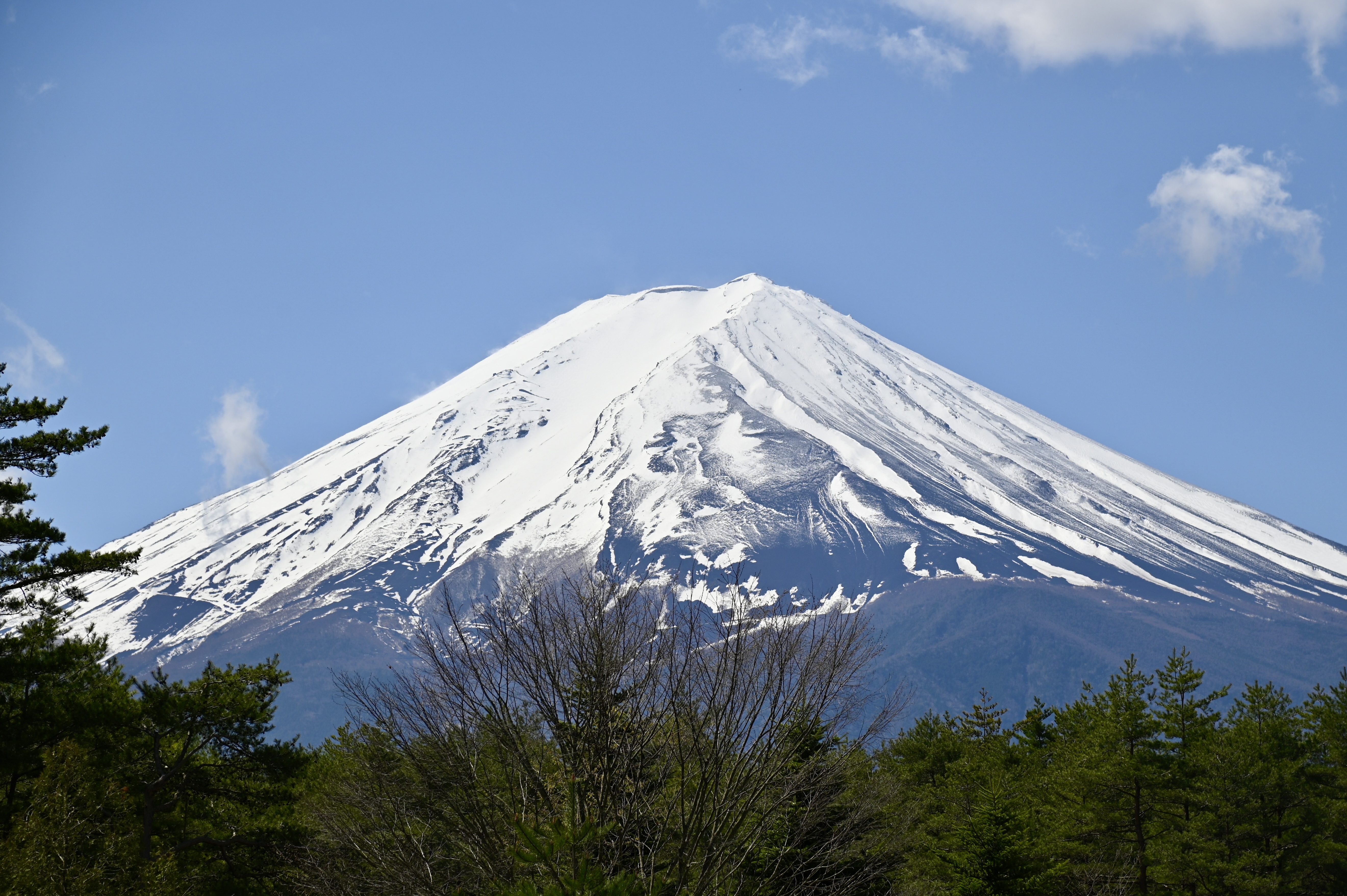
The mountain itself is a volcanic cone, and it last erupted in 1707 to 1708. Eruptions over time gave it the beautiful upside-down conical shape it has today. At a little more than 12,000 ft, it is roughly equivalent to six Skytree Towers (the tower I’d visited the day before). The base diameter is about 25-30 miles, encompassing an area of about 500 sq miles; by comparison, the entirety of New York City is about 300 square miles.
To get there I decided to sign-up for a tour that would include a visit close by Fuji and a stop in Hakone, which I’d heard good things about – for its outdoor sculpture museum and its mountain lakes. I thought I’d joined a small group tour, but when I arrived (in the lobby of my own hotel), I was on one of eight buses that’d be going there that day just as part of “my group”! Oh well, so be it. Fortunately, I was in the second row of the bus and not sharing my two seats with anyone else.
Climbing Mt Fuji is quite popular, especially to do so overnight so that you can see the sunrise from its summit. In fact, the tour guide on our bus told us he’d done it 16 times, having seen the sunrise on 15 of those. To facilitate climbing, ten stations – or stops – have been created, with the first at its base and the tenth at its top, with the roads paved until Station 5. And – that was the goal for the tour – a drive to Station 5. But – given that it was still mid-April, there apparently was still snow on the roads and, as such we only would be going to Station 1. In addition, Fuji is known as a “shy” mountain, meaning that it only is fully visible about 30% of the time given cloud cover (our tour guide explained that the mountain is big enough to create its own weather).
Would we see Fuji?
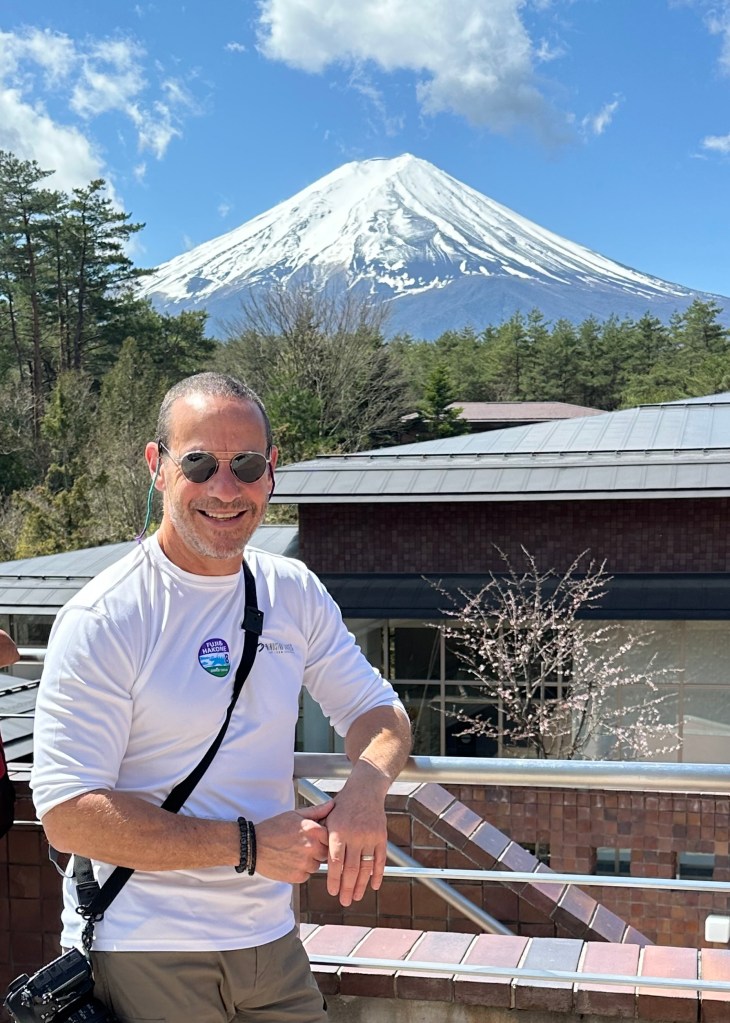
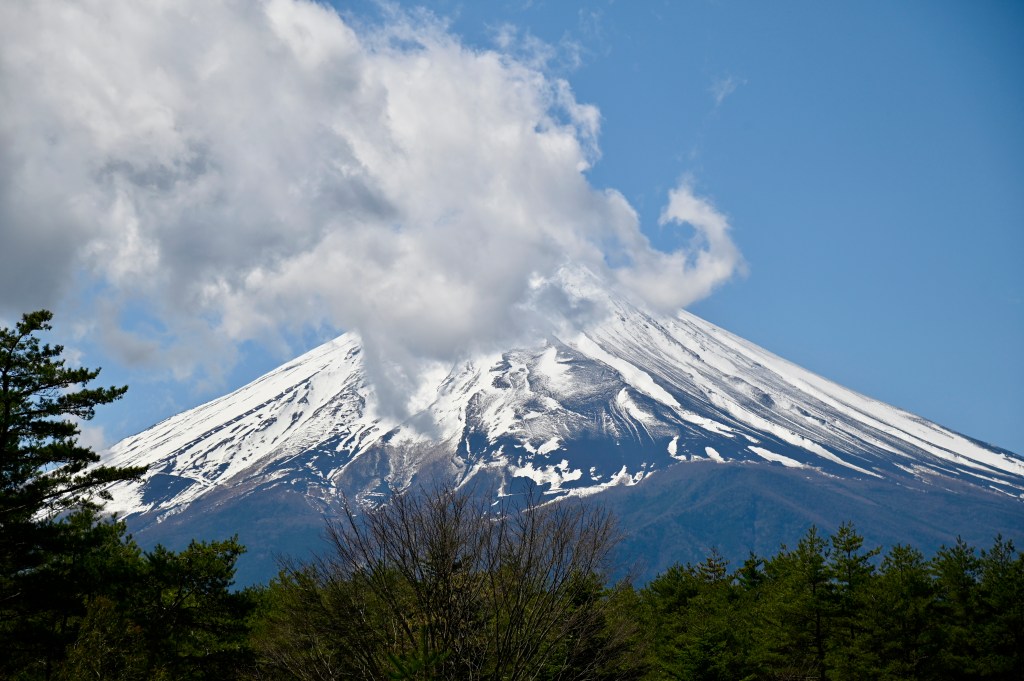
The short answer: yes! Our full drive to the mountain would take 2 1/2 hours and, as we exited the city along the way we began to see its peak. And we continued to see it. Our guide was cautious – telling us it may not last long – but as we approached our first stop about 1 1/2 into the trip it continued to stay clear. Where we stopped had a viewing platform and, yeah, there it was. Magnificent. Snow-capped. Iconic in shape. What a freaking treat on a beautiful day with blue skies. The crowds from the buses were invisible to me, as I focused on the view of Mt Fuji. Wow.
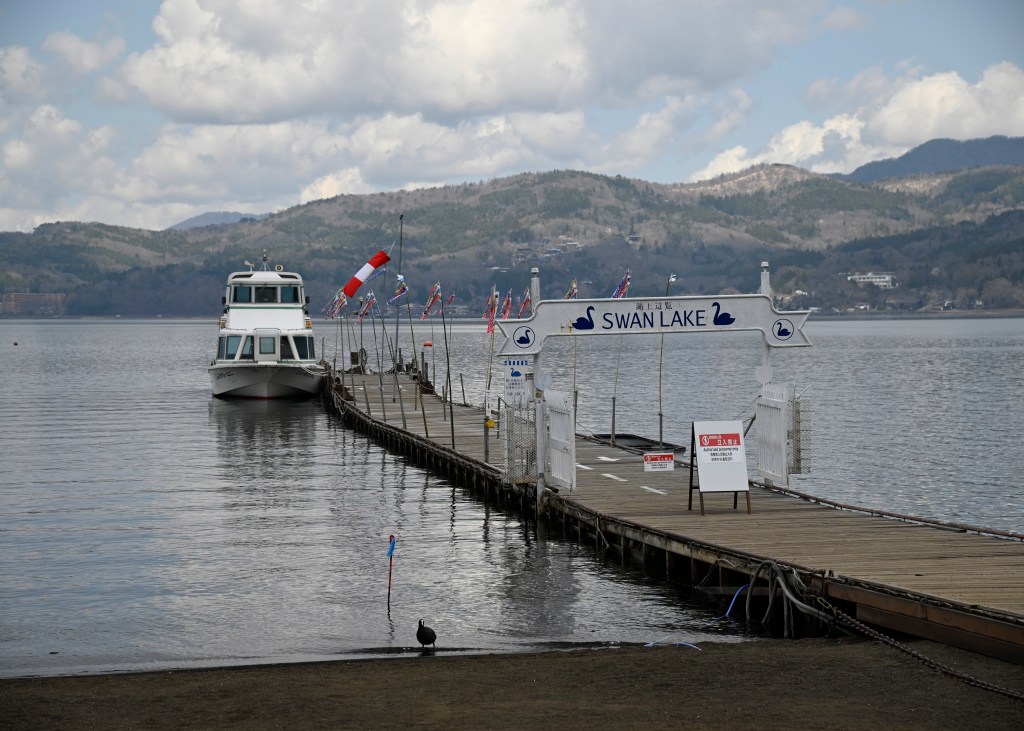
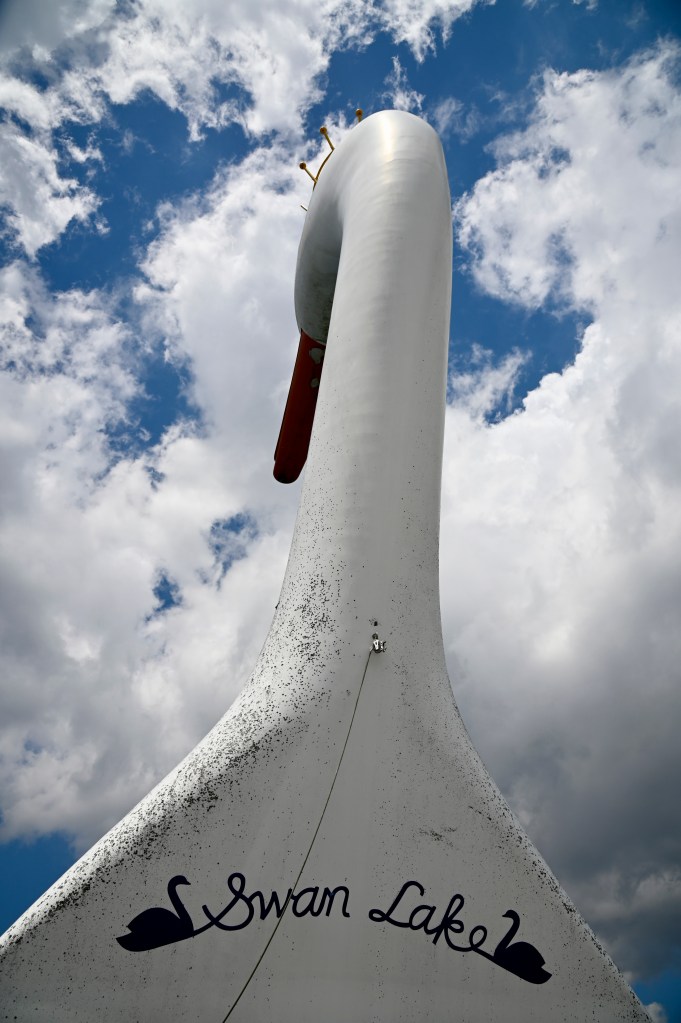
We made one other stop – at Station 1 – but the view wasn’t nearly as good, before continuing on for a 20-minute boat cruise on Lake Yamanaka (one of the “Five Fuji Lakes”), a mountain lake with views of Fuji and known for its swans – both real life and boats shaped like them. But by the time we got on-board, clouds had begun to block the Fuji summit, and we would never see its top again that day. The ride was tranquil and nice, but no more Fuji.
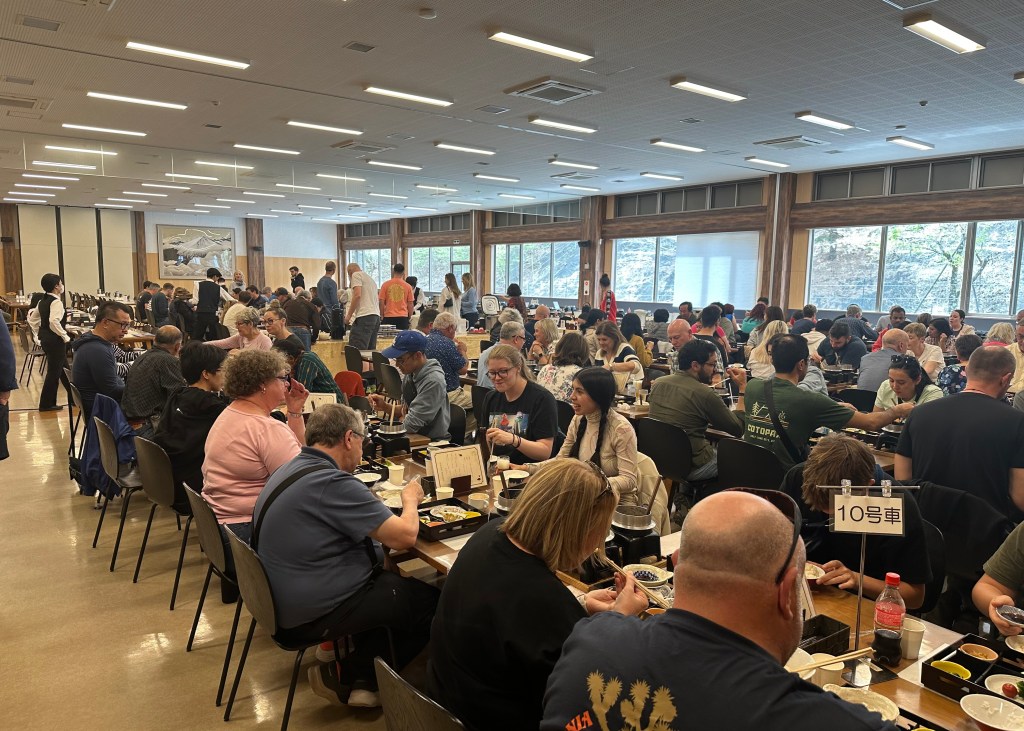
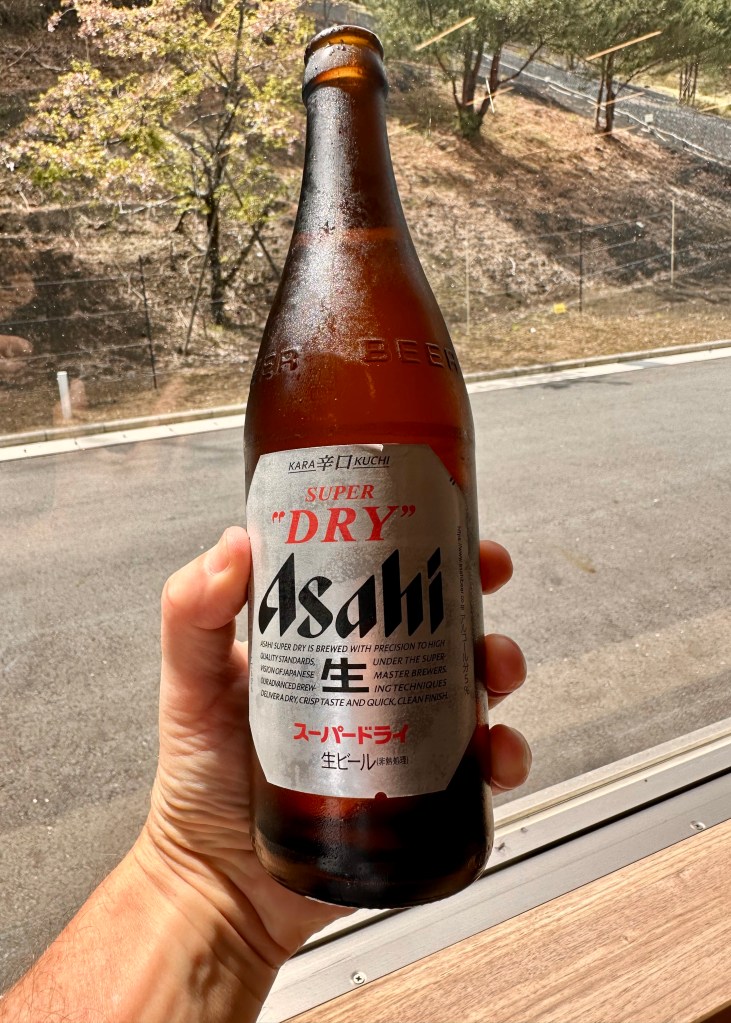
Lunch was in a large – very large – hotel function room with apparently everyone from all the other buses. Each of us had our own Japanese hot pot, which was a lot tastier than one might think, and it was a chance for me to have my first Asahi beer in Japan.
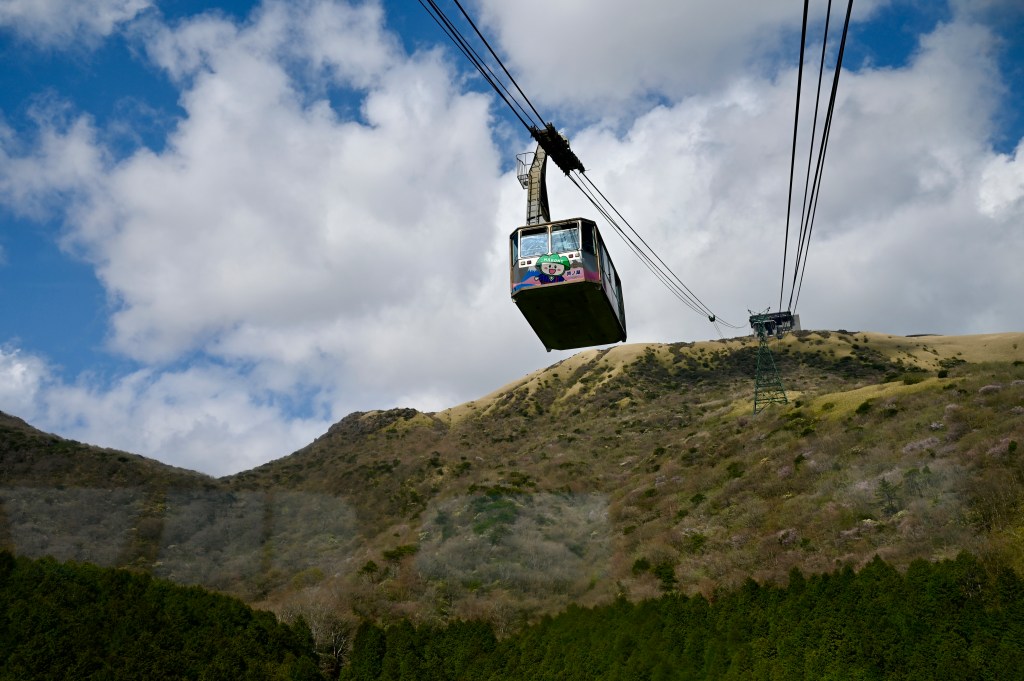
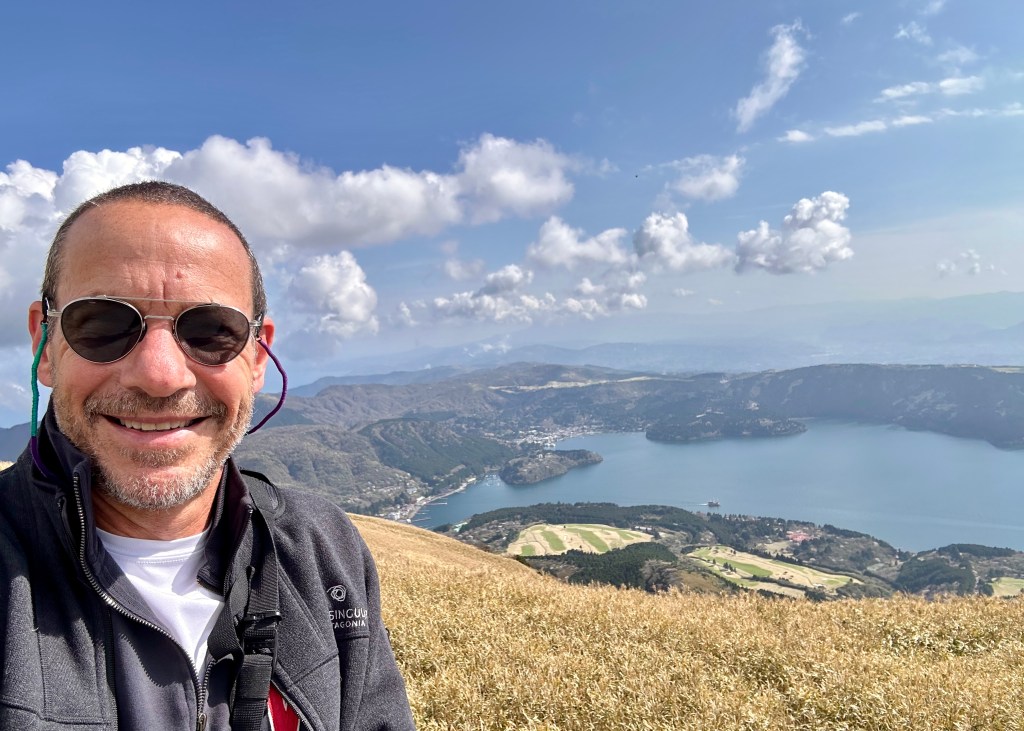
After lunch we headed to the Hakone Komagatake Ropeway – the name given to what is really a cable car that, at its top, provides gorgeous views of the area (around Mt Hakone), including the ability to see a caldera lake – Lake Ashi – and the Pacific Ocean east of Tokyo in the way off distance. We had time for a brief walk around the top of the mountain where we were (though we couldn’t see Fuji due to clouds), before returning back down the cable car.
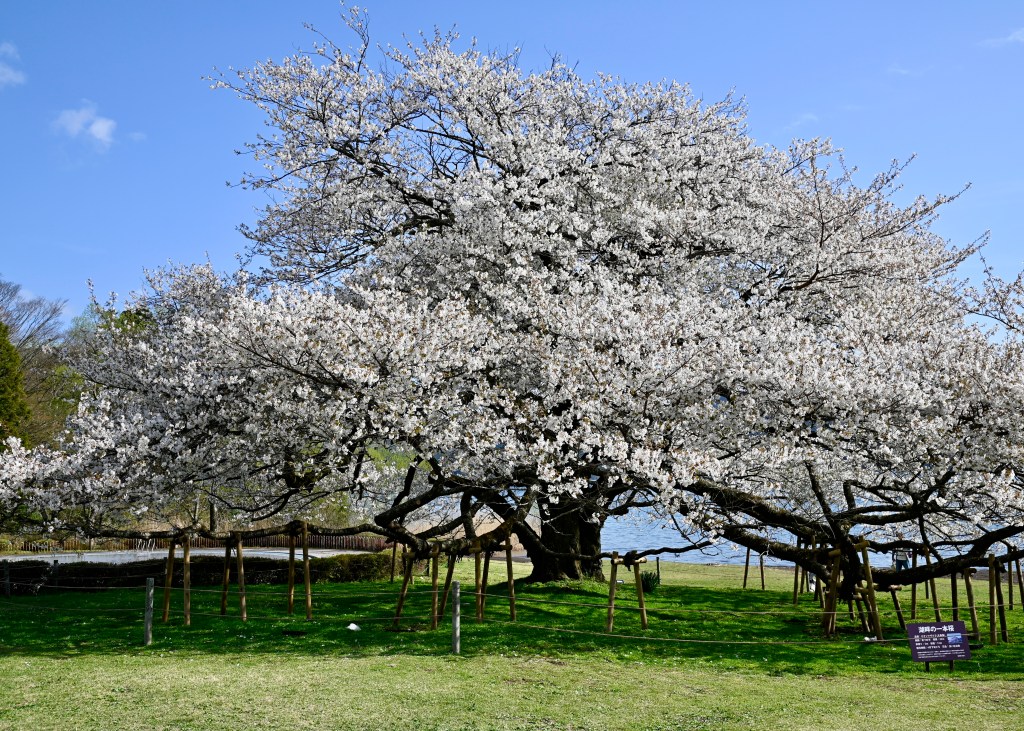
From there, we headed to Odawara Station, where we’d pick-up the bullet train for the return to Tokyo.
Ah, the bullet train, or the Japanese High-Speed Train, or the “Shinkansen.” Amtrak – which I’ve traveled innumerable times in and out of New York City as well as between DC and New York – has nothing on this baby. In about 30 minutes we’d cover 45 miles. The announcements, in both Japanese and English, were easy to understand. It was unbelievably clean and comfortable, with lots of legroom, and punctual (the Japanese are very well known for the timeliness of their trains – apparently the average delay is only 24 seconds). And boy, it was fast.
After arriving in Tokyo, at the Tokyo Station, I transferred to the subway back to my hotel. The Japanese subway also was a pleasure – great signage, electronic ticket machines in multiple languages with clear directions, easy to follow maps despite their size and complexity, and clear announcements. Amazing people-watching in the stations and on the cars. And what an odd subway experience, though I’ll save that for another time.
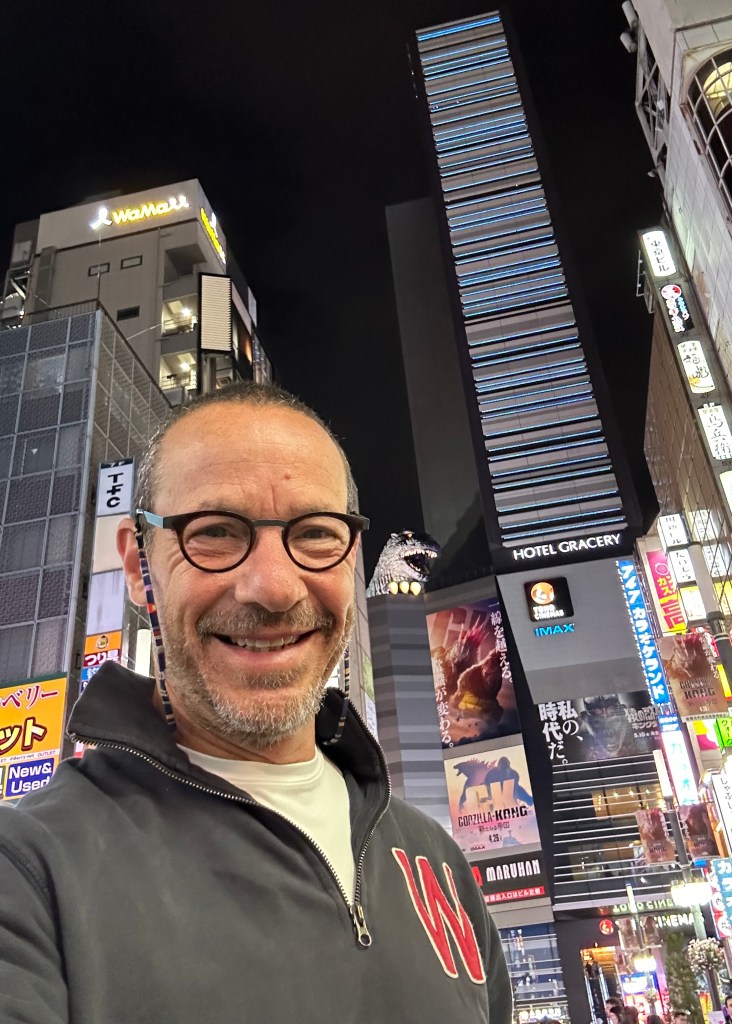
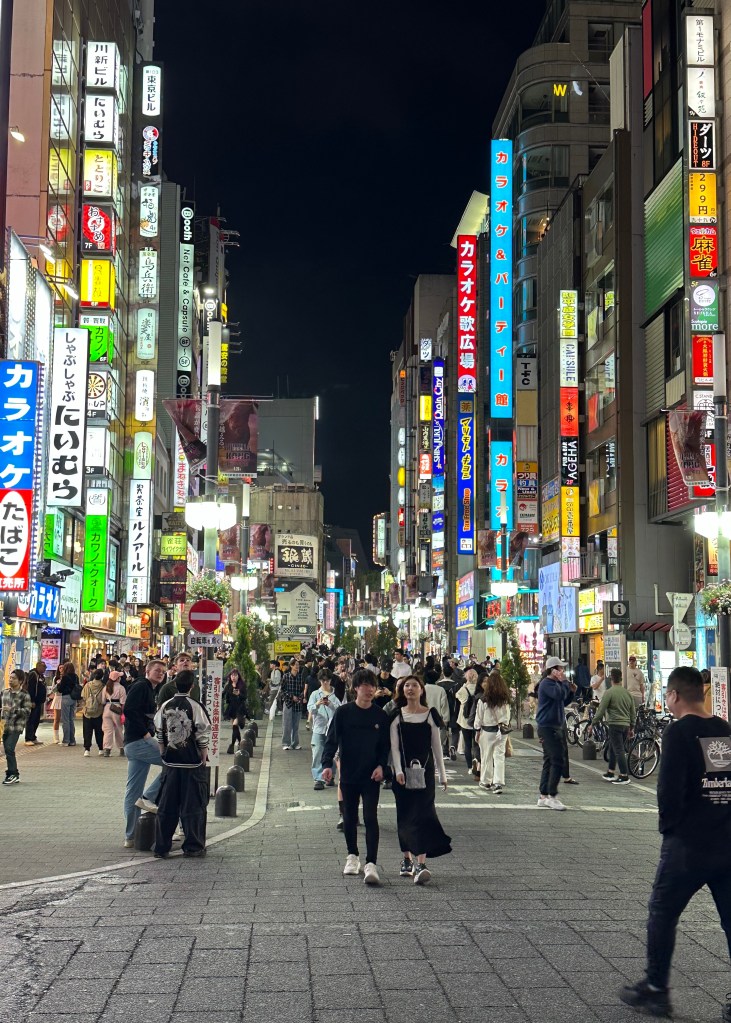
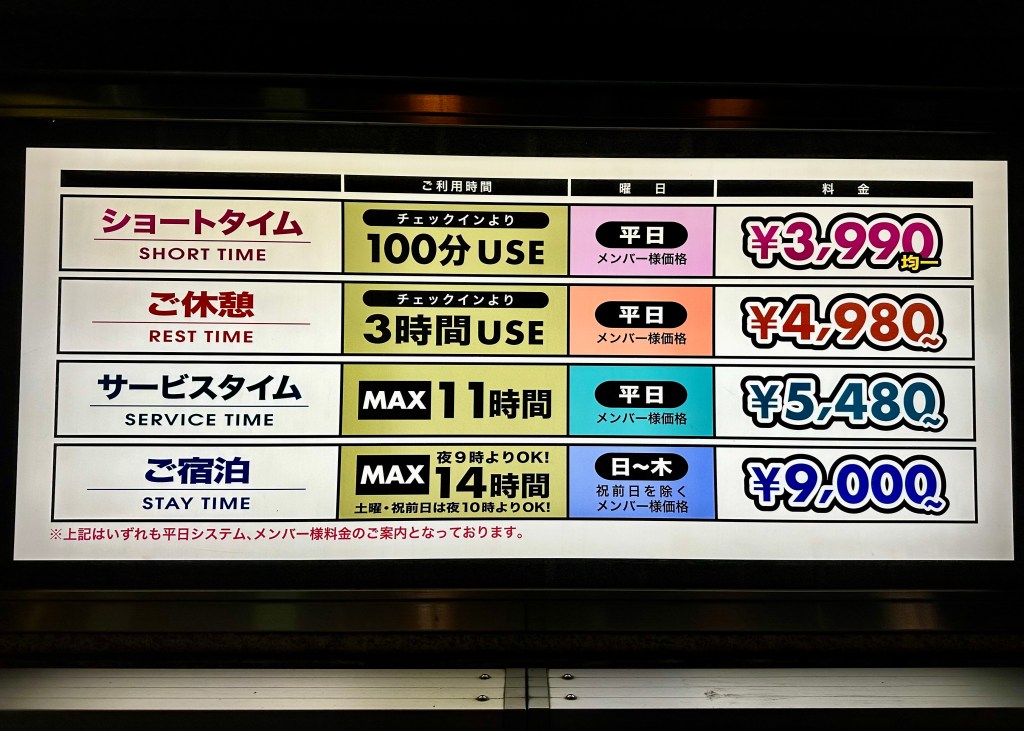
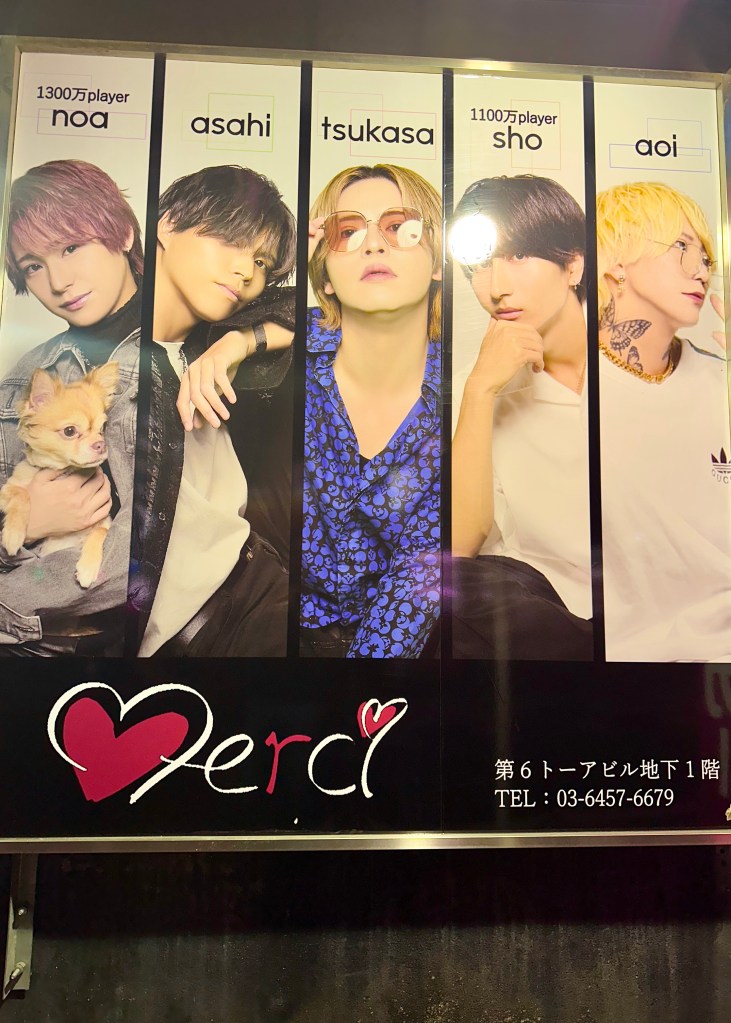
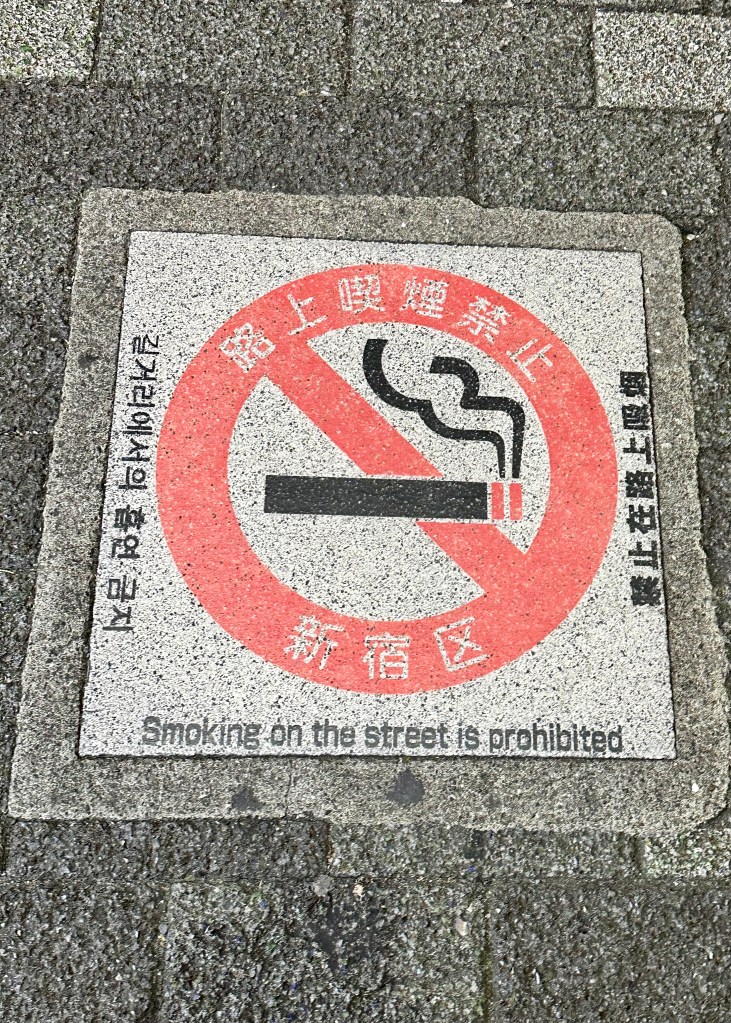
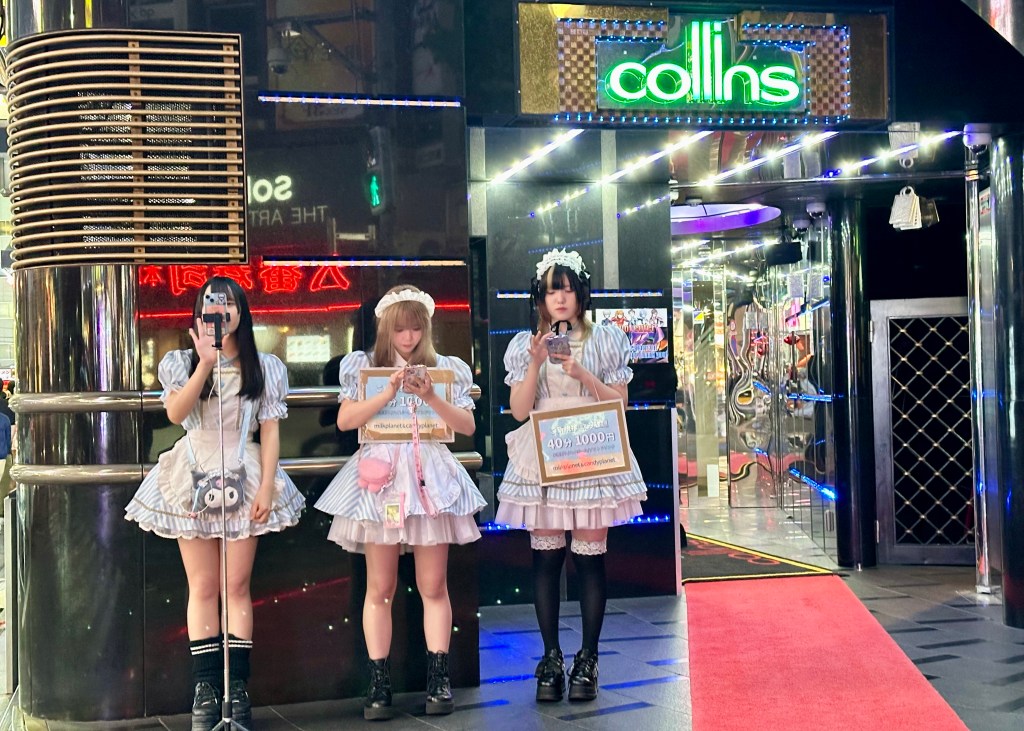
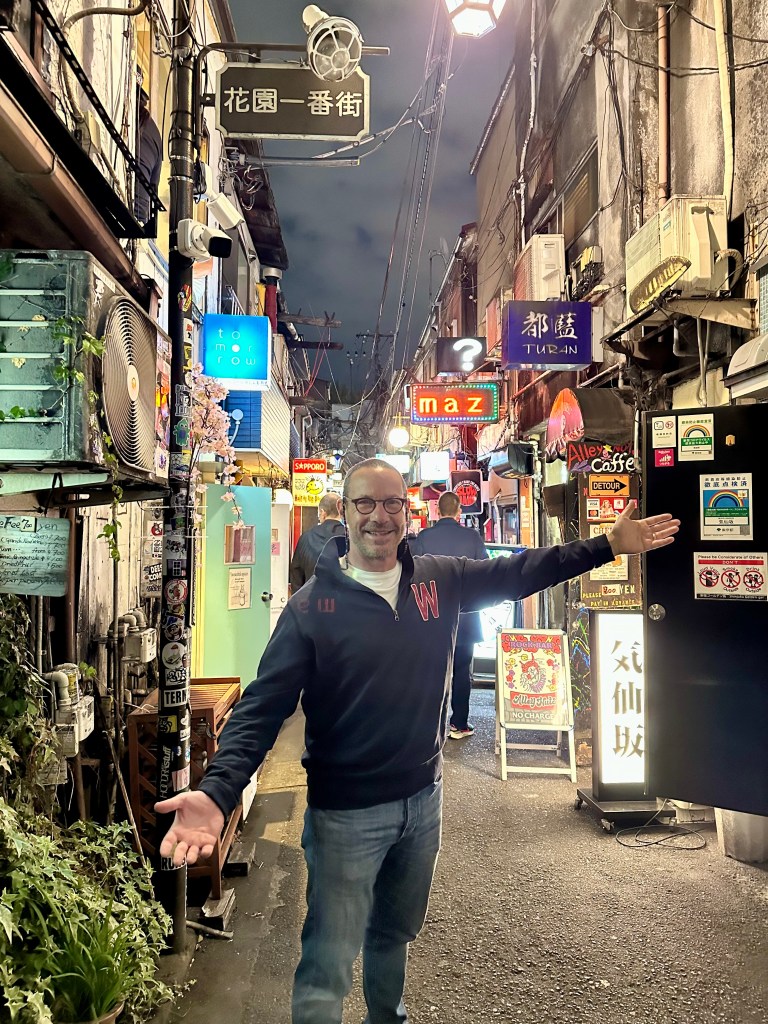
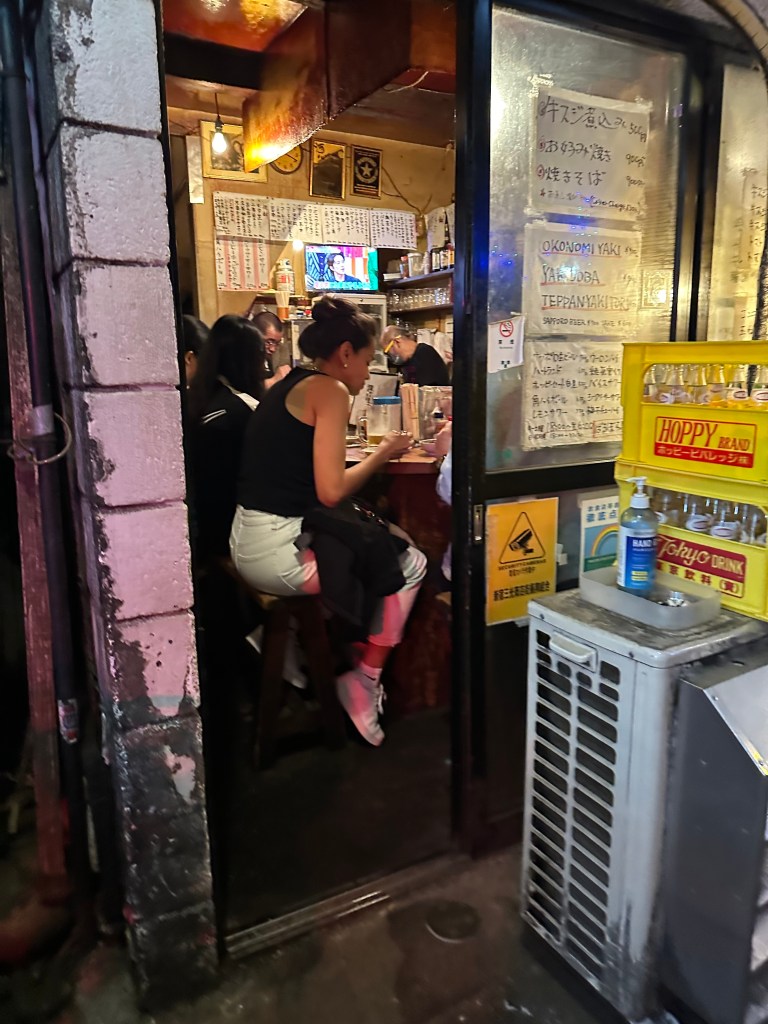
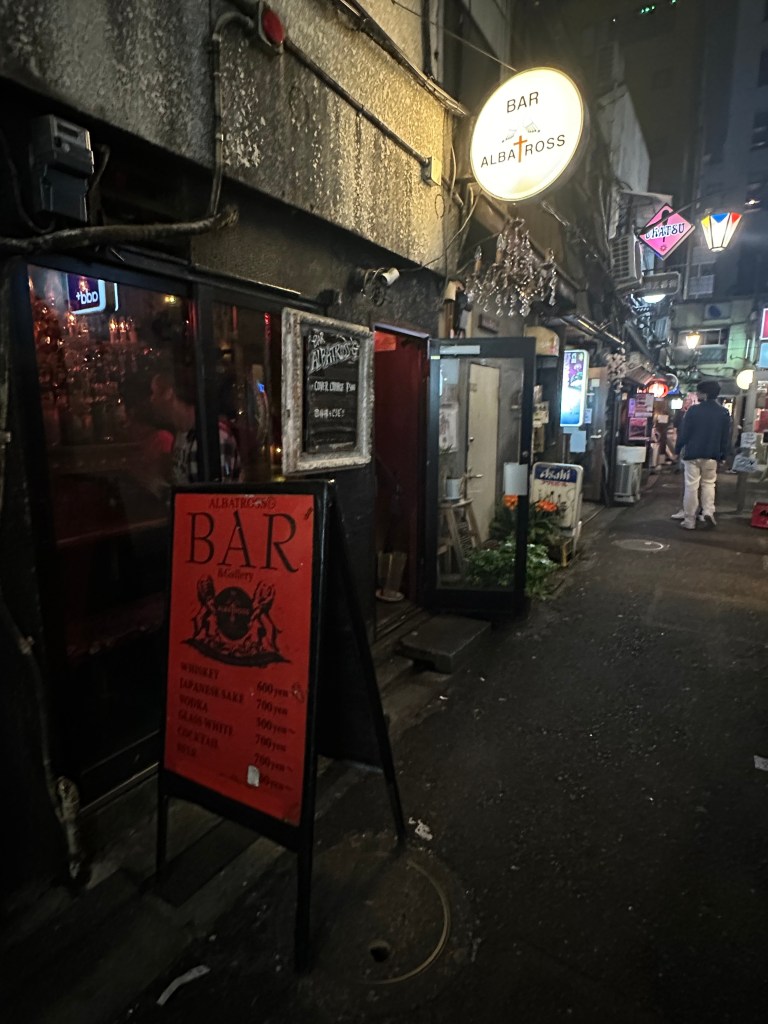
I spent my evening in a neighborhood – Kabakichu – nearby my hotel. It’s an entertainment district, with lots of bars, restaurants (I ate at a small noodle joint), a batting cage, and nightclubs, as well as a red-light district, with love hotels, shops, and host and hostess clubs. Amazing neon. Tons of people. Oh, and Godzilla! Great eye-candy. And a neighborhood within the neighborhood called “Golden Gai,” a section of about 8-10 narrow streets – more like alleys – lined with tiny bars that fit only 6-10 people each; if you’ve watched Anthony Bourdain’s “No Reservations” episode about Tokyo, this will be familiar. Some had cover charges, some didn’t. Some seemed to cater to locals, some to tourists. All were fun to pop into.



 Fred's Travel Blog