Our guide here learned English in a buddhist school, which he attended for four years. His parents are illiterate, as they grew-up during the French colonial period, when only the elite were allowed to go to school.
During the Vietnam War, Laos became the most bombed country in the history of warfare. The US dropped about 2 million tons (yes, tons) of bombs on the country, roughly equivalent to 1 ton for every person in the country. To this day, tens of millions of bombs that failed to explode exist as UXO – unexploded ordinance – and still maim and kill Laotians. Some important archeological sites – including the Plain of Jars, which dates to sometime between 1240 and 660 BC – can’t be fully explored due to the UXO.
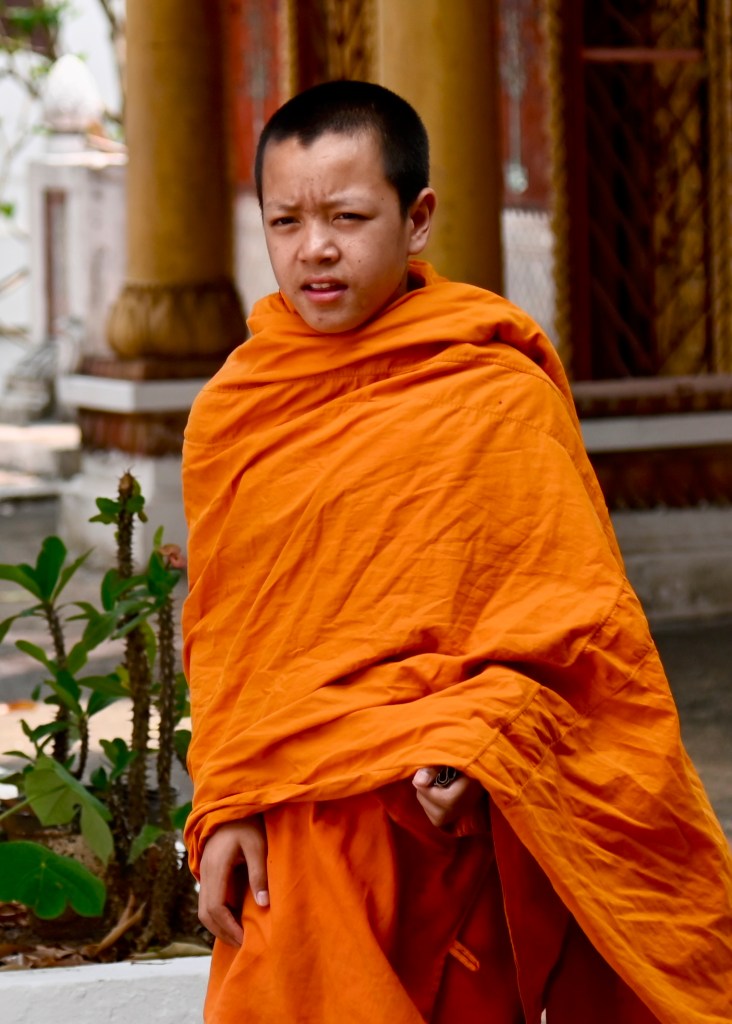
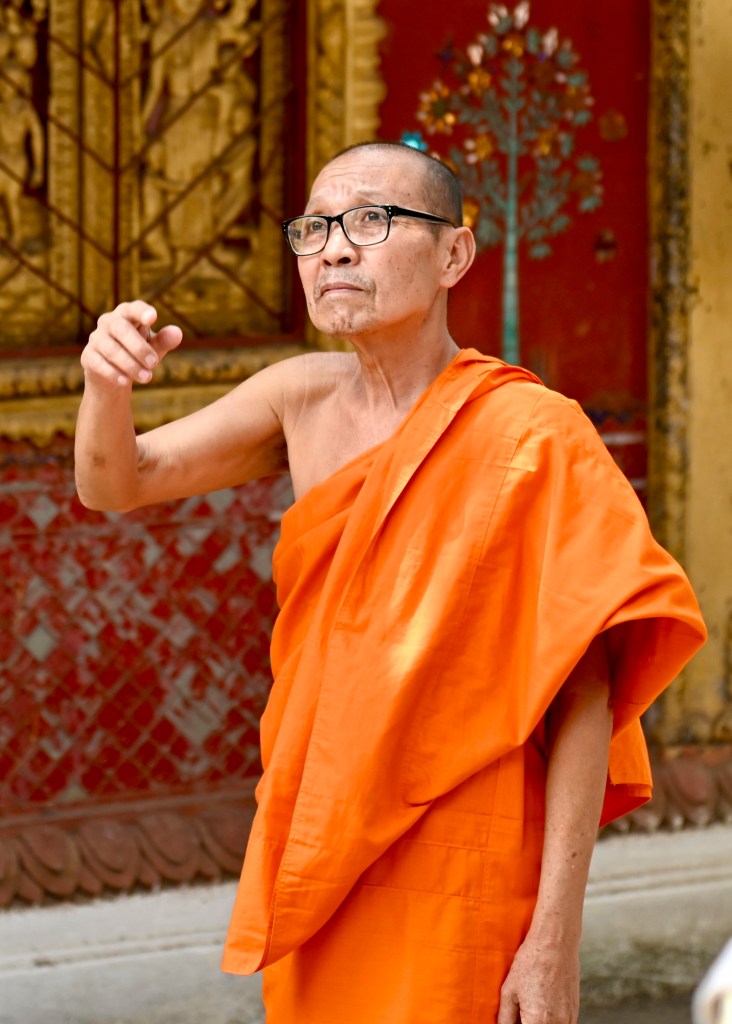
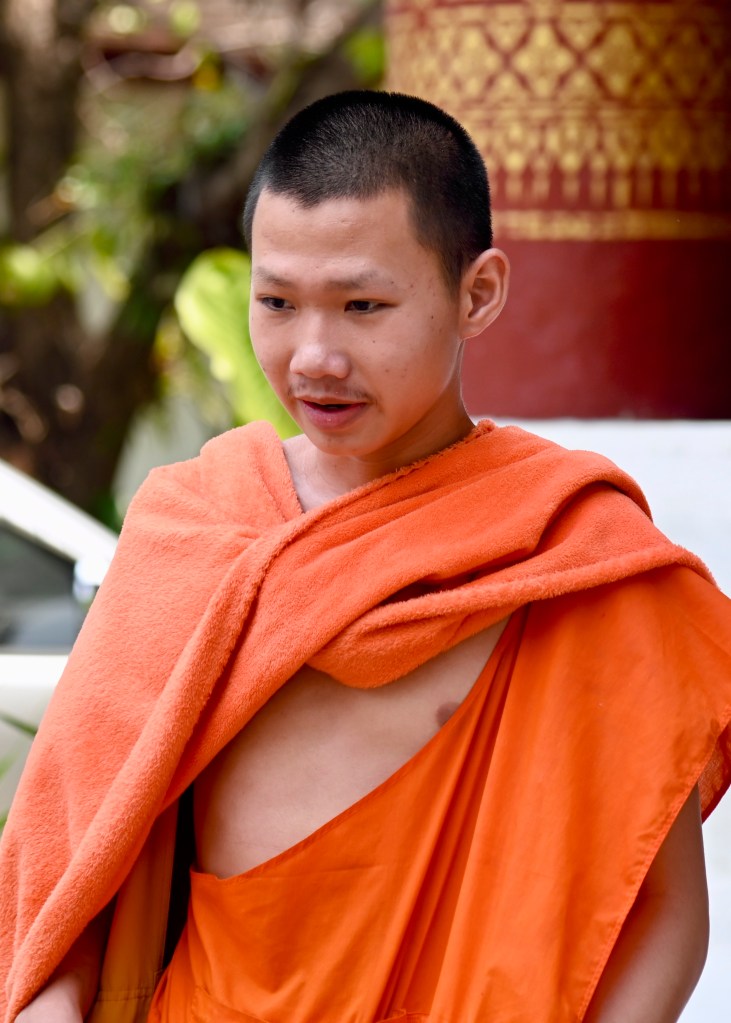
A land-locked country bordered by Vietnam, Cambodia, Myanmar, and China, our place of exploration was in Luang Prabang, a UNESCO World Heritage city and the former capital, with a population of about 60,000, making it the smallest city we’ve visited across Vietnam, Cambodia, and Laos. Today, Laos is a country of close to 8 m people, more than double what it was in 1975, when Saigon fell in Vietnam. The average age is about 25, and you could feel the youth and the energy during our stay, though it is also the buddhist heartland of the country.
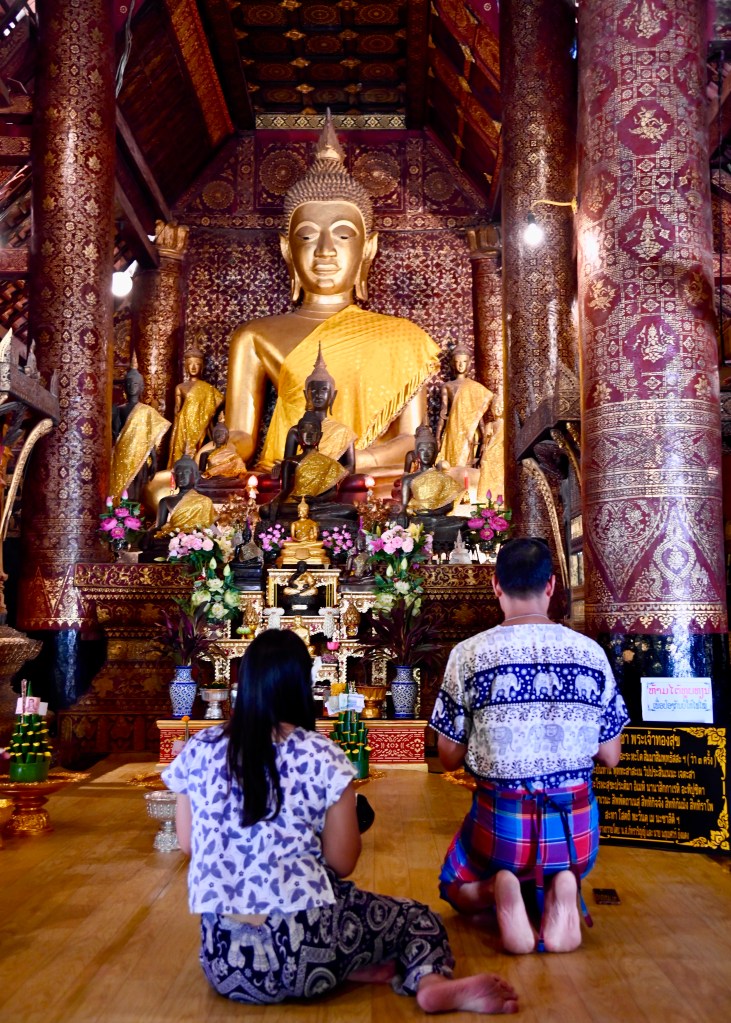
We arrived during the three-day Lao New Year celebration, and our guide alerted us to blocked streets and that one way the locals celebrate is to douse people with water – from water pistols, water rifles, hoses, and buckets, no matter whether you are walking by or driving by – in a tuk-tuk, on a motor-bike, or in a car; there even were pick-up trucks loaded with people in the back who doused people at roadside in return. It represents a form of purification for the new year, and, yup indeed, we got purified.
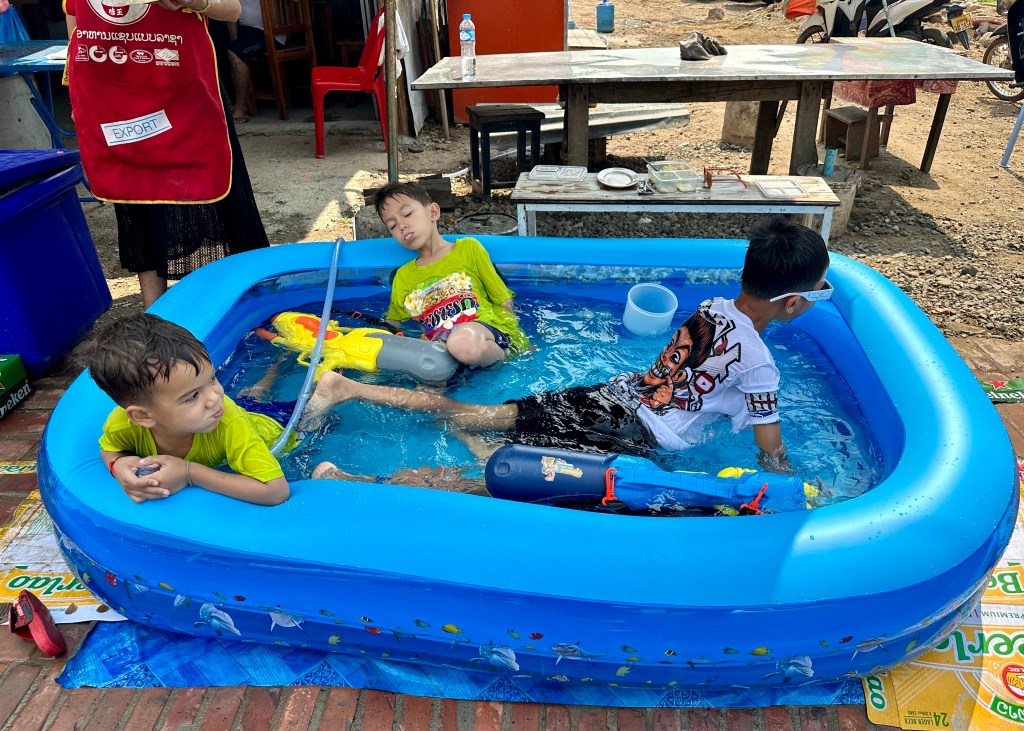
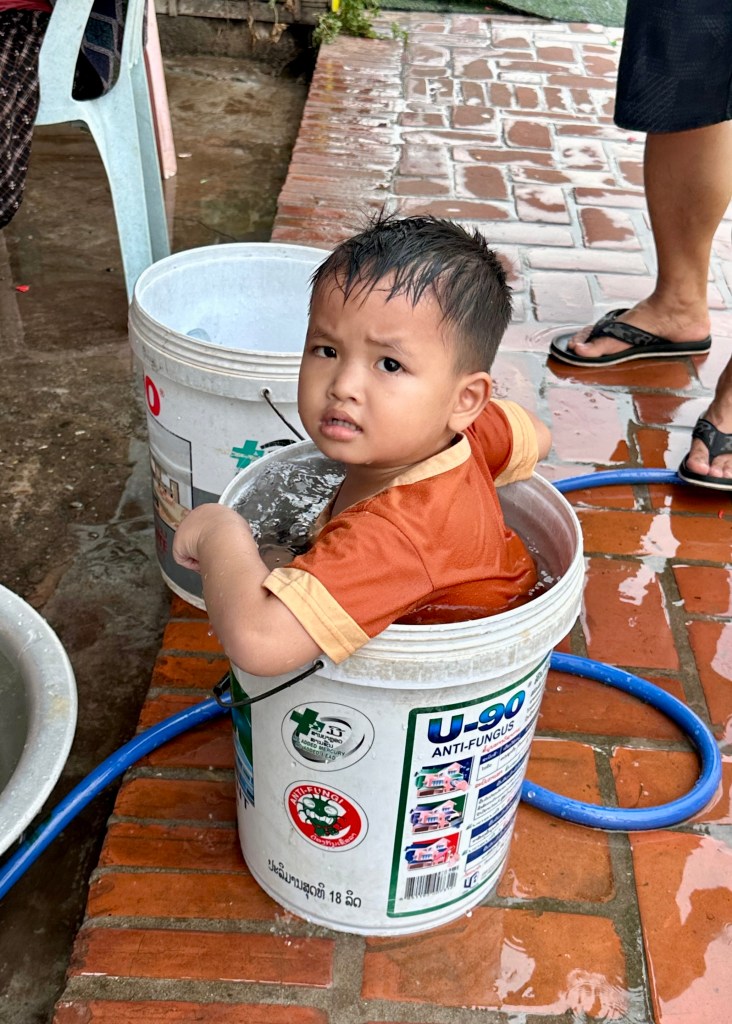
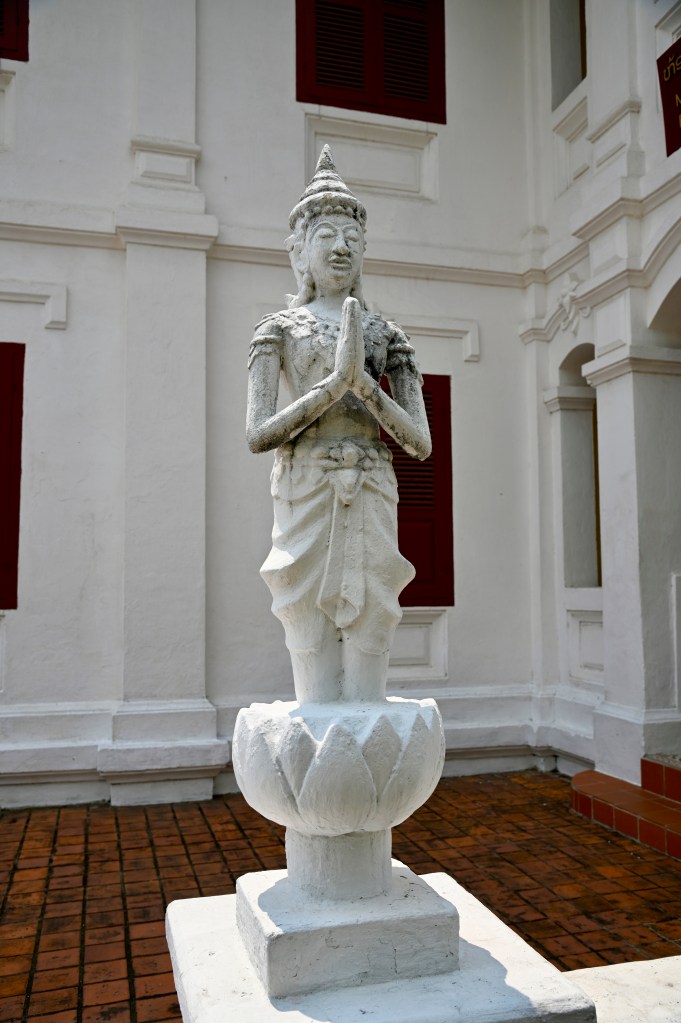
We visited the National Museum, originally a home to two kings, and it was jam-packed with tourists, primarily Chinese ones, due to the easy travel from China to Luang Prabang, then we headed to several buddhist temples – “wats” – before I was dropped for lunch at a local restaurant, where I could eat outdoors overlooking the Mekong River and have a beer. Rather than riding back to my hotel in a tuk-tuk, I decided to walk the c. 2 miles, passing lots of celebrants along the way, getting fully drenched with a smile on my face.
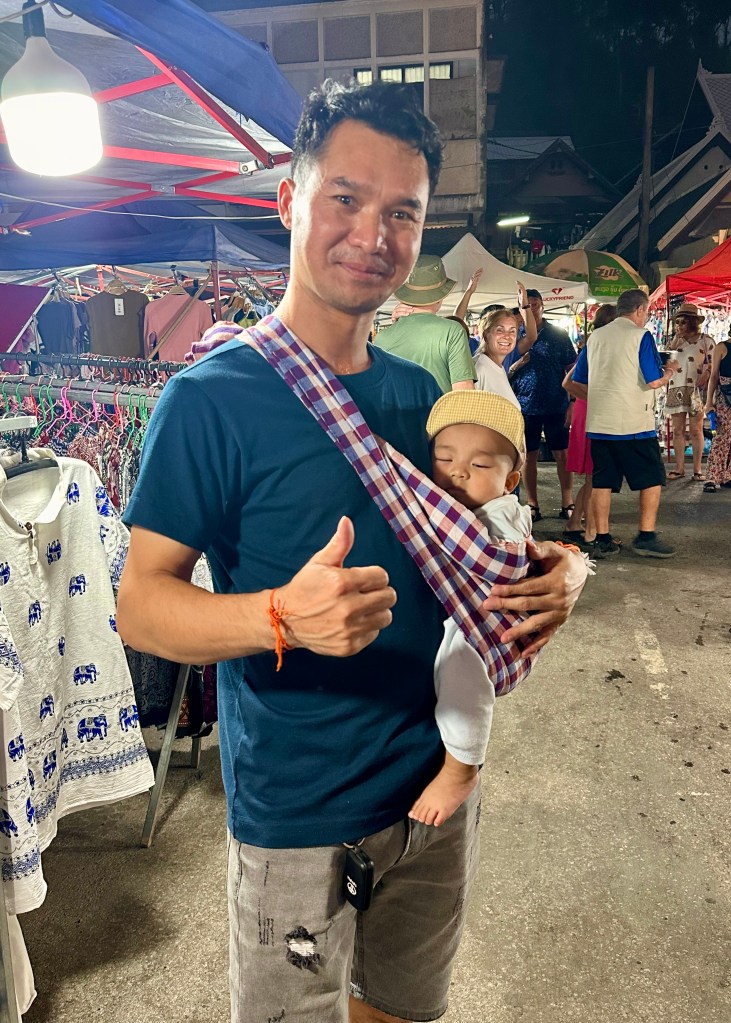
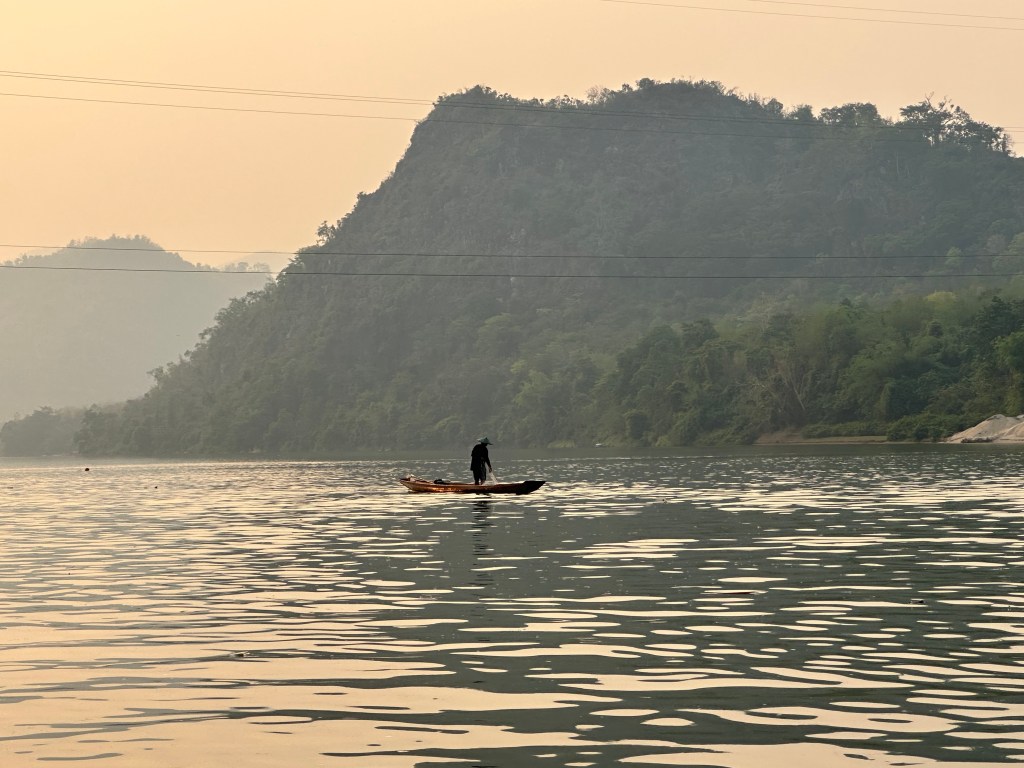
Our day ended with a sundown cruise on the Mekong, past rugged mountains and lush green forest, followed by a walk through a nighttime market before dinner.
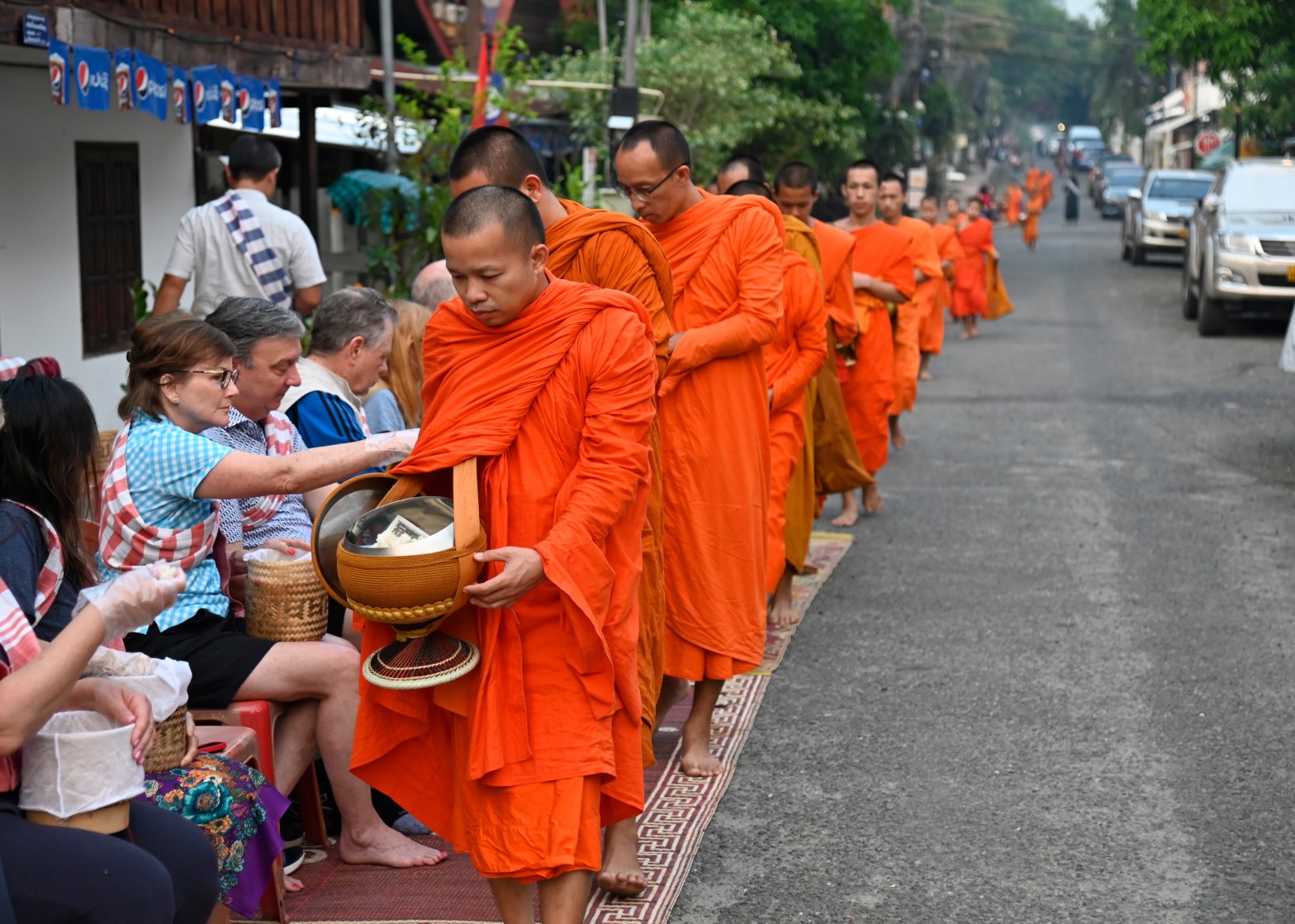
The real treat of our visit was the next morning, however, when we left the hotel at 5:30 to participate in “tak bat” – the morning ritual of donating food to the local buddhist monks. Locals and tourists alike sit outside homes, silently placing small handfuls of sticky rice or other food into the baskets of monks who silently walk by; there are hundreds of monks in Luang Prabang, and my group of fellow travelers sat with ritual shawls around our shoulders and barefoot (out of respect) on plastic chairs under which had been placed a carpet, each of us with a small bucket of rice prepared by a local woman just for this purpose. Next to us on either side were locals outside their homes, doing the same. The saffron-robed monks walked by – at almost a relentless pace – putting pressure on us to move quickly so as to put rice in each of their bowls.
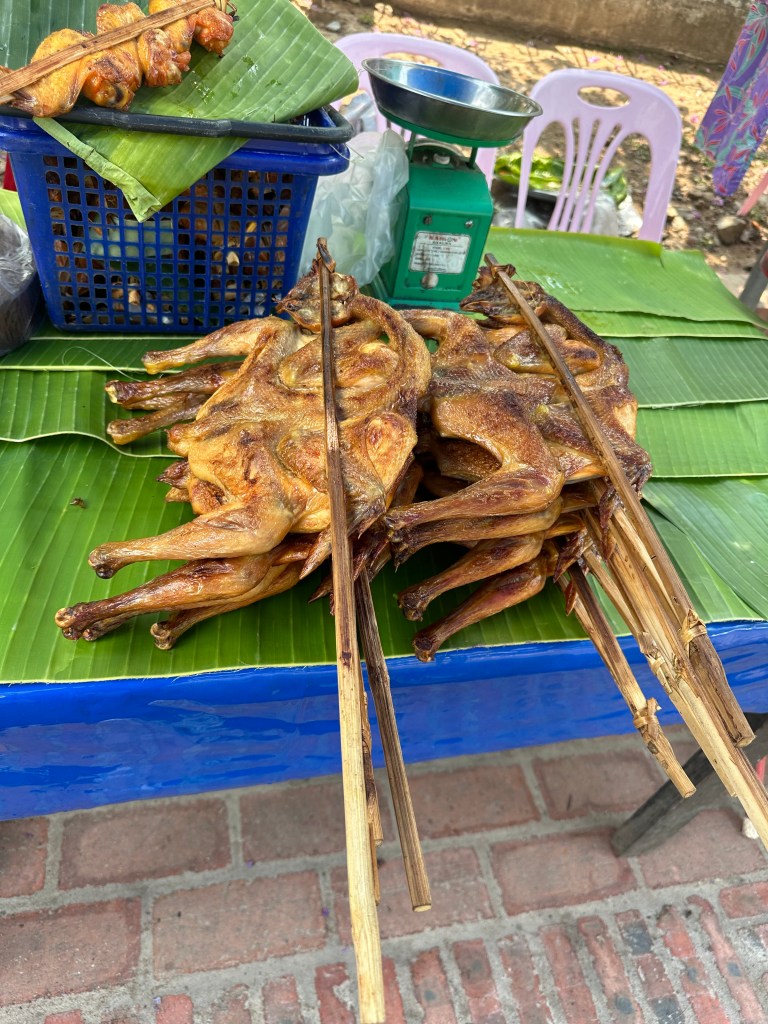
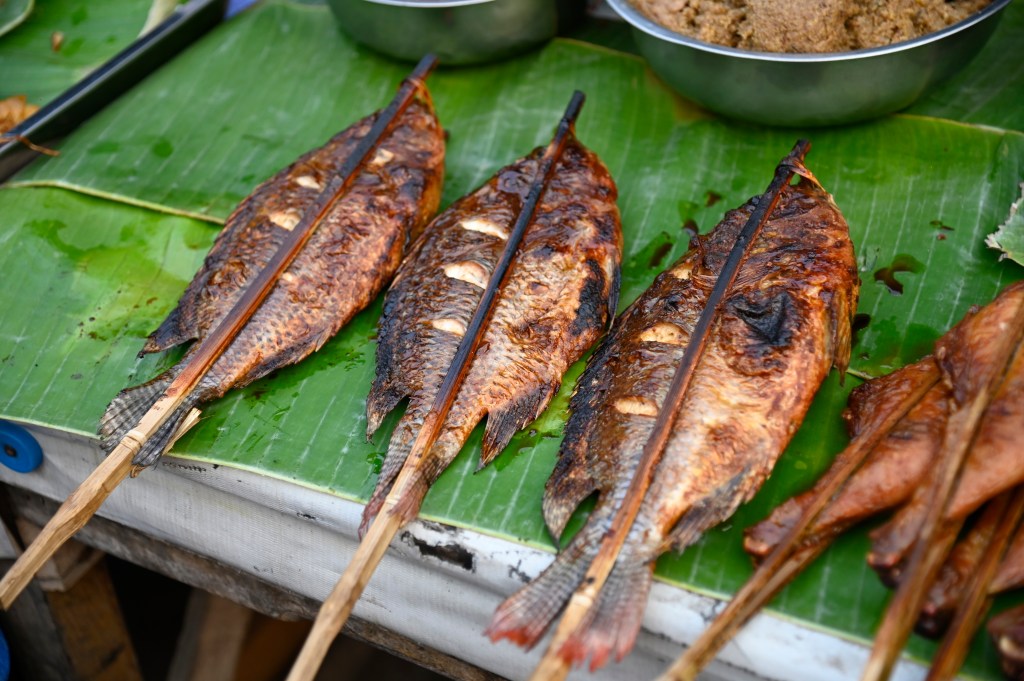
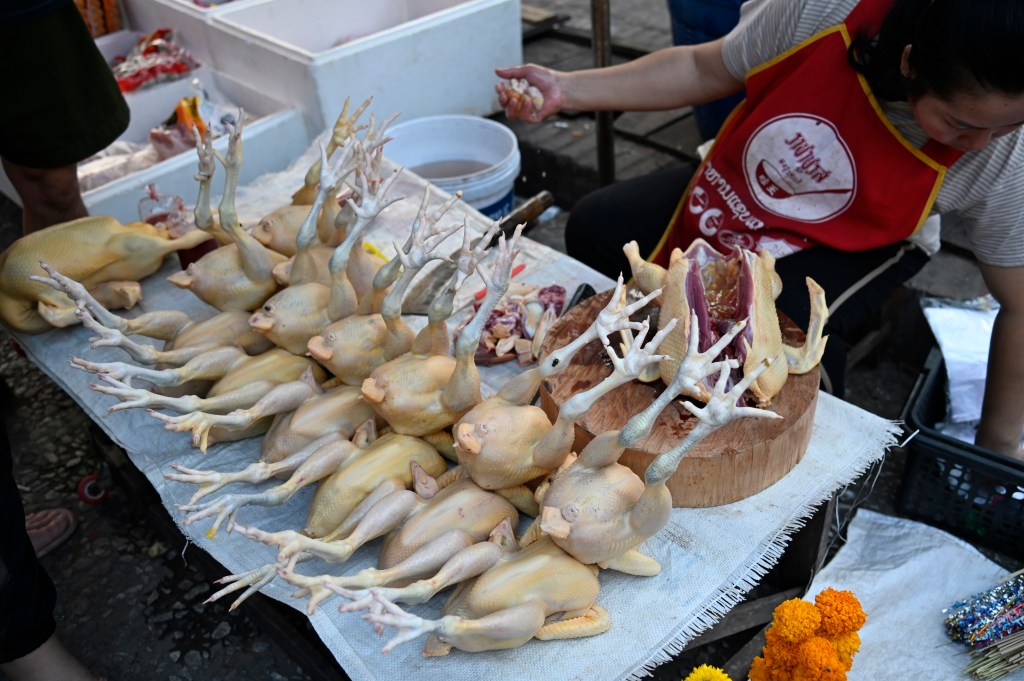
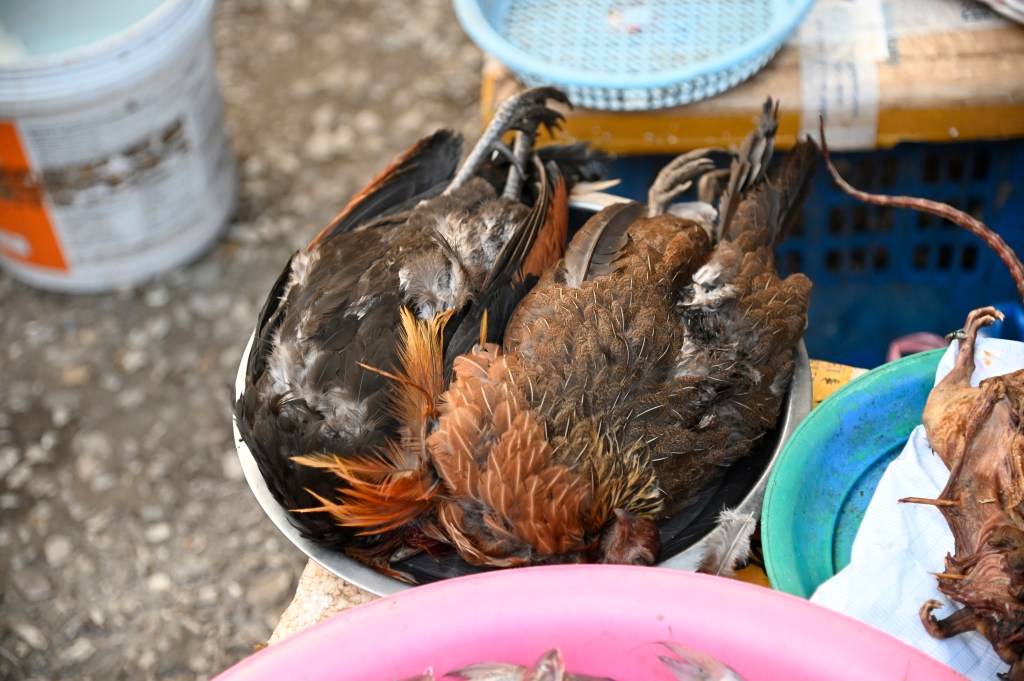
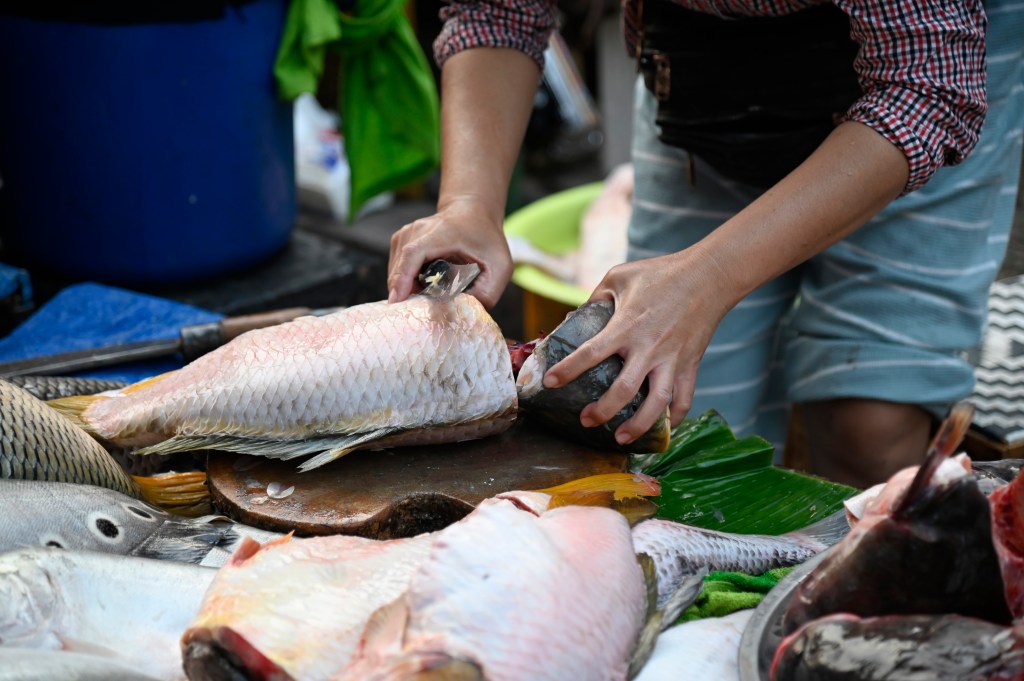
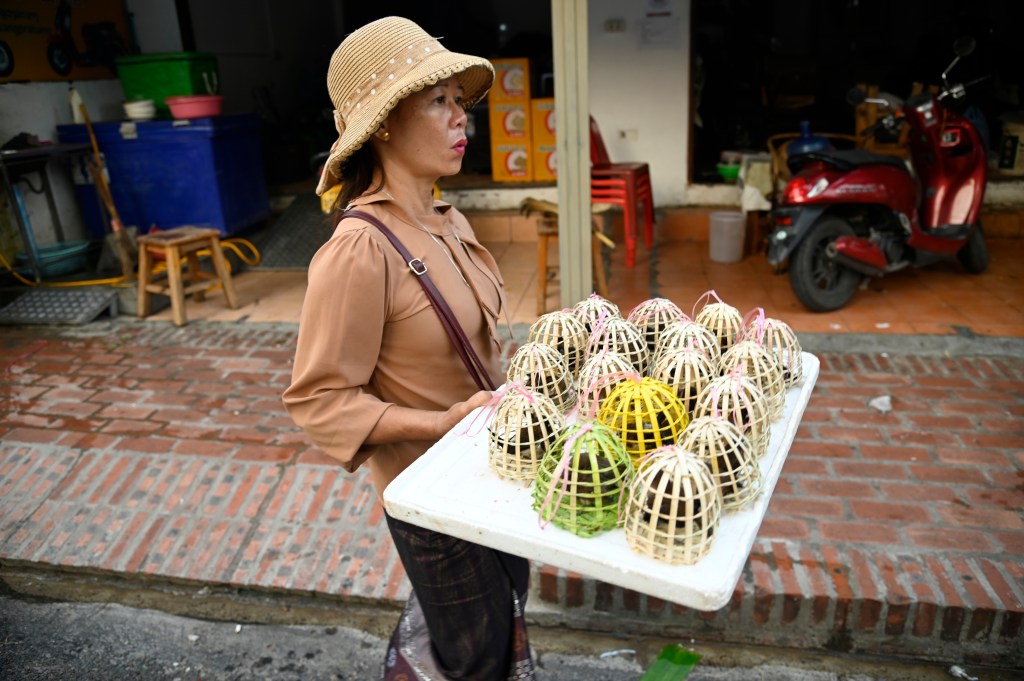
We then took a walk through a local market – mostly food, cooked and uncooked, being butchered and already butchered – pork, beef, chicken, rat, fish of all types, bread, spices, fruit, vegetables, even small birds in small cages.
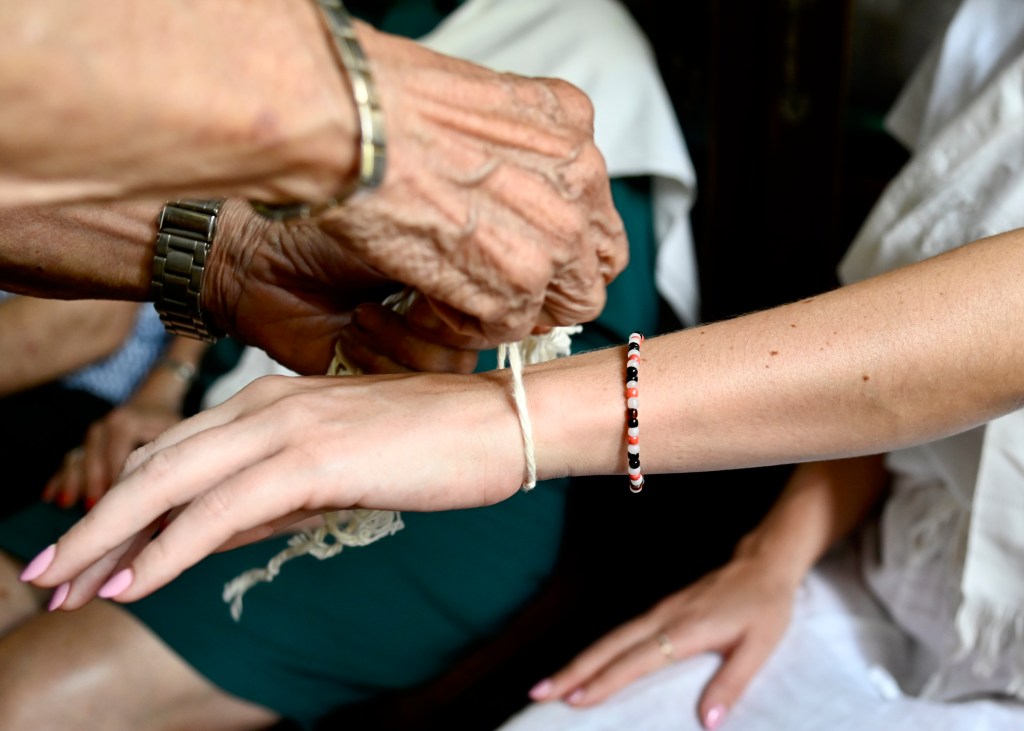
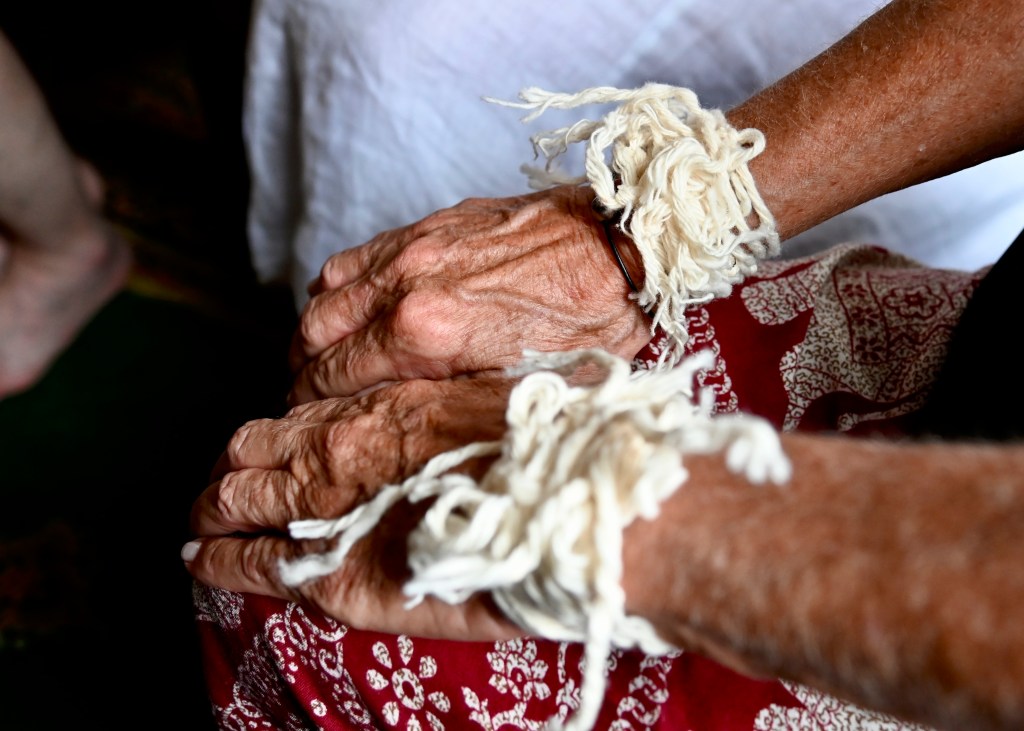
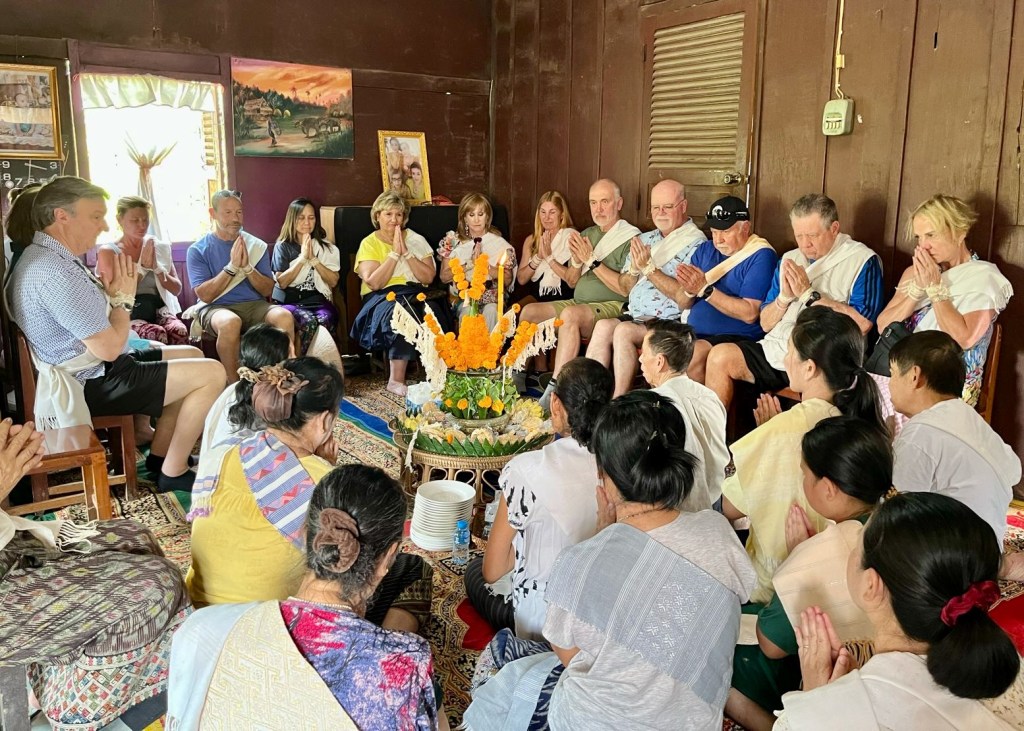
From there, we were off to our next morning treat, participation in a “baci” ceremony, a traditional Lao peoples ritual to celebrate important events and to provide blessings. We gathered at the home of local couple, who had been joined by eight of their neighbors and a shaman. The shaman led off the ceremony with some prayers, and then each of the ten individuals tied a small length of plain white cotton cord around both of our wrists, so 10 on each wrist, 20 in all. We ended the ceremony by sharing bananas, rice cakes, and shots of “lau lau” – homemade rice wine, that burned as it went down. We were to leave the cotton on our wrists for a minimum of three days, after which they could be removed (by being untied, not cutting them off).
Our time in Laos ended with lunch at a restaurant overlooking the Mekong, with local dishes and cold beer. We then flew on to Bangkok, where I had my final dinner with this group of travelers. As always, the low prices were stunning – there were 14 of us who ate dinner, shared eight bottles of wine and multiple cocktails and hors d’ouevres, for the unbelievable price of $61/person. I enjoyed final cocktails with these friends at our hotel before I left the next morning for several days at my next location.
 Fred's Travel Blog