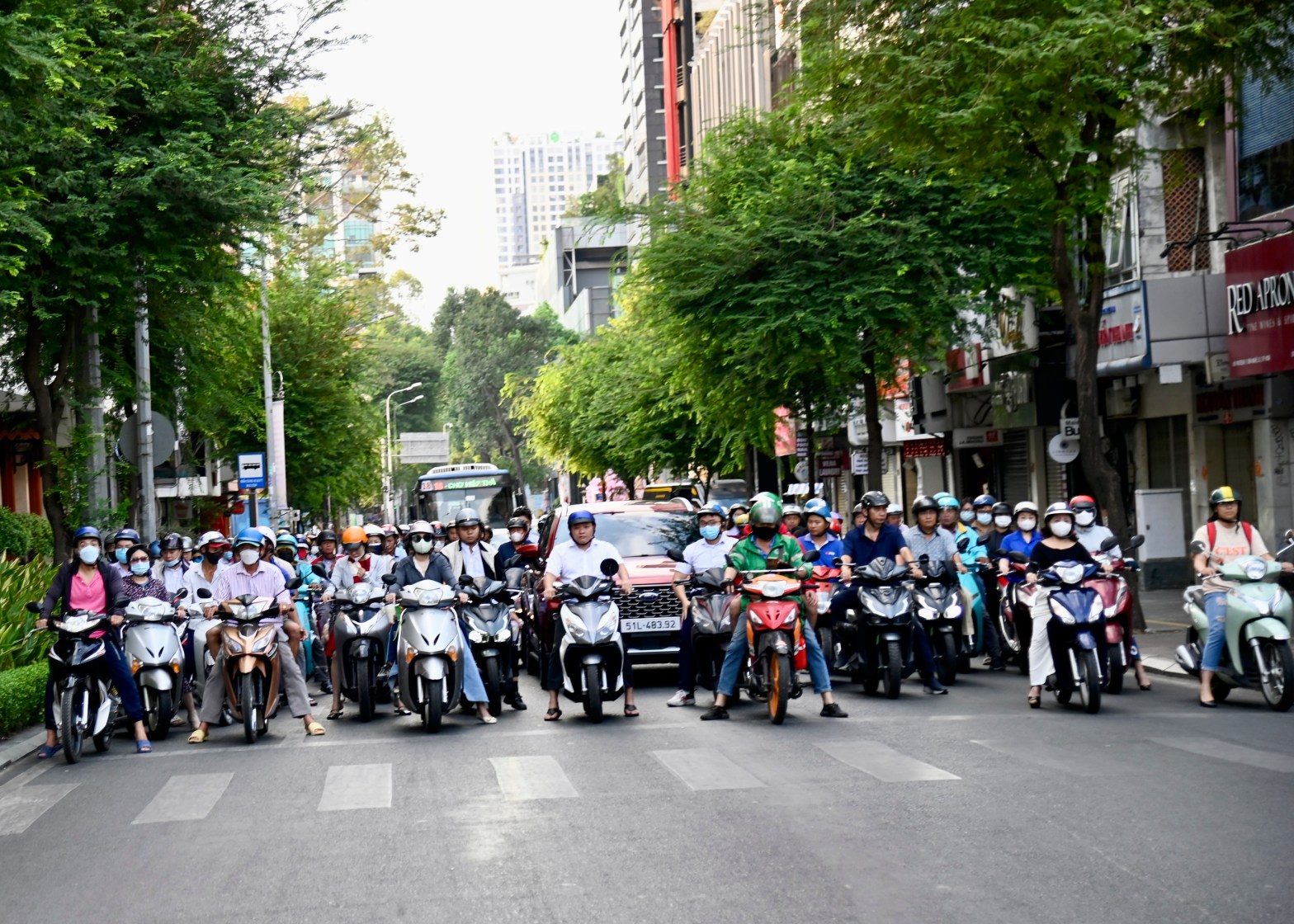
It was a relatively early morning in Saigon when we took our rickshaw ride to see how the city wakes up; the population seems to be somewhere between 10m and 15m (it was about 3m in 1975 when the Vietnam War ended), making it the largest city in the country, with something like 6m scooters/motorbikes. The old name is Saigon, which apparently the majority of Vietnamese still call it, though the official name is Ho Chi Minh City, a change made in 1976 not long after the unification of North and South Vietnam.
Like everyone we’ve had a longer conversation with, our guide – about age 49 – has a Vietnam War story. His father fought for the North Vietnamese, signing-up at age 16. His uncle on the other side of the family – his mom’s brother – fought for the South Vietnamese and, after the war, was in a re-education camp for nine years, and he eventually moved to the States. Meanwhile, his father joined the community party, but then rejected it after all that he had seen during and after the war. Our guide told us that he grew-up poor, like much of the country; that when young he had to wear clothes that his mother made out of her own old dresses.
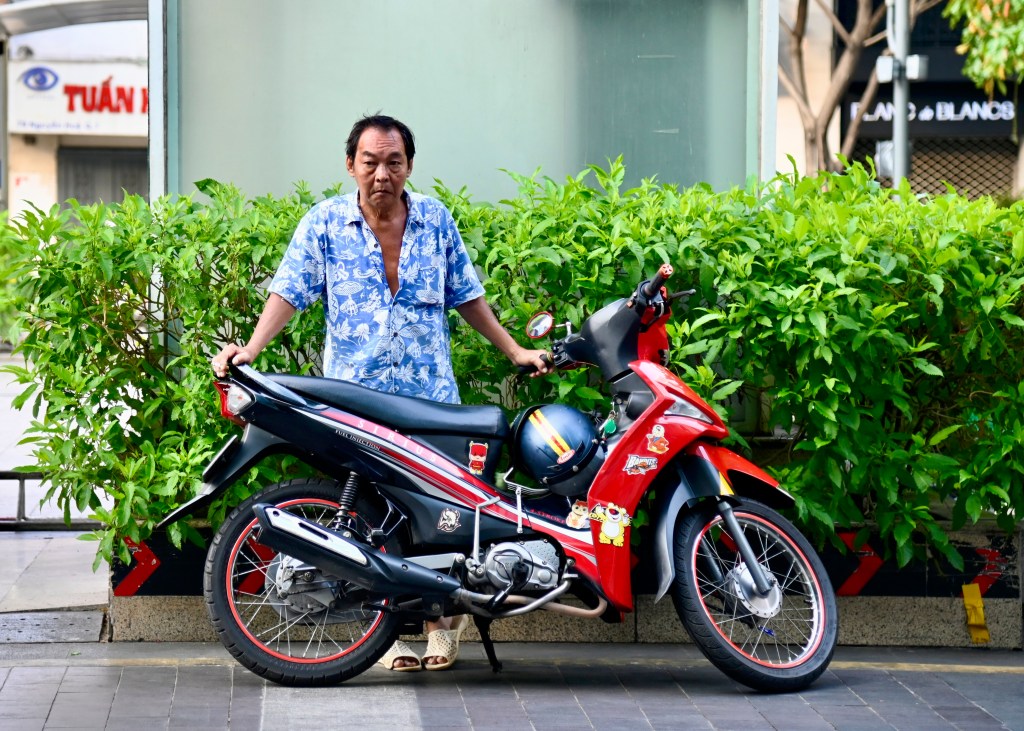
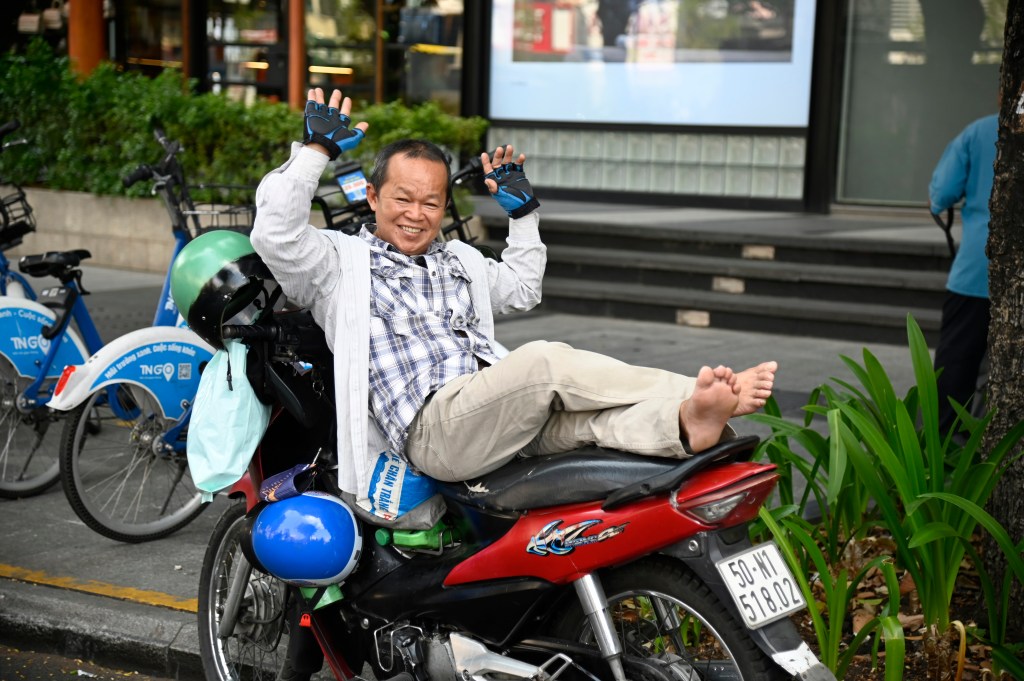
Today, though, we saw a loud and boisterous Saigon, even at 7 a.m. as we tooled around the city. Like Hanoi, the number of motorbikes and scooters and vespas is mind-boggling and far out numbers the number of cars. Men, women, duos, and even families of three or four squeeze onto the bikes and the traffic just ebbs and flows.


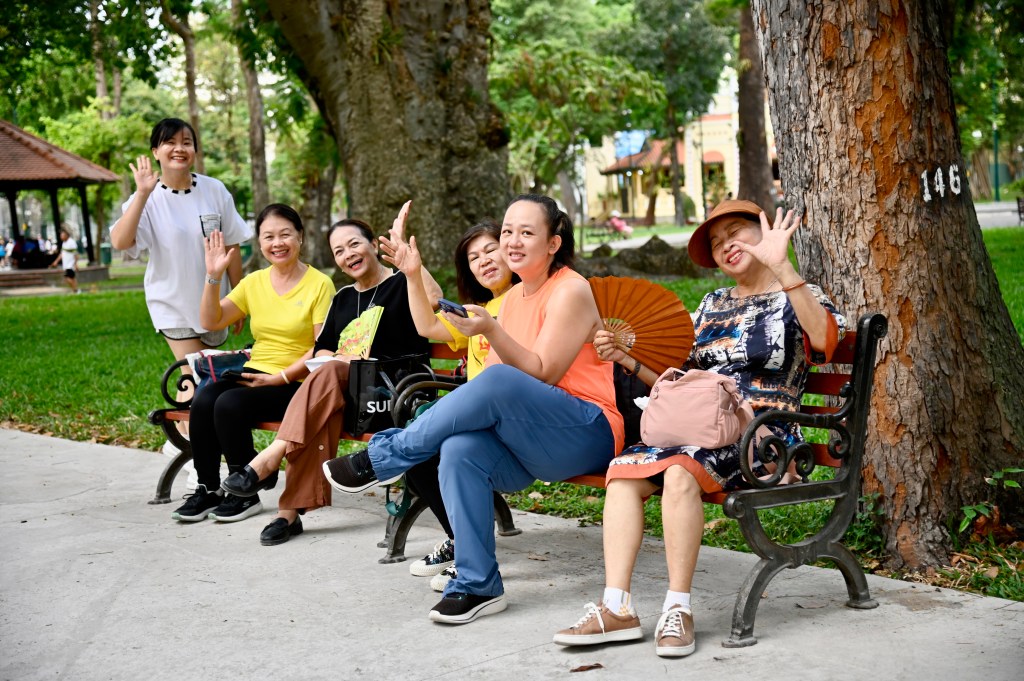
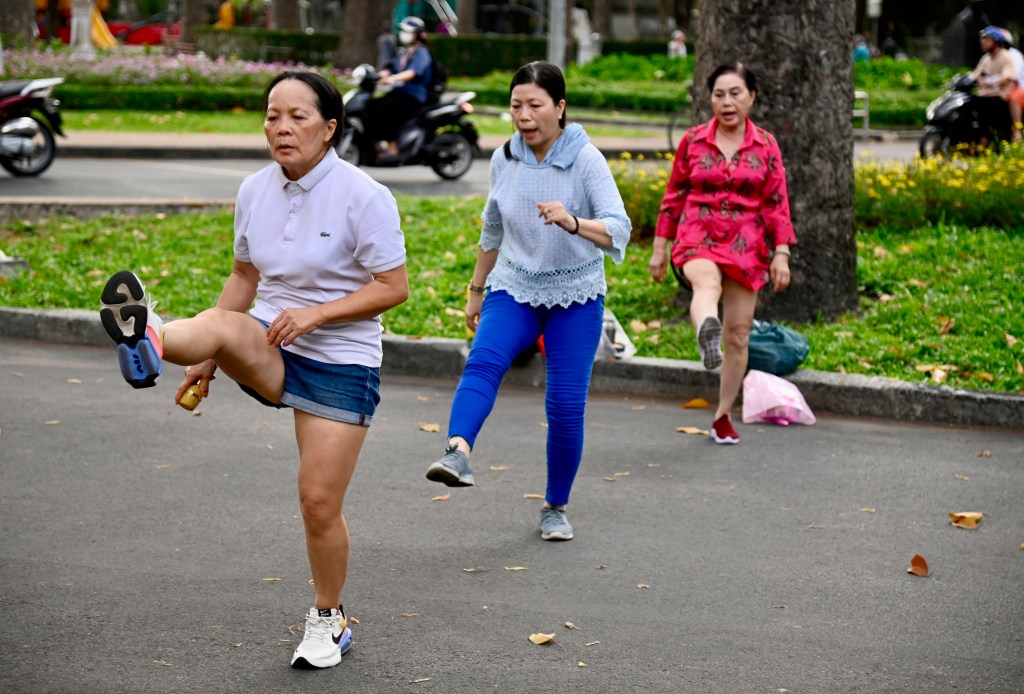
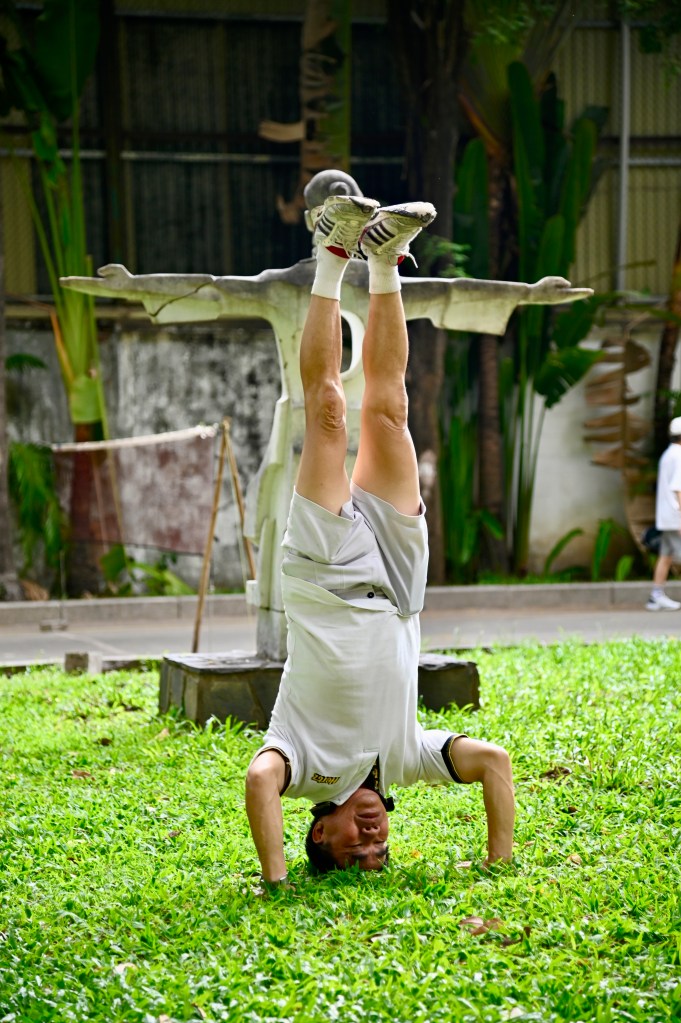
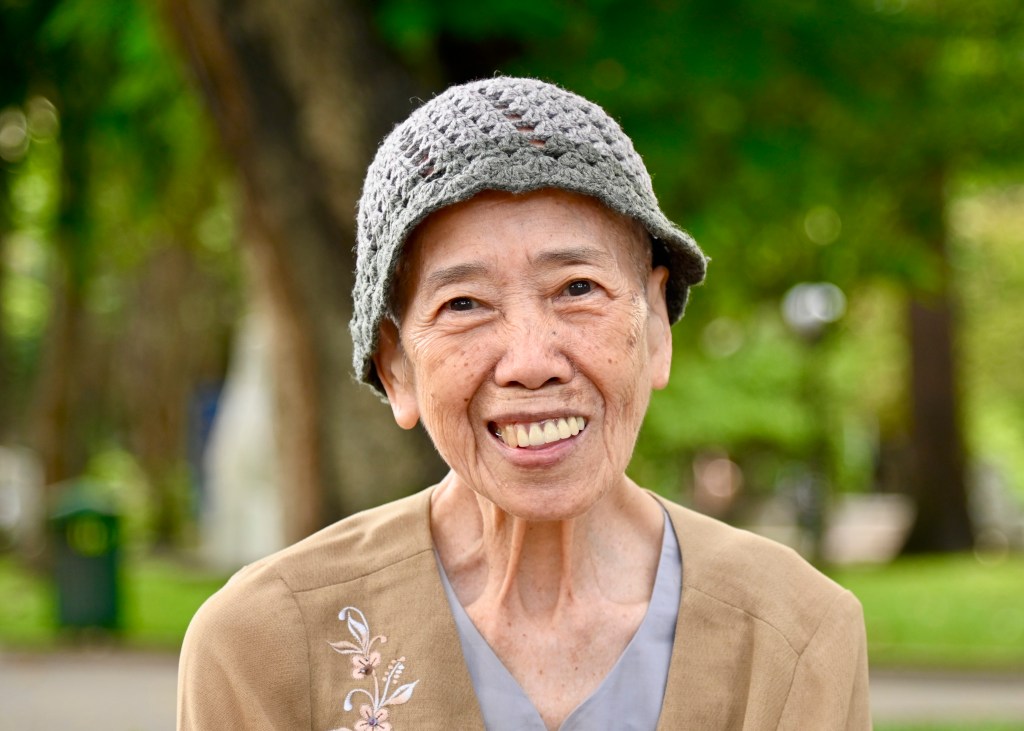
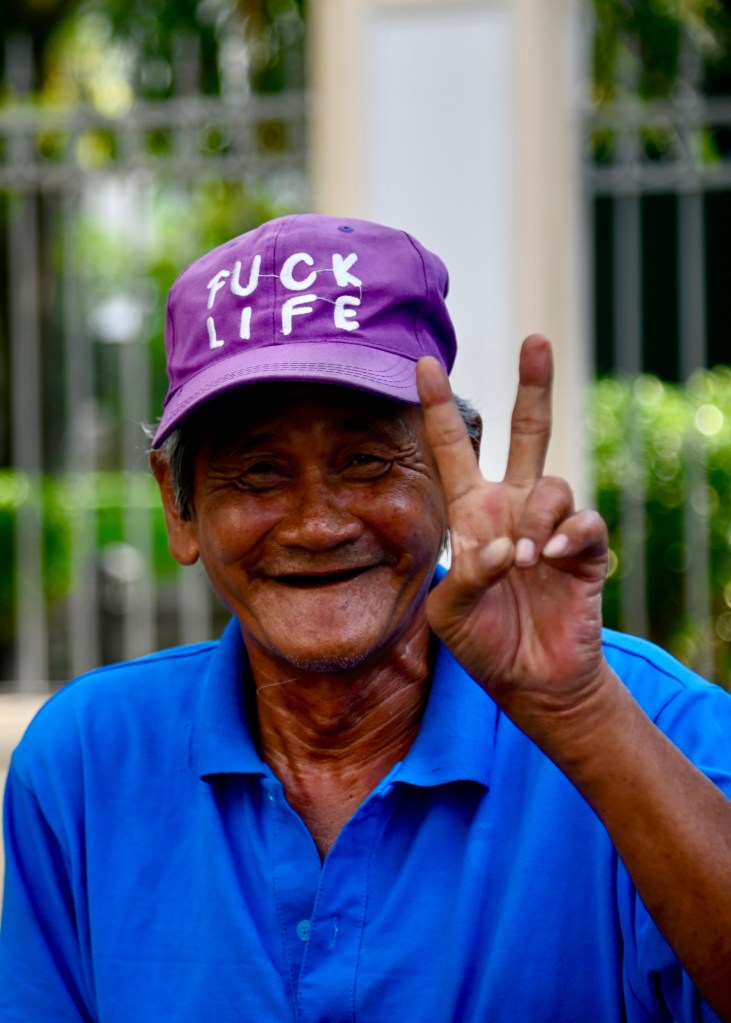
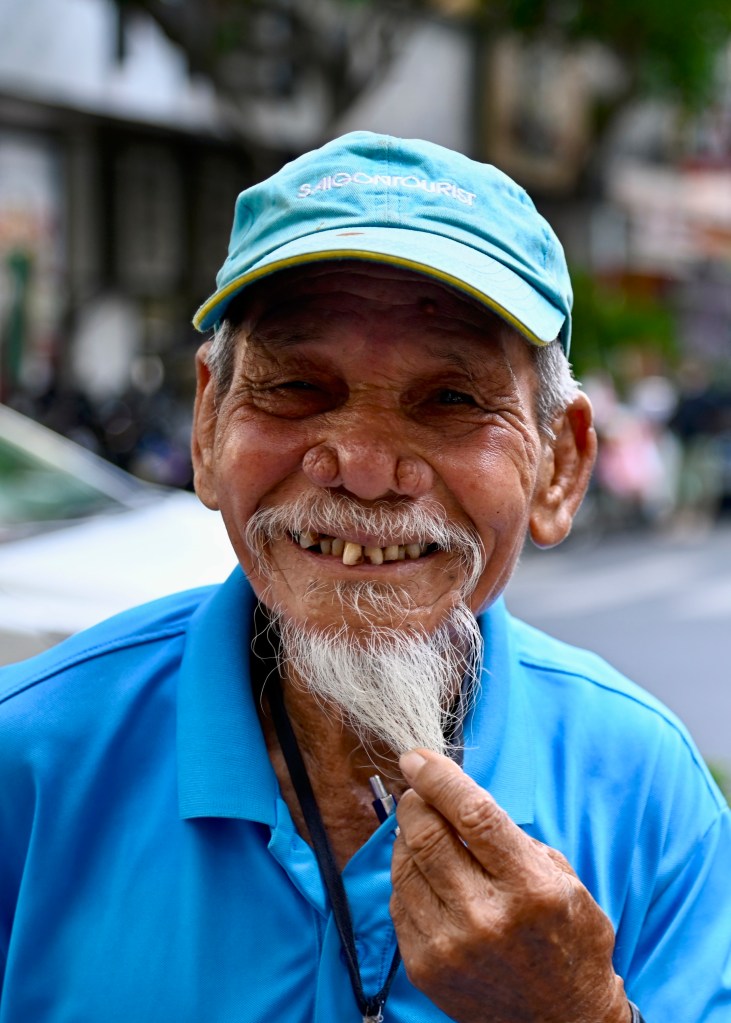
Our ride took us to a local park, where we saw people exercising – running, stretching, doing Tai Chi, dancing – and people just relaxing and having coffee while it was still – at around 85 degrees – relatively cool. We stopped at a cafe in the park for some Vietnamese coffee – traditionally made with condensed milk, making it a sweet cool treat at that hour.
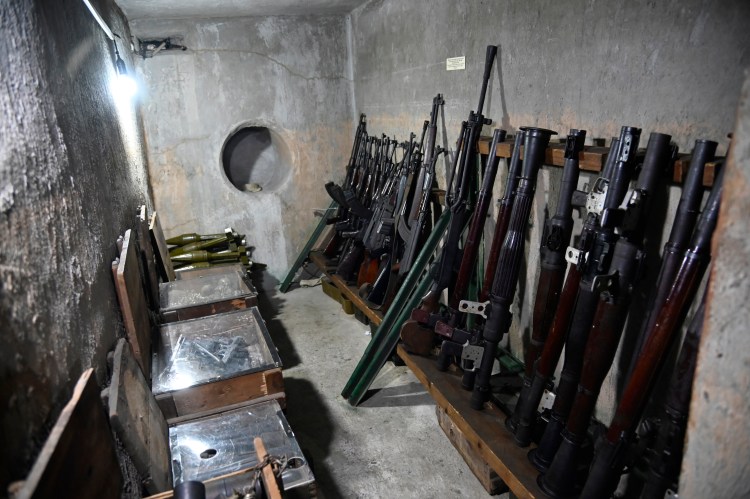
From there we headed to an alley, where shops and stands were set-up; directly across from he woman selling whole (dead and plucked) chickens was the site of a small former weapons bunker, well hidden below the tile floor, where guns and rocket-launchers and ammo had been stored by the Viet Cong for the Tet Offensive in 1968.

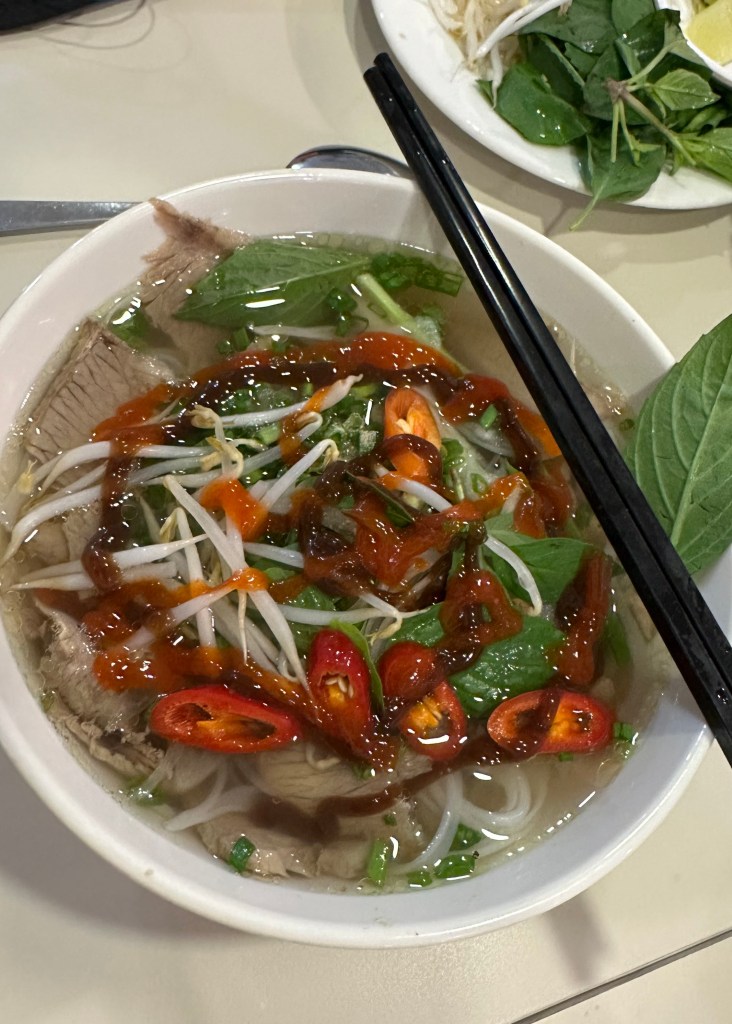
It was then time for breakfast and we headed to a restaurant for pho, the well-known and traditional Vietnamese noodle soup with chicken and pork, which is frequently eaten early in the day. The joint we went to had pictures of Bill Clinton on the wall, as he’d eaten there when he visited in 2000. I asked our guide if Clinton also had used the bathroom there cause, you know, I wanted to go where Bill and gone. Turns out this wasn’t the EXACT location where Bill had been – the owner had moved the restaurant to a different spot since Clinton’s visit. Regardless – delicious broth, some noodle slurping, a decent out of heat courtesy of some fresh chilis and sriracha sauce.
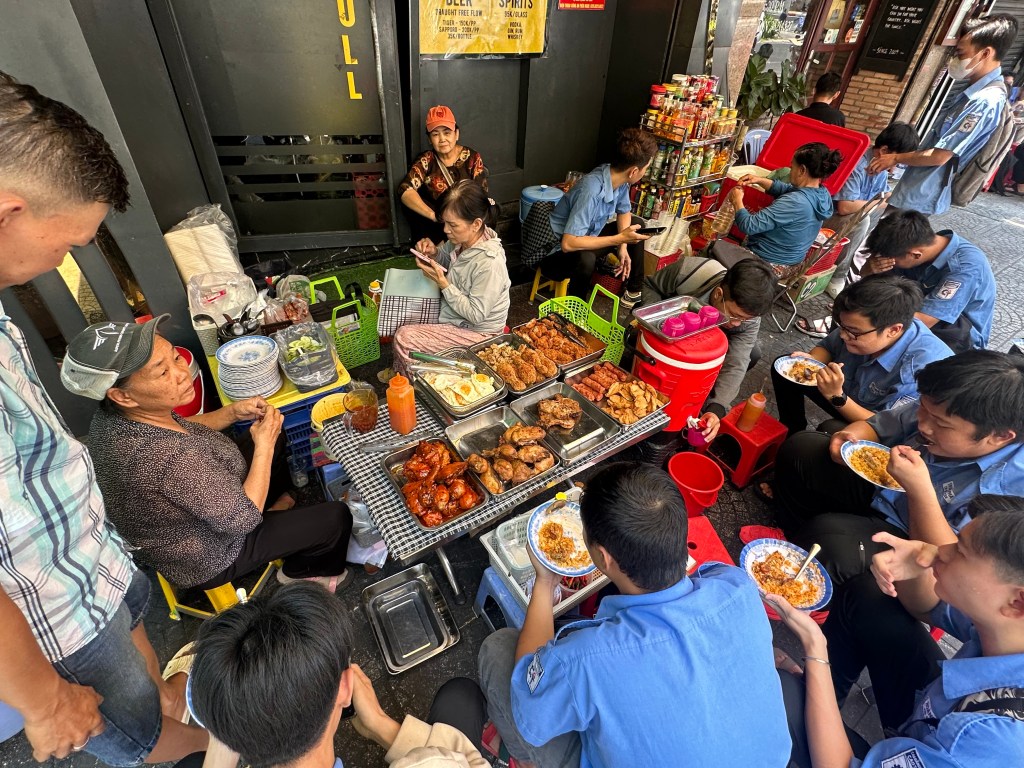
We had a bit of a break, some I walked with some friends to a local chocolate shop, started by a couple of French guys a number of years ago who wanted to exclusively use Vietnamese-grown cacao beans. I learned about the shop in the Saigon episode of “Somebody Feed Phil,” and, as one of the founders said, all they had to do was learn how to make chocolate. At the location we went to, they roast and grind the beans, then make a wide-variety of stuff – hot chocolate, ice cream, chocolate bars, chocolate candies, cakes, and bars. I opted for the chocolate milkshake with broken cookies. Wicked good. Chocolate rush. Sugar crash. The walk back to the hotel gave us a chance to see street-life around 11:30 a.m., with a number of school-going teenagers out for lunch at street-side restaurants and coffee shops.
We had lunch at a restaurant about 30 minutes outside of where were where we got a demonstration on how to make Vietnamese pancakes stuffed with shrimp and pork and veggies – kind of like a small omelette – before we headed back into the city. This was our chance to see the old French-colonial era post office, but, as well, a number of landmarks from the Vietnam War ear.
We first drove past the old US Embassy, which is now a consulate, as the Embassy has relocated to the capital city of Hanoi. As we drove around, we continued to see a mix of old and new Saigon – street level shops in old buildings, narrow alleys and street-side vendors, and large modern office towers and apartment buildings. After the war, the economy suffered terribly – the money across the country was changed, each family only got the equivalent of $2,000 American dollars when they transferred their money (regardless of how much money they had before hand), rations and supplies were handed-out based upon a coupon system, with the value of your coupon based upon whether you were a member of the party or not and, in the case of children, their age. After the US embargo was lifted, however, the economy has boomed and virtually all we saw has been since 1995.

The colonial-era French post office sits a few hundred yards away from the building that once housed the US CIA headquarters; it was the roof of this building (not the US Embassy, as was mis-reported) where the famous photograph shows people being evacuated during the Fall of Saigon in 1975. In front of that building today sits a coffee shop; nearby there’s a Tumi luggage store, and behind it towers a modern office tower.
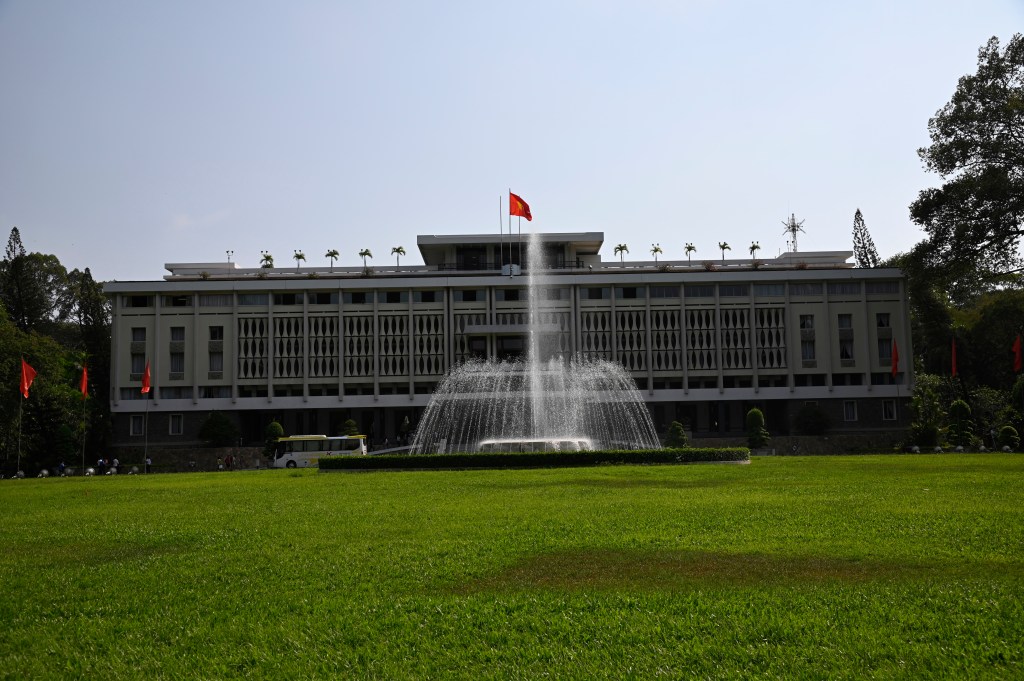
By now the outside temp was around 100 degrees with high humidity, and we were off to visit the old presidential palace which, after unification, became the Reunification Palace. The air conditioning – to the degree it existed – wasn’t on, and most of our tour was on outer unenclosed walkways anyway, and we had a chance to visit the underground bunker that housed offices, a huge kitchen, and communications equipment. Parked outside on the lawn were Vietnam-era tanks and a fighter jet, as this was where a North Vietnamese tank crashed through the gates Saigon Fell.

Our last stop of the day was at a temple for the Cao Dai religion; during the period from 1975-1986 religion was banned here, but now there is significant freedom of religion, though something like 40% of the population say they have none. Buddhism is dominant at 38%, followed by Catholicism at 8%, and after that its a smattering of other stuff, including this localized religion which was founded in 1926.
While we are all incredibly curious about the Vietnam War and its era, the Saigon we see is a very different place. As our tour guide said numerous times, “OMB” – “Oh My Buddha” – when he compares the Saigon of today with the one of 50+ years ago.
 Fred's Travel Blog