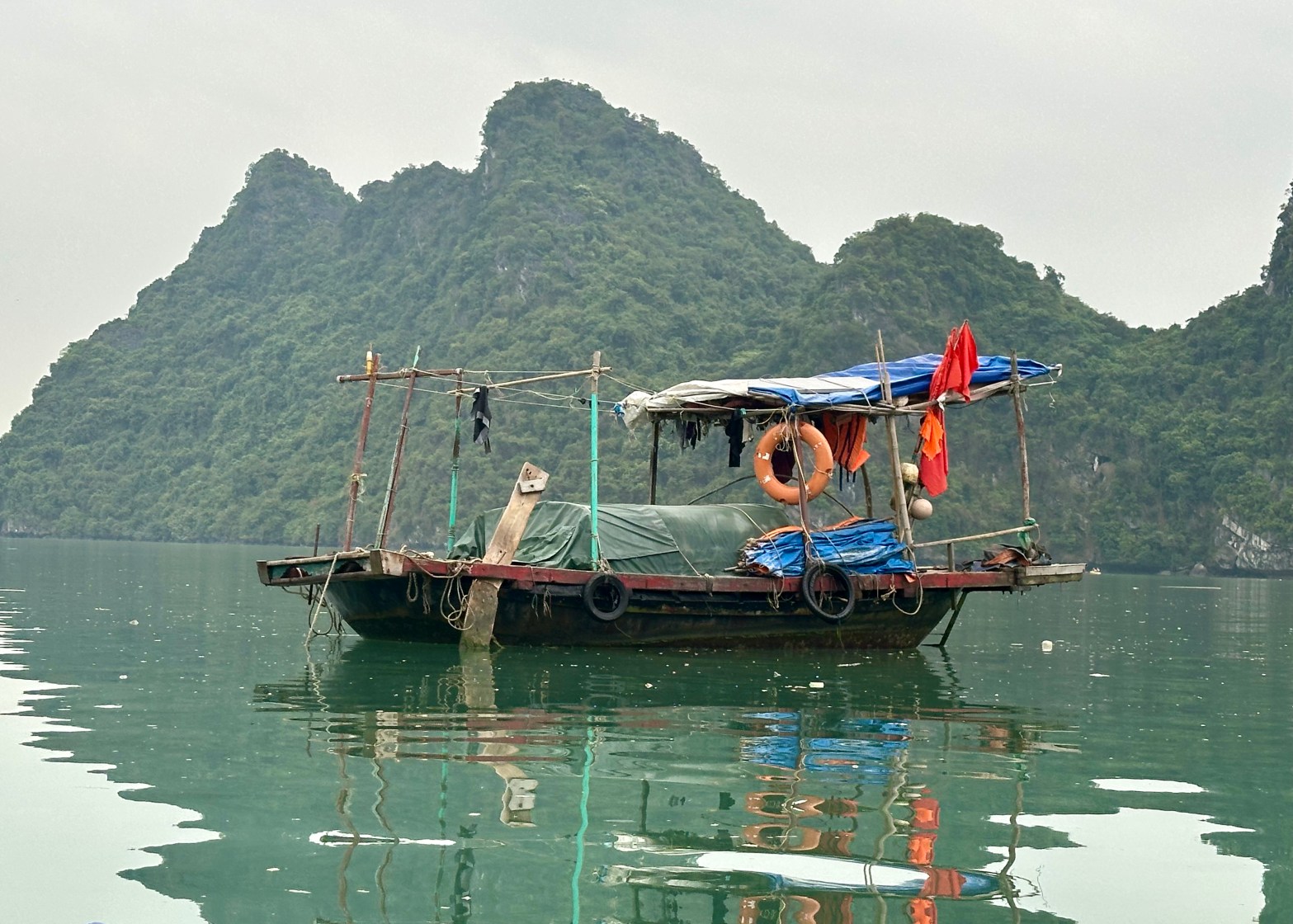
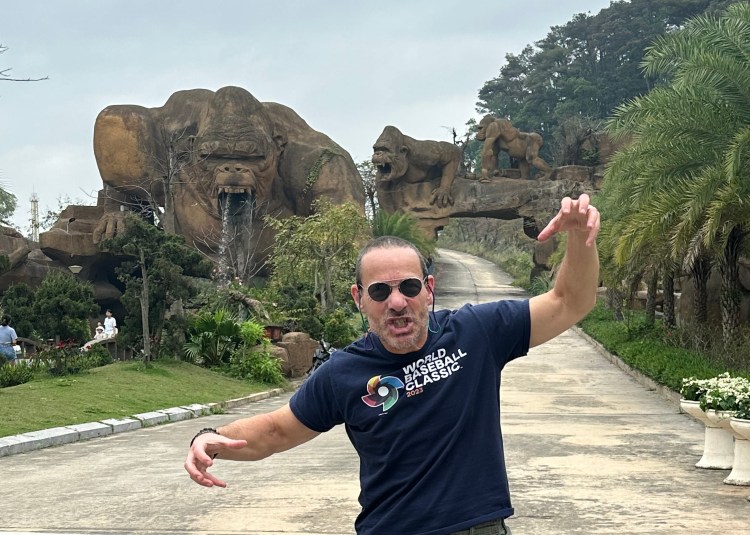
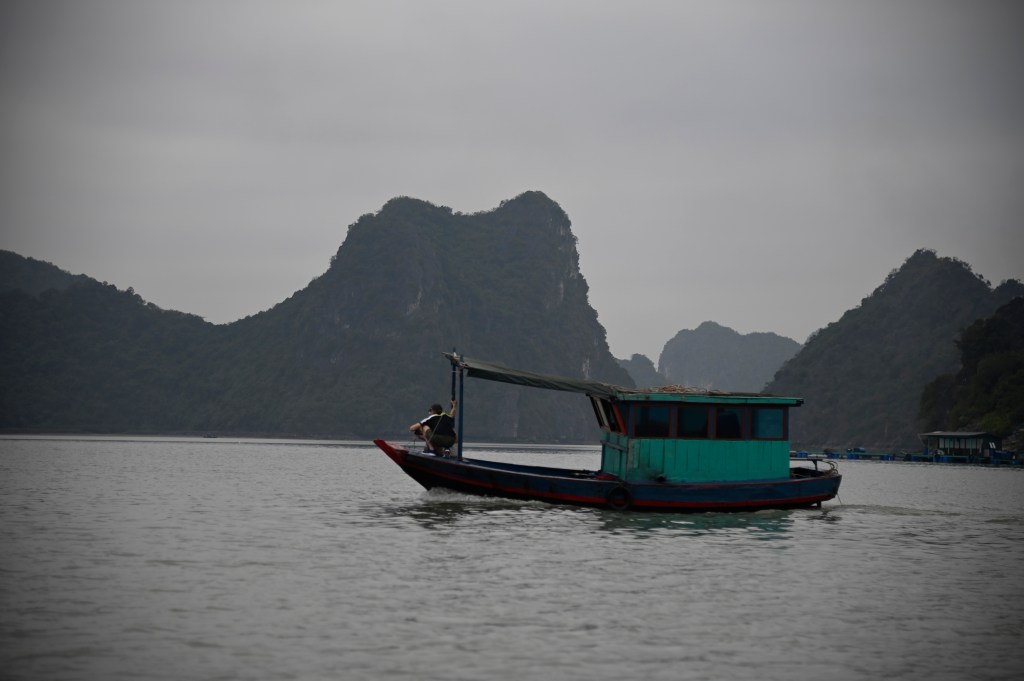
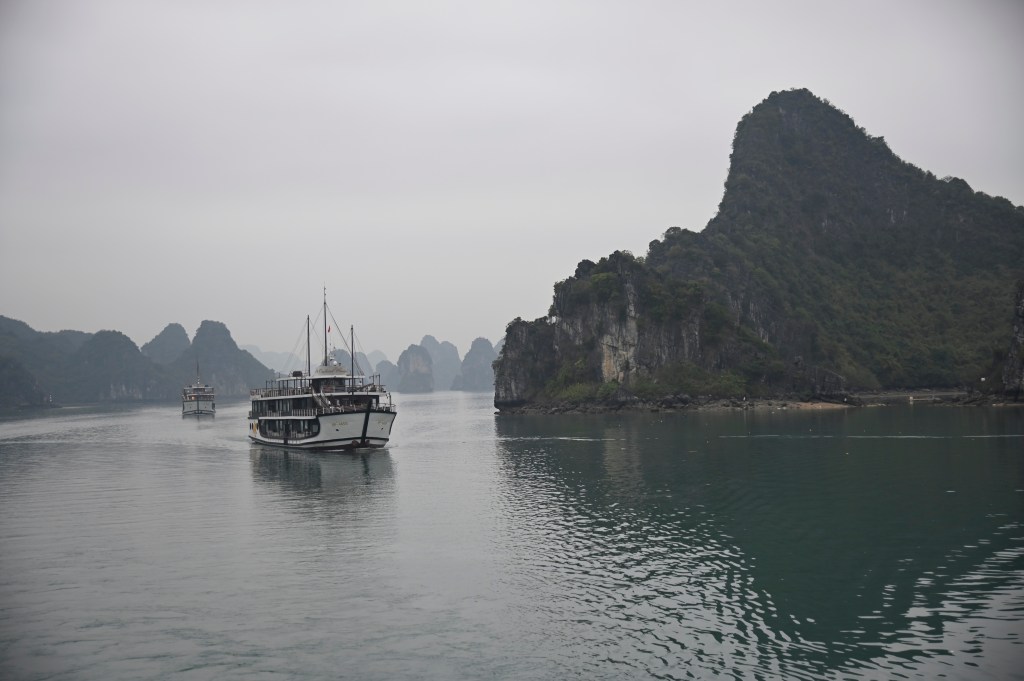
We started out around 8:30 a.m. on a two-hour drive east of Hanoi to Ha Long Bay, a UNESCO World Heritage Site that sits in the northern part of the Gulf of Tonkin. The Bay is made up of over 1,900 islands, jungle-covered limestone formations – named karsts – that, in some cases, appear to rise straight out of the water. These are the same formations I’d seen in Ninh Binh on my first day, with the difference being that this is the sea and that was an enclosed river valley where rice was farmed. Parts of the film “Kong: Skull Island” were filmed in both places and now, as we approached the pier where we’d be picking up our boat for an overnight stay, we passed by a relatively new Kong-based theme park. Unfortunately, we had grey overcast skies the whole time we were on Ha Long Bay.

Along the drive, we stopped at a rest-area that doubled as a significantly-sized pearl shop; the Bay is the site of numerous pearl farms, and this spot was a place where you could learn about how pearls are raised (think of it as mollusk IVF) and purchase pearls of a wide-variety of color, size, perfection, and luster, as well as bracelets, rings, necklaces, and jewelry also made from mother-of-pearl.
The Bay, before COVID, was the site of 10m+ tourists per year and, as a result, a good many condos and apartments and hotels have been built along its coast; the pandemic, of course, clobbered the tourist business and it hasn’t yet fully recovered, so we saw buildings abandoned midway through construction as well as buildings that, while completed, were deserted.
UNESCO apparently had threatened to take away the World Heritage status of the Bay, given an escalation in its pollution, so a significant effort has been made to clean it up.
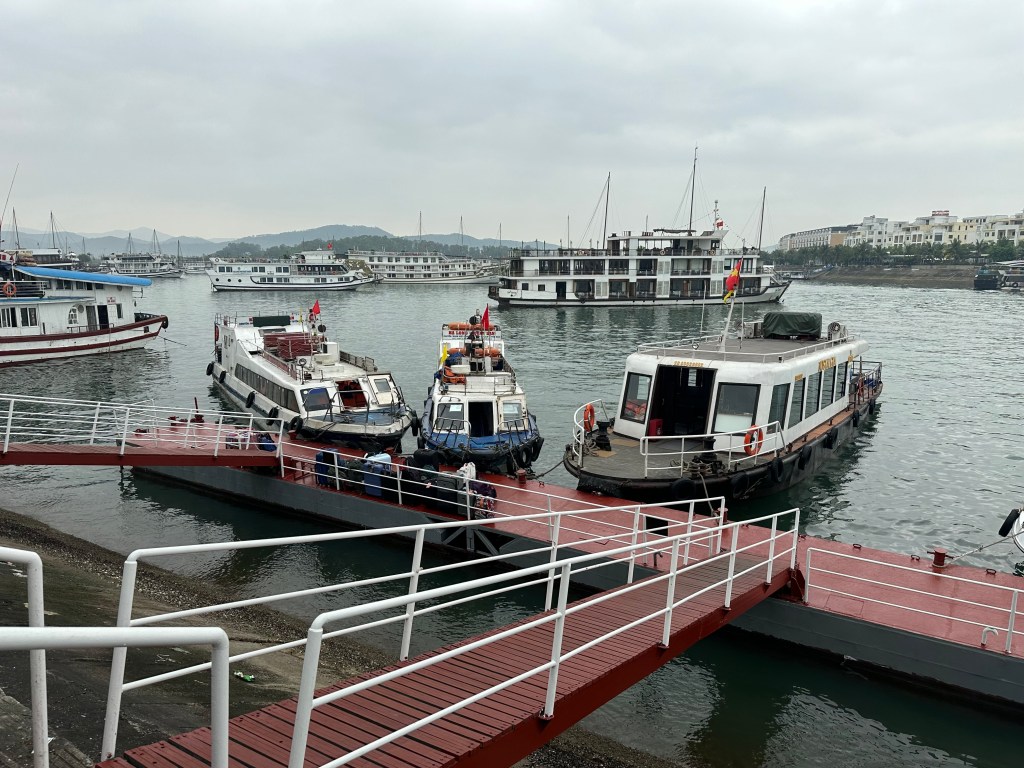
We saw a good number of tourist boats in the harbor, some designed for one-day cruises, others designed for overnight stays. We took a small tender out to our ship, the Orchid 4568, which was big enough to handle up to 22 people, with unexpectedly large guest rooms each with ensuite baths; while not fancy, the boat had a restaurant, a spa, and a small jacuzzi on-board, along with an outdoor bar on the sizable sundeck.
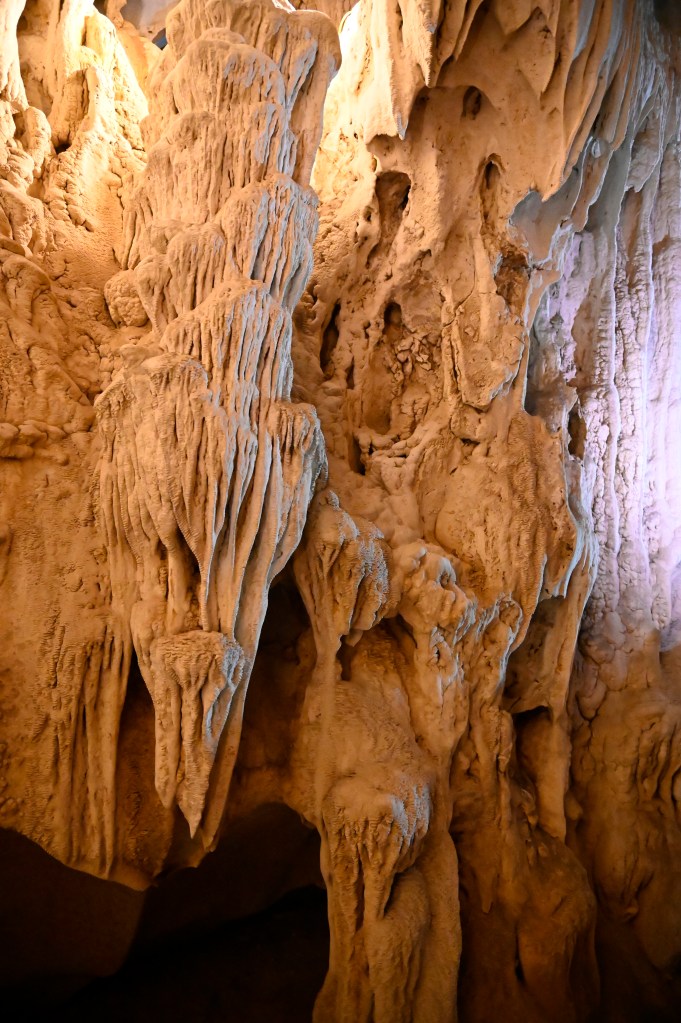
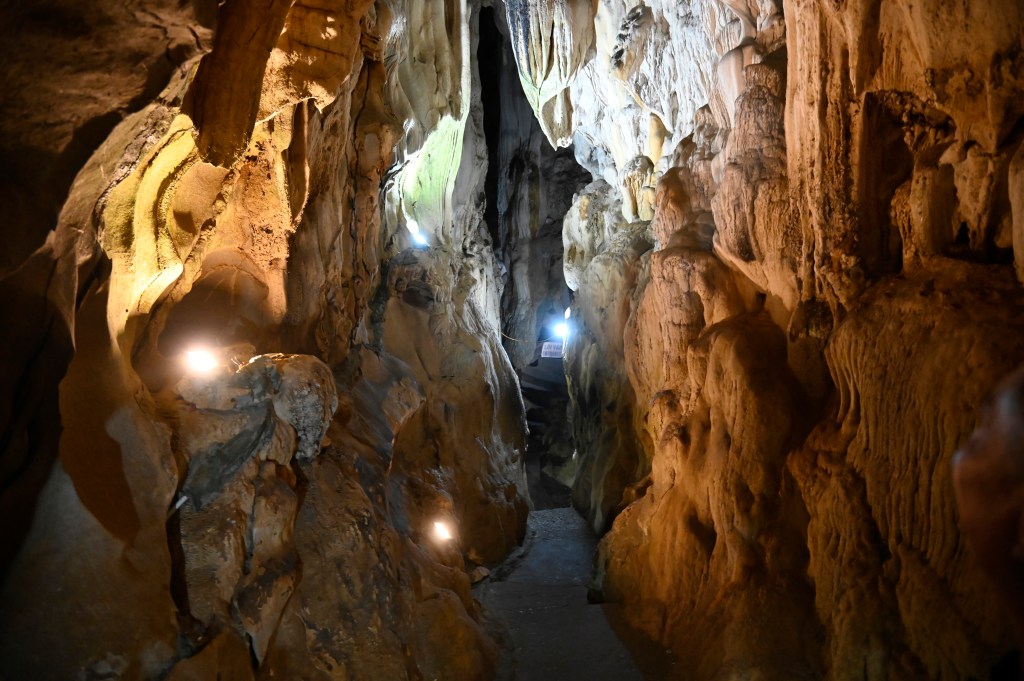
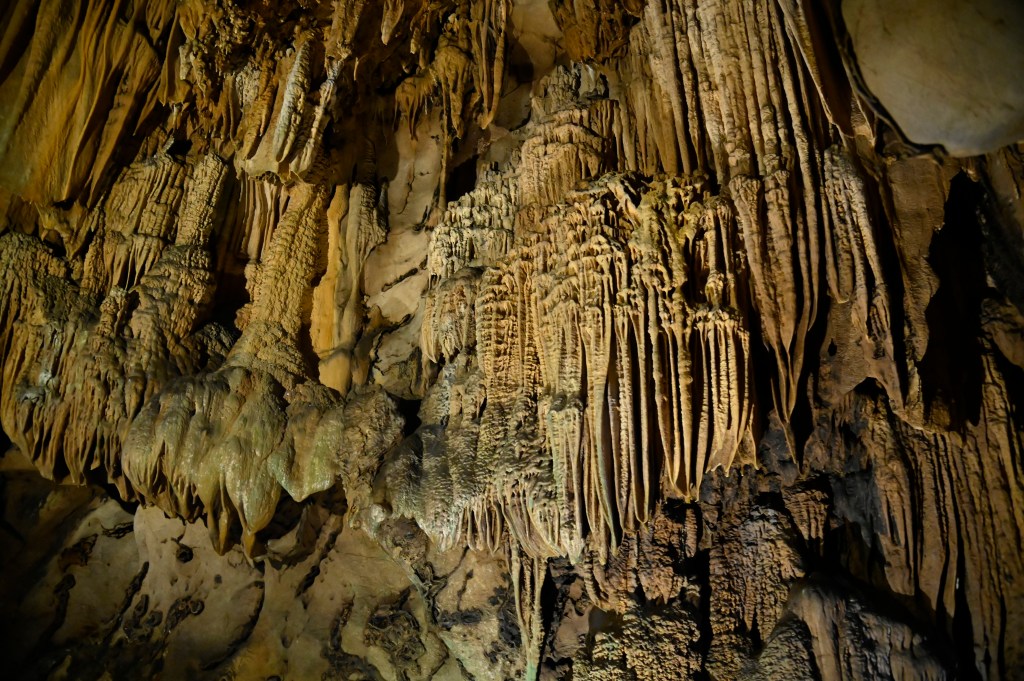
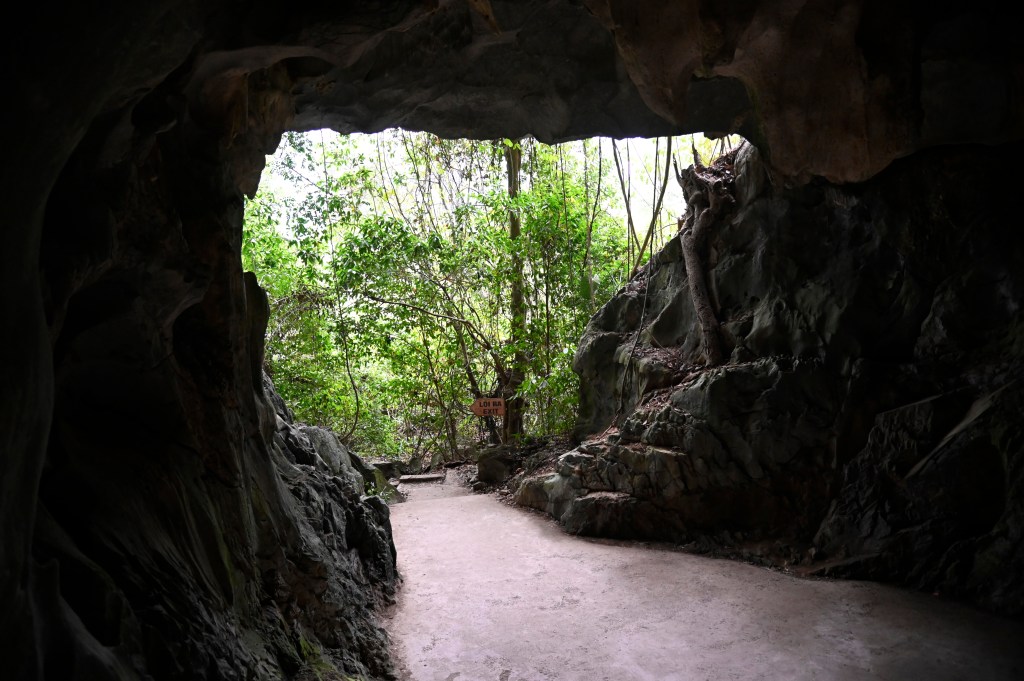
We boarded and took a short cruise to a point where I could take an excursion to see the Trung Trang Cave which stretches a distance of 300 yards through one of the karsts. It’s estimated that the cave is hundreds of millions of years old, and was rediscovered in 1938; it served as a US hospital during the Vietnam War. The cave is approached by climbing 150 stairs up a karst valley, and – though the path in the cave is now paved – its walls and ceilings are covered with stalagtites, some reaching to the floor and formed over the course of many years – we were told that one millimeter growth takes 15 years. When there are hollow stalagtites, you can knock on them and hear a variety of sounds. Some ferns grow along the path, and you can see the water cistern that was used during the War. The ceiling in some cases reached up to 20’ or 30’ feet high, but I also needed to duck at certain places along the path to avoid banging my head.
After the return to the boat, I passed on the chance to take a swim in the Bay. Just as the swim was announced, a fuel boat had pulled up alongside us and its engines churned up the Bay’s bottom; the mud in the water along with the unfortunate occasional presence of floating plastic garbage bags, bits of cardboard, and empty plastic bottles made that a hard pass for me. Instead, it was happy hour, a demonstration of how to make Vietnamese pork spring rolls, and dinner, and I think everyone skipped the participatory squid fishing – our guide explained that it took a lot of patience with usually no reward. As a few of us sat on the deck late into the evening, it was unfortunately too cloudy to see any stars, but the tourist boats that surrounded us were lit-up, giving an eerie glow to the Bay.
On day four a few of us awoke early for 6:15 a.m. tai chi on the sundeck, followed by breakfast (when I had a chance to taste my first “egg coffee” – a Vietnamese speciality that tasted like a cappuccino) and then a chance to kayak in the Bay. That was tranquil and chill, with the water being glassy and still, and we were able to get in close to the base of the karsts; it was all good despite the occasional presence – really the crime – of the floating garbage. With time to quietly reflect, I couldn’t help but think of the war and the devastation it brought to these places and these people. Here I was on a northern bay of the Gulf of Tonkin, where the incident in August 1964 served as an impetus for greater US involvement in the Vietnam War.
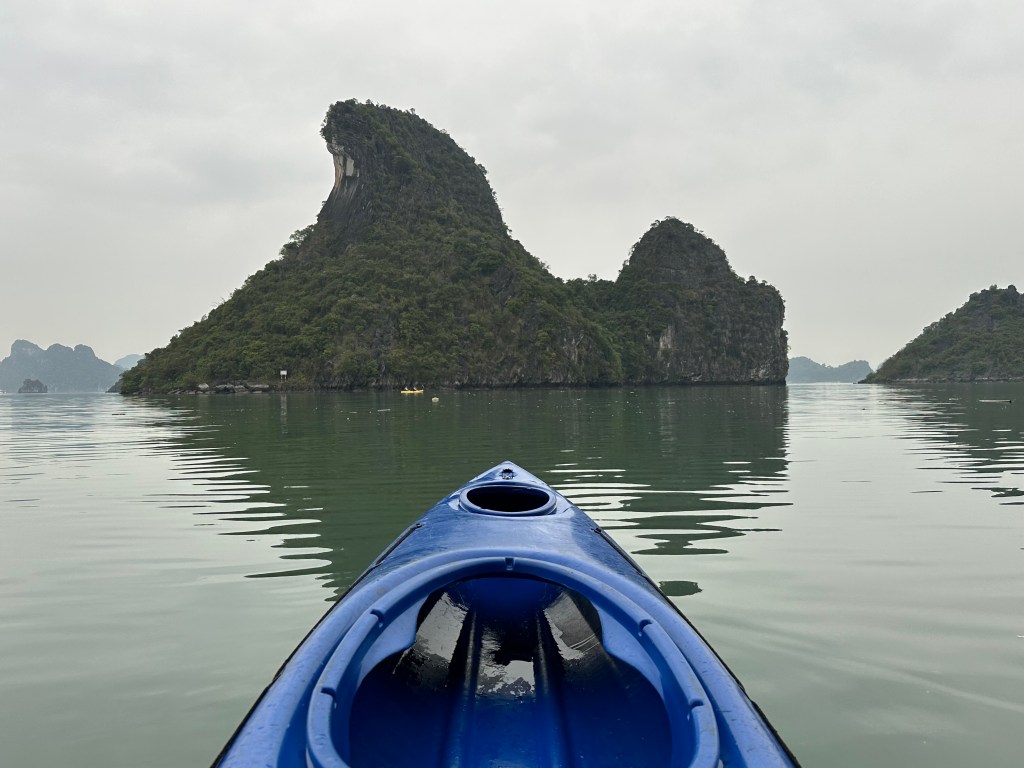

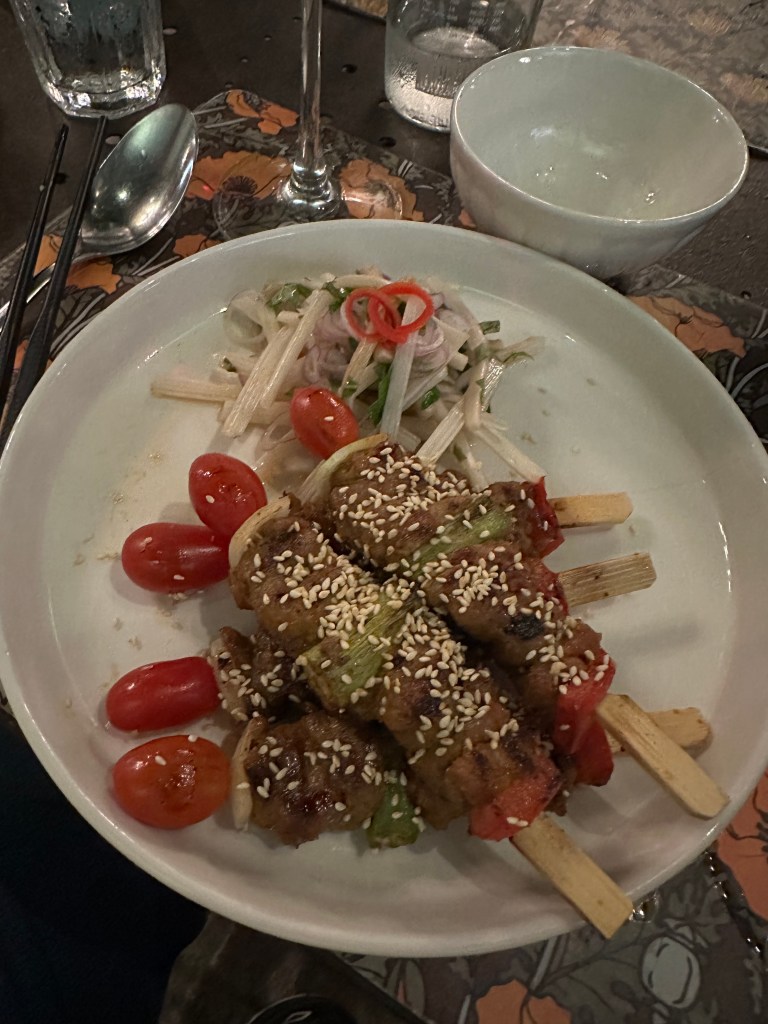
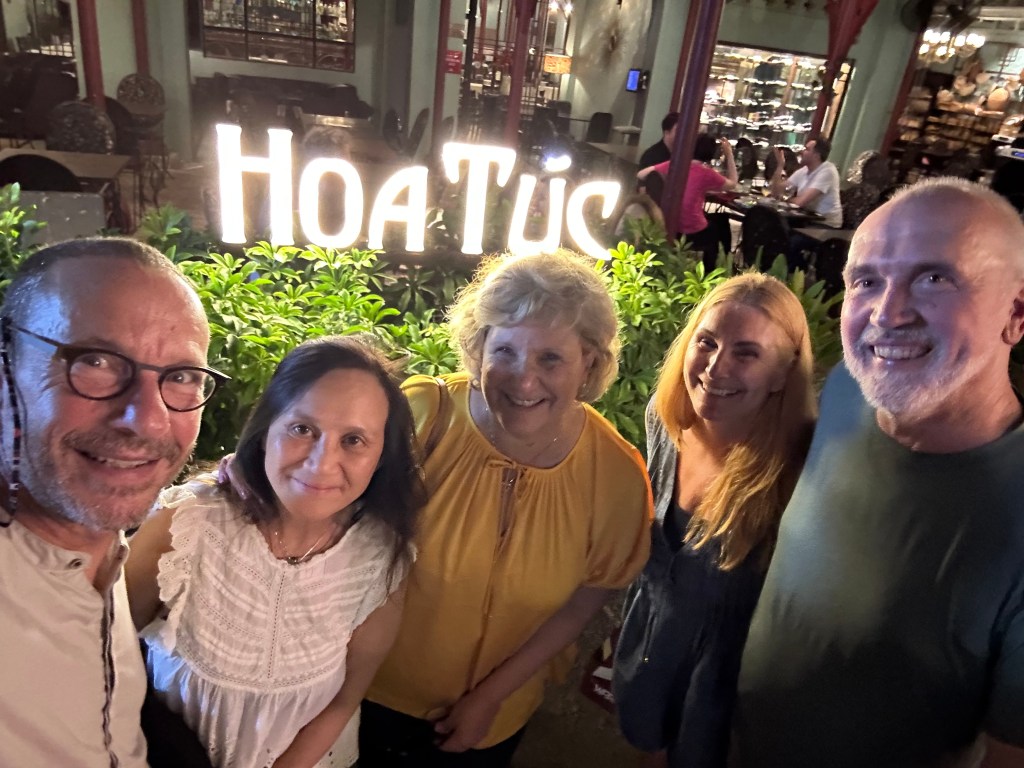
That kayak ride was a peaceful way to end our visit to the Bay. The rest of the day was spent in transit – first returning on the boat to a nearby pier, then taking about an hour drive to Hai Phong (the third largest city in Vietnam, with about 3m people), followed by a two-hour flight to Saigon, where we’ll spend the next three nights. Dinner out with some new and old friends tonight at a great restaurant within walking distance of the hotel, but more on Saigon to come.

 Fred's Travel Blog