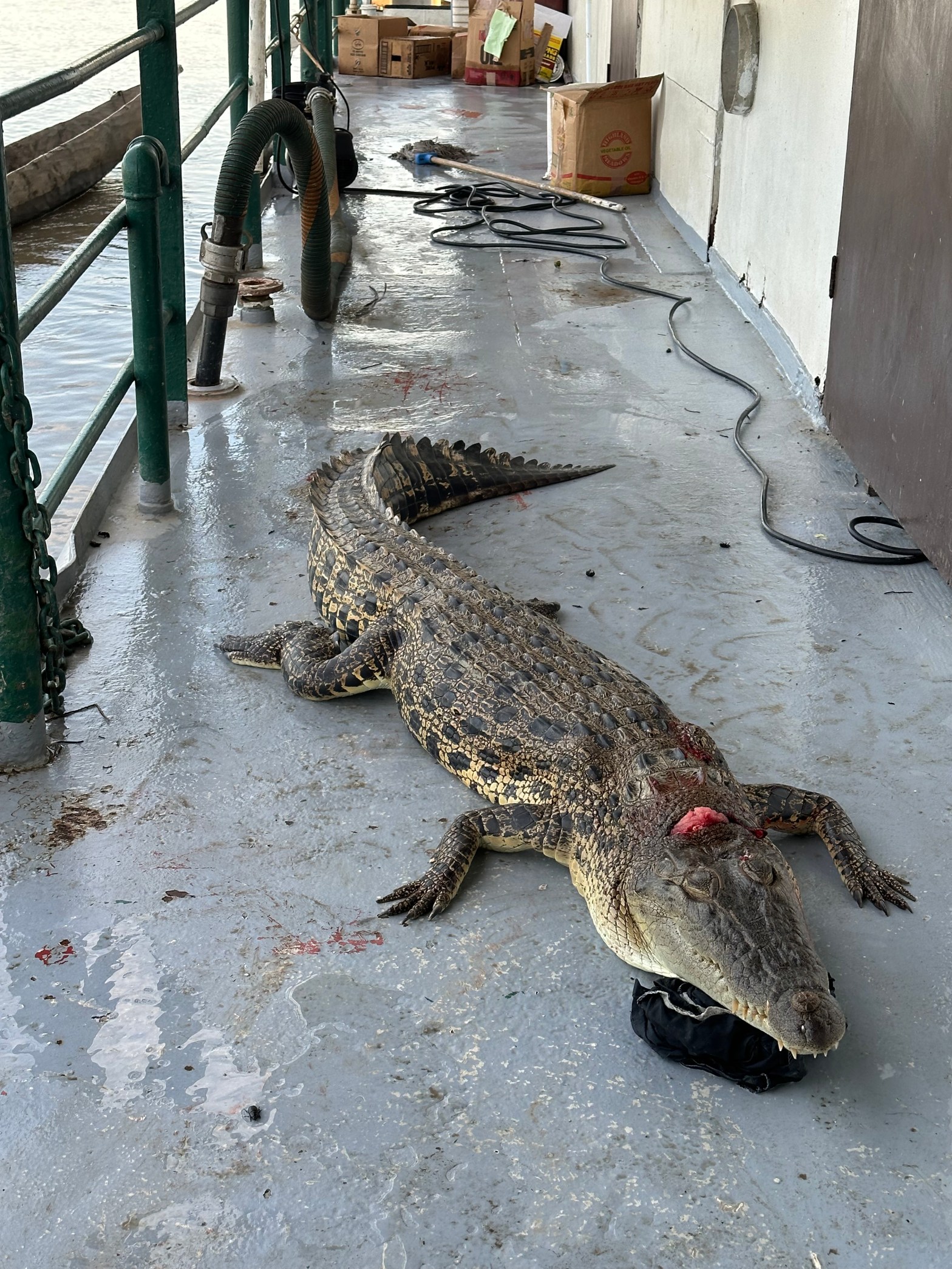
When I left my room at seven a.m. on the morning of day nine, our tour director, Deb, stopped to tell me that there was a crocodile on the deck outside.
It was a dead one.
As it turned out, a local merchant – Ronny – had planned on stopping by the Sepik Spirit early to try and sell us a variety of locally-made crafts – masks, spoons and letter openers carved from boar bone, necklaces and bracelets made from nuts and seeds and beads, wood carvings, etc. The prior evening, he and his crew had come across, captured, and killed the saltwater crocodile that was now on deck.
How’d they do that? As Ronny told the story, they first speared and wounded it. They then got a piece of rope around it so that they could hold onto it while it struggled and tired. Eventually, they were able to club it, and then slay it with an axe or knife by severing its spinal cord. That death-blow was still visible on the croc as it lay on the deck for us to see. One of my travel mates and I were curious enough that we poked and probed at it, feeling its heft, its scales, and – yes – its soft underbelly.
Deb purchased the croc, with the idea that our chefs might cook some of it for dinner, then the crew would keep the rest for whatever purpose they wanted. And Ronny still had his crafts on display as well.
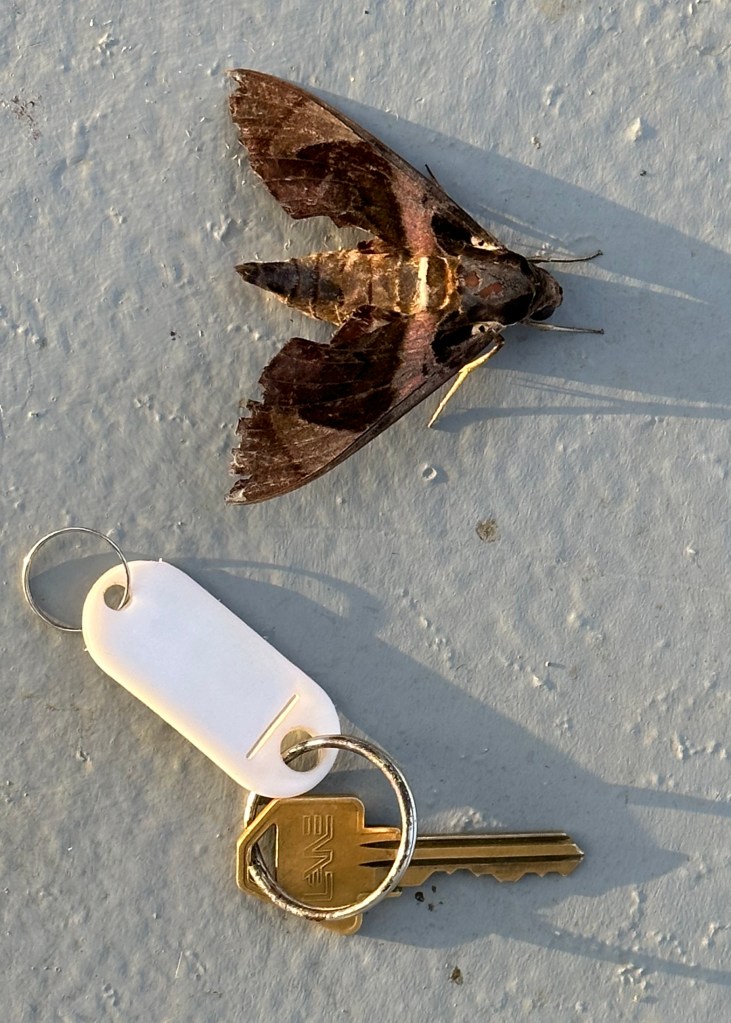
In addition to the dead croc, we also had a number of large moths – like the one I’d wrestled with in my room – just sticking around the front deck of the boat. They were so big that they cast shadows.
We learned that Joseph, who would have been the usual guide for our time on the Sepik Spirit, had passed away unexpectedly a few weeks prior, and that’s why Paul was our lead guide instead. Joseph’s village was nearby and there was to be a mourning ceremony there, which most of our crew hoped to attend.
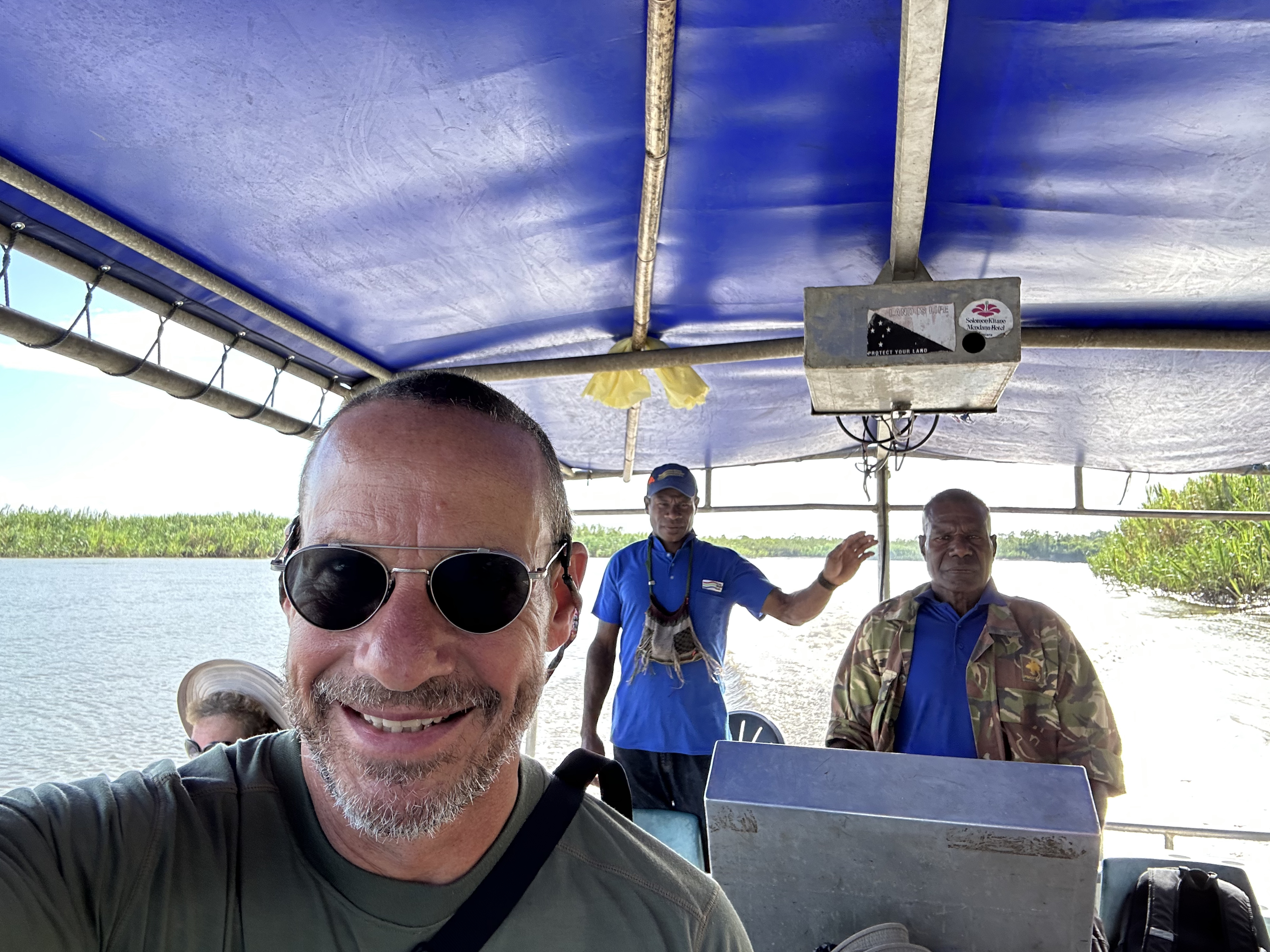
After breakfast, we all loaded into the flat-bottom boat to head on to the Korosameri River (if you recall, we were then moored at the confluence of this river – also known as the “Cross Mary” and “Angry Woman” – and the Karawari).
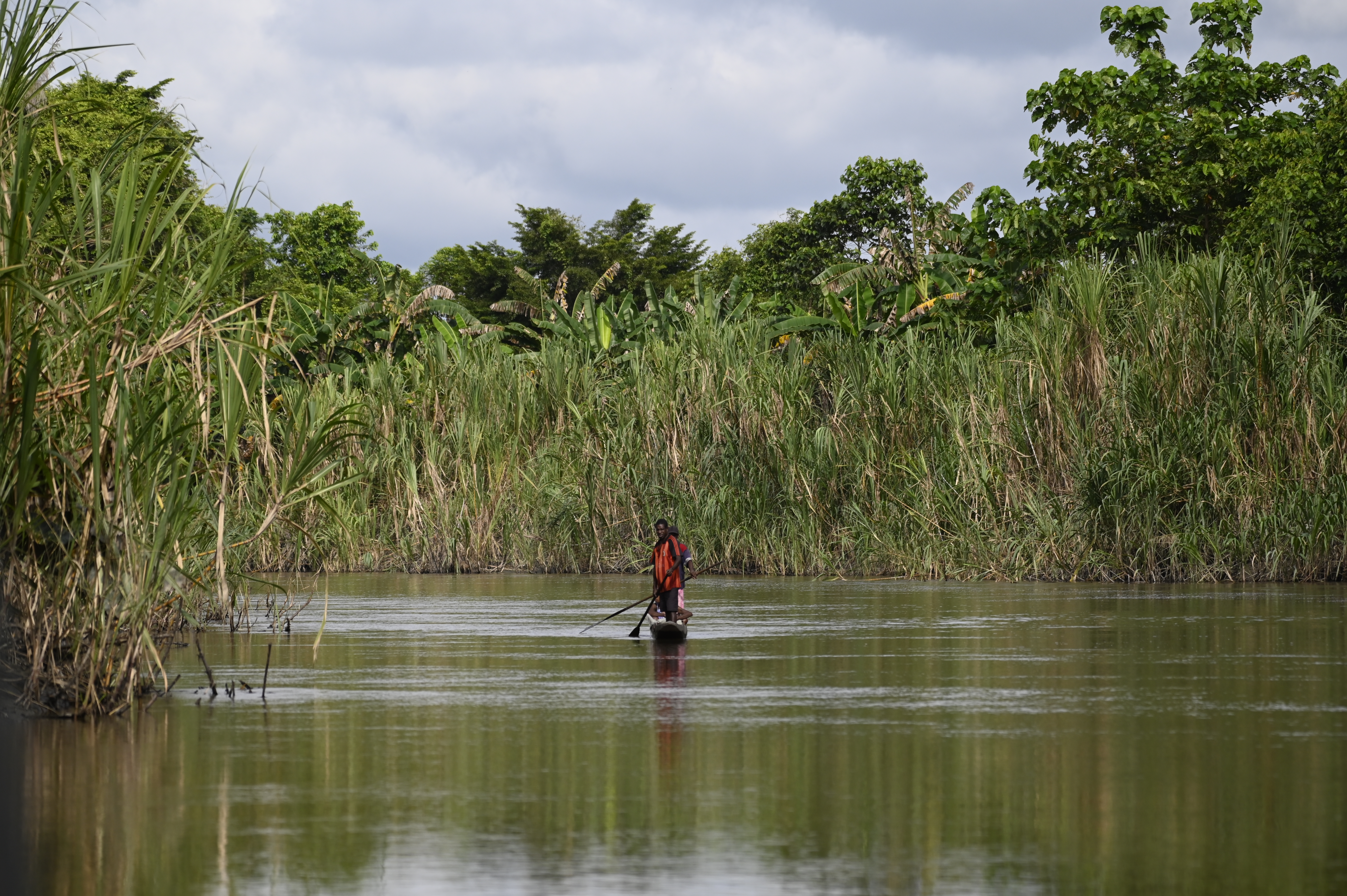
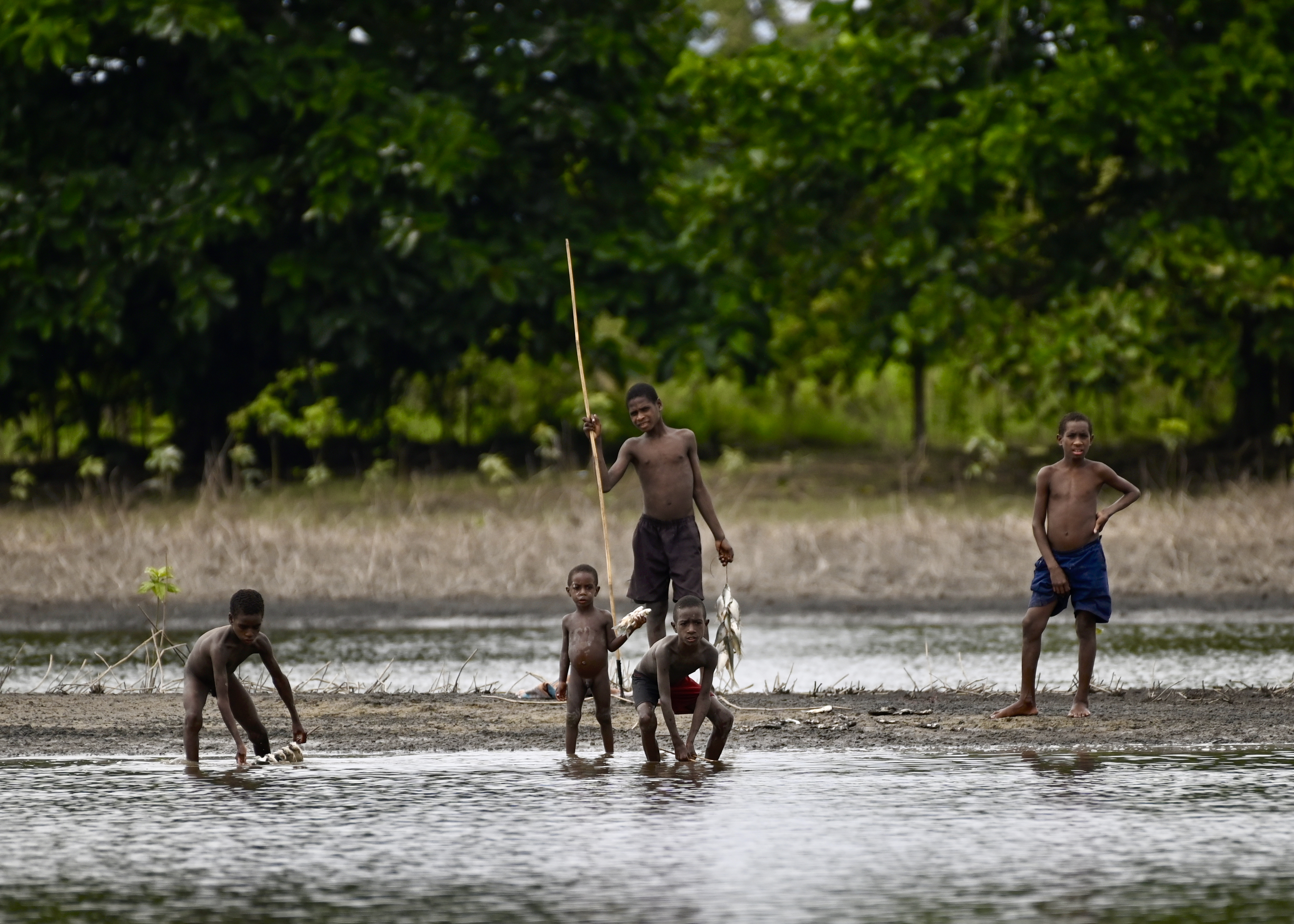
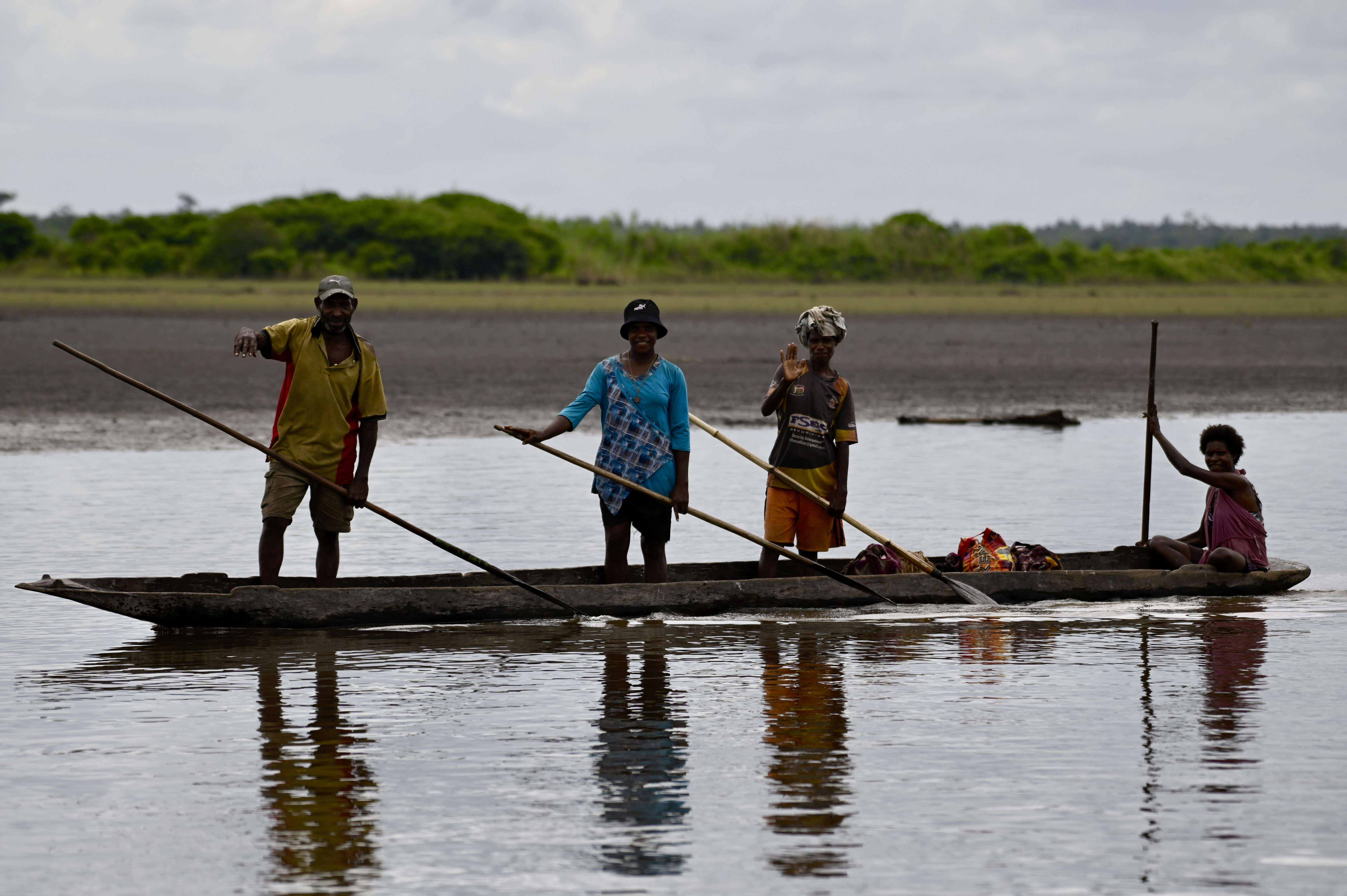
We cruised for about an hour past tall reeds, birds, the occasional village (including Joseph’s where we saw mourning shelters going up) until we reached the Blackwater Lakes Region, which we entered via a small tributary. As we entered, the water became more like wetlands – shallower and swampy – we could see the bottom at times – and the growth on the river’s edge became much lower and flatter. There were lots of people out fishing in canoes.
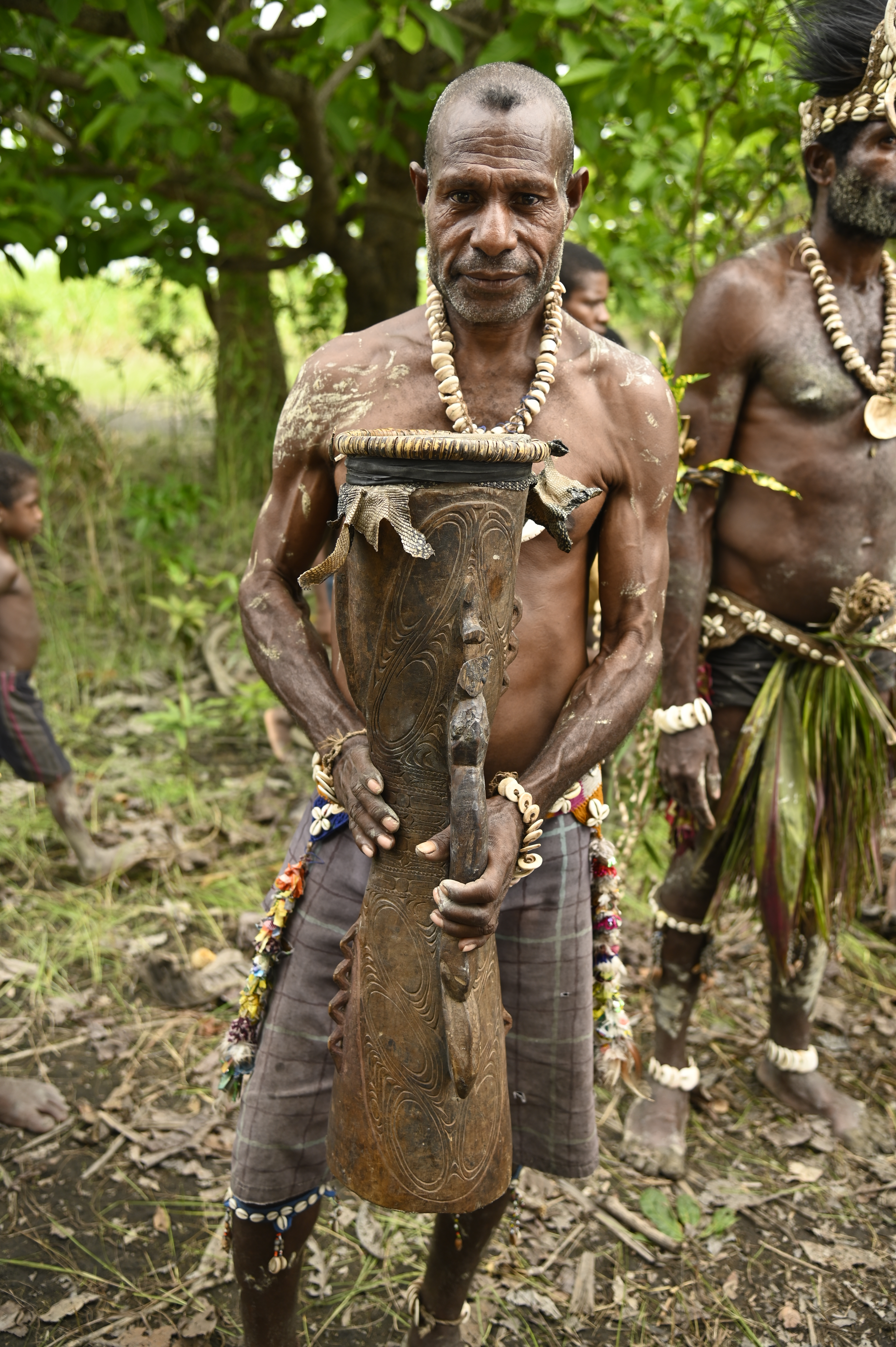
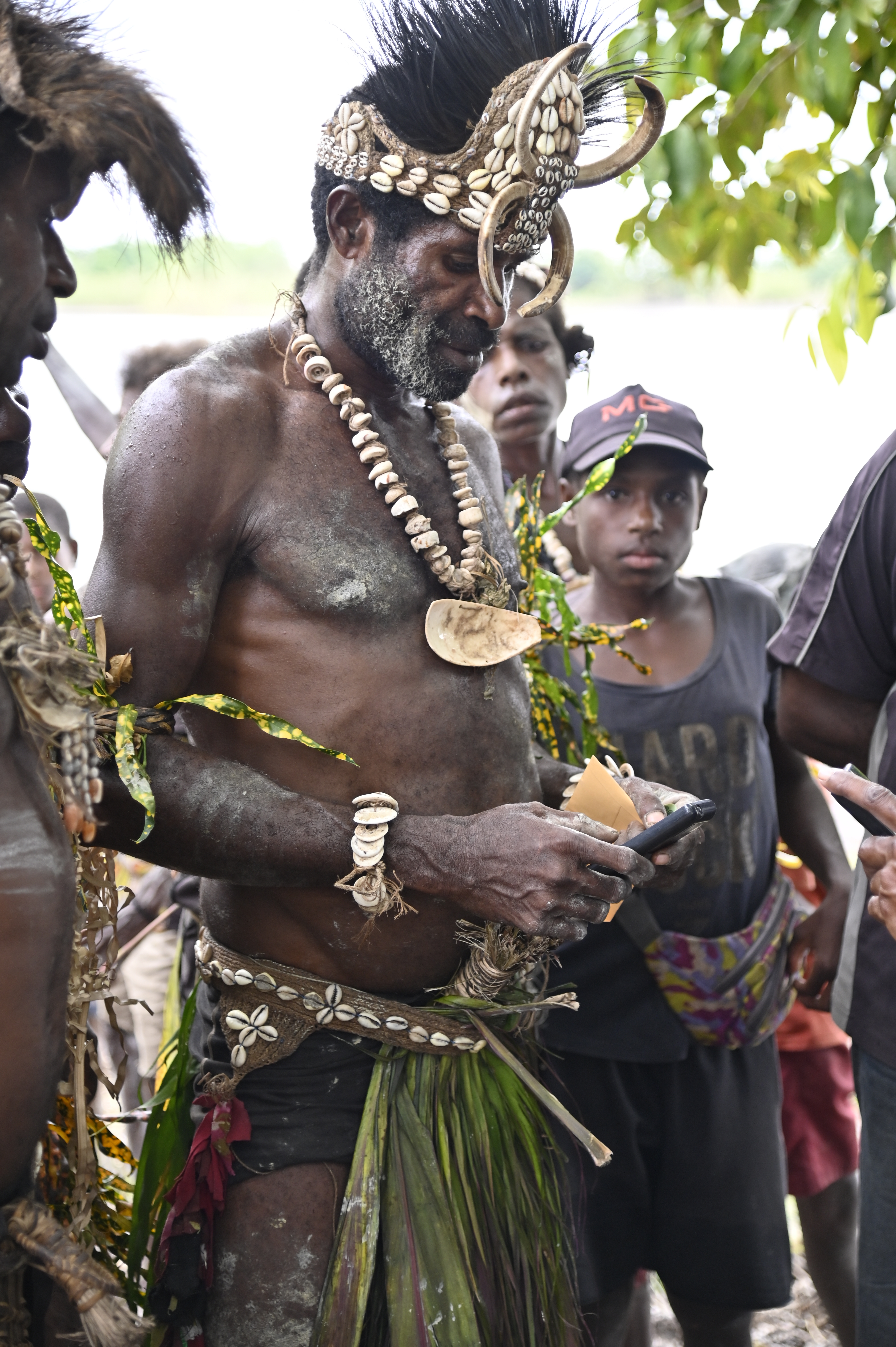
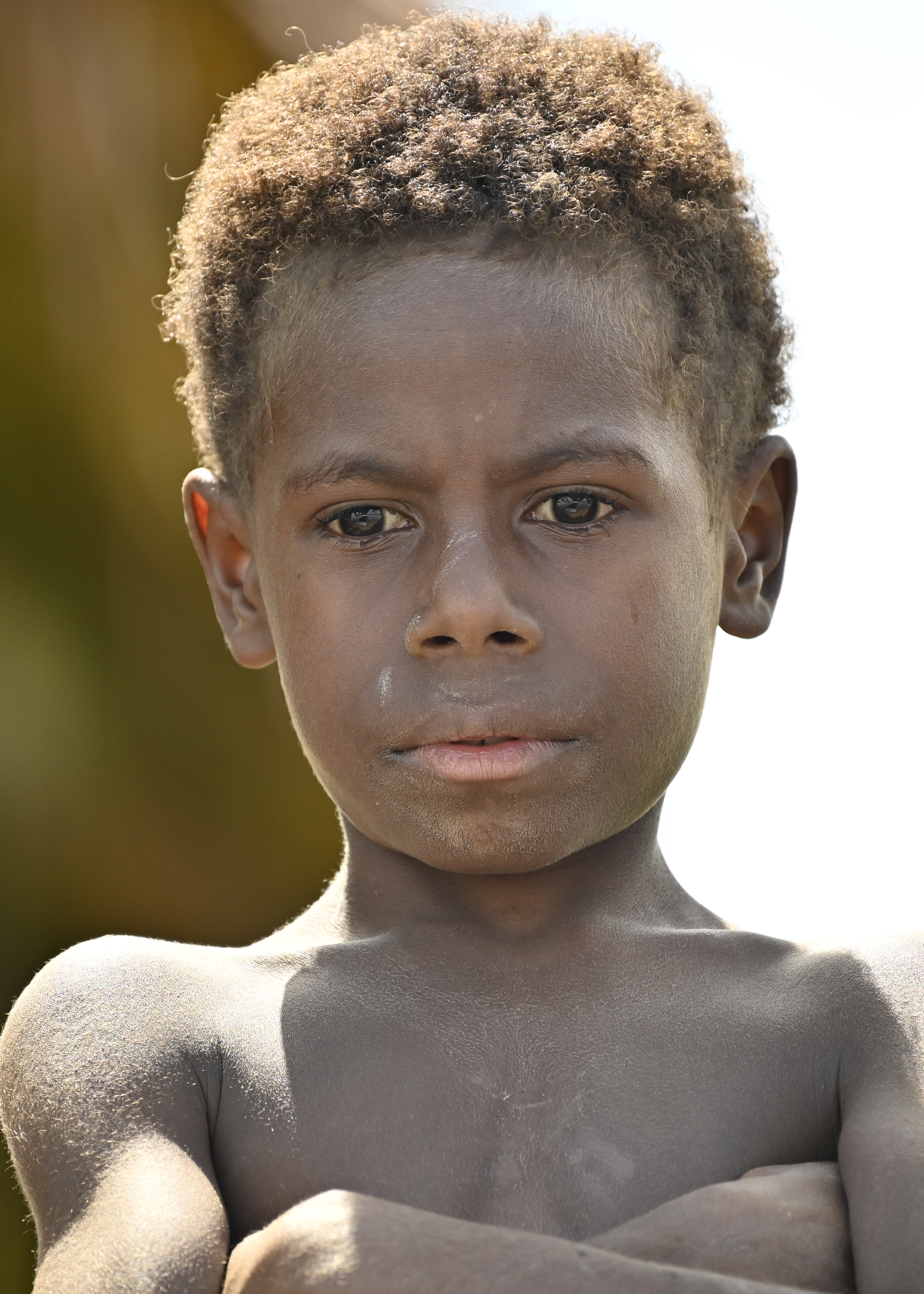
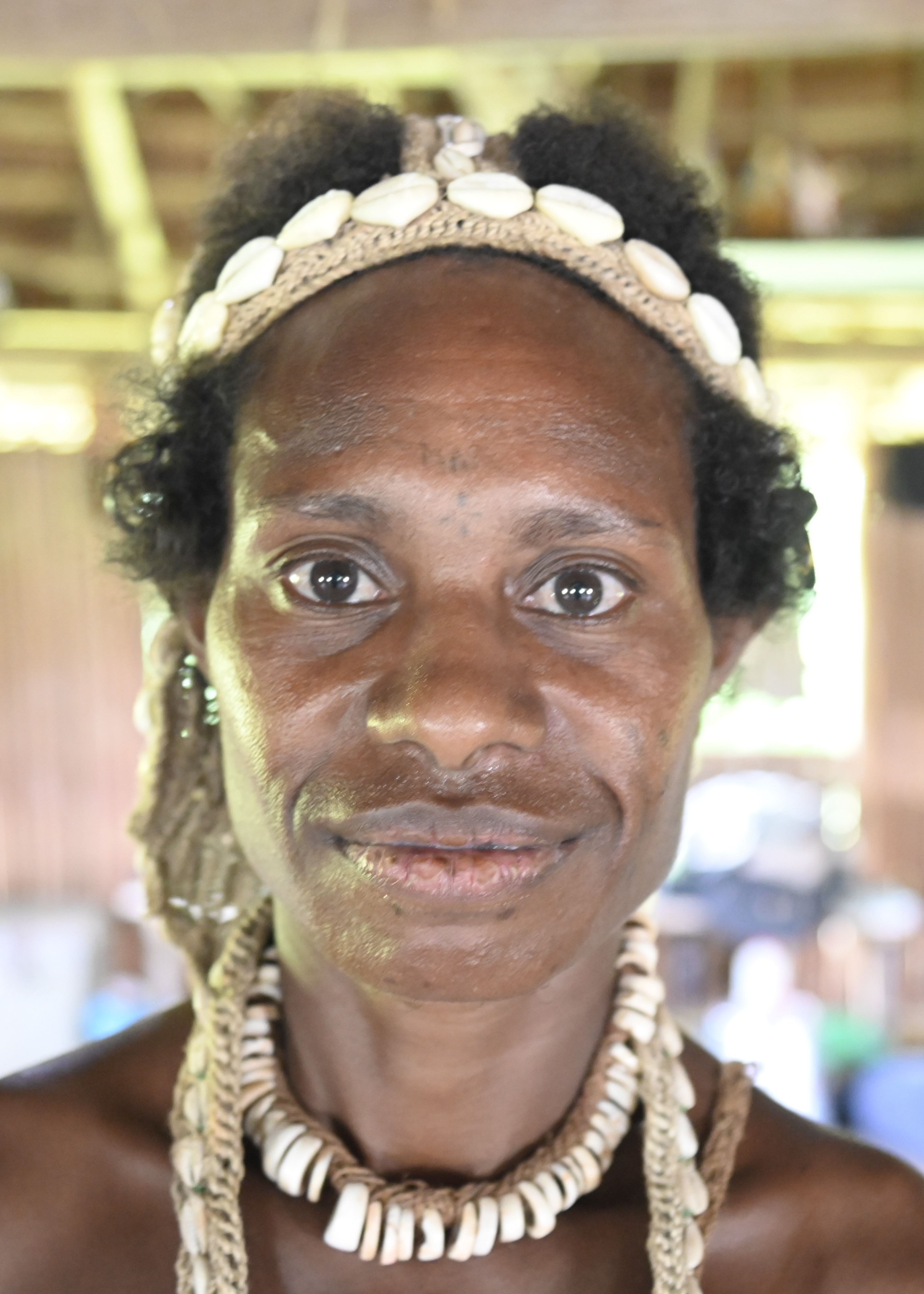
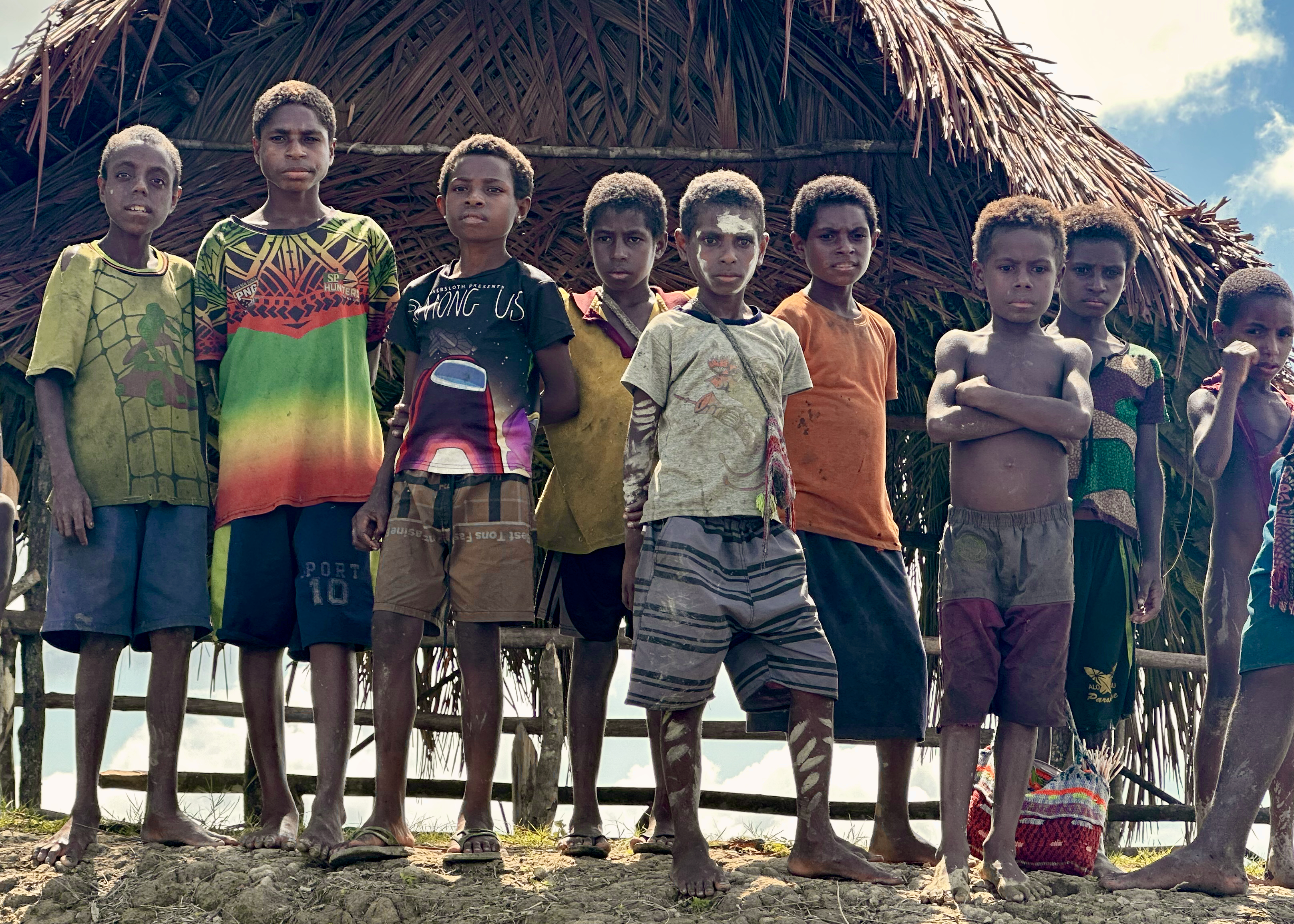
Our first stop would be the village of Sangriman, where we saw a dance demonstration by the Kabriman tribe; the second stop – a village of about 350 people, also the Kambriman tribe – would be to see a woman’s Spirit House and woman’s dance.
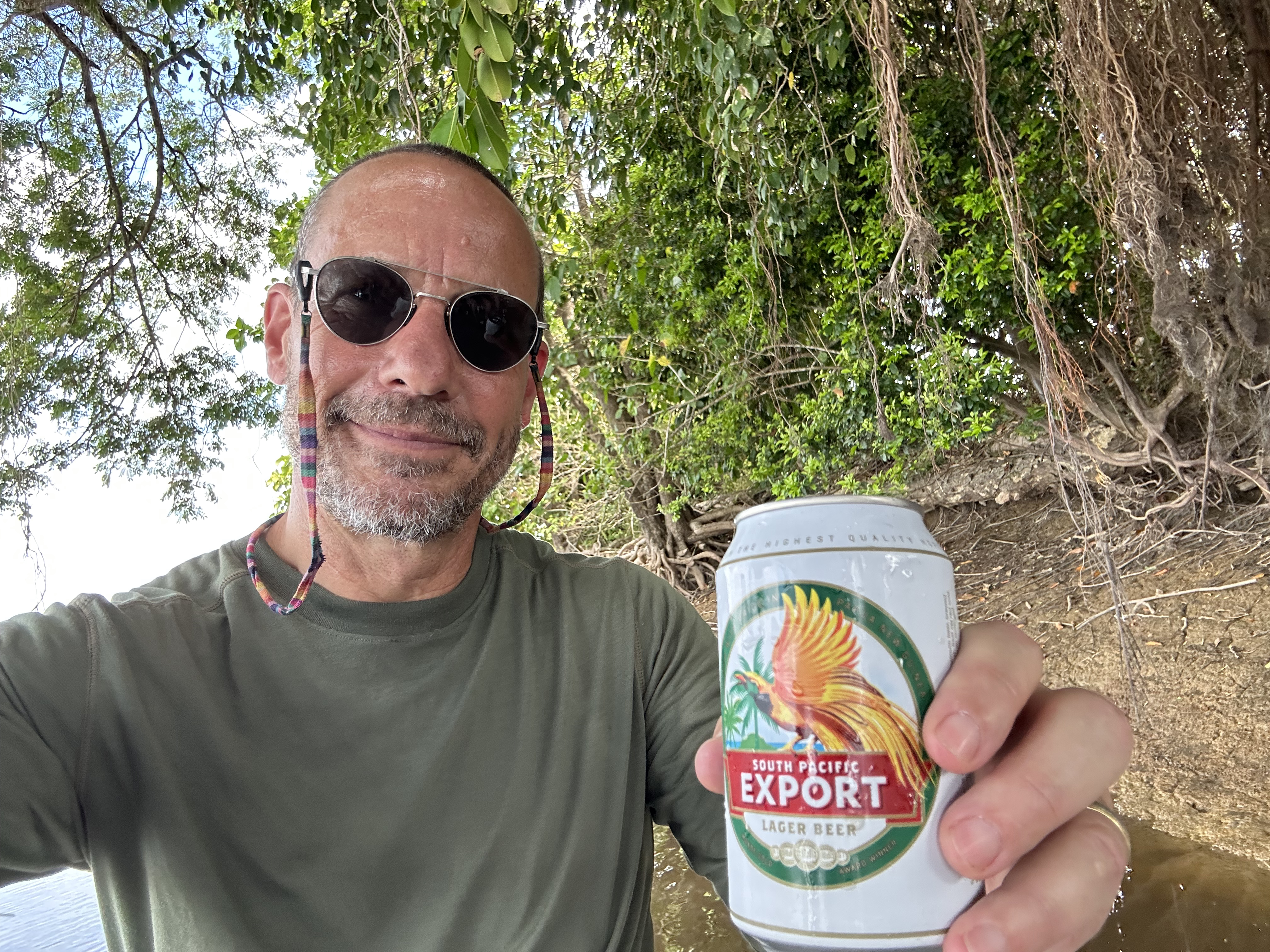
For lunch that day, we pulled over under some low trees at the river’s edge. Our crew had taken along a boxed lunch of bean salad, cole slaw, minced meatballs, potatoes salad, cookies, bananas, and water, soda, and beer.
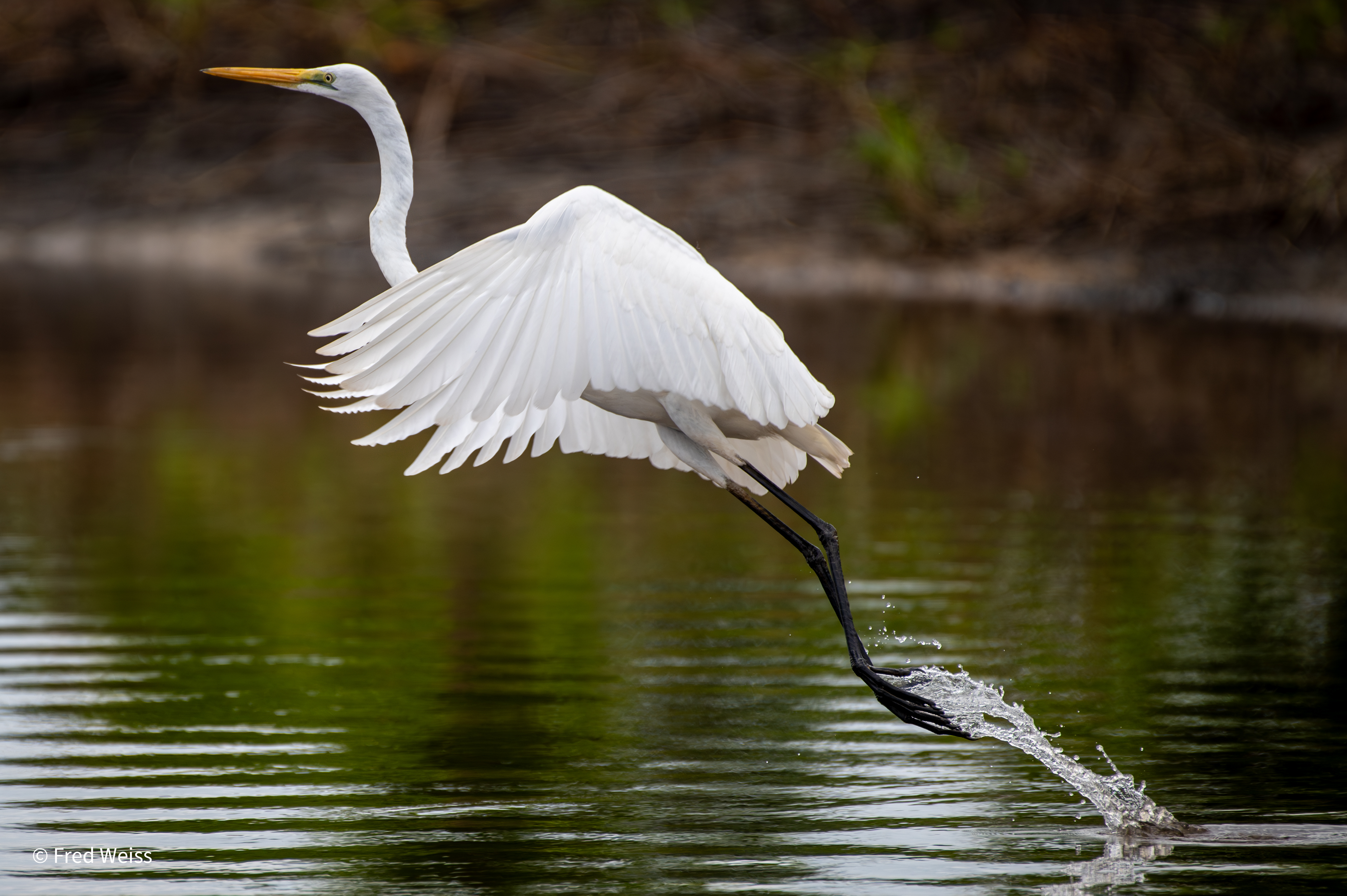
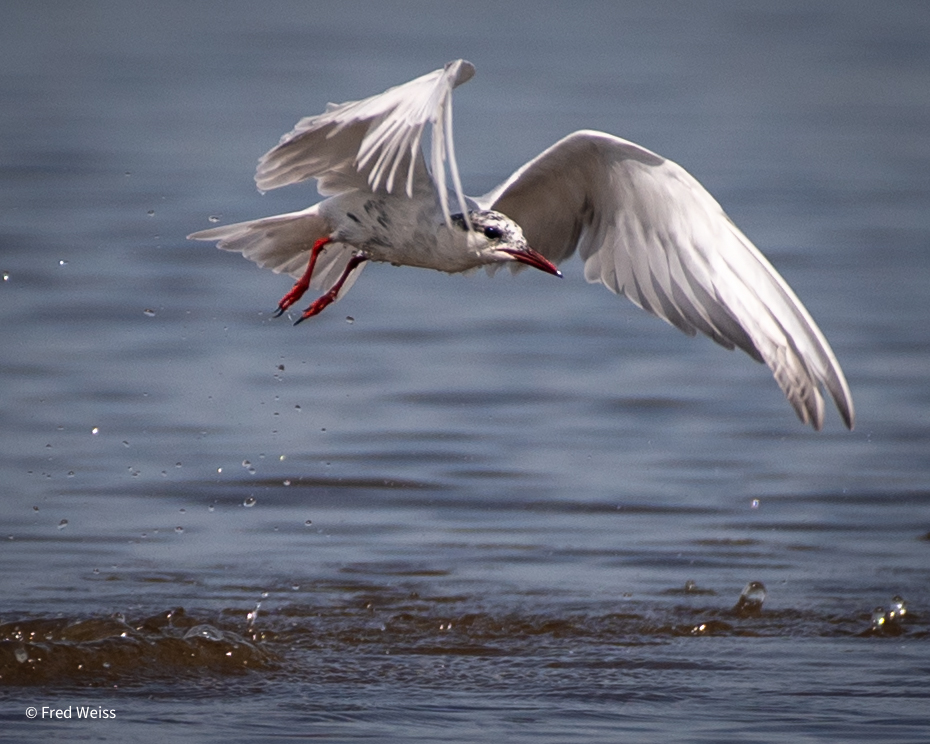
After lunch, we continued to cruise the Blackwater Lakes Region – we saw lots and lots of egrets throughout the day, as well as other birds. At one point, Brian – our captain – abruptly stopped the engine: we had grounded on the shallow waterway, and he and his crew-mate had to hop out and ask us to all move to one side of the boat so that the two of them could push us off the sandy bottom.
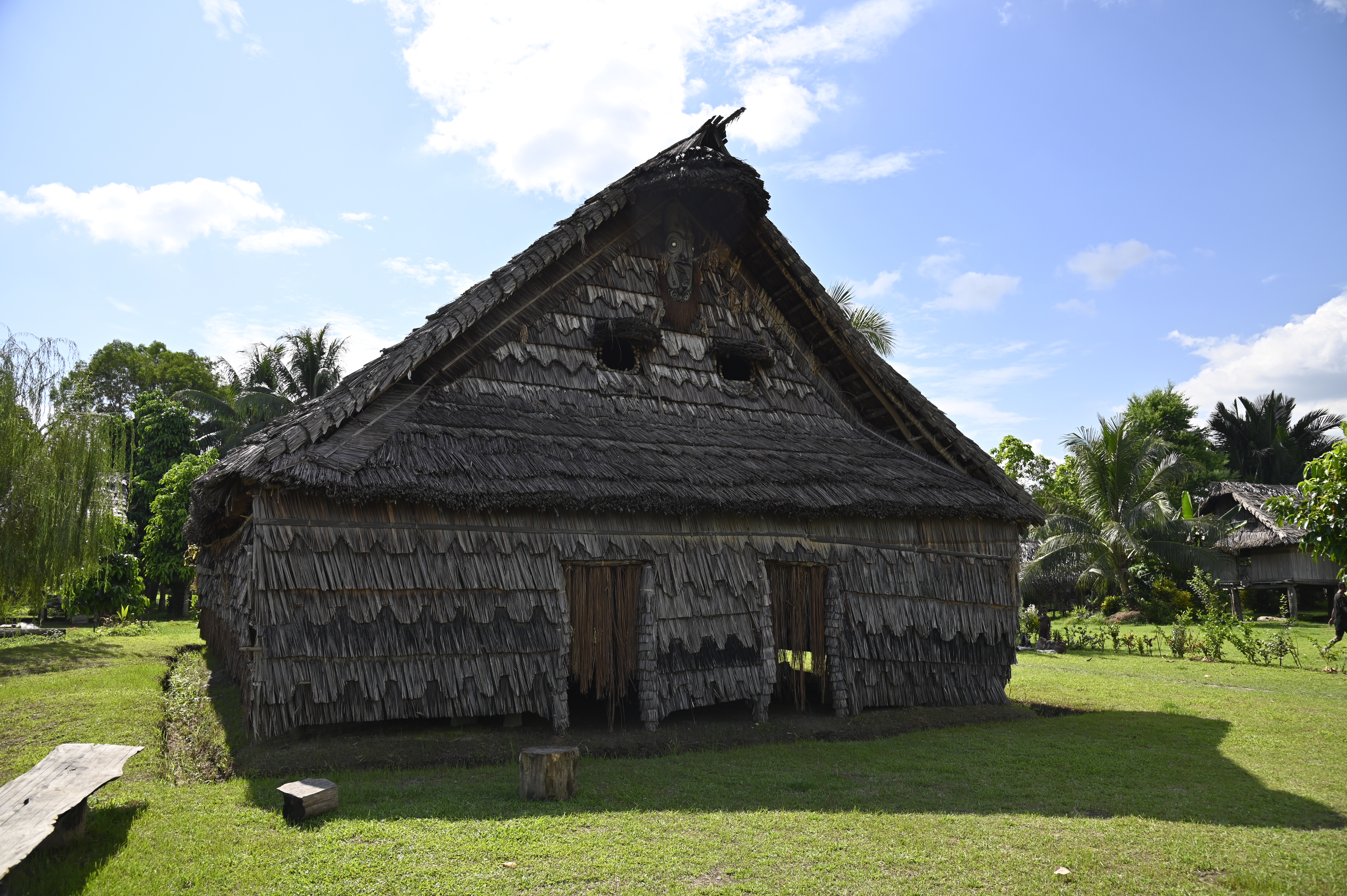
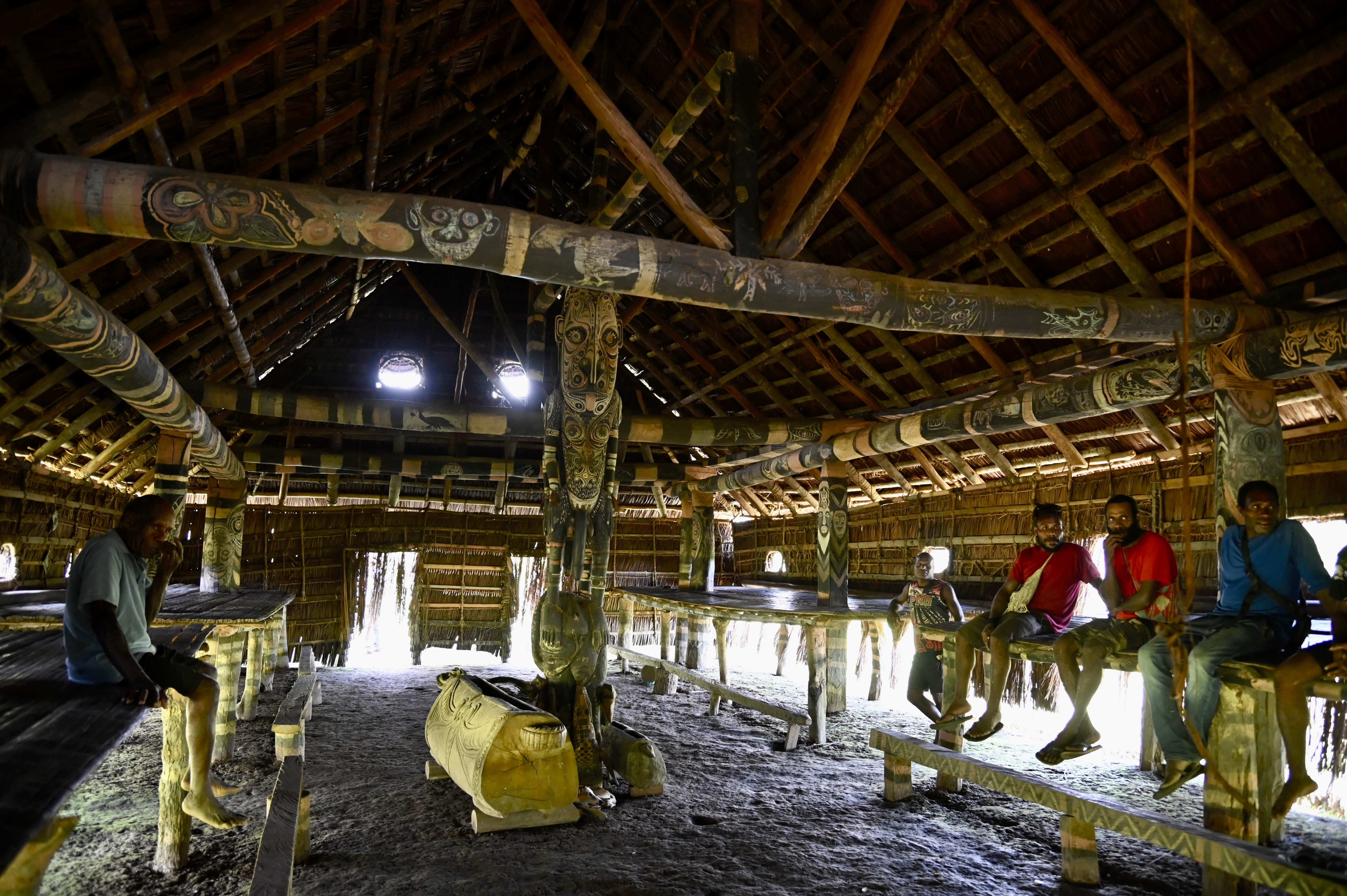
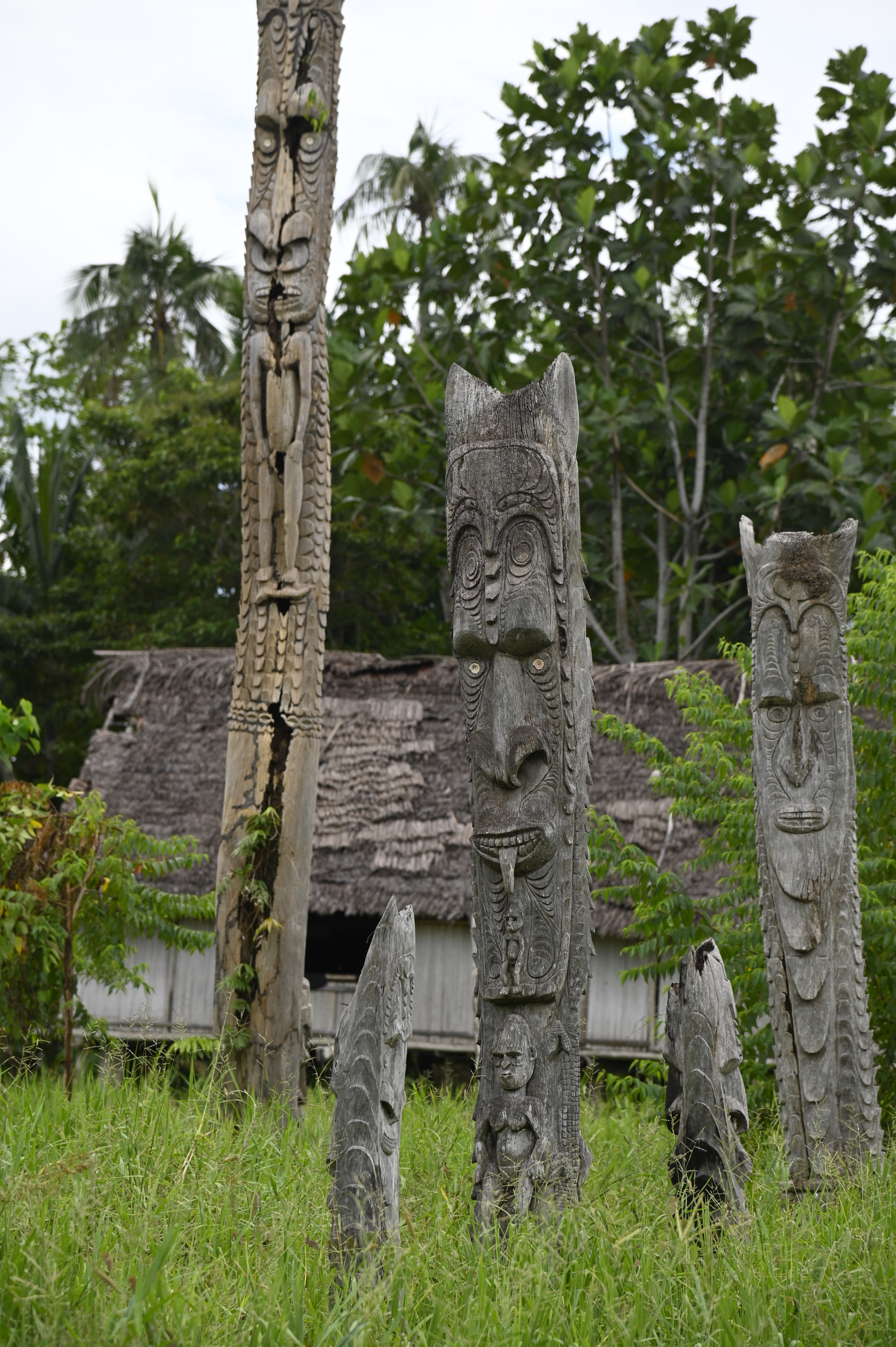
Our final stop would be Mumeri, the village of Joseph, the respected guide and local leader who had passed away a few weeks prior. Here we visited a men’s spirit house – a place for men of a group of designated tribes to gather and talk and smoke – and had a chance to walk around. This, too, was the village that Margaret Mead had visited in the early 1930’s.
We also had hoped to be able to see men with crocodile scarring – a set of raised scars on their bodies that would be evocative of crocodile scales. Paul, last evening, had told us about the lengthy ritual and care of the scars that would result it what we might see. He explained, as well, that we might have to pay a few Kina – the PNG currency – in order to see and take pictures. But – unfortunately – the water was too shallow this day to get us to the village where we might see the scarring.
All told, we spent from 8:30 until 4:30 on the rivers – long lazy cruising at 30 mph and less, looking for birds and watching people go by as we scanned the river’s edge. We saw no other tourists, as we rode along on flat and still waters, with high clouds, and temps in the 80’s with high humidity when we stopped, but a nice breeze when we cruised.
And our dinner that evening back on the Sepik Spirit included marinated and skewered chunks of crocodile tail, from the beast we’d see on our deck that morning. Some of us were interested in seeing if we could take any of the croc’s teeth back home with us as a souvenir, but the crew wished to keep the remaining parts of the croc for themselves to take back to their villages.
[Clicking on an image below will enlarge it in a new window]




 Fred's Travel Blog
WOW!
LikeLiked by 1 person