Today we were able to visit four tribes here in the Western Highlands Province, with sometime lengthy drives in-between.
We started with a visit to members of the Melpa tribe, who gave us a demonstration of a burial – from the way in which they communicate with other families in their tribe or clan (a subset of a tribe) about a death all the way through to how they bury a body.
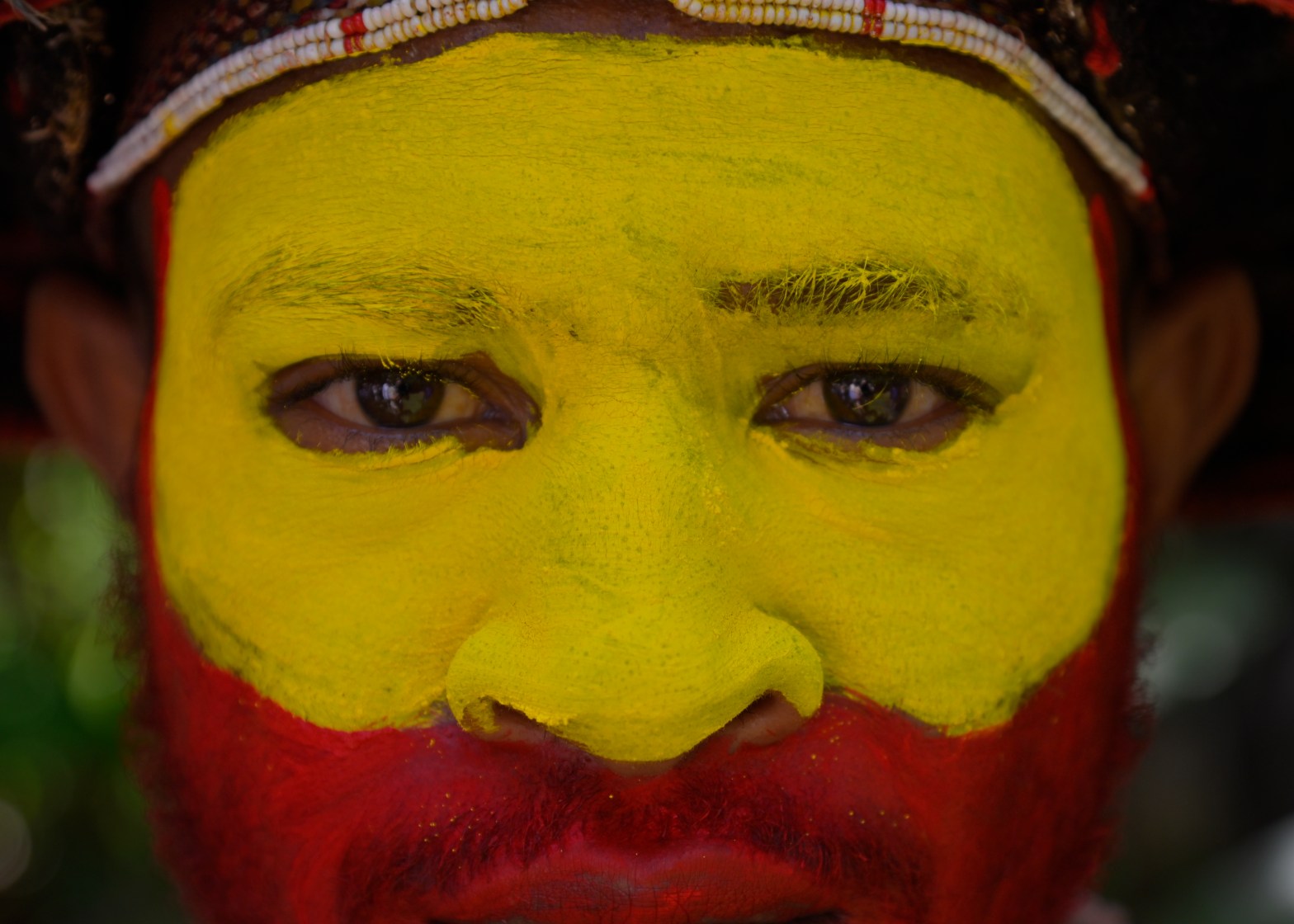
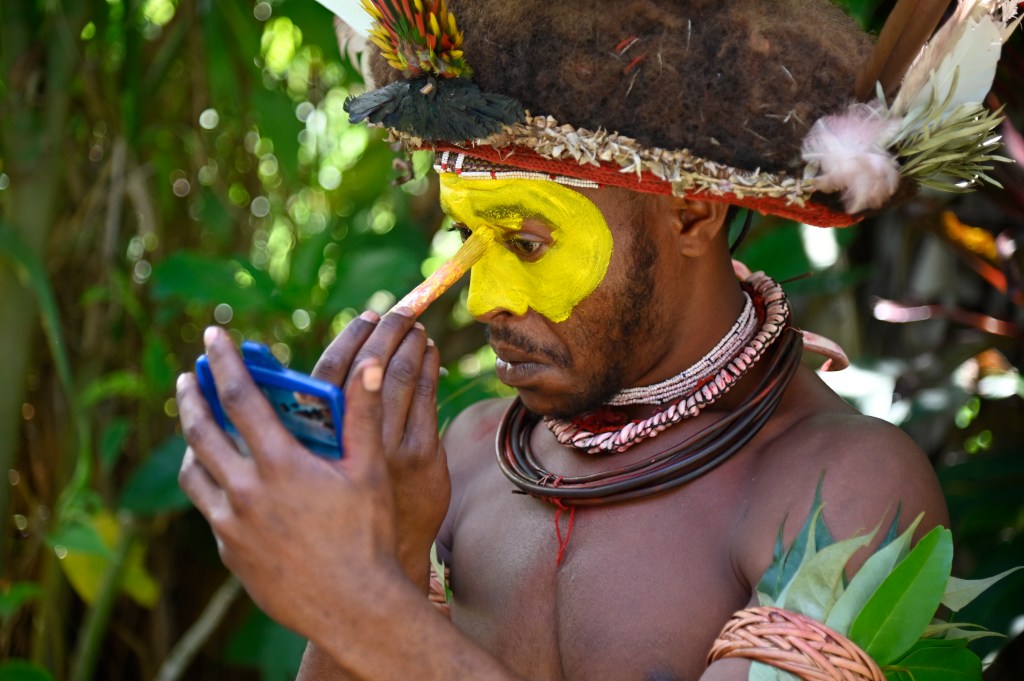
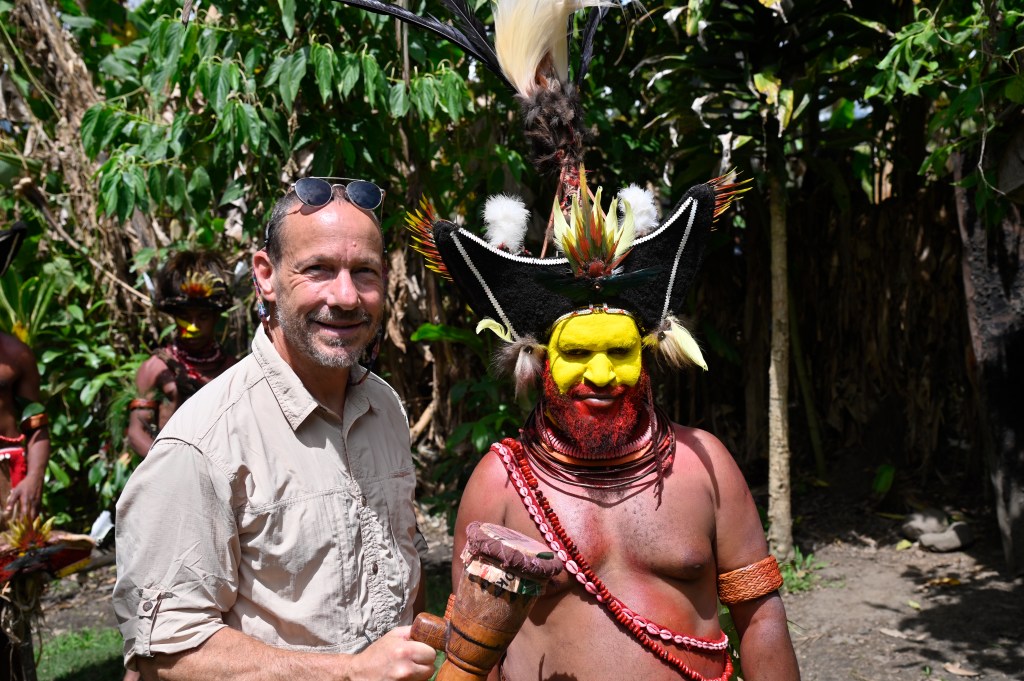
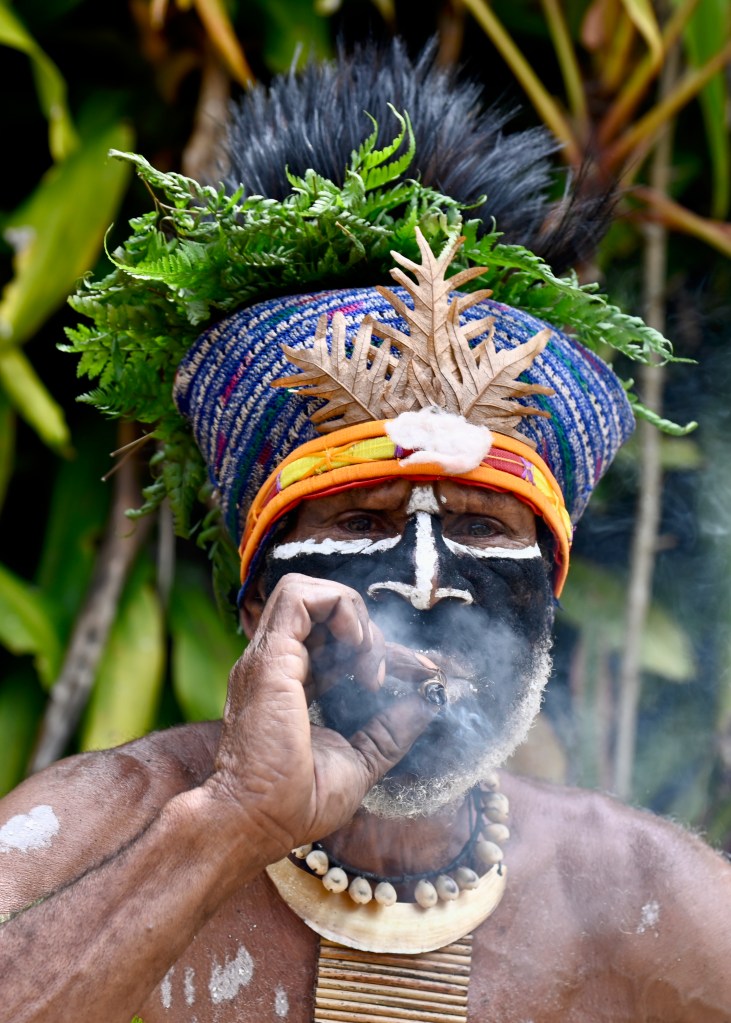
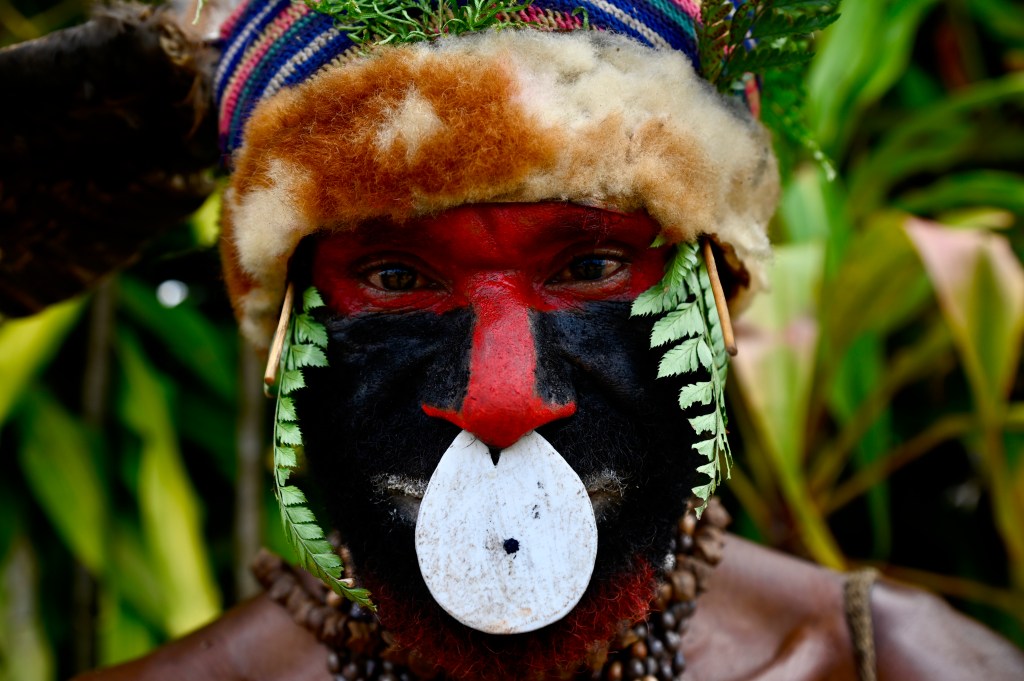
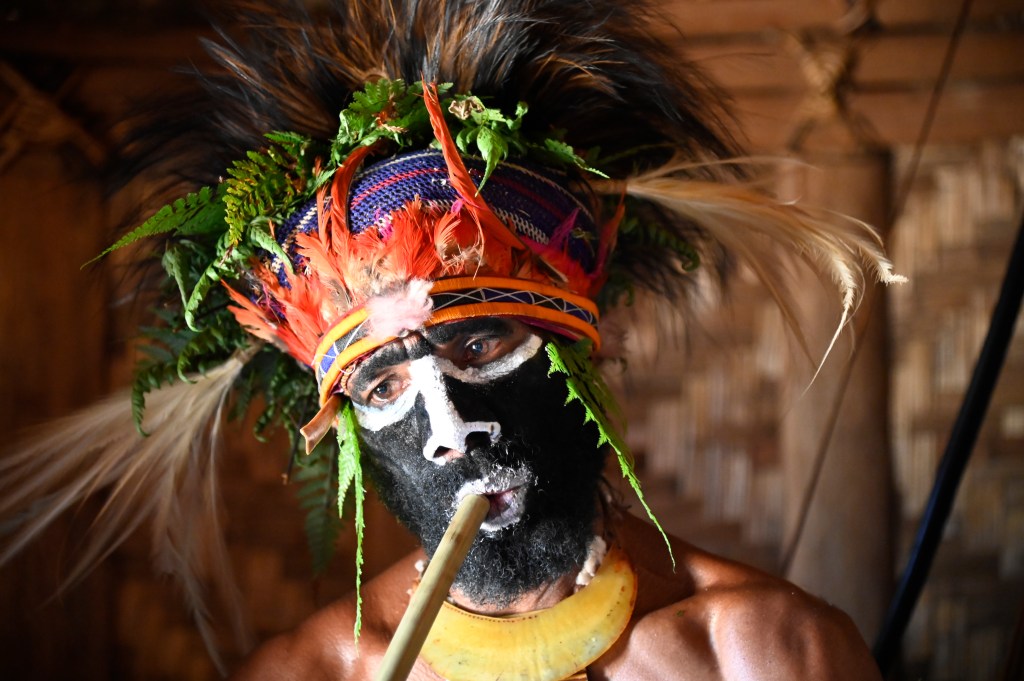
Our next visit was to see the Huli Wig Men, one of the better know tribes in the Highlands. They make hats – wigs – out of their own human hair and use those on top of their own hair. They have “everyday” wigs, wigs for special ceremonies (they wore those for us), and tribal leader wigs. As well, they decorate the wigs with feathers and other natural items, and pain their faces in vibrant colors. We saw them paint and dance.
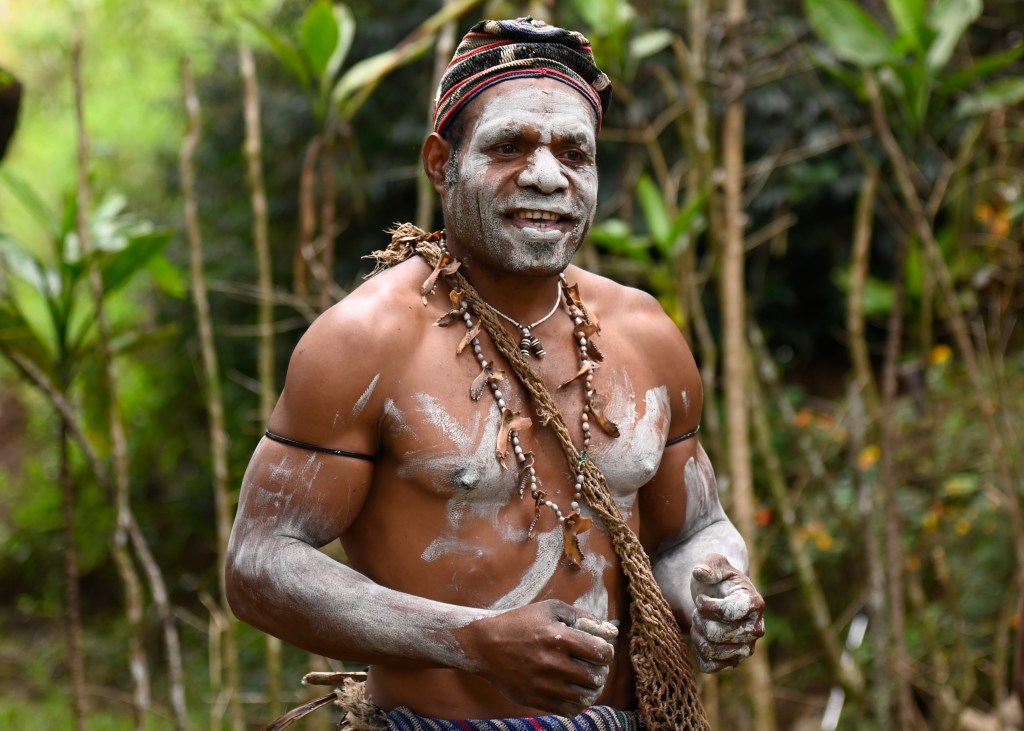
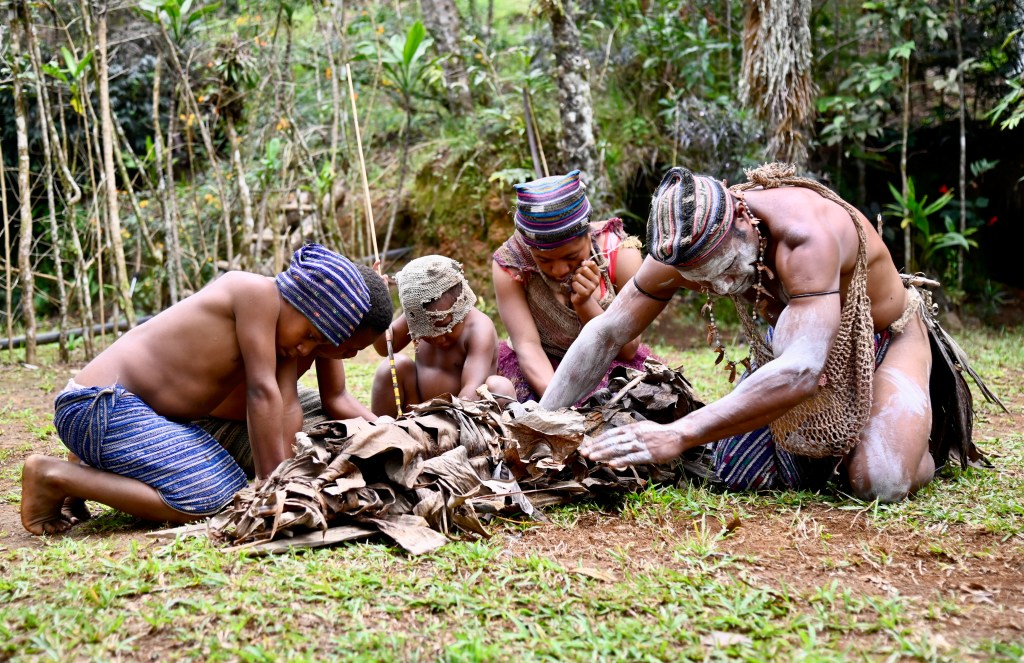
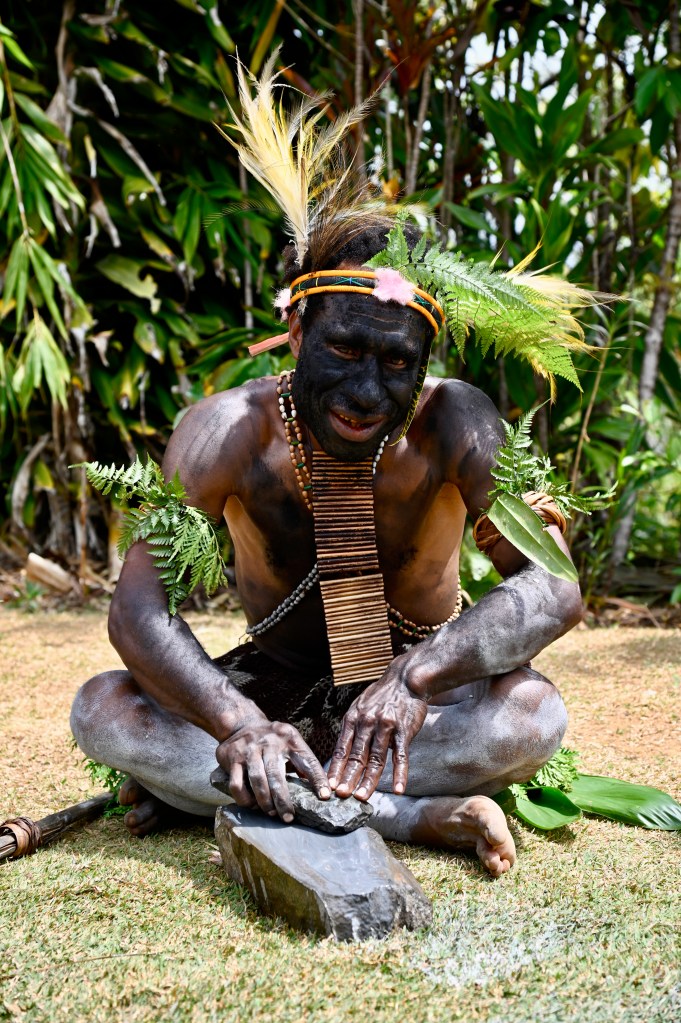
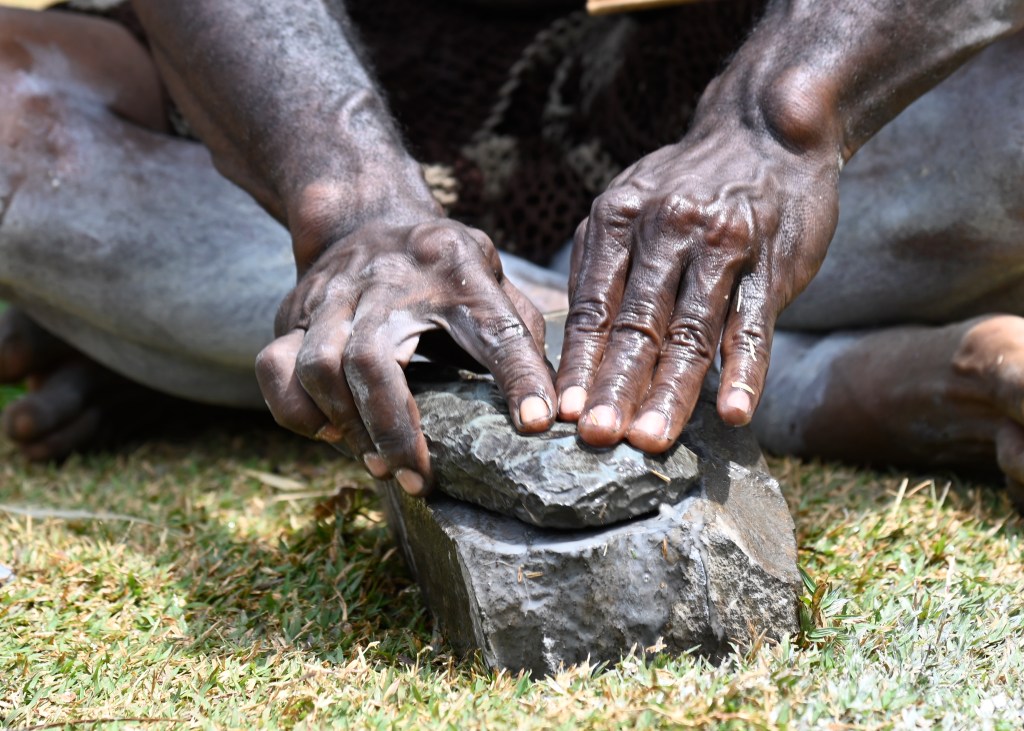
The third visit was with the Giga tribe, which showed us several things – how they sharpen tools, how fire is started, a divorce ceremony, and flute players (the flutes are made of simple bamboo tubes – they’re more like a recorder).
And, our last visit was with the well-known Goroka Mud Men, who make large masks (that cover their entire heads) out of clay, and who cover their bodies with clay as well. They showed us a scenario in which an unwanted visitor builds a fire in their territory and is then “attacked” by several mud men.
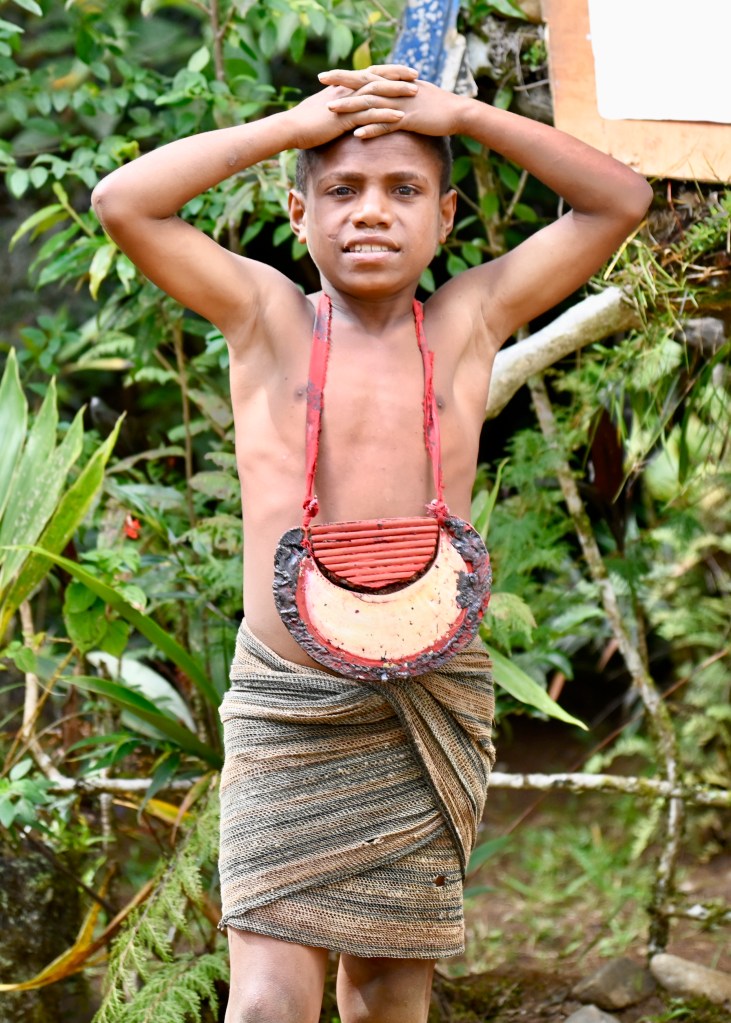
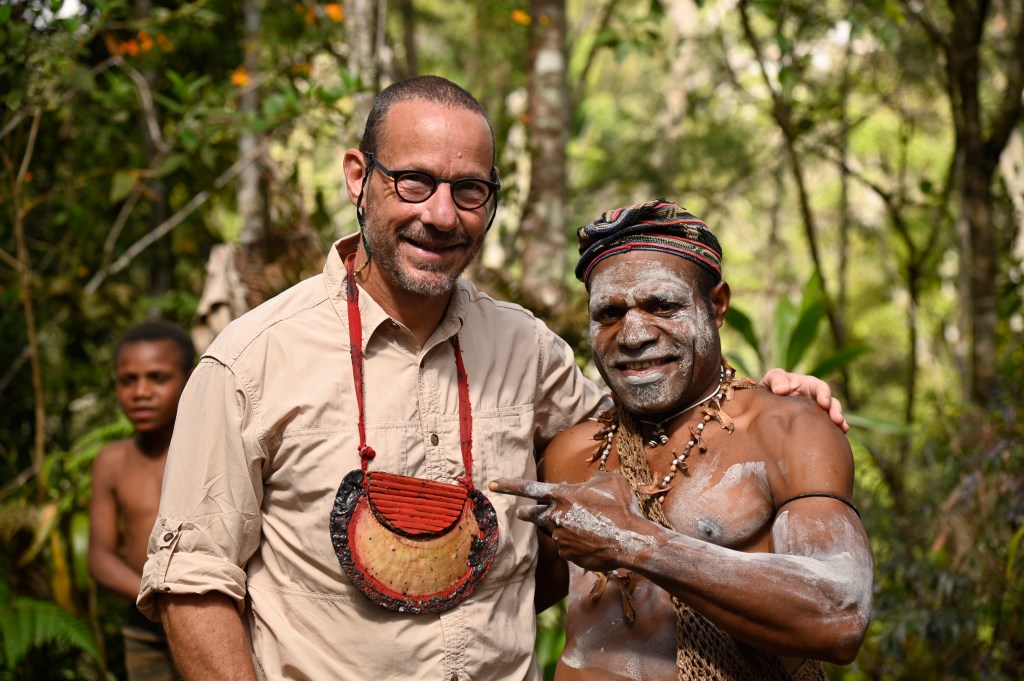
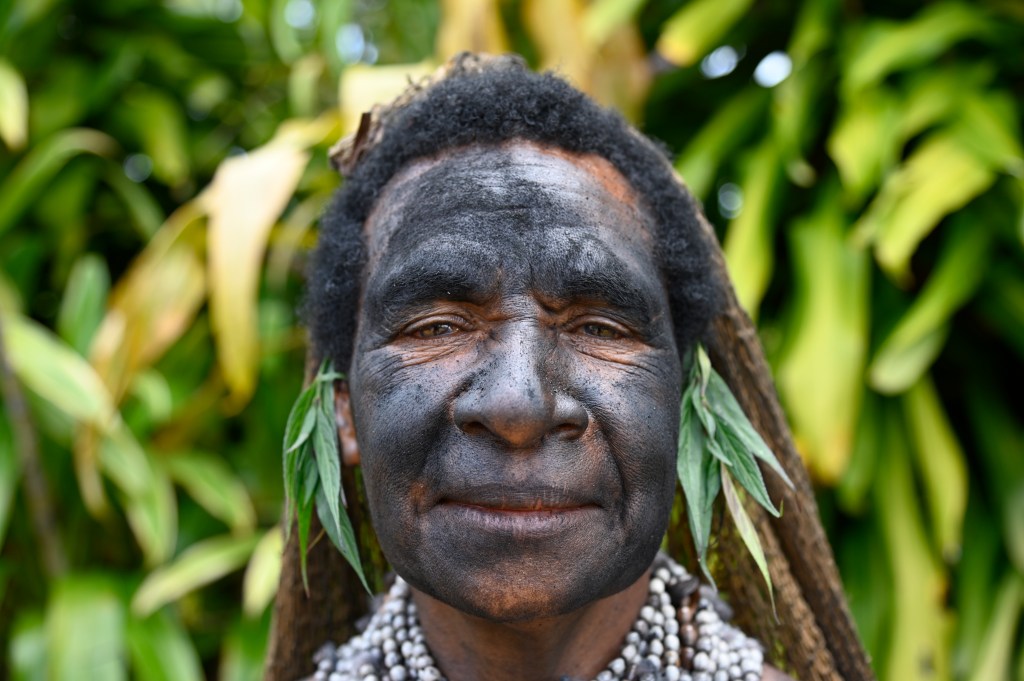
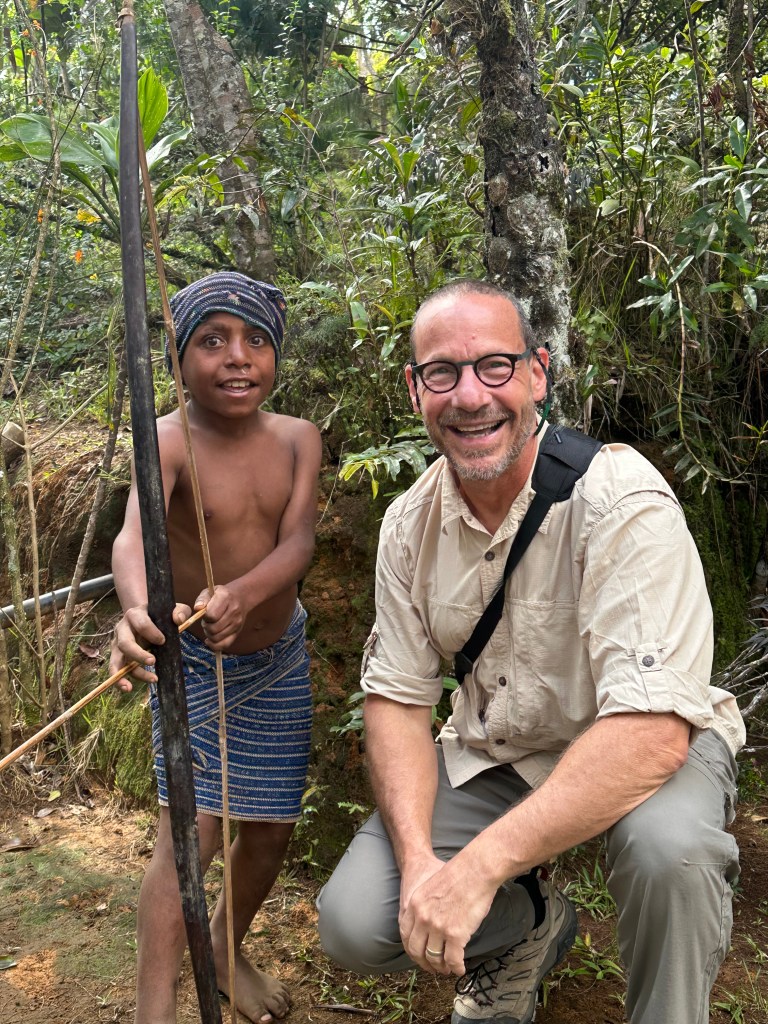
The beginning of each presentation starts with a tribal leader or “cultural center” leader welcoming us, expressing their gratitude for our visit, and letting us know that photographs are completely okay to take. After the demonstrations, the performers are quite willing to have close-up photos taken, shake our hands or embrace us, take pictures with us, and let us try on parts of their traditional clothing. It is really clear that they are happy to have us there, and that they’re deeply proud of their culture.
Our day ended at our Lodge with the viewing of a documentary from 1980 named “First Contact.” The first contact with some of the Western Highland tribes (some of the tribes we saw today) was in 1930; the Australians who had contact with them filmed it. So, in 1980, a documentary was made using that film inter-woven with contemporary interviews with some of the villagers from 1930 as well as two of the Australians. Really fascinating stuff. Available on Vimeo in two parts.
Tomorrow we leave to go to fairly remote areas where we will have no cell or internet available until at least day eleven. I’ll have a lot of catching-up to do after that.
(Clicking on an image below will enlarge it in a new window).




 Fred's Travel Blog