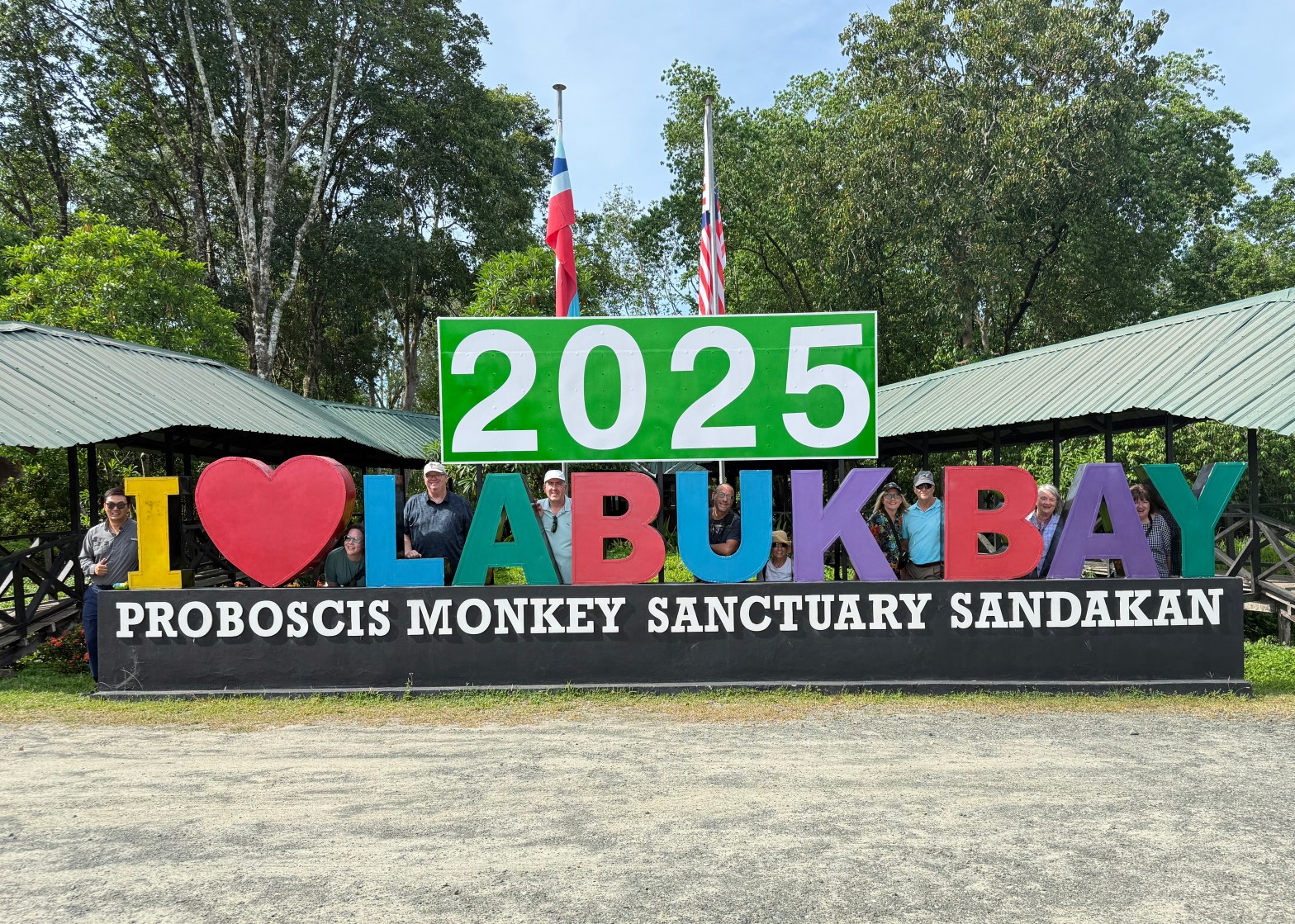
Starting the day with a three-hour flight from Kuala Lumpur to Sandakan wasn’t the most exciting activity in the world, but it did, of course, mean arriving on the island of Borneo. Sandakan is the second largest city in Malaysian Borneo (in the state of Sabah), is located on the east coast, facing the Sulu Sea, and, at one time, it was the capital of British North Borneo. It’s a city of about 450,000 people.
Borneo itself is the third-largest island in the world (after Greenland and New Guinea), and the island is divided among three countries – Indonesia (which controls about 73% of the territory, but also is spread among many other islands), Brunei – in its entirety – which controls about 1% of the island’s territory), and Malaysia, which controls the remaining 26%. The equator stretches across Borneo, pretty much cutting it in half (Malaysian Borneo is in the Northern Hemisphere), and – as such – it’s tropical and the rainforest(s) are estimated to be about 140m years old, making them some of the oldest in the world.
Malaysian Borneo is itself split between two states – Sabah, where I’d be spending the reminder of my time in Borneo – a little more than seven days – and Sarawak.
The first decision, before we landed, was to decide what to do. We’d be spending the rest of today and the morning of tomorrow in and around Sandakan; tomorrow we’d be going to see sunbears and orangutans, both in sanctuaries, and today we had a choice – see orangutans (in the same sanctuary as tomorrow), or opt instead to see proboscis monkeys in a separate sanctuary. Our group of 14 split up – nine of us, plus our Tour Director, opted for the monkeys, while the remaining five headed to see orangutans.
The 40-minute drive from the airport to the Labuk Bay Proboscis Monkey Sanctuary took us past a landscape that reminded me of traveling from a small Caribbean island airport – roughly paved roads, older model cars, lots of trees and vines and power lines, road-side strip malls with grocery stores and car repair joints.
We arrived at the Sanctuary with about an hour to wait until the scheduled feeding. The monkeys – none of the wildlife – are caged; the Sanctuary is surrounded by an open mangrove forest, but has viewing areas and platforms where feedings are held a few times a day. Even without a feeding, there were a few monkeys hanging around platforms, munching on leaves and stems, casually swinging from tree-to-tree, or sitting on the ground, waiting for the appointed hour.
And what an hour it was. A few staff showed up and started to put food out on the platforms and – as they did – there must have been 30-40 proboscis monkeys who arrived – large males leading the crowd, then mothers with their babies clinging to them, and every age of male and female in between. The viewing area was two levels, a large-scale wooden structure, with a roof over it and bathrooms, while the feeding platforms were anywhere from 10-25 feet away, over mostly bare ground, with the forest not far beyond.
It is the males, among the proboscis, who have the large noses, which sometimes get in the way of their eating. Naturalists and biologists believe that the reason for the large noses is for them to make louder and lower sounds as a means of attracting mates.
In addition to the proboscis monkeys were a handful of silver leaf monkeys, also just fascinating to watch. (just a reminder that you can click on any photo in the gallery below to see a larger version of the image, then use your arrow keys or mouse to scroll through them; these are among some of my favorite pics from this entire journey)
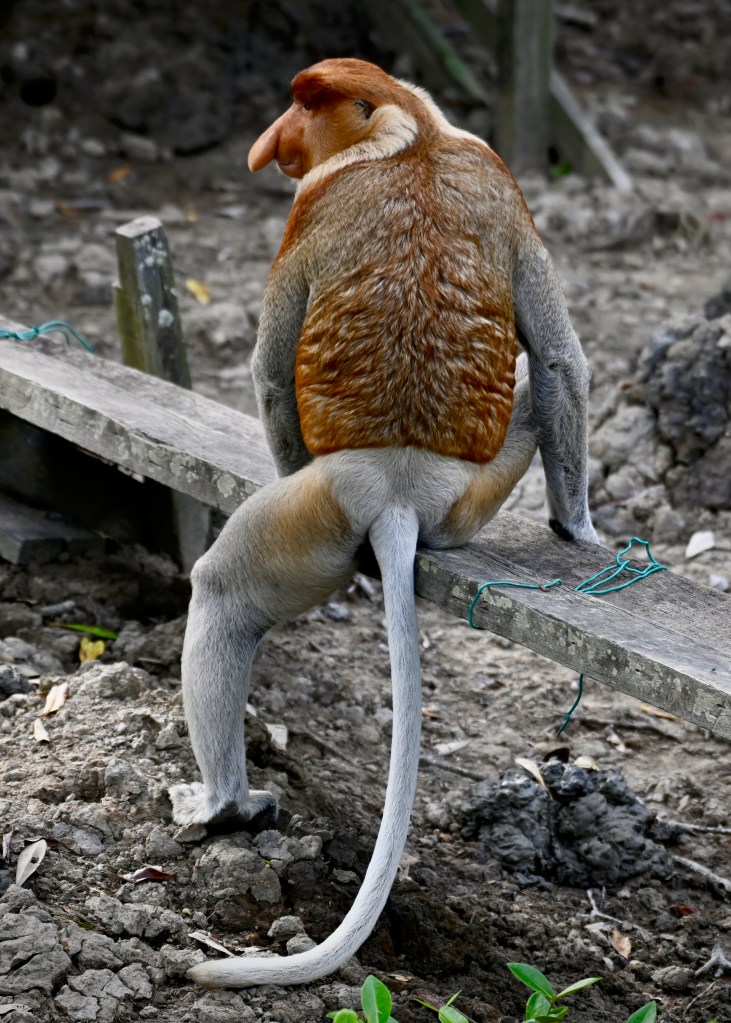
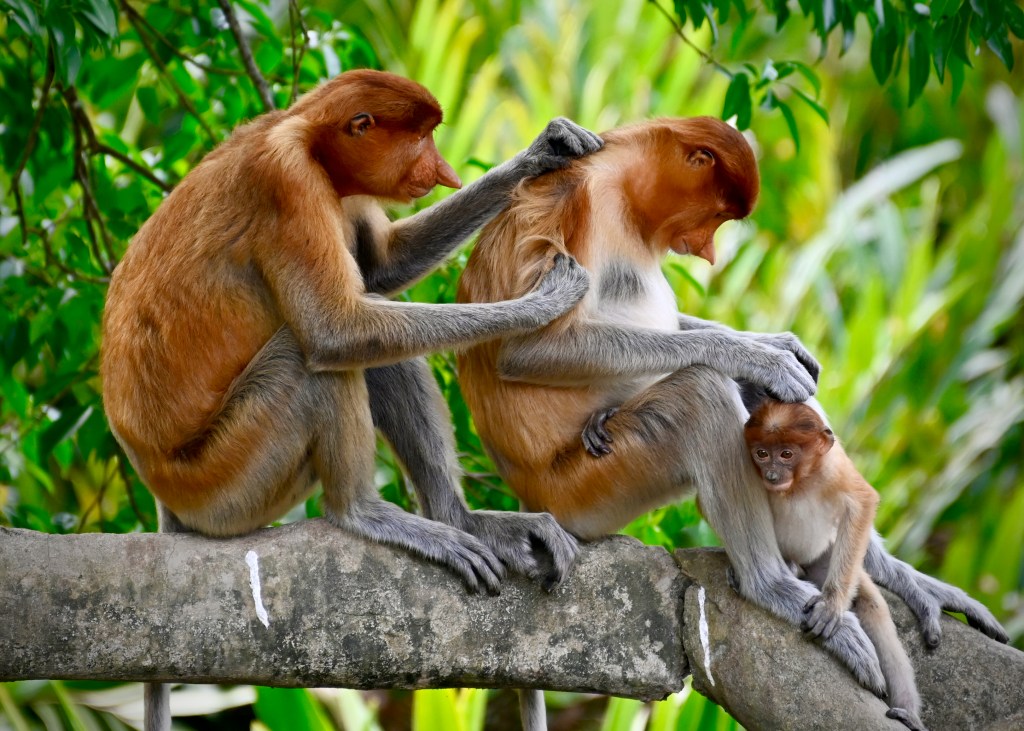
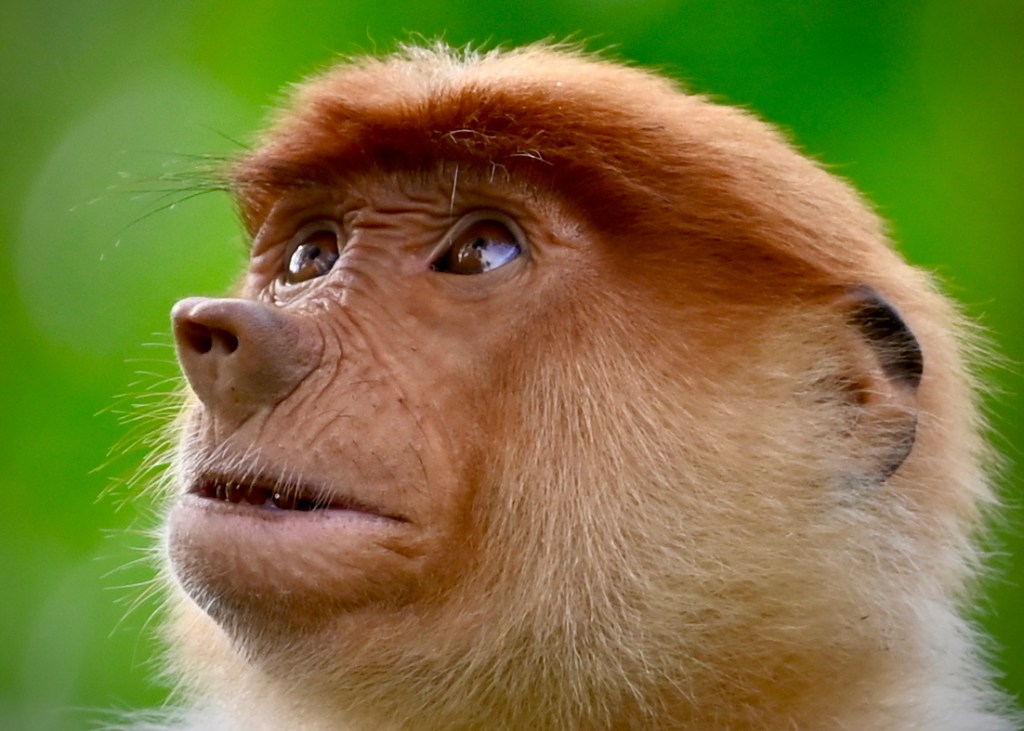
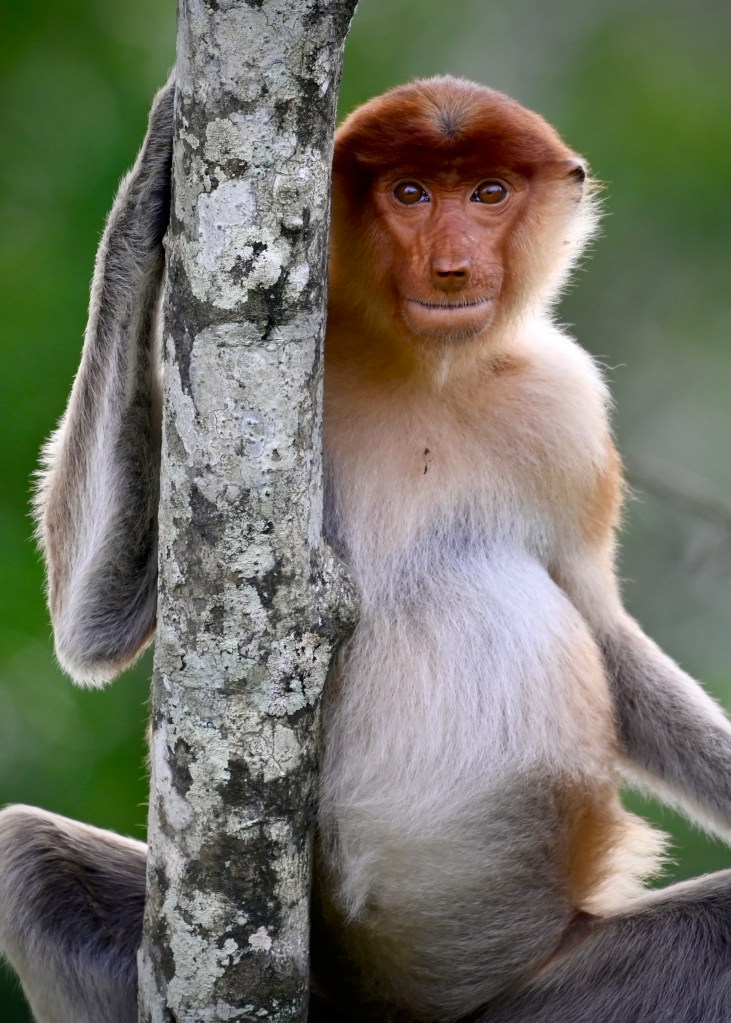
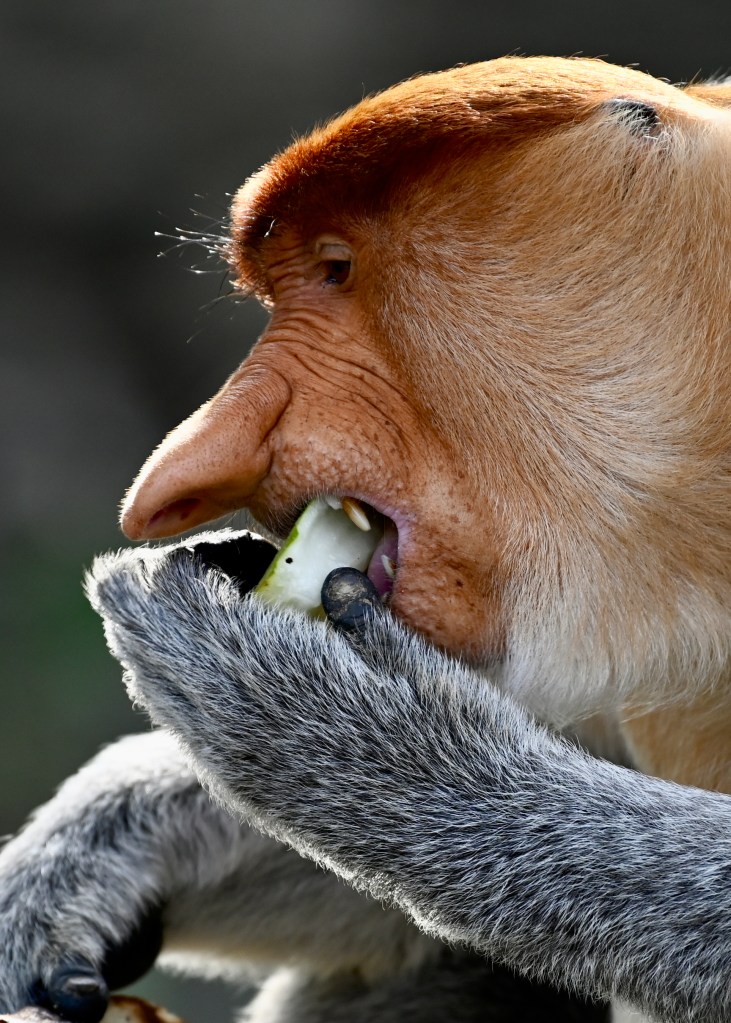
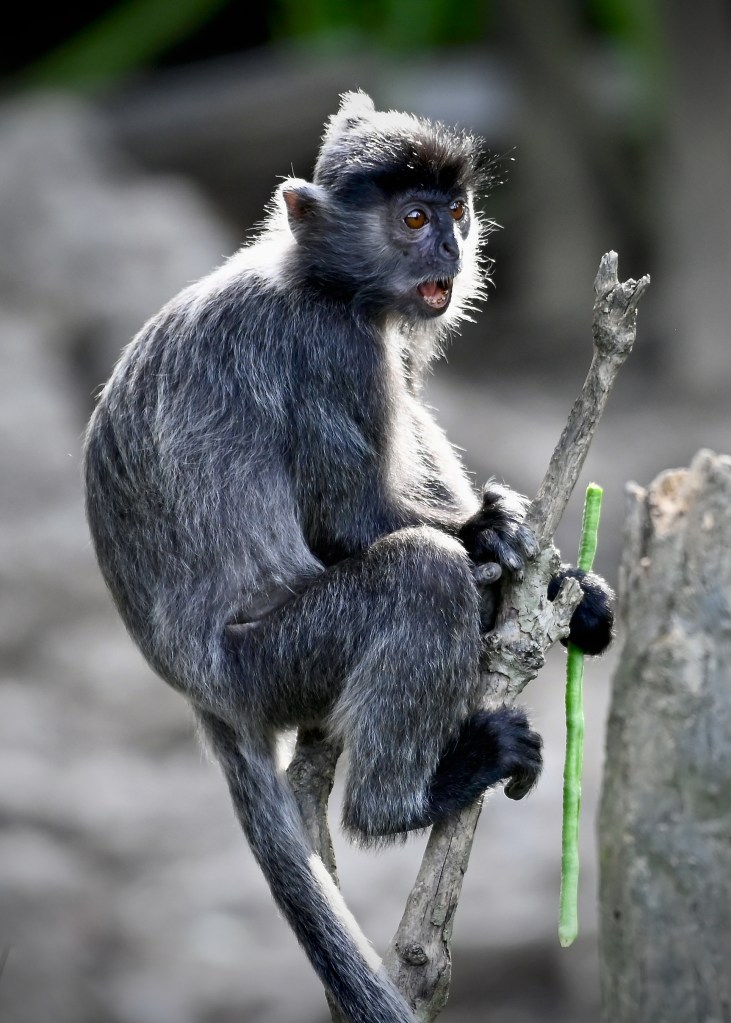
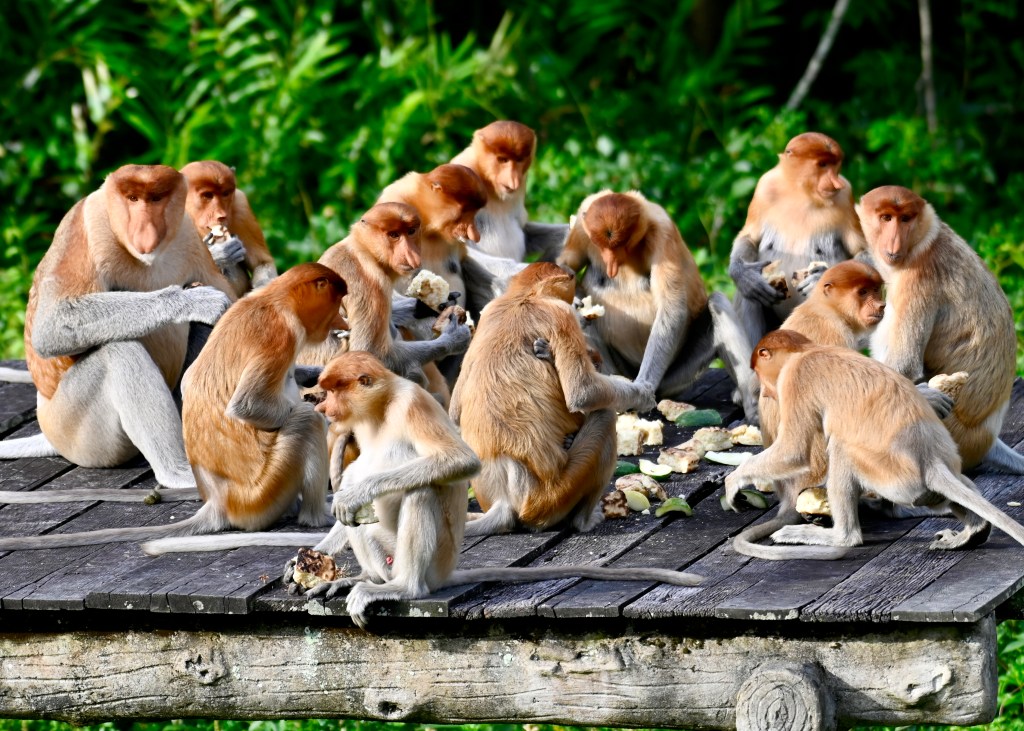
We watched well past the end of feeding time, as there were battles for last scraps, and some of the monkeys just hung around the platforms for a bit.
And, with the forest beyond the platforms, we kept our eyes out for birds; we were lucky enough to see a woodpecker way beyond and above where we were standing.
A super-fun time; as we were leaving the sanctuary there were, for whatever reason, a few military tanks parked outside along with some of the troops.
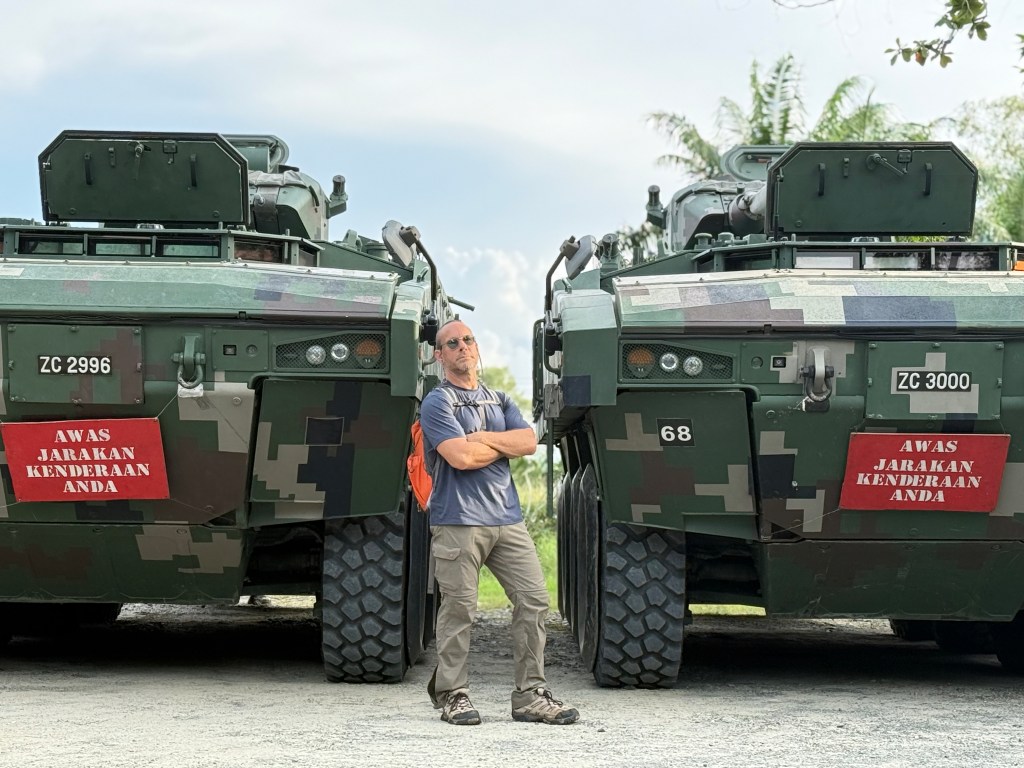
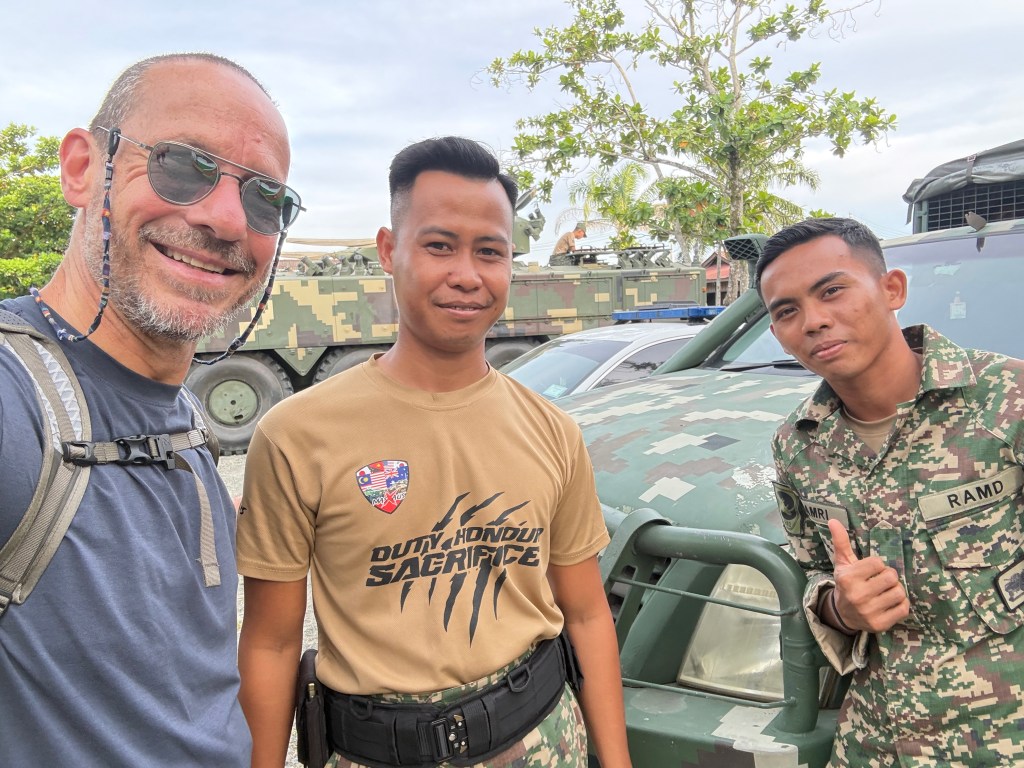
We headed to our hotel for the night – nothing special – where we attended, before dinner, a presentation about the oil palm industry which, frankly, sounded like a big PR campaign wherein a local oil palm producer got a chance to make an argument for how good they were while destroying indigenous plants and trees, and relocating indigenous populations.
Decent Chinese food for dinner, at two huge tables with massive lazy susans placed at the center of each table, too much food, but four Absolut vodkas costing only about US$25!
And tomorrow I’d see orangutans!
 Fred's Travel Blog