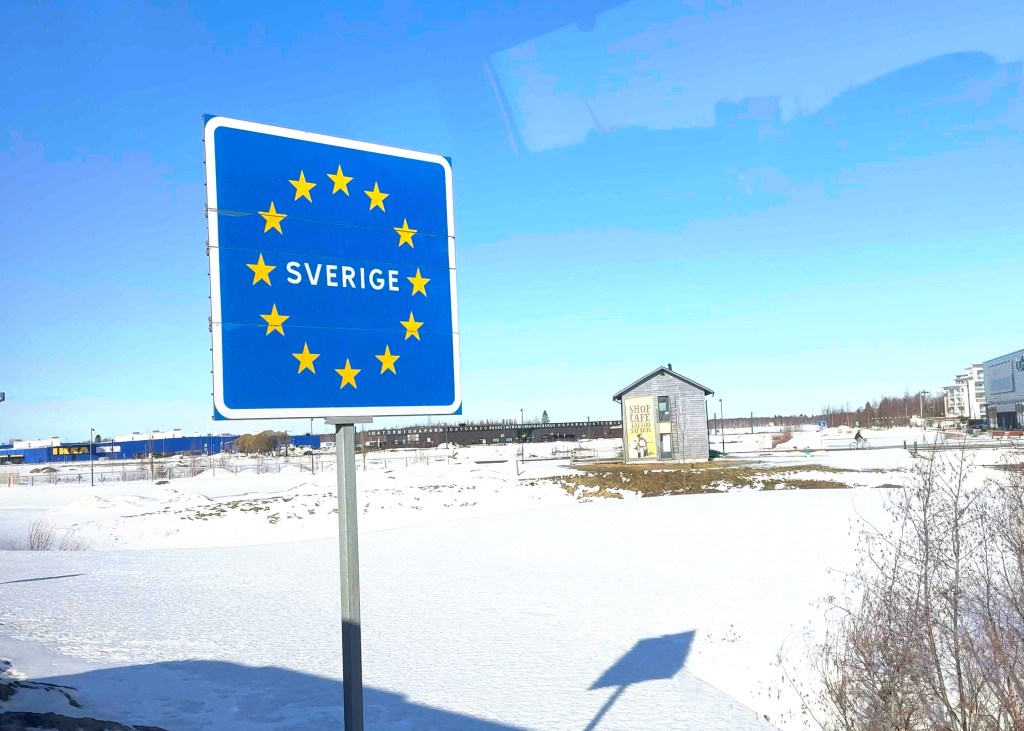
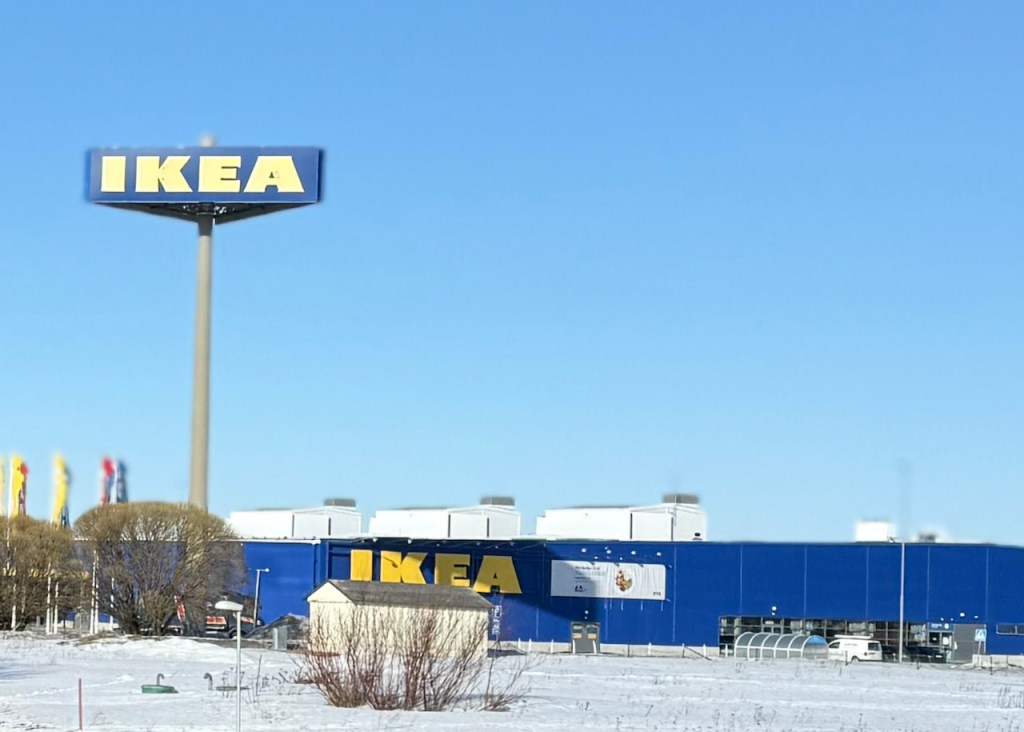
We made the drive from Finnish Lapland into Swedish Lapland on the morning of day six. There’s no immigration nor customs as you cross the border, so no passport stamp either, just a sign with the European Union symbol on it, easily missed if your guide hadn’t pointed out that it was coming-up on the right. And, just as we crossed the border, there also was an Ikea. And the time changed as well – we were now an hour earlier than in Finland.
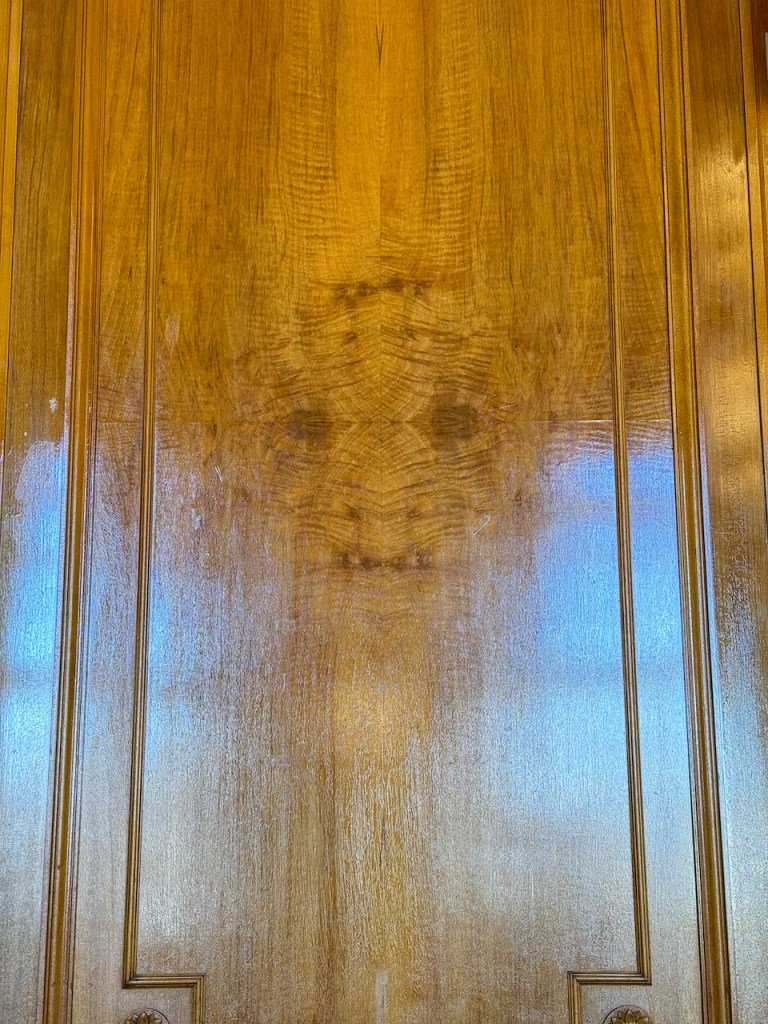
We stopped at an old historic hotel (the Haparanda Stadshotell, Haparanda being the town’s name), originally built in 1900; it sits just a few minutes from the border. The owner of the hotel served refreshments – including the first of my many cinnamon buns (a Swedish treat, known locally as “kanelbullar”) while telling us a bit about the hotel’s history, which – because of the one hour time-change between Sweden and Finland – celebrates New Year’s twice each year. As well, she told the story about how concerned she was when COVID hit and the border closed, which meant little traffic between the two countries, impacting her business. But – as luck would have it – the Swedish government needed a place to put up the soldiers it used to guard the border, so the hotel ended-up being busy the whole time. We got a brief tour, which included the big dining room where images of ghosts that might haunt the place were embedded in the walls.
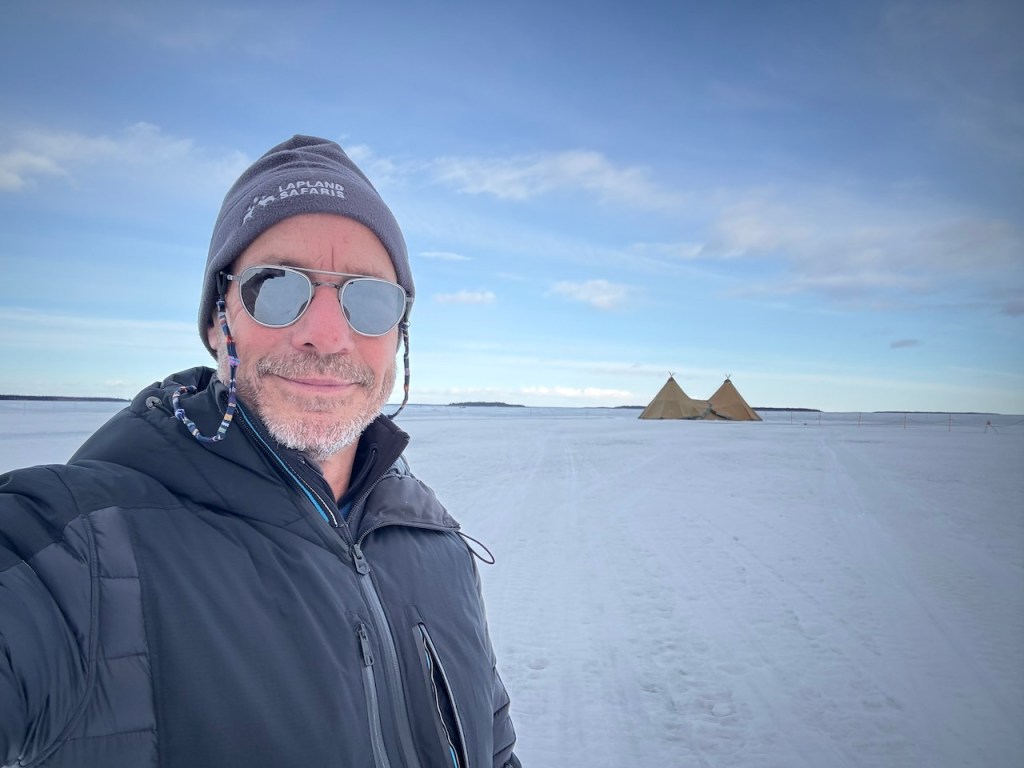
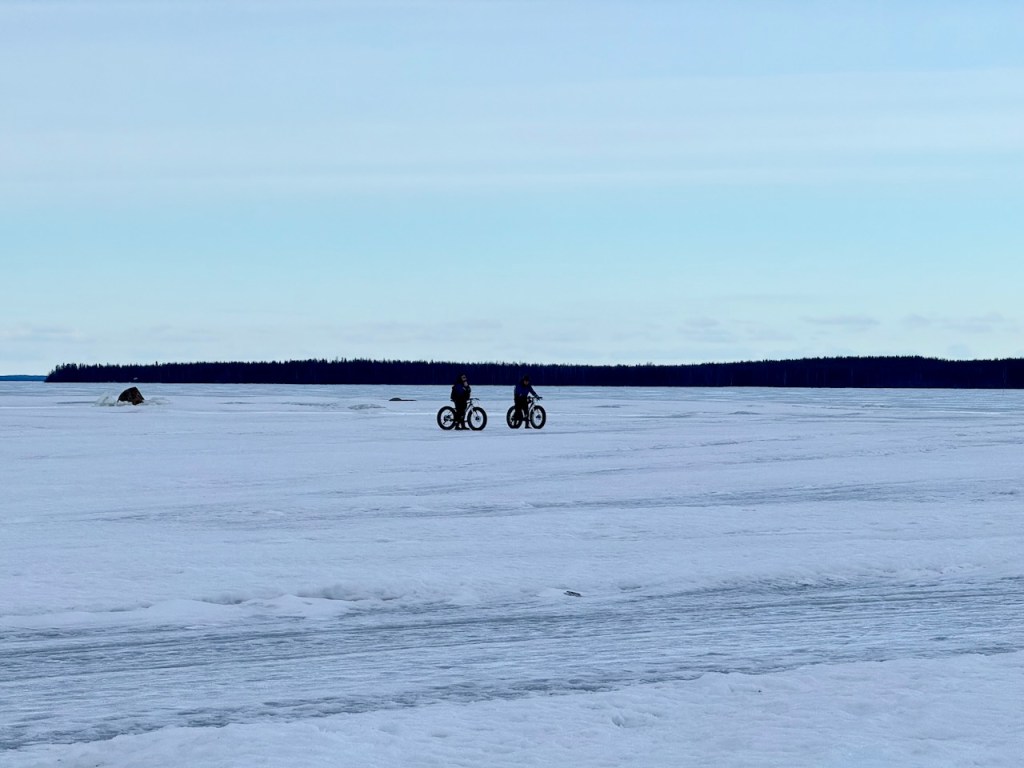
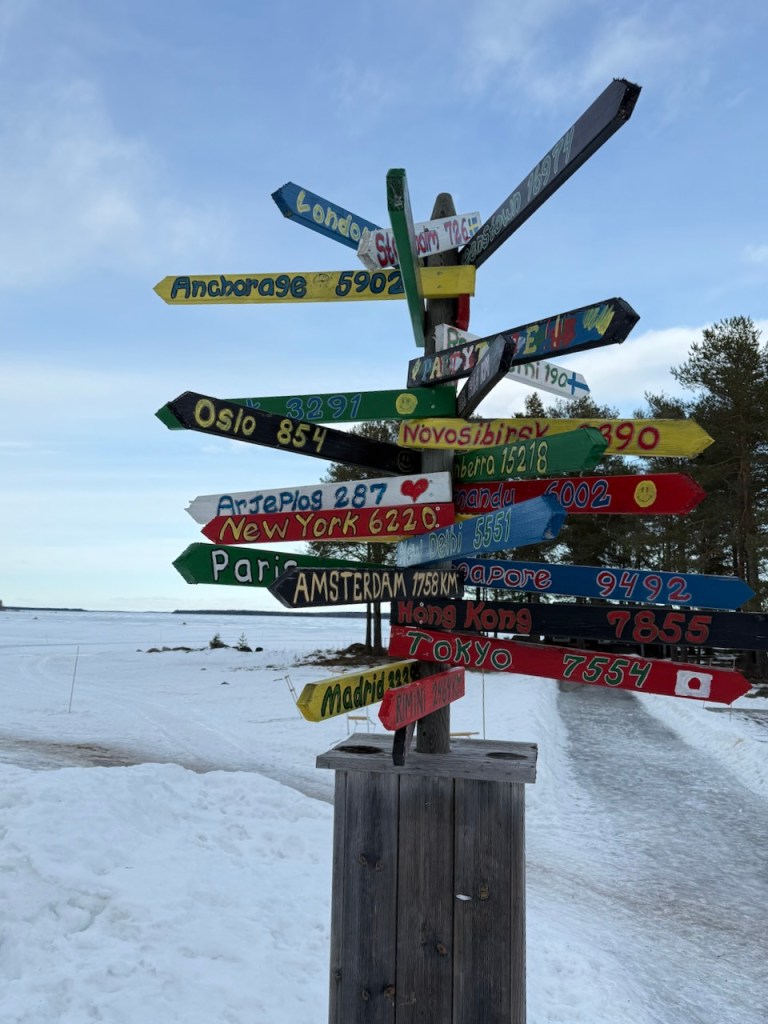
The Baltic Sea reaches its furthest point north as the Gulf of Bothnia, nearby where we were at the border between Finland and Sweden; our stop for lunch was at a rustic restaurant that sits on the Baltic; even though this was late March, this far north the Sea was frozen – so frozen that we could walk out onto it and watch people on bicycles cycling across it.
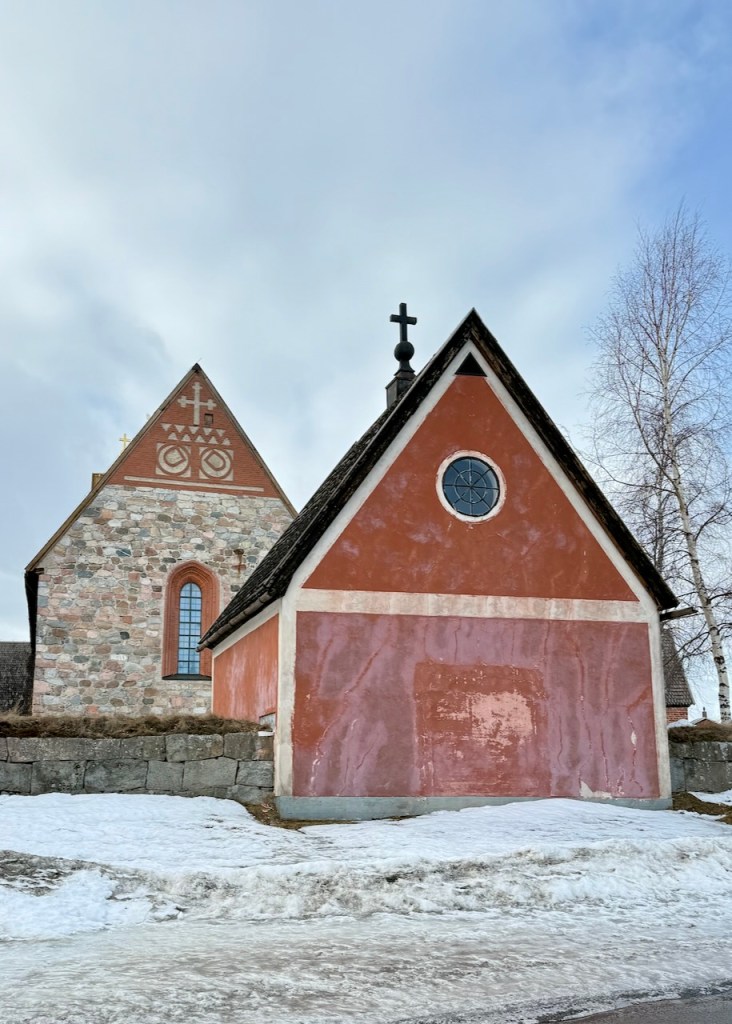
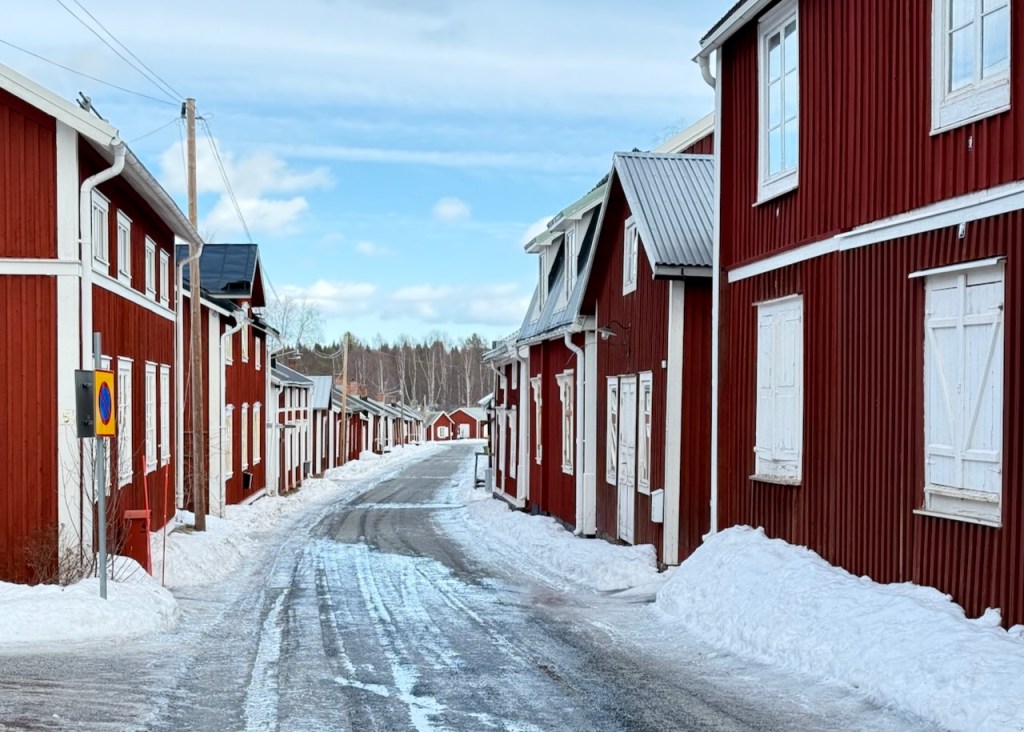
The last stop before arriving at our hotel was in the town of Gammelstad kyrkstad, a UNESCO World Heritage Site. Back in the day, people had to travel many miles to go to church on Sundays; towns like Gammelstad started as markets then became a place for religious observances for the agricultural communities through Scandinavia. But because the distances traveled were so long, the towns began to offer small wooden homes for attendees to stay in for a night or two before they returned home. Today, Gammelstad is the best preserved of these types of towns, in its original layout, with a church at its center that dates to the 15th century, and many of its 420 homes renovated and maintained and all painted a deep red – and available for purchase.
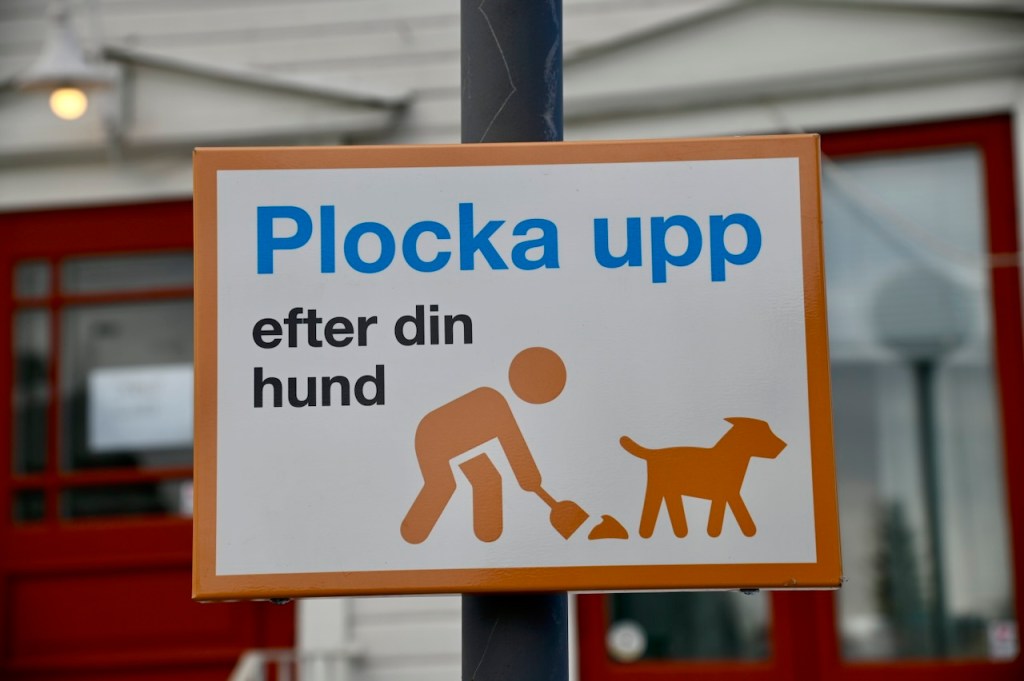
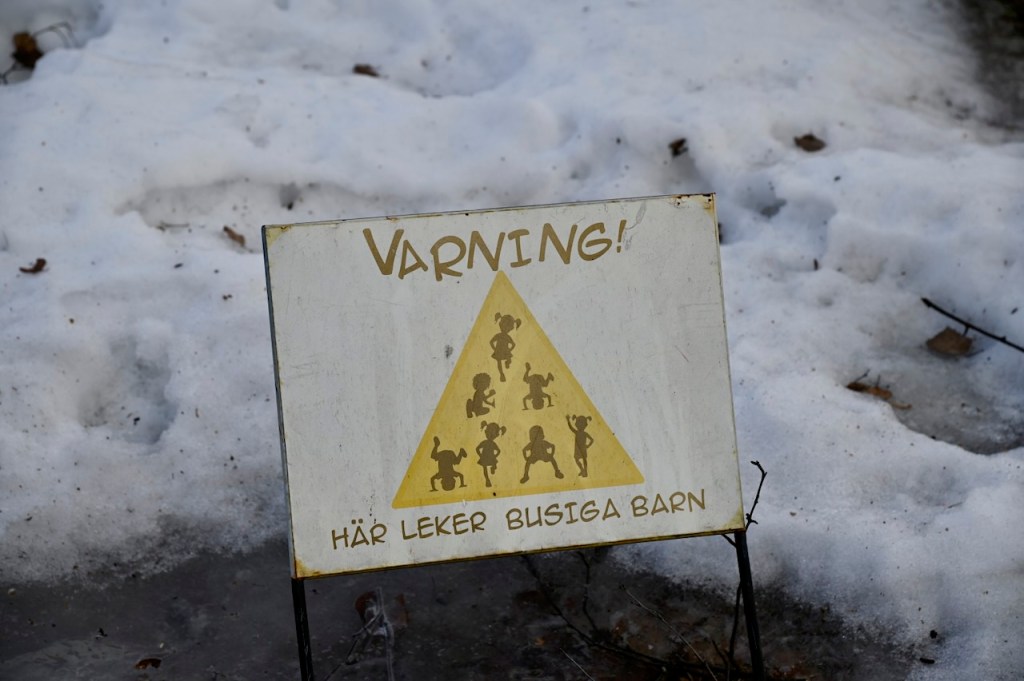
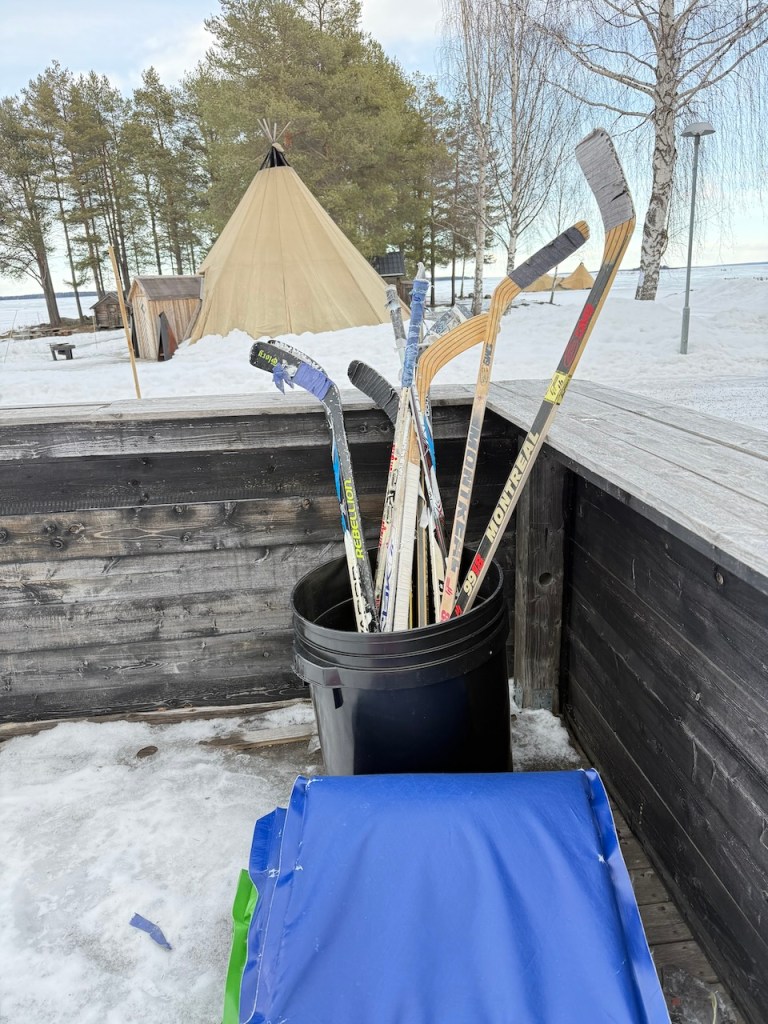
Sweden is a country of about 10.5m people and is considered the most developed in Scandinavia and is the fifth most populous country in Europe. It remained “neutral” during the Second World War, so didn’t suffer the extreme destruction that its neighbor Finland experienced. It has universal healthcare, free tertiary education, has more than 96,000 lakes, and is ranked fifth globally on the “Human Development Index,” which balances life expectancy, education, and income per capita. Ice hockey is its national sport and – waddaya know – I saw a hockey rink, a bunch of hockey sticks and a hockey goal sitting nearby the frozen Baltic.
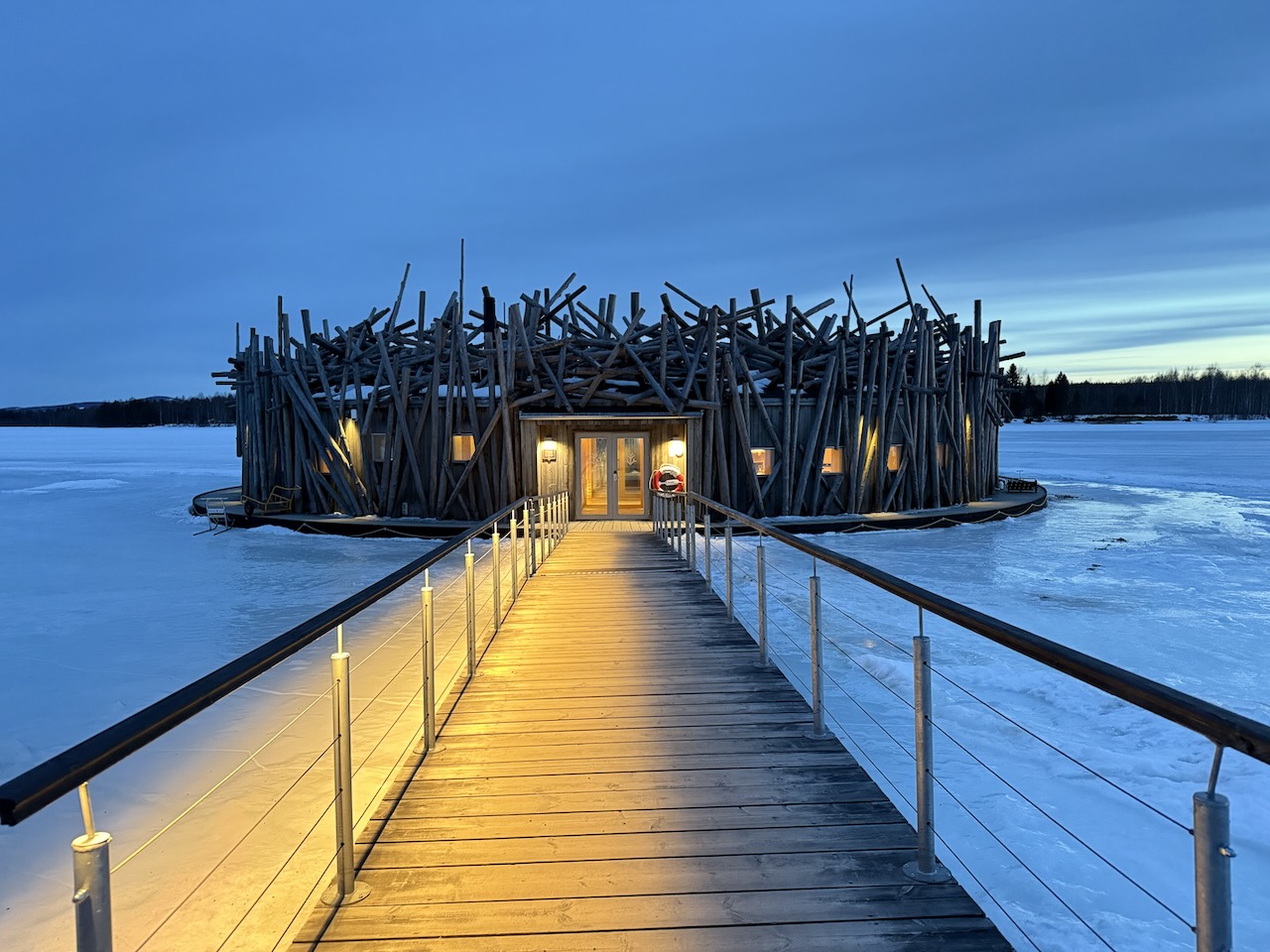
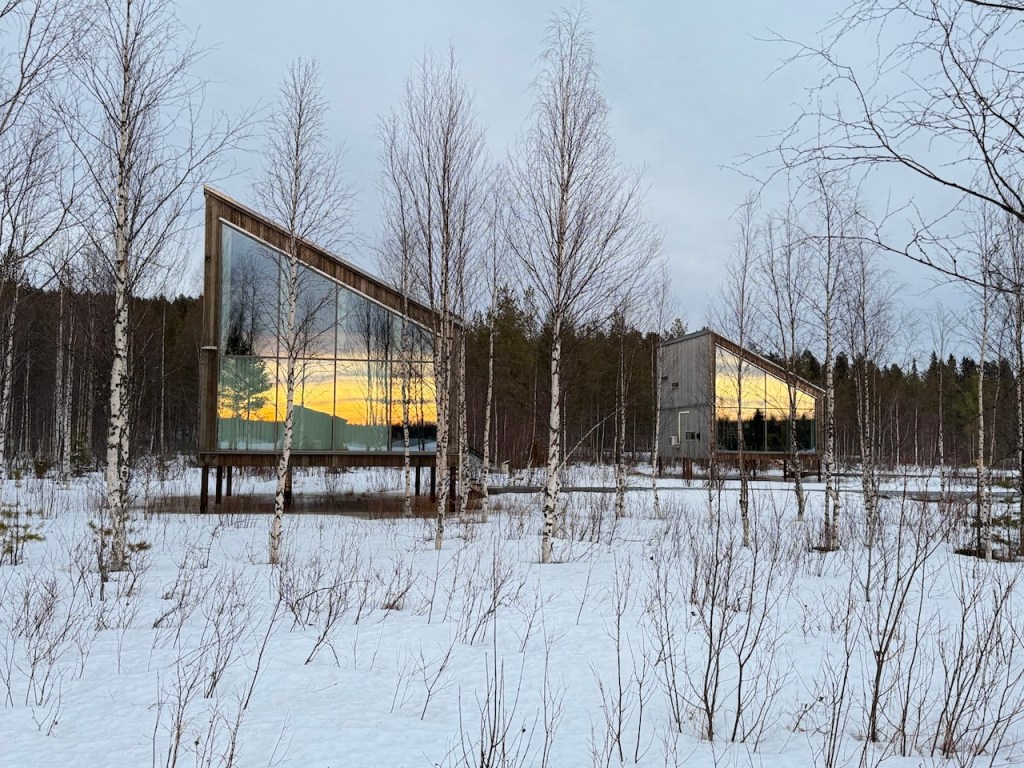
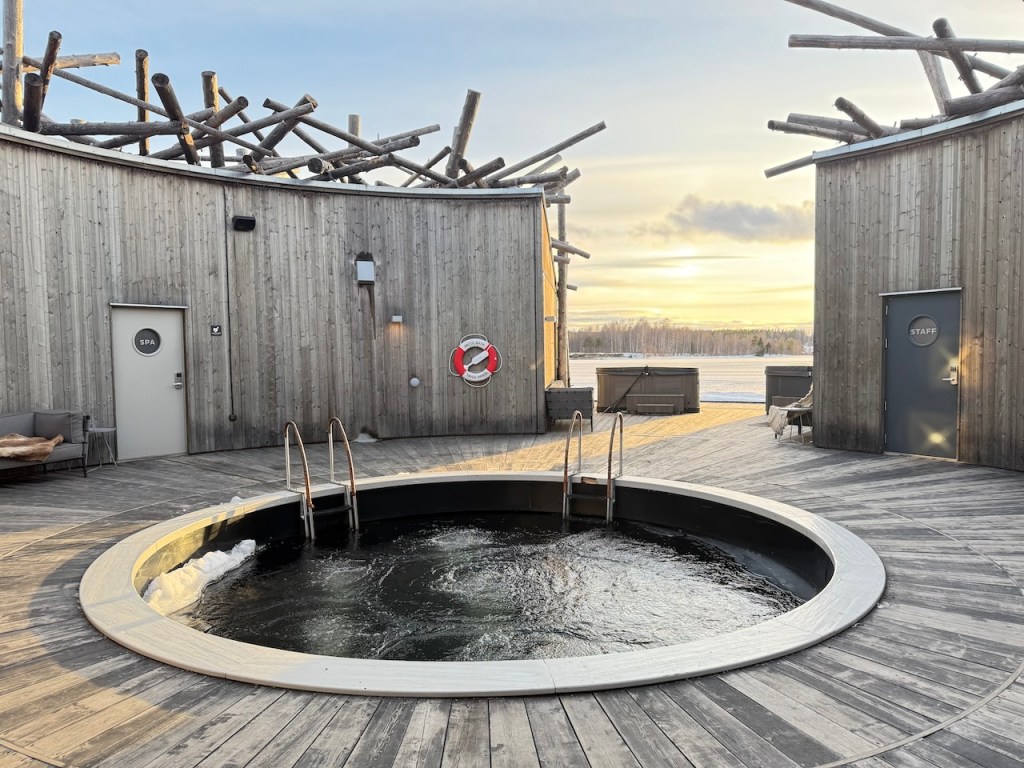
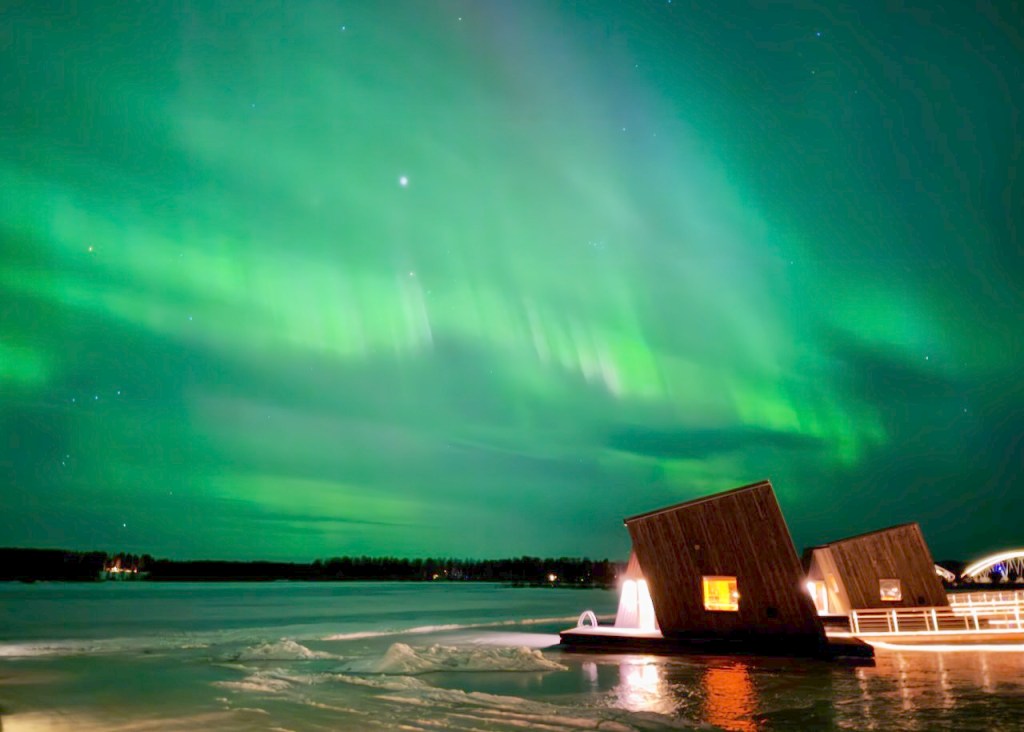
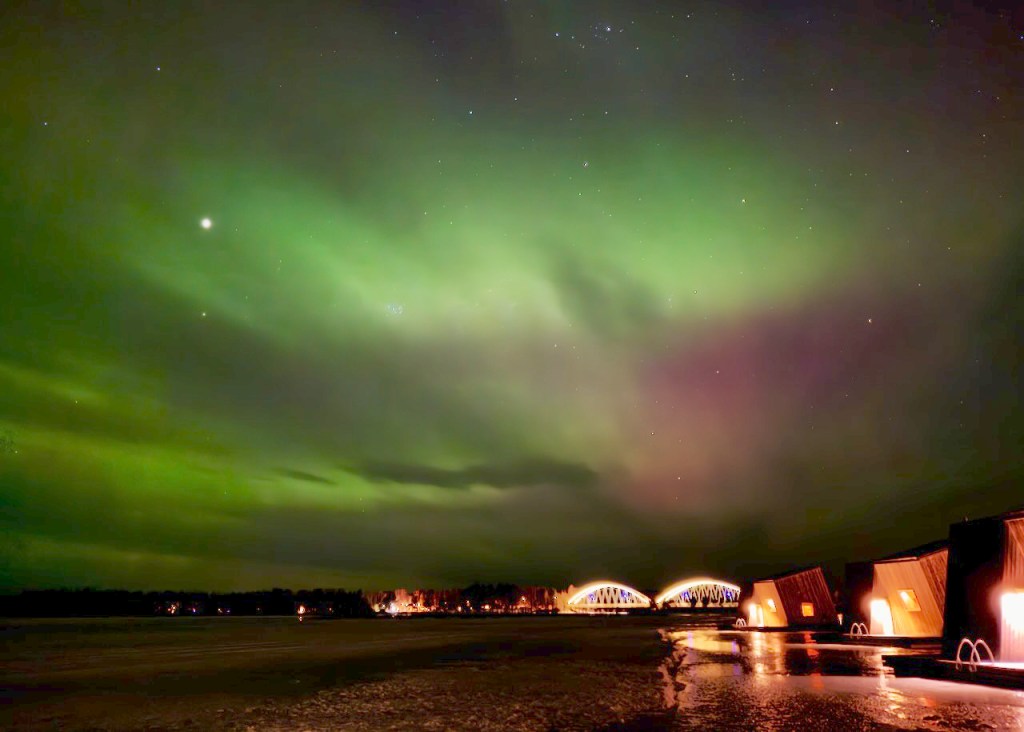
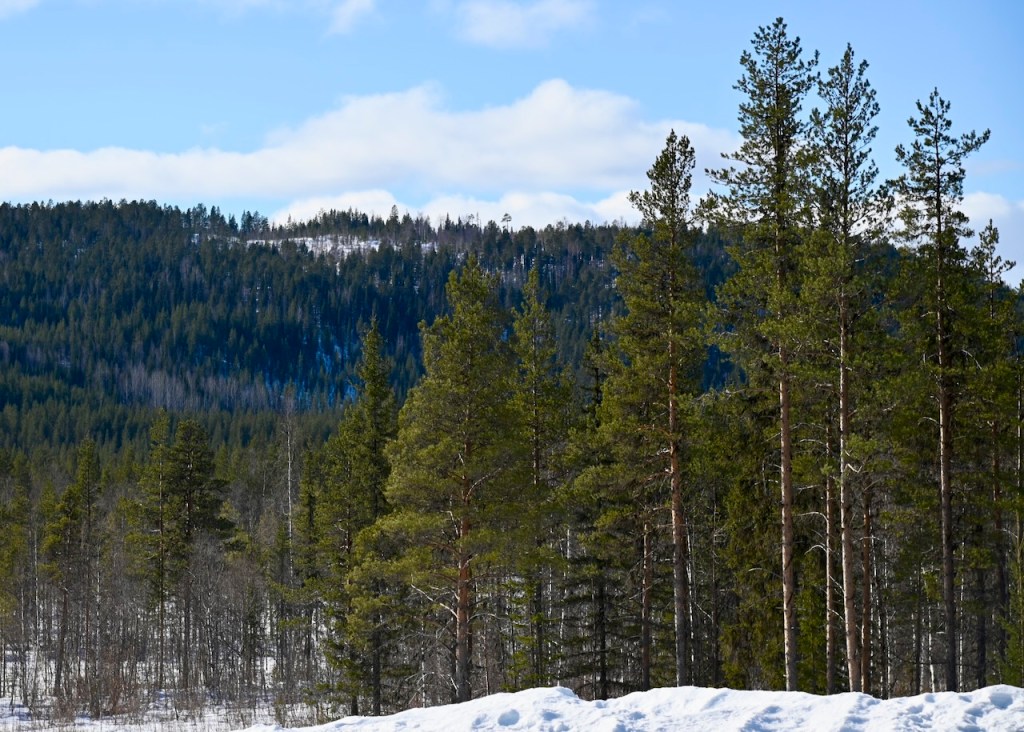
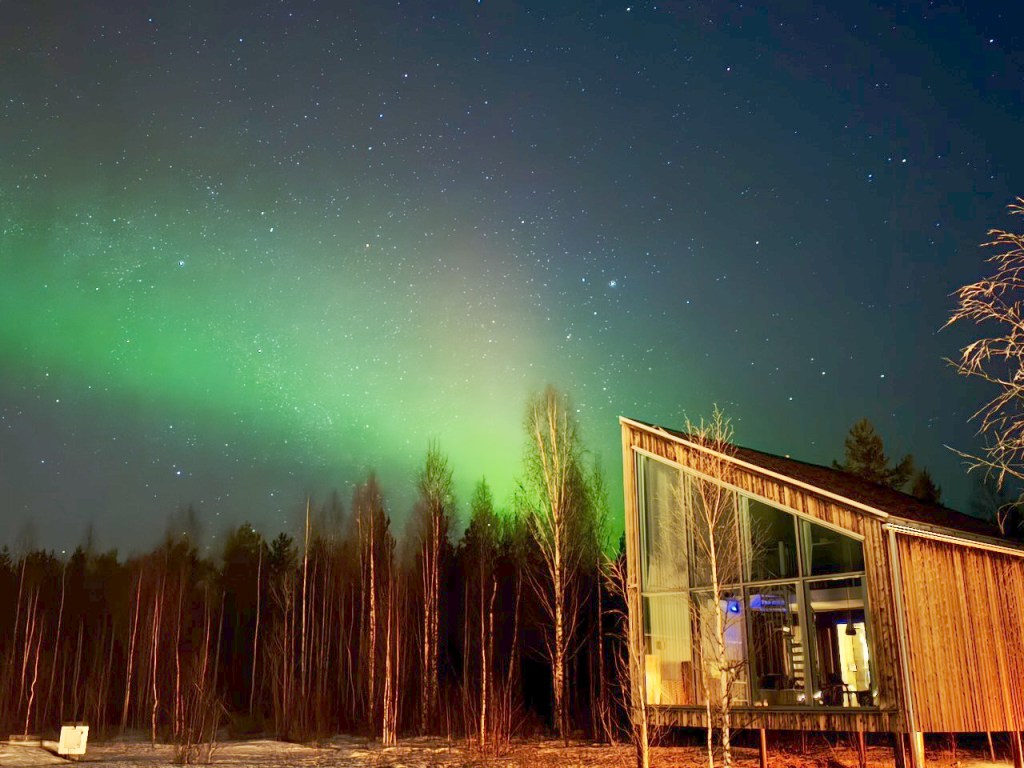
Our hotel for the next two nights was the beautiful Arctic Bath Hotel which sits on the edge of – and some buildings literally atop – the Lule River. The main building (the picture at the top of this post; reception, dining room, bar, sauna) – circular and covered with what look like tree trunks (honoring the Swedish timber tradition) – sits floating on the river in the warm weather and atop the river ice during the cold months. Two sets of rooms – each individual cabins – exist; some, like the main building, sit on the river; others are on the land by the river’s edge, surrounded by frost- and snow-covered trees. I had one of those rooms, which belongs among the most beautiful places I’ve ever stayed.
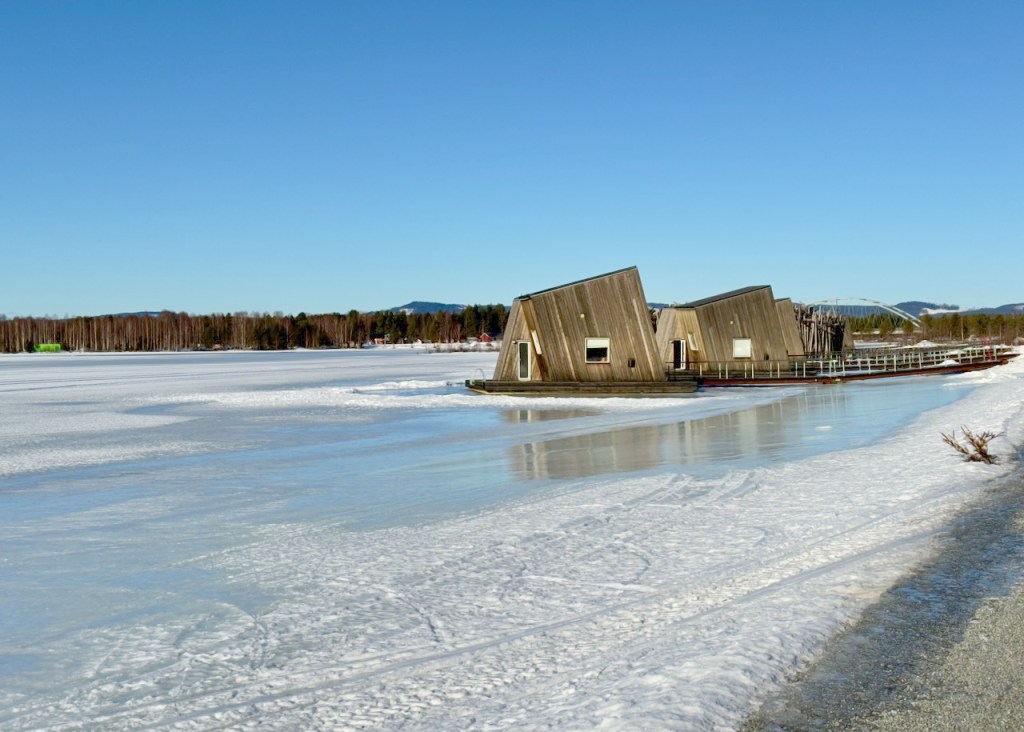
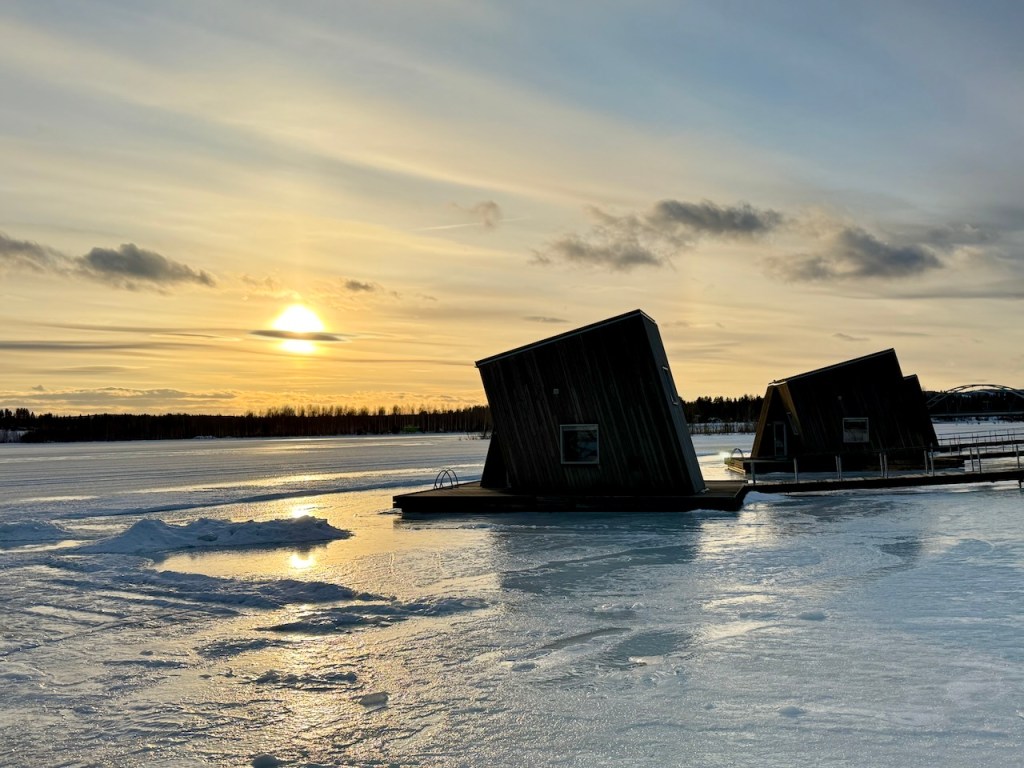
We arrived at the hotel, checked-in, and I made a bee-line for the saunas and the bath, setting up my iPhone on a small tripod to capture my arctic plunge. The “bath” sits in the middle of the main building’s circular platform, open to the air, with the “bath” actually the frozen river (in the pictures below you can see ice at the bath’s edge). I’d been advised – after getting into a bathing suit, start in the sauna for a few minutes to warm up, then plunge, then repeat three times. Yup – I followed the directions. The steps down the letter into the water were – for lack of a better set of words – fucking freezing, and I lasted all of ten seconds in the water each time, didn’t dare put my head under, the surface and could barely release my hands from the ladder before grabbing it again. But an amazing – amazing! – experience.


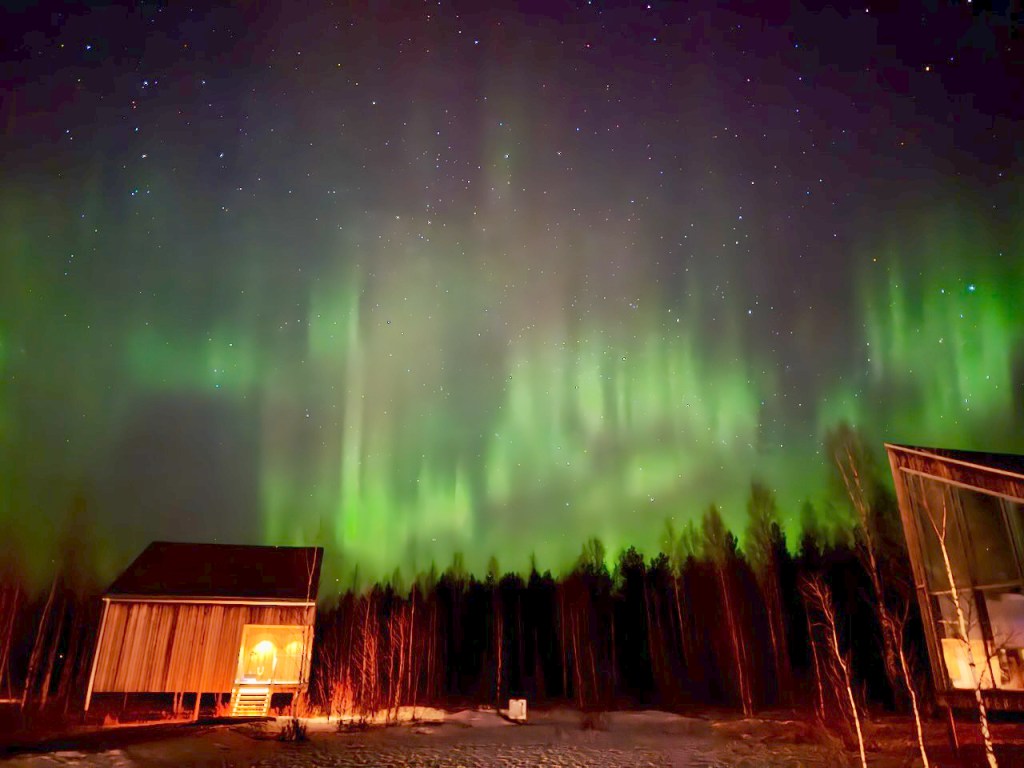
And that evening we saw just about the best Northern Lights we’d experience on the entire trip.
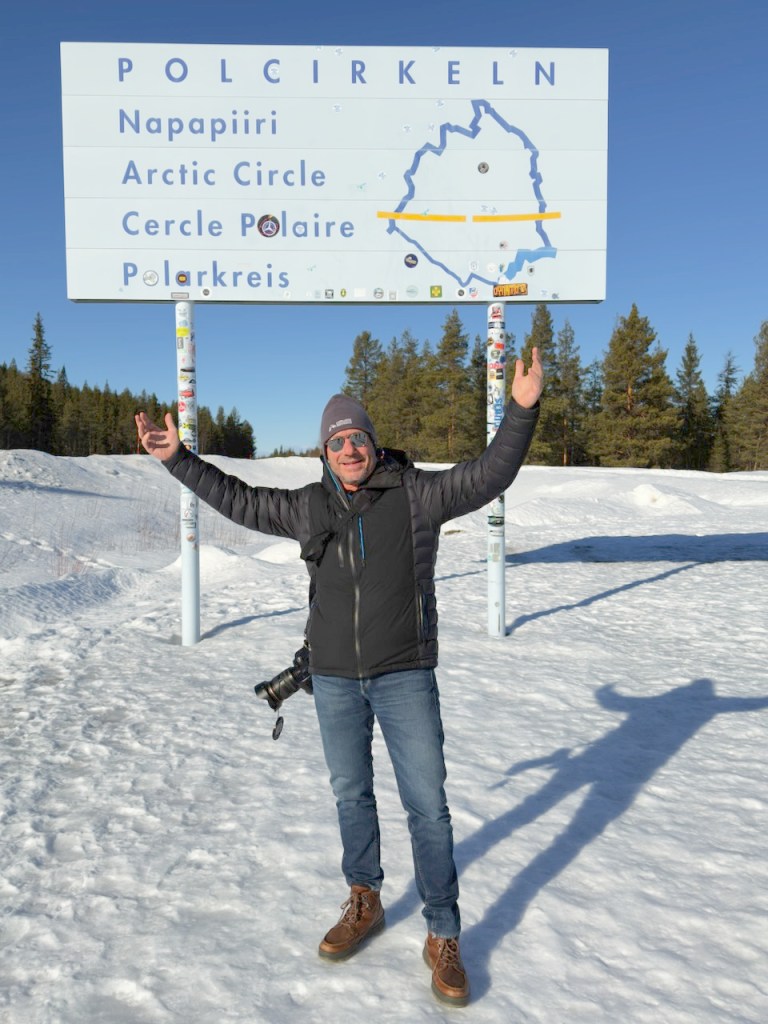
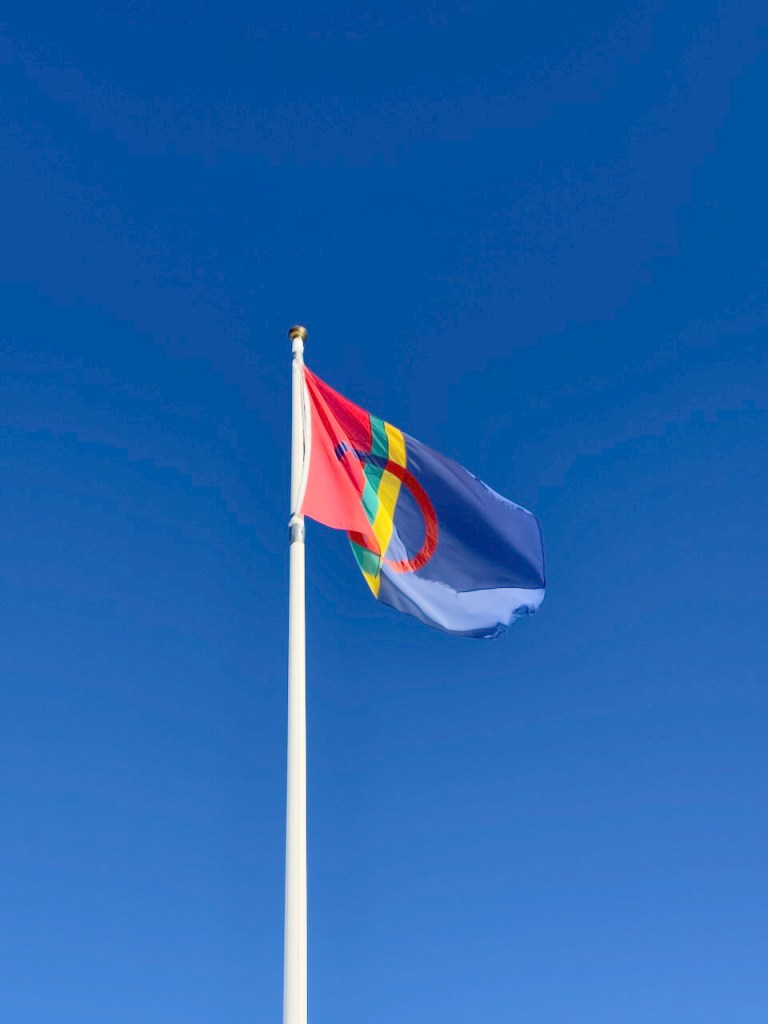
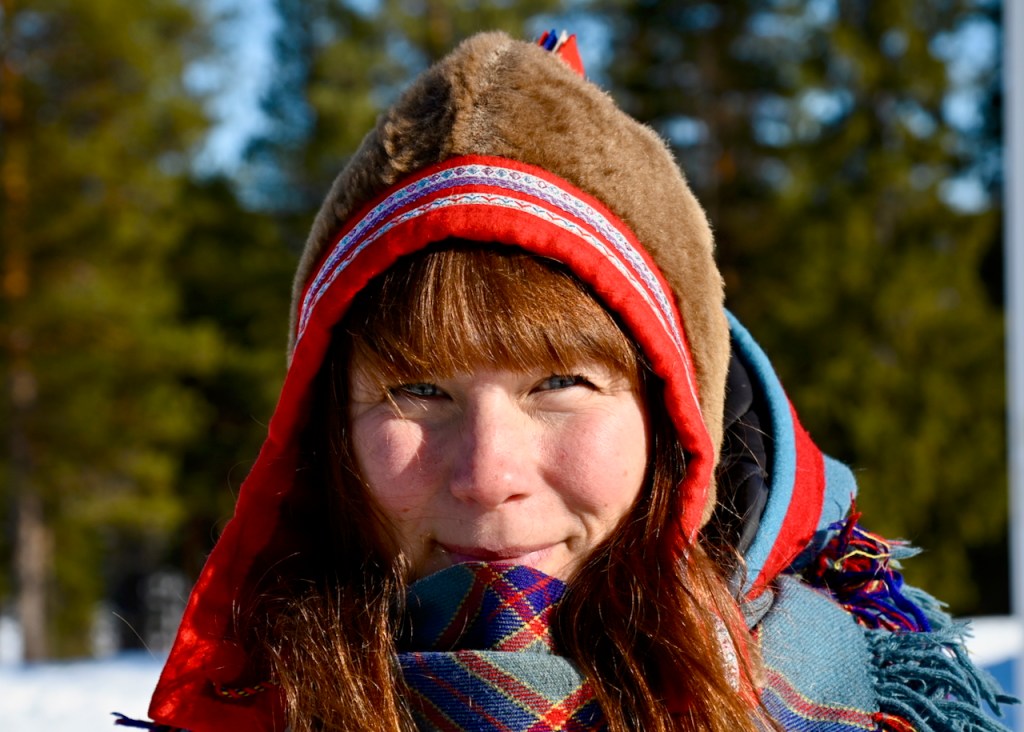
On day seven we returned to the Arctic Circle, driving about 1 1/4 hours, where we met Anna, a member of the indigenous Sami people, apparently the only indigenous community in Europe, of which only about 80,000 survive. They’ve been here for 3,600 years. We took a few pictures, then drove to her winter home.
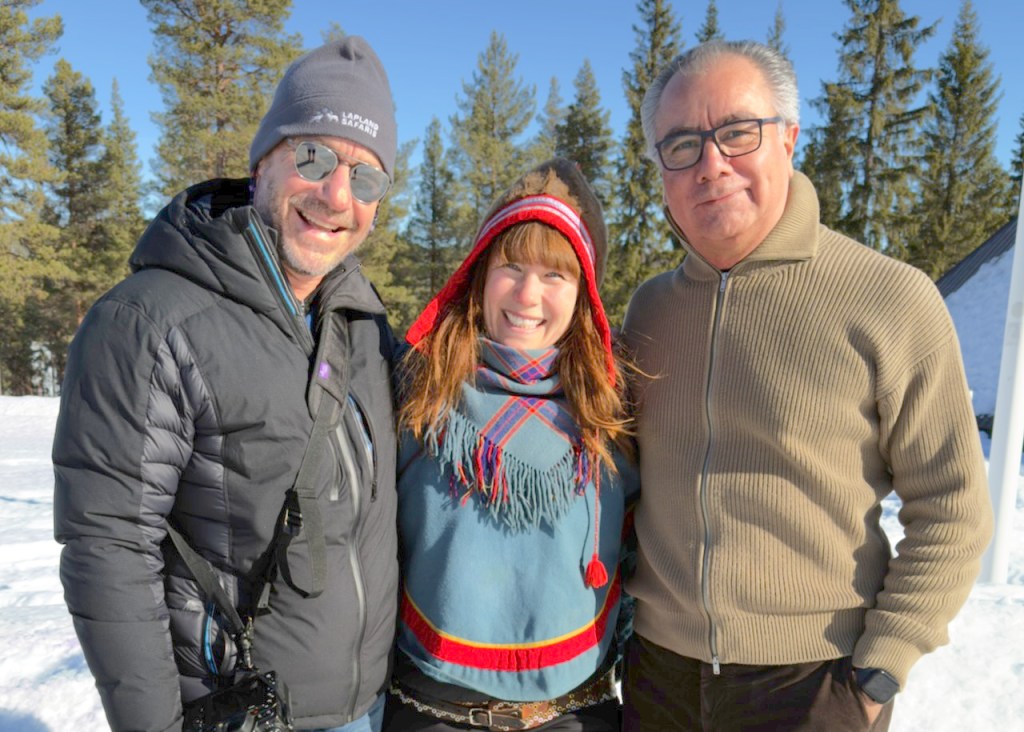
She and her husband are reindeer herders, living with their children near the small town of Jokkmok in the winter, and he goes with their herd to the mountains – where it is colder – for the summer.
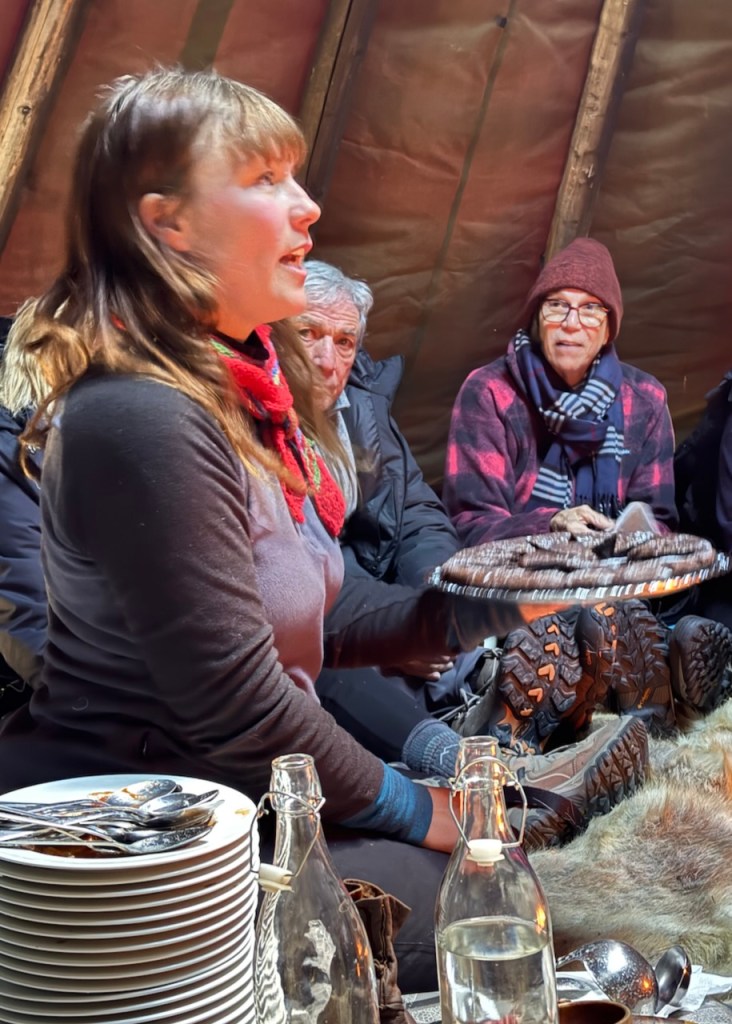
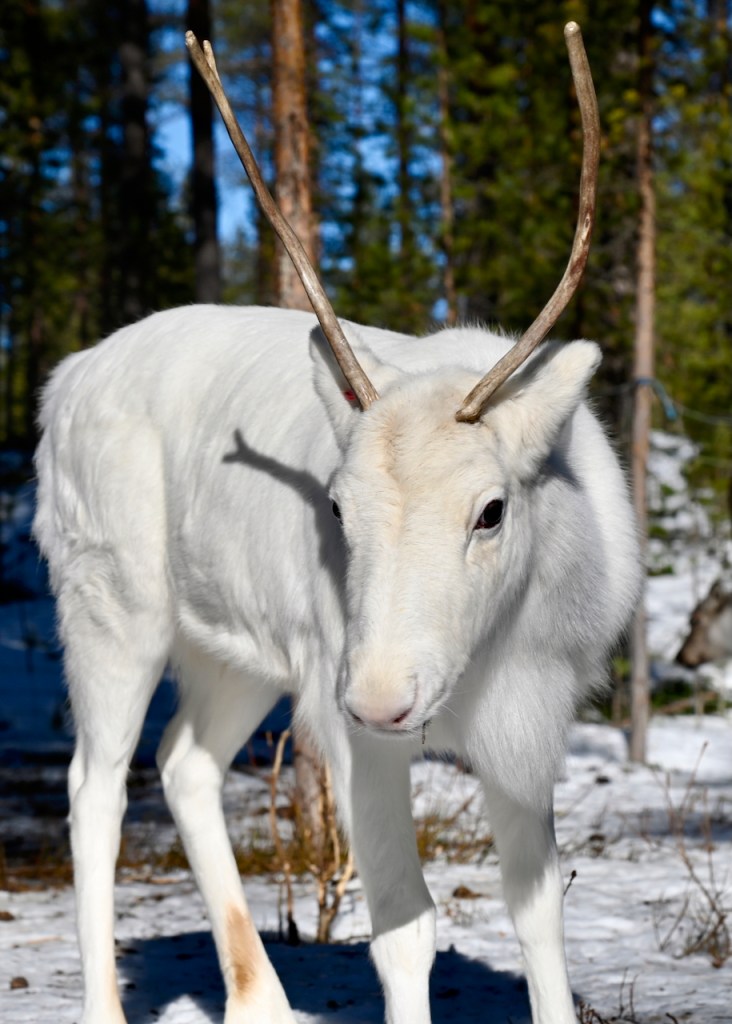
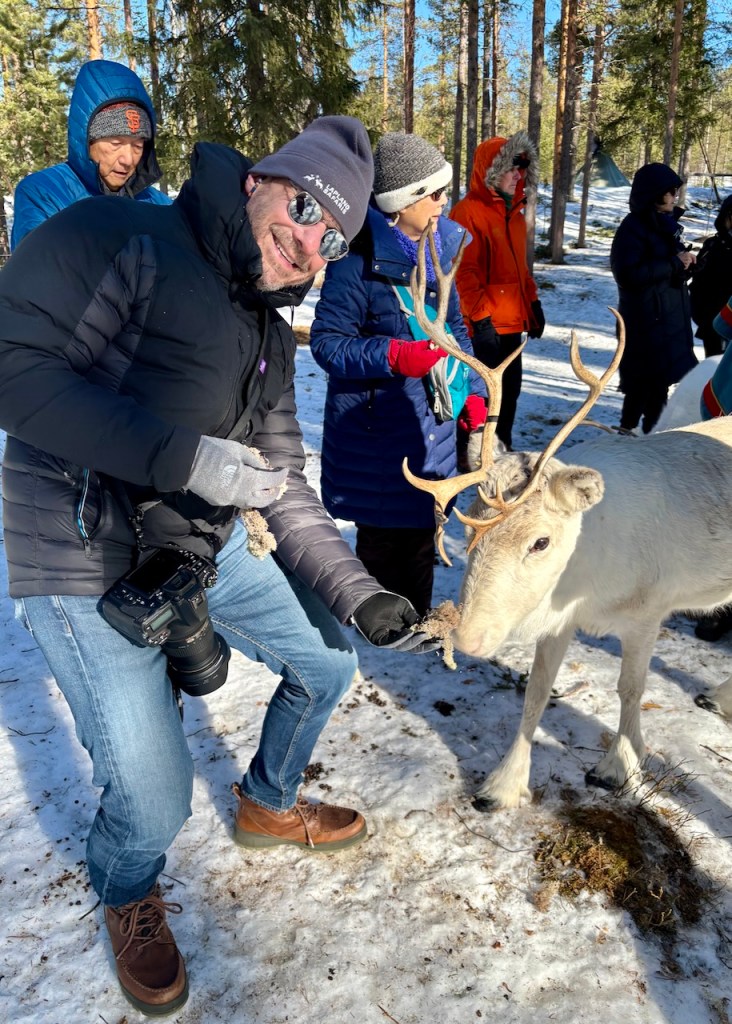
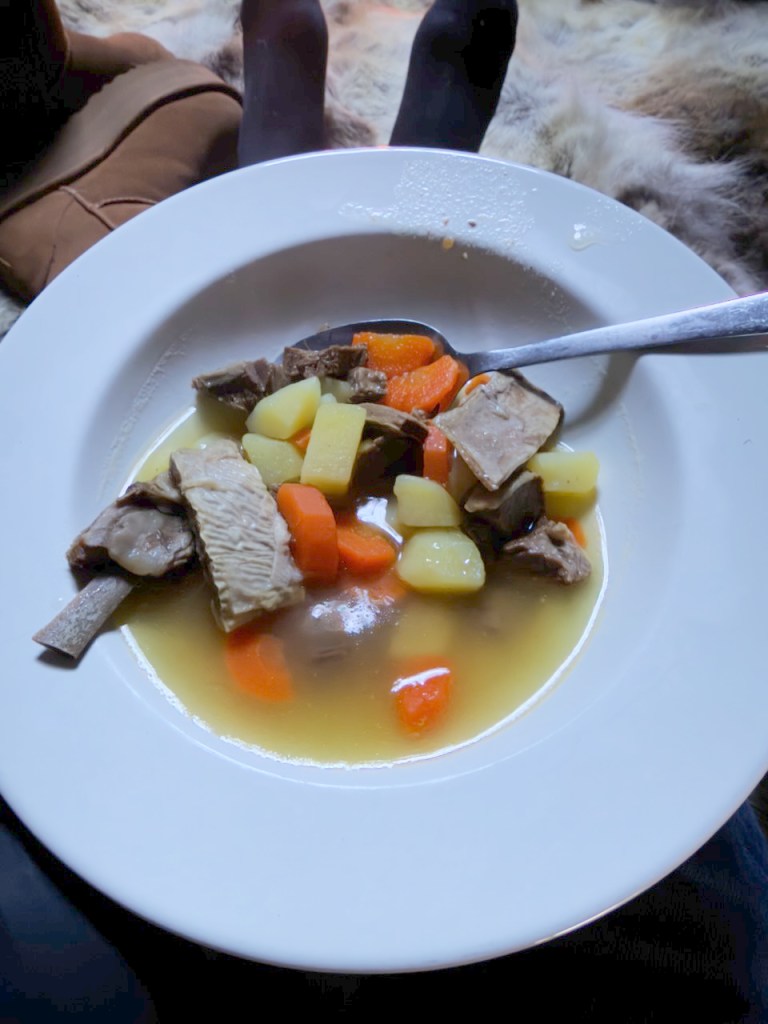
We spent a wonderful three hours with her, as she told stories of her people, explained her and her husband’s lives with their children, the challenges they face as indigenous peoples, the challenges they face as reindeer herders in a changing environment, allowing us to meet and give food to some of their reindeer, and cooking and serving us a warm lunch while we all squeezed into her lavvo (a large tepee, the same type of structure as where we had lunch earlier in our journey). She served us reindeer stew made from one of her own animals; local tradition holds that only salt can be used in the stew, otherwise it’d be like saying your reindeer don’t taste good on their own.
She also sang one of their traditional songs – a joik – this one a tribute to her daughter (which we were not permitted to film or record). She was a delight – laughed easily, warm, engaging, informative; the whole experience was enlightening and touching, and – when she finished singing – a number of us had to wipe the tears out of our eyes.
And the Northern Lights that evening – our last of this trip – did not disappoint.

 Fred's Travel Blog